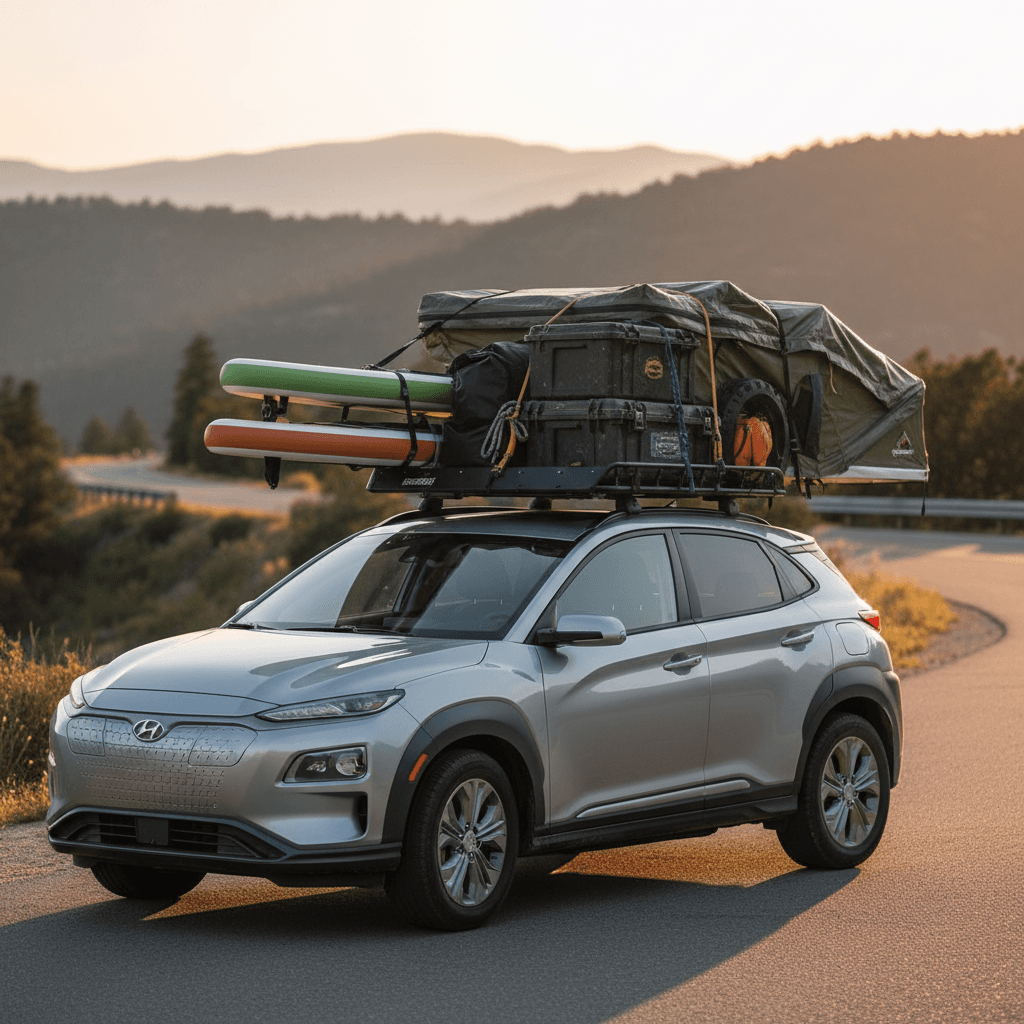
If you’re eyeing a roof box or bike rack for your Hyundai Kona Electric, the first number you need to know is the **roof rack weight limit**. Overloading the roof is an easy way to damage the car, stress the battery, and even compromise safety at highway speeds. The good news: Hyundai publishes clear roof load limits for the Kona Electric, you just have to know where to look and how to apply them to real-world gear.
Short answer
Kona Electric roof rack weight limit overview
Hyundai doesn’t publish one universal number for every Kona ever built. Instead, the **roof load limit** (sometimes called "roof rack load" or "max roof cargo") is listed in regional spec sheets and owner’s manuals for specific model years and trims. That’s why you’ll see slightly different numbers from **75 kg up to 100 kg** in various brochures.
Typical Hyundai Kona Electric roof load figures
Roof load is not payload
Official Kona Electric roof load by generation
Let’s translate the fine print into something you can actually use. Exact numbers can vary slightly by region, so always double‑check your specific car’s **owner’s manual** or local spec sheet, but here’s what’s typical for the Hyundai Kona Electric lineup:
Typical Hyundai Kona Electric roof rack (roof load) limits
Approximate factory roof load specs by generation and common regional documents. Always verify in your own owner’s manual.
| Model years / generation | Typical Hyundai roof load figure | How it’s worded | What it means in practice |
|---|---|---|---|
| 2018–2023 Kona Electric (first generation) | 80 kg (176 lb) | “Roof rack load (kg): 80” or “Max roof load 80 kg” | Includes weight of crossbars plus cargo; stay under 80 kg total while driving. |
| Some early Hyundai accessory racks (Kona Electric) | 75 kg (165 lb) | “Load capacity = 75 kg evenly distributed over 2 bars” | Applies specifically to that Hyundai‑branded rack; still also bound by the car’s roof load. |
| 2024–2025 Kona Electric (second generation) | Up to 100 kg (220 lb) in several spec sheets | “Roof rack load limit 100 kg” or “Roof rack load (kg): 100” | Higher roof load on some new‑gen models, but only if your rack system is rated that high. |
| Gas/hybrid Kona (various years) | Typically 75–100 kg | Similar language: “Roof rack load limit…” | Useful for comparison, but don’t assume an ICE Kona spec applies to your EV. |
Use this table as a starting point, then confirm against the label and documentation for your exact vehicle.
Where to find your exact number
Roof rack weight basics: dynamic vs static loads
Roof rack weight gets confusing fast because you’ll see different numbers from Hyundai, from rack manufacturers, and from accessories like roof‑top tents. They’re often talking about **different types of load**:
Two kinds of roof load you’ll see
Understand this before you bolt anything to your Kona Electric’s roof.
Dynamic load (what Hyundai cares about)
Dynamic load is the weight on the roof while the car is moving, cornering, braking, hitting bumps.
- This is what Hyundai’s 80–100 kg roof load limit refers to.
- Includes crossbars + any carrier + the cargo.
- Exceeding it can damage the roof, mounts, or even affect stability.
Static load (parked, often higher)
Static load is the weight you can support when the vehicle is parked, such as with a roof‑top tent.
- Some racks quote much higher static limits (150–220 kg+).
- This does not override Hyundai’s dynamic limit.
- For driving, you must still obey the lower dynamic rating.
Don’t “average out” the numbers
How much gear can you really carry?
Once you subtract the weight of the rack system itself, you’ll be surprised how quickly you run out of roof capacity. Here’s a realistic way to size your setup for a Kona Electric.
Step‑by‑step: sizing roof cargo for your Kona Electric
1. Confirm your car’s roof load limit
Check your Kona Electric’s owner’s manual. If it lists **80 kg**, that’s the maximum moving roof load, no matter what your rack or cargo box says. Newer cars might say 100 kg, but trust your own documentation.
2. Weigh or look up the rack system
Most two‑bar crossbar kits for the Kona Electric weigh **6–10 kg (13–22 lb)**. Subtract this from your roof load limit first. If your limit is 80 kg and the rack weighs 8 kg, you’ve got **72 kg left** for boxes, bikes, or kayaks.
3. Add the carrier’s empty weight
A mid‑size cargo box runs around **12–20 kg (26–44 lb)**. Many kayak cradles or bike trays weigh **3–7 kg (7–15 lb)** each. Subtract that too. What’s left is your true gear allowance.
4. Count the cargo itself
Two typical mountain bikes can add **26–34 kg (57–75 lb)**. A loaded roof box for a road trip might be **30–40 kg (66–88 lb)**. Stay under the remaining allowance from Step 3, using a bathroom scale if you’re close.
5. Double‑check payload and handling
If you’ve got four adults, a dog, and a packed hatch, you’re also pushing overall payload and axle limits. If the Kona feels floaty, wanders in crosswinds, or takes longer to stop, you may be overloaded long before you hit the paper numbers.
Example 1: First‑gen Kona Electric, 80 kg roof load
You install a 7 kg rack and a 15 kg cargo box:
- Roof limit: 80 kg
- Minus rack: 73 kg
- Minus box: 58 kg left for luggage
If you pile in 50 kg of gear, your total roof load is **72 kg**, safely under the limit.
Example 2: New‑gen Kona Electric, 100 kg limit
You install a 9 kg rack and two 5 kg bike trays:
- Roof limit: 100 kg
- Minus rack: 91 kg
- Minus trays: 81 kg left for bikes
Two 15 kg e‑bikes total 30 kg. Your full roof load is **49 kg**, well within the limit, but keep crosswind stability in mind.
Choosing a roof rack for your Kona Electric
The Kona Electric has been sold with different roof configurations: raised rails, flush rails, and in some markets no rails at all. Make sure any rack you buy is **explicitly listed as compatible with your model year and roof style.**
Main roof rack options for Hyundai Kona Electric
Match the rack style to your roof and the loads you actually plan to carry.
OEM Hyundai crossbars
Pros:
- Designed specifically for the Kona roof.
- Weight ratings that match Hyundai’s testing.
- Often integrate nicely with sunroof and trim.
Cons:
- Usually priced higher than aftermarket.
- May have lower stated capacity (e.g., 75 kg).
Aftermarket vehicle‑specific racks
Pros:
- Often higher dynamic rating, sometimes up to 100 kg.
- More bar shapes and accessories (bike trays, kayak cradles).
- Good fit if engineered for Kona Electric.
Cons:
- You must still obey the car’s own roof load limit.
- Quality varies, stick to well‑known brands.
Universal clamp‑on bars
Pros:
- Cheaper and easy to find online.
- Might work on short trips with light loads.
Cons:
- Fit can be marginal on flush‑rail Kona Electric models.
- Ratings can be optimistic; instructions sometimes vague.
- Risk of paint damage or noise if poorly adjusted.
Aim for overkill in quality, not in load
Range and efficiency penalties with a roof rack
Every square inch of gear you hang in the airstream above a Kona Electric’s roof is like a parachute. Even an empty set of crossbars costs you a bit of range; a tall cargo box or a pair of bikes can take a **noticeable bite out of highway efficiency**.
- Bare crossbars alone often shave a few percent off highway range, figure roughly **3–5%** as a working estimate.
- Add a fully loaded, medium‑height cargo box and you can see **10–15% less range** at 70–75 mph compared with a clean roof.
- Two bikes on the roof are similar to or worse than a big box aerodynamically; range penalties of **15–20%** on long freeway runs are not unusual.
- Headwinds, cold weather, and higher speeds stack on top of roof rack losses, plan conservatively for road trips.
Plan charging stops with a margin
Roof rack safety rules for EV owners
EVs are heavy and their weight sits lower in the chassis thanks to that big battery pack. That’s good for handling, but it also means you can feel roof‑top weight and drag more clearly. Follow these rules and your Kona Electric will stay composed and predictable.
Essential safety rules for your Kona Electric roof rack
Keep loads as light and low as possible
Use the smallest box or rack that does the job, pack heavier items in the cabin or hatch, and keep the roof cargo low and centered between the crossbars.
Re‑torque and re‑check
After your first 30–50 miles with a new rack or new load, stop and check all clamps and straps. Repeat at each fuel, or rather, charging, stop on a long trip.
Mind your speed and side winds
High speeds plus tall, blunt loads magnify crosswind effects. If the Kona starts to wander or feel top‑heavy, slow down. No road trip story is worth shaking the car apart.
Respect sunroof clearances
On sunroof‑equipped cars, confirm that the glass can open without hitting the rack or cargo, or simply leave it closed when the rack is installed.
Avoid hard off‑road impacts
The Kona Electric isn’t a rock crawler. Big potholes and deep ruts with a heavy roof load send brutal spikes into the mounts. Take it slow on rough roads or remove the rack for that trip.
Common use cases: bikes, kayaks, and cargo boxes
Most Kona Electric owners shopping for a roof rack fall into just a few camps: **bike people, boat people, and box people**. Here’s how the roof rack weight limit plays out for each.
Bikes on the roof
- Two acoustic bikes: ~28–34 kg (62–75 lb).
- Two e‑bikes: easily **40–50 kg (88–110 lb)**.
- Add in trays and the rack, and you’re often sitting near 60–70 kg total.
On an 80 kg roof limit car, that leaves a slim margin. When in doubt, consider a **hitch‑mount bike rack** instead and leave the roof for lighter gear.
Kayaks and boards
- Typical plastic kayak: 20–27 kg (44–60 lb).
- SUP or surfboard: 10–15 kg (22–33 lb).
- Foam blocks or cradles: another 2–5 kg (4–11 lb).
One kayak on a quality rack is fine. Two big kayaks can push you close to the limit, especially on earlier 80 kg cars. Double‑check weights before you plan that family paddling weekend.
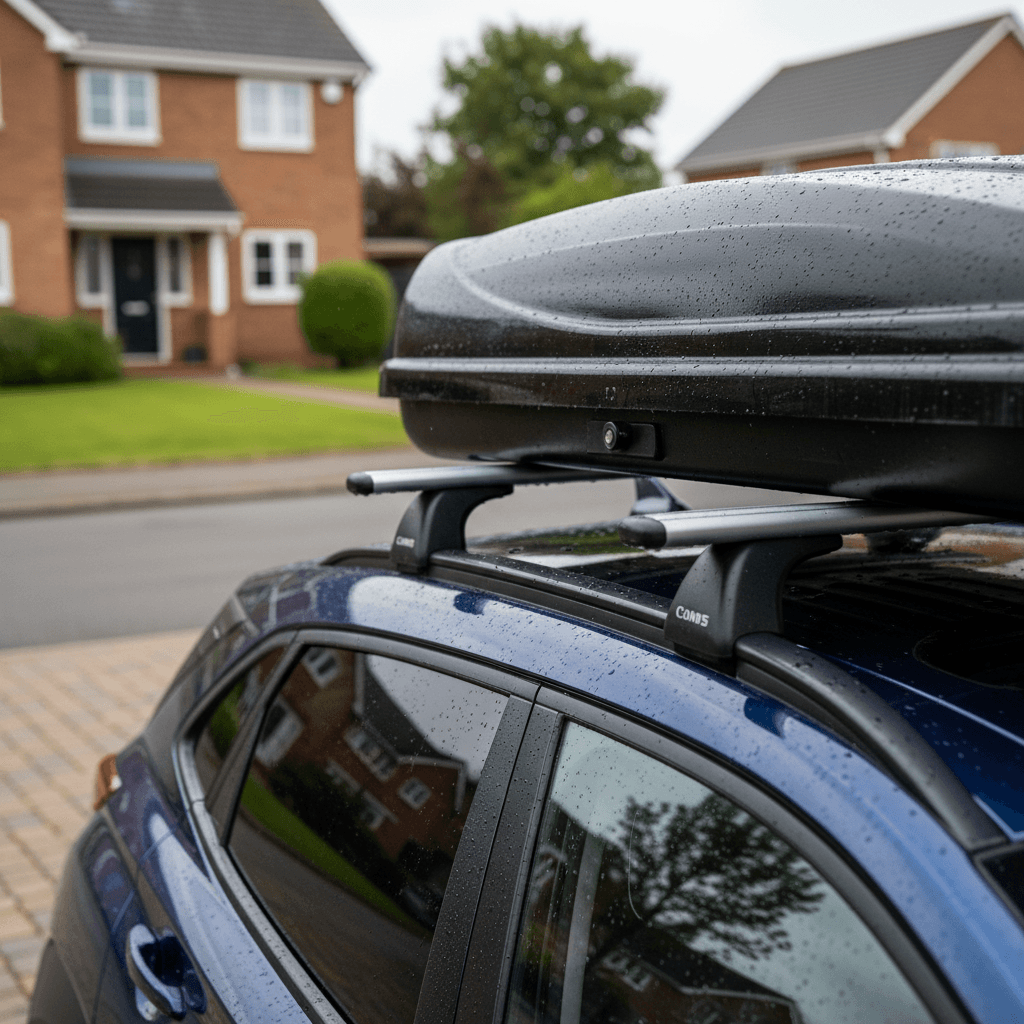
Cargo boxes
- Medium box empty: ~15 kg (33 lb).
- Family trip packing: 25–40 kg (55–88 lb) of stuff.
- Total roof load: often 40–55 kg (88–121 lb).
That’s comfortably within an 80–100 kg limit, but remember, more weight on the roof means more sway and more charging stops. Pack bulky but lighter items up top and keep the heavy stuff down low.
Kona Electric and towing vs roof cargo
Hyundai has gradually opened the door to towing with newer versions of the Kona Electric in certain markets, while earlier cars often had no official towing rating at all. From a roof‑load perspective, the biggest thing to understand is that **everything works together**: roof cargo plus any tongue weight on a hitch counts against the same overall payload limits.
Earlier Kona Electric (no or limited towing)
For many first‑generation Kona Electric models, especially in North America, Hyundai didn’t approve towing from the factory. Owners still sometimes add aftermarket hitches for bike racks, but these add **leverage and weight at the very back** of the car.
If you’re stacking a rear bike rack and a loaded roof box, keep overall payload in mind and watch for squat at the rear axle.
Newer Kona Electric (select towing ratings)
Later European and some other‑market Konas list modest braked and unbraked towing capacities with a maximum tow ball weight, often around **75–100 kg (165–220 lb)**.
That tow ball weight plus whatever you place on the roof is all pressing down on the chassis. If you’re towing and running a roof box, it’s usually smart to run the roof **light**, just sleeping bags and jackets, not dumbbells or cases of water.
Don’t forget legal limits
How this matters when buying a used Kona Electric
If you’re shopping for a used Hyundai Kona Electric, whether through a private sale, a traditional dealer, or a digital retailer like Recharged, roof rack use is more than just a lifestyle clue. It can tell you something about how the car has been used and how carefully it’s been loaded.
Roof‑rack questions to ask about a used Kona Electric
A few smart questions can reveal how hard a car has worked for a previous owner.
1. Look for past rack marks
Check along the roof rails and door frames for clamp marks, chipped paint, or dents from previous racks. Cosmetic damage is common; structural kinks are not.
If you’re buying from Recharged, our inspection will flag visible body damage and note any aftermarket accessories.
2. Ask what they carried
There’s a big difference between an occasional ski box and a permanent double‑kayak setup or heavy e‑bikes on the roof.
Consistent heavy roof loads aren’t an automatic deal‑breaker, but they’re worth factoring into how you plan to use the car next.
3. Compare to battery health
Roof boxes and bikes eat range; owners who road‑trip with them rack up more fast‑charging miles.
A Recharged Score battery health report helps you see how the pack has aged so you’re not guessing about the impact of years of loaded adventures.
4. Factor in accessories
If a used Kona Electric comes with a quality rack and box, that kit may be worth real money to you.
Recharged can help you compare similar cars, value the accessories, and decide whether that adventure‑ready setup is a bonus or just extra wind noise you’ll remove.
Hyundai Kona Electric roof rack FAQ
Frequently asked questions about Kona Electric roof rack limits
Key takeaways for Kona Electric owners
The Hyundai Kona Electric is a terrific little adventure machine, but it’s still a compact crossover with a modest roof. Treat the **roof rack weight limit, typically 75–100 kg depending on your car, as a hard boundary**, not a suggestion. Remember that the limit includes the bars and carriers, plan your cargo with a bathroom scale instead of guesswork, and give yourself range headroom when you bolt big, boxy things into the wind.
If you’re shopping for a **used Kona Electric** and plan to haul bikes, kayaks, or camping gear, it’s worth choosing a car that’s been inspected carefully and comes with transparent battery health information. That’s exactly what you get with Recharged: every vehicle includes a Recharged Score Report with verified battery diagnostics, fair‑market pricing, and EV‑savvy guidance on how to set it up for your life, including the right way to load the roof.