When people talk about Tesla battery cost per kWh, they’re really asking two questions: How much does it cost Tesla to build a battery, and how much would it cost you if that battery ever needed replacing? If you’re shopping for a new or used Tesla, or any used EV, that number has a big impact on long‑term ownership costs and resale value.
Key takeaway up front
Why Tesla battery cost per kWh matters
Battery cost dominates the economics of an electric vehicle. A modern Tesla pack stores anywhere from ~60 kWh in some Model 3s to over 100 kWh in long‑range Model S and X versions. Multiply that by the cost per kilowatt‑hour (kWh), and you’ve got the single most expensive component in the car. That’s why cost per kWh matters for Tesla buyers, current owners, and anyone considering a used EV.
- It shapes the sticker price of new Teslas
- It influences how quickly used Teslas depreciate
- It drives what a worst‑case battery replacement could cost
- It’s a good shorthand for how mature EV technology has become
Don’t confuse cost with price
What “battery cost per kWh” actually means
A kilowatt‑hour (kWh) is a unit of energy. If your Tesla has a 75 kWh battery, that’s the total energy it can store when new. Cost per kWh is simply the total battery cost divided by that energy capacity. For example, if a 75 kWh pack costs $10,500 to build, that’s $140 per kWh.
Three flavors of “Tesla battery cost per kWh”
They sound similar, but they answer different questions.
1. Cell cost per kWh
This is the cost of individual battery cells before they become part of a pack. It’s useful for analysts, not shoppers.
2. Pack cost per kWh
Cells plus pack structure, cooling, electronics, and assembly. This is the best number to compare across carmakers.
3. Replacement price per kWh
What you’d pay for a new or remanufactured pack installed in your car. This is the number owners care about most.
How to use the number wisely
Estimated Tesla battery cost per kWh by model
No automaker publishes exact pack cost per kWh, and Tesla is no exception. But based on industry teardown studies, raw material pricing, and battery chemistry improvements, we can outline reasonable working estimates for the current generation of Tesla vehicles. Remember, these are estimates of pack cost, not what you would pay for a replacement.
Approximate Tesla pack cost per kWh (internal cost)
Illustrative 2025 estimates based on industry analyses, rounded for simplicity.
| Model | Typical pack size (kWh) | Approx. pack cost per kWh (USD) | Approx. pack build cost |
|---|---|---|---|
| Model 3 RWD | 57–60 | $110–$140 | $6,500–$8,000 |
| Model 3 Long Range / Performance | 75–82 | $115–$145 | $8,500–$11,500 |
| Model Y Long Range / Performance | 75–82 | $115–$145 | $8,500–$11,500 |
| Model S Long Range | 95–100+ | $130–$160 | $13,000–$16,000+ |
| Model X Long Range | 95–100+ | $130–$160 | $13,000–$16,000+ |
Use these numbers for context and comparison, not as repair quotes.
Why the ranges are wide
How far EV battery costs have come
From lab costs to real-world replacement bills
Here’s where many owners get a rude awakening. If Tesla can build a pack for, say, $120 per kWh, why does a replacement sometimes cost the equivalent of $400–$600 per kWh or more? The difference comes down to everything wrapped around the hardware: diagnostics, labor, shipping, facility overhead, and profit.
What goes into replacement pricing
- New or remanufactured pack with full or partial warranty
- Specialized labor to safely remove and install a 1,000+ lb pack
- High‑voltage safety procedures and equipment
- Logistics and storage for large, hazardous components
- Dealer or service center overhead and margin
What owners actually see
- Out‑of‑warranty quotes that can run into the five‑figure range
- Partial repairs or module swaps sometimes offered at lower cost
- Third‑party EV specialists emerging with pack repair options in some markets
- Most owners never need a full pack replacement within the first 10+ years
Don’t anchor on worst‑case stories
How battery cost per kWh affects used Tesla values
Used EV shoppers don’t buy kWh on a spreadsheet, they buy remaining battery life and real‑world range. Still, battery cost per kWh sets the floor under every used Tesla’s value, because it defines how expensive it would be to rescue a car with a failed pack.
Three ways pack cost shapes used Tesla pricing
Even if you never see a battery invoice.
1. Depreciation curve
Expensive batteries push early‑year depreciation higher. As pack costs fall, residual values for later‑model Teslas tend to be stronger.
2. Battery health discount
A car with noticeable range loss often sells at a discount, because buyers mentally factor in the price of future pack work.
3. Market confidence
As buyers understand that modern packs rarely fail outright, used prices become less sensitive to scary replacement quotes.
Where Recharged fits in
Ready to find your next EV?
Browse VehiclesChecking battery health before you buy
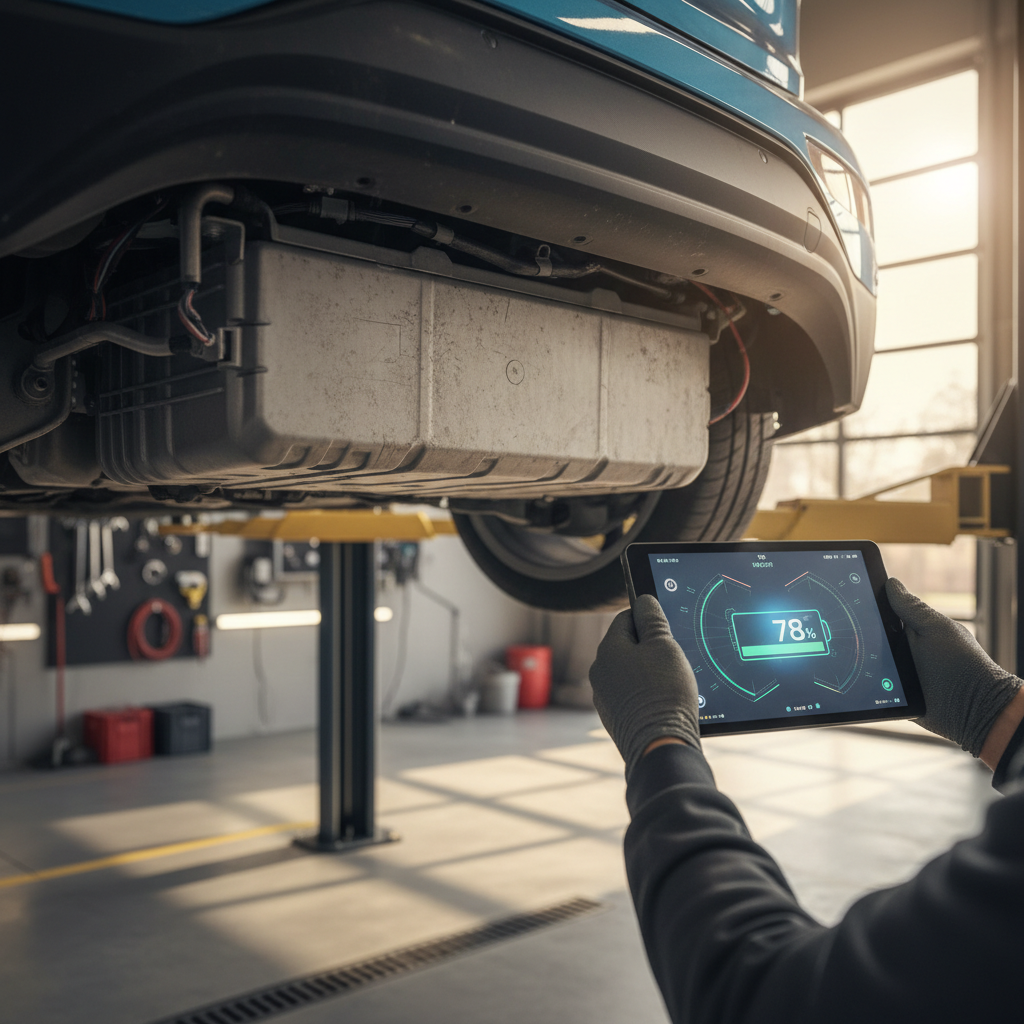
When you’re evaluating a used Tesla, you don’t need to calculate cost per kWh on the back of a napkin. You need to know how much usable capacity is left, how the car has been charged, and whether the pack shows any warning signs. Think of it as buying a house: you don’t price out bricks, you hire a home inspector.
Used Tesla battery health checklist
1. Compare displayed range to original spec
Fully charge the car (or review the seller’s screenshots) and compare the indicated range at 100% to the original EPA number. A modest drop, often 5–10%, is normal as the pack ages.
2. Review charging history if available
Frequent DC fast charging and routinely charging to 100% can accelerate degradation. Occasional fast charging is fine; constant use merits a closer look at health reports.
3. Scan for battery‑related alerts
Any warnings about the high‑voltage system, reduced power, or restricted charging speed should be investigated before you buy.
4. Ask about software‑limited packs
Some Teslas have packs that are software‑limited to a lower capacity. In rare cases, that means there’s more hardware than the gauge shows, which can be a hidden benefit.
5. Get a third‑party battery health report
If you’re buying privately, consider an EV‑specialized inspection that can pull battery data. If you’re buying through Recharged, the <strong>Recharged Score</strong> already includes this.
6. Confirm warranty remaining
Tesla’s battery and drive unit warranty is typically 8 years with a mileage limit. Knowing what’s left tells you how much of the risk Tesla is still absorbing.
Leverage transparent marketplaces
Ways to reduce your long-term battery cost
You can’t control Tesla’s internal cost per kWh, but you have plenty of influence over your own cost per mile. The way you charge, drive, and even store your Tesla makes a meaningful difference in how the pack ages, and in how soon you’d ever face major battery work.
Practical ways to keep your battery cost per kWh low
Small habits compound over 8–12 years of ownership.
Charging habits
- Use Level 2 home charging for most daily use.
- Keep daily charge targets around 70–85%, unless you need full range.
- Reserve DC fast charging for road trips and occasional needs.
Temperature & storage
- Avoid leaving the car at 0% or 100% for long periods.
- Whenever possible, park in a garage or shaded area.
- Use scheduled departure so the pack is warm and ready when you leave.
Driving style
- Smooth acceleration and braking are easier on the pack.
- High‑speed, high‑load driving heats the battery more.
- Occasional spirited driving is fine; constant abuse isn’t.
Smart ownership moves
- Keep software updated for the latest battery management tweaks.
- Address cooling system issues promptly.
- Track range over time so you notice unusual changes early.
Should battery costs stop you from buying a used Tesla?
If you focus only on scary replacement quotes, you’ll miss the bigger picture. Modern Tesla packs are engineered to outlast typical ownership cycles, and the underlying cost per kWh keeps trending down. That means the risk of a catastrophic, out‑of‑warranty failure gets a little less painful every year.
Reasons not to stress too much
- Most packs show modest degradation over the first 100,000+ miles.
- Battery and drive unit warranties cover the highest‑risk years.
- Industry‑wide pack costs per kWh continue to fall over time.
- Used Teslas often deliver very low running costs compared with gas cars.
When to be cautious
- The car has unusually low range for its age and mileage.
- There’s a history of repeated battery‑related warnings or repairs.
- You can’t get any trustworthy battery health data.
- The price doesn’t reflect obvious signs of heavy degradation.
How Recharged helps de‑risk the decision
FAQ: Tesla battery cost per kWh
Frequently asked questions about Tesla battery cost per kWh
Battery cost per kWh is a useful lens for understanding Tesla’s technology and the direction EVs are headed. But on its own, it won’t tell you whether a particular car is a smart buy. For that, you need real battery data, clear pricing, and a partner that understands EVs inside and out. That’s exactly the gap Recharged is built to fill, so you can focus on enjoying smooth, silent miles, not worrying about what’s happening inside the pack.