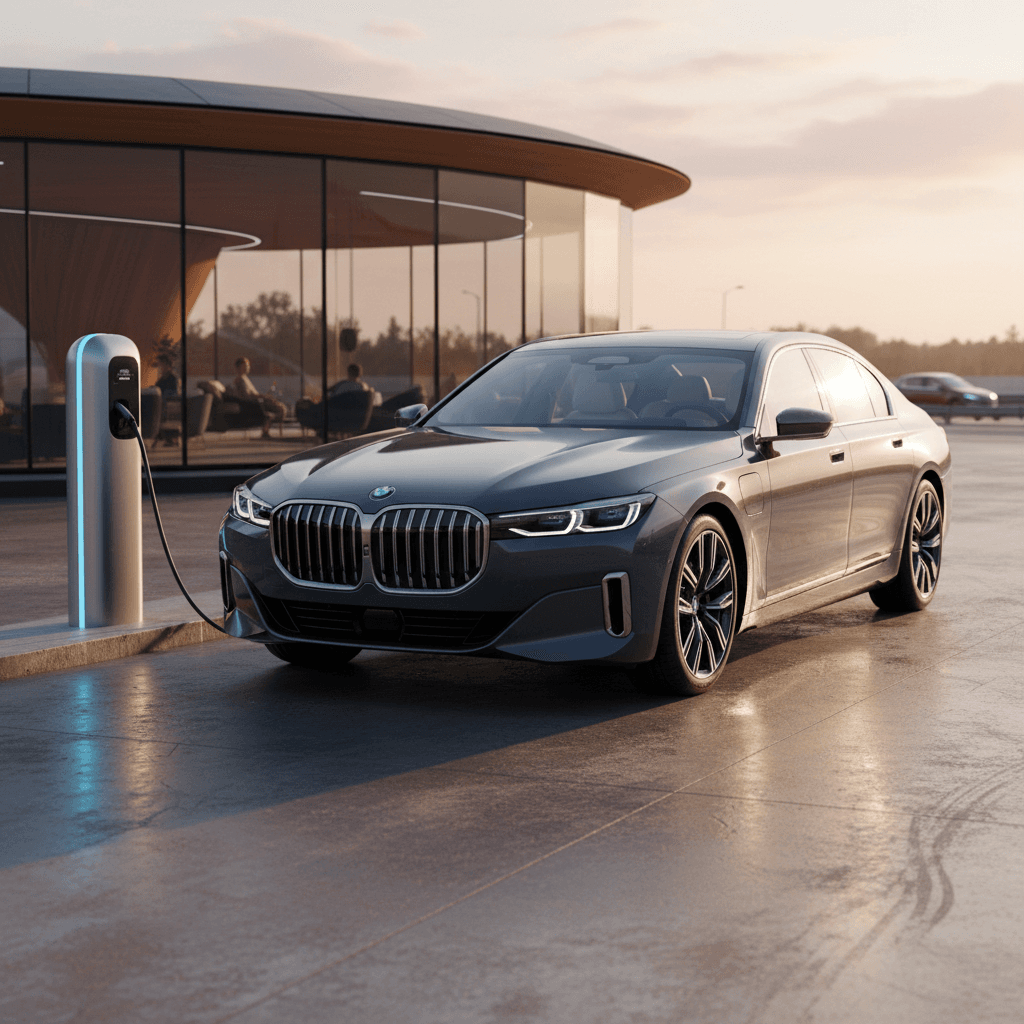
If you want an all-electric flagship sedan that still feels like a classic German luxury car, the 2024 BMW i7 should be on your shortlist. It takes everything BMW knows about long-haul comfort and piles on a massive battery, serious performance, and an almost over-the-top tech show. But how does the 2024 i7 really stack up on range, charging, and day‑to‑day livability, and is it a smart buy, especially once it hits the used market?
2024 BMW i7 in a nutshell
2024 BMW i7 overview
For 2024, BMW rounds out the i7 lineup with a lower‑priced eDrive50 and a high‑performance M70, bracketing the previously launched xDrive60. All three share the same large battery pack (around 101.7 kWh usable) and the same basic long‑wheelbase 7 Series shell, but they target very different buyers, from chauffeured executives to power-hungry Autobahn fans.
2024 BMW i7 key numbers
Pricing reflects that flagship positioning. For 2024, U.S. MSRPs land roughly at $106,700 for the eDrive50, $125,200 for the xDrive60, and about $169,500 for the M70 xDrive, before options and without a federal EV tax credit due to price and import rules.
No $7,500 federal EV credit
Trims, power, and key specs
BMW keeps the 2024 i7 lineup simple: three trims, one battery, three personalities. Here’s how they break down.
2024 BMW i7 trims at a glance
All trims share the same large battery pack but differ in motor layout, power, and range.
| Trim | Drivetrain | Power | 0–60 mph (est.) | EPA range (mi) | Base MSRP* |
|---|---|---|---|---|---|
| eDrive50 | RWD, single motor | ≈449 hp | ~5.5 sec | Up to 321 | ≈$106,700 |
| xDrive60 | AWD, dual motor | ≈536 hp | ~4.5 sec | High 200s–317 | ≈$125,200 |
| M70 xDrive | AWD, dual motor | ≈650 hp | ~3.5–3.7 sec | ≈274–291 | ≈$169,500 |
Approximate U.S. specs; exact figures vary slightly with wheels and options.
The eDrive50 is the efficiency play: rear‑wheel drive, plenty of power for a big sedan, and the longest rated range. The xDrive60 strikes the best balance for most buyers, with all‑weather traction and stout performance that matches its rivals. The M70 is absurdly quick for a limo, think 3.5‑second 0–60 mph territory, but its extra output shaves off some usable range.
Choose the eDrive50 if…
- You mostly drive highway miles and want maximum range.
- Rear‑wheel drive suits your climate and driving style.
- You’d rather spend budget on comfort and tech options than power.
Choose the xDrive60 or M70 if…
- You need all‑wheel drive traction for snow or performance.
- You care about effortless passing power more than ultimate range.
- In the M70’s case, you want a true electric M‑car experience in a limo body.
2024 BMW i7 range and efficiency
On paper, the 2024 i7’s range is competitive but not class‑leading. All trims use the same ~101.7 kWh battery, but software tuning, motor layout, and wheel choices nudge the numbers up or down.
- eDrive50: roughly 301–321 miles EPA‑estimated range, depending on wheel size.
- xDrive60: roughly 298–317 miles EPA‑estimated range; an xDrive60 on 21‑inch wheels has still managed about 310 miles in independent highway testing, beating its EPA figure.
- M70: roughly 274–291 miles EPA‑estimated range, again depending on wheels.
Wheel choice matters
In real‑world use, the i7 behaves like most big‑battery luxury EVs: it’s happiest in steady‑state highway or suburban cruising, and range can drop quickly at sustained high speeds, in cold weather, or if you fully exploit the car’s performance. Still, a true 270–300 miles between charges is realistic for most trims when driven sensibly.
Cold weather considerations
Charging speeds and real-world behavior
Range is only half the story. The other half is how quickly you can put energy back in. The 2024 BMW i7 is solid here, if not segment‑leading, with respectable AC charging at home and competitive DC fast‑charging on the road.
BMW i7 charging options
From overnight Level 2 to road‑trip DC fast charging
Level 1 (120V)
Included cord on a household outlet.
- ~1.9 kW power
- Well over 40–70 hours for a full charge
- Only useful for emergencies or very light use
Level 2 (240V)
BMW Flexible Fast Charger or Wallbox.
- Up to 11 kW AC onboard
- Roughly 0–100% in 9–11 hours
- Great fit for overnight home charging
DC fast charging
On CCS public chargers.
- Peak ~195–200 kW
- 10–80% in about 30–35 minutes
- 80 miles in roughly 10 minutes in ideal conditions
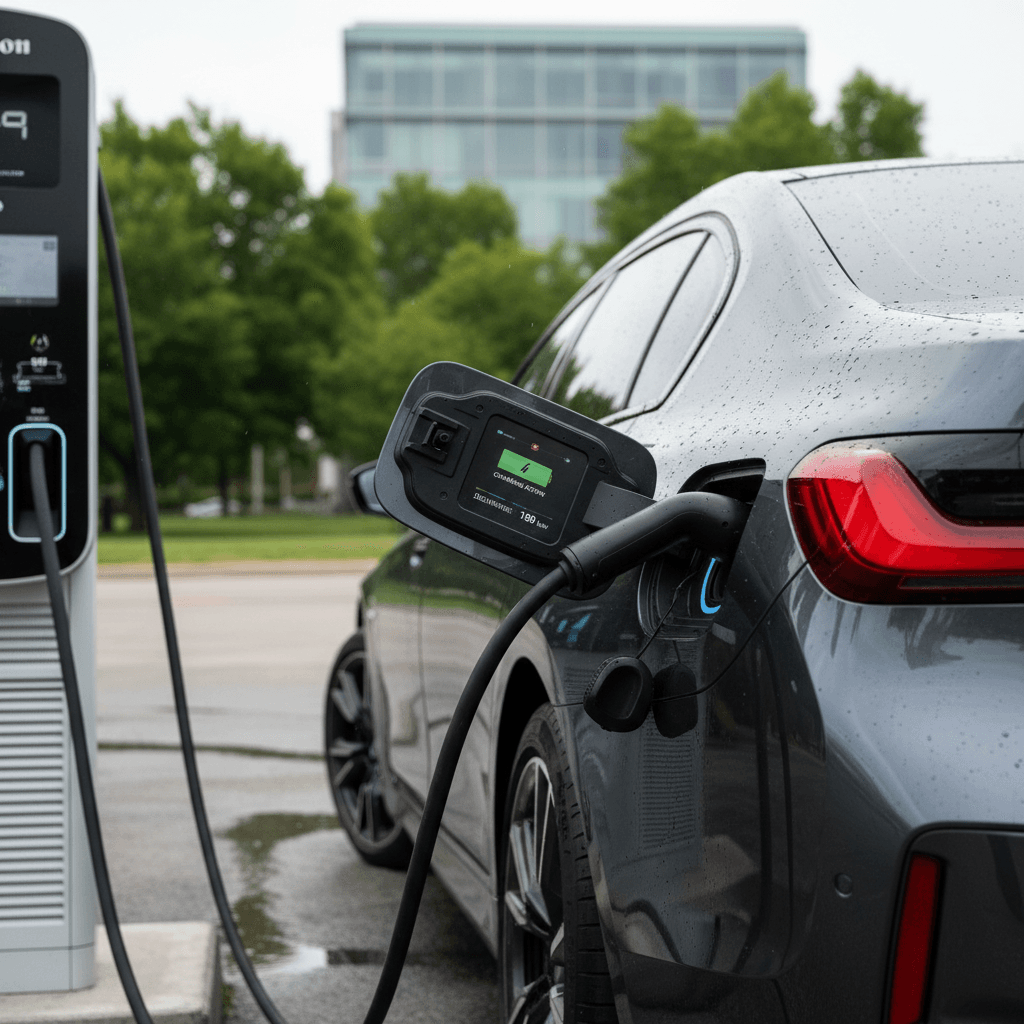
On a capable DC fast charger, BMW quotes roughly 10–80% in about 30–35 minutes, with around 80 miles of range added in about 10 minutes when conditions are right. At home, the onboard 11 kW AC charger means a typical 240‑V Level 2 setup can refill the battery overnight in under 10–12 hours, depending on amperage.
Complimentary public charging
Charging best practices for BMW i7 owners
1. Install a dedicated Level 2 circuit
The i7’s battery is too large for daily Level 1 charging. Plan for a 40–60A, 240‑V circuit and a quality Level 2 EVSE in your garage or driveway.
2. Use DC fast charging strategically
Reserve DC fast charging for road trips. Regular home Level 2 charging is usually cheaper, easier on the pack, and better for long‑term battery health.
3. Precondition before fast charging
Use the built‑in battery preconditioning tied to navigation. Arriving at the charger with a warm pack lets the i7 achieve higher charging power and shorter stops.
4. Avoid frequent 0–100% swings
Like any lithium‑ion pack, the i7’s battery is happiest living between roughly 10% and 80–90% for daily use. Save 100% charges for big days.
Interior, tech, and comfort
If you like your luxury EVs quiet, cocooning, and a little theatrical, the i7 delivers. Think of it as a rolling lounge that happens to sprint like a sports sedan when asked.
BMW i7 interior highlights
Where the flagship EV earns its price tag
Executive rear seating
Available reclining rear seats with footrests, heating, ventilation, and massage make the i7 genuinely comfortable to be driven in, not just to drive.
31.3" Theater Screen
An optional fold‑down 8K‑class rear display turns the i7 into an in‑motion cinema, complete with Amazon Fire TV integration and a dedicated sound stage.
Curved Display & ambient light bar
Up front, a 12.3" digital cluster and 14.9" touchscreen sit under a single glass pane, backed by a light bar that doubles as a touch‑sensitive control surface.
Material quality is generally excellent: rich leathers, detailed stitching, available cashmere/wool blends, and crystal‑like controls. The design is more maximalist than minimalist, especially compared with a Tesla Model S, but the ergonomics are mostly solid once you learn BMW’s latest iDrive system.
Tech learning curve
Driving experience: quiet cruiser with some BMW DNA
On the road, the 2024 BMW i7 feels like what it is: a very heavy, very powerful electric limo that BMW has worked hard to make feel smaller than it is. Air suspension and adaptive damping work with rear‑axle steering to keep the car composed, while abundant torque makes passing almost effortless in any trim.
- Refinement: The i7 is exceptionally quiet at highway speeds, with very little wind or road noise and only a muted electric whir under hard acceleration.
- Ride quality: Tuned for comfort first, especially on the standard wheel/tire setups. The M70’s big wheels and sporty calibration trade a bit of plushness for body control.
- Handling: Rear‑steer and a low center of gravity keep it feeling more agile than an S‑Class‑sized EV has any right to be, but this is still a big, heavy machine, not an i4 M50 writ large.
Electric flagships like the i7 aren’t about on‑paper lap times so much as making 5000+ pounds of battery and structure disappear from the driver’s perception. BMW mostly nails that brief here.
BMW i7 vs EQS, Lucid Air, and Tesla Model S
Luxury EV shoppers rarely cross‑shop just one model. If you’re looking at the i7, you’re almost certainly also eyeing the Mercedes‑Benz EQS, Lucid Air, and Tesla Model S. Each takes a different approach.
BMW i7 vs key luxury EV rivals
High‑level comparison for U.S. shoppers focused on range, character, and tech.
| Model | Character | Max EPA range (mi) | Charging standard (US) | Standout strength |
|---|---|---|---|---|
| BMW i7 | Classic luxury limo | ≈321 | CCS (NACS coming via adapter) | Ride comfort, rear seat, materials |
| Mercedes EQS Sedan | Aero luxury pod | ≈350 | CCS | Efficiency, quietness, MBUX hyperscreen |
| Lucid Air | Tech‑forward sport sedan | 400+ | CCS | Range leader, performance, efficiency |
| Tesla Model S | Minimalist performance hatch | ≈405 | NACS | Charging network, software, value vs Germans |
Approximate 2024 model‑year figures; specifics vary by trim and wheels.
The i7 isn’t the range king of this set, and its software ecosystem and charging network story aren’t as cohesive as Tesla’s. What it offers instead is a more traditional sense of craftsmanship, a truly opulent rear cabin, and driving manners that should feel familiar to longtime BMW and 7 Series owners making the jump to electric.
Think about how you actually drive
Ownership costs, incentives, and charging perks
Sticker price is only part of the equation. With any six‑figure luxury EV, you’re also buying into a set of running costs, incentive quirks, and charging realities.
What it costs to live with a BMW i7
Beyond the MSRP
Energy & maintenance
- Home electricity is typically far cheaper per mile than premium gasoline.
- Fewer moving parts than a V8 7 Series: no oil changes, spark plugs, or exhaust.
- Expect higher tire costs; heavy EVs are hard on rubber, especially with big wheels.
Incentives & perks
- No U.S. federal EV tax credit for new i7 purchases under current rules.
- Some states or utilities still offer rebates on home charger installation or off‑peak rates.
- Complimentary Electrify America DC fast charging offsets early ownership energy costs.
Leasing and used‑EV angles
Is the 2024 BMW i7 right for you?
The 2024 BMW i7 is not the car for someone chasing maximum range or an ultra‑minimalist interior. It is the car for someone who wants a full‑fat luxury sedan, quiet, comfortable, unapologetically plush, that happens to run on electrons instead of premium unleaded.
Where the i7 shines
- Genuine flagship comfort: Ride, seats, and noise isolation are top tier.
- Balanced performance: Even the eDrive50 is quick; the M70 is borderline absurd.
- Thoughtful charging package: Strong DC performance plus complimentary Electrify America access.
- Transition‑friendly: Feels like a 7 Series first, EV second, reassuring for ICE 7 owners going electric.
Where to think twice
- Price: Six‑figure MSRPs, with options easily pushing an M70 toward $200k.
- Range vs best in class: Solid but not Lucid‑level; big wheels are a tax on efficiency.
- Tech complexity: Some buyers may find the interface busy compared with simpler EVs.
- No federal tax credit: Incentives rely on state/utility programs and lease structures.
If you’re on the fence between a loaded plug‑in‑hybrid 7 Series and an i7, the calculus comes down to your charging situation. If you have reliable home charging and mostly predictable routes, the i7 makes a lot of sense. If you can’t install Level 2 at home, or you live somewhere with patchy CCS infrastructure, a PHEV may be a safer bridge step.
Thinking used? What to watch on a pre-owned i7
Given its steep new‑car pricing, the BMW i7 is destined to become a fascinating used EV proposition. Early cars will bring five‑figure depreciation but still offer cutting‑edge comfort and performance, as long as you buy carefully.
Pre‑purchase checklist for a used BMW i7
1. Verify battery health and DC fast‑charge history
Look for a <strong>quantitative battery‑health report</strong> rather than just a dashboard guess. Frequent high‑power DC fast charging isn’t automatically a problem, but it’s worth understanding how the car was used.
2. Check charging equipment
Confirm the car includes its original BMW Flexible Fast Charger and, if promised, any wallbox or adapters. Replacing missing equipment isn’t cheap.
3. Inspect wheels and tires carefully
Heavy EVs chew through tires. Uneven wear can hint at alignment issues or suspension damage from curb strikes and potholes, expensive on a car this complex.
4. Test all tech and comfort features
Rear theater screen, seat functions, ambient lighting, driver‑assistance systems, faults can be costly to chase down out of warranty. Spend time in every seat and menu.
5. Confirm software and recall status
Ask for proof of recent software updates and check for open recalls. OTA plus dealer updates tidy up bugs and can improve charging or driver‑assist behavior over time.
How Recharged can help with a used i7
Ready to find your next EV?
Browse VehiclesRecharged can also help you sell or trade in an existing EV or ICE luxury car, line up financing, and even arrange nationwide delivery The 2024 BMW i7 isn’t trying to reinvent the luxury sedan so much as electrify it. It doesn’t chase Lucid or Tesla on headline range numbers, but it delivers a deeply refined, quietly confident driving experience with enough performance and charging capability to make everyday use, and serious road‑tripping, feel straightforward. If that sounds like your kind of flagship, and you’re willing to invest in proper home charging, the i7 is one of the most convincing arguments yet that the traditional luxury limo’s future is electric.2024 BMW i7 FAQ
Frequently asked questions about the 2024 BMW i7