If you’re shopping used, the phrase Tesla Autopilot on used cars can either sound like a huge bonus or a legal headache. Between changing feature names, hardware generations, and Tesla’s evolving policies, it’s not obvious what you actually get when you buy a pre-owned Tesla today.
Important 2026 update
Why Tesla Autopilot on used cars matters in 2026
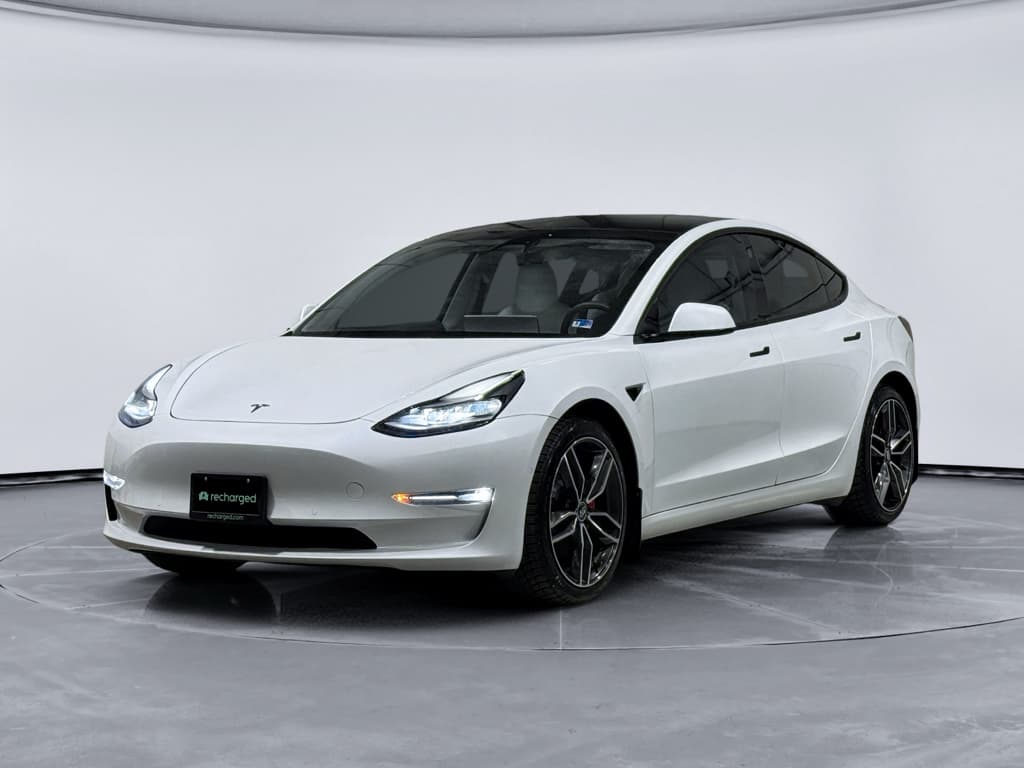
Tesla’s driver-assistance stack is one of the biggest reasons shoppers choose a Tesla over another EV, especially in the used market, where price gaps can be narrow. A 2018–2022 Model 3 or Model Y with Autopilot or Full Self‑Driving (Supervised) can feel very different to live with than a base car that only has standard cruise control and safety features.
What Autopilot can change for a used‑Tesla owner
Three everyday scenarios where the package makes a difference
Commute comfort
Adaptive cruise and lane centering can take the edge off a stop‑and‑go commute, especially on divided highways.
Road‑trip fatigue
Hands‑on supervision is still required, but automated lane keeping and lane changes (in some packages) can reduce driver workload.
Resale and demand
On the right car, driver‑assist packages can make that VIN more desirable than a similar Tesla without them.
Not self‑driving
Quick glossary: Autopilot, FSD (Supervised) and the new names
Tesla has tweaked both the feature set and the branding over time, and in 2026 it’s also changing how it markets these systems in states like California. Here’s how to decode what you see on a used‑Tesla listing.
Key Tesla driver‑assist terms you’ll see on used listings
Use this table to map old listing language to what’s on the car today.
| Label on listing | What it usually meant new | What to expect used in 2026 | Transfer behavior |
|---|---|---|---|
| Autopilot (included) | Adaptive cruise + Autosteer lane‑keeping on compatible roads | Basic automated steering and distance control, subject to regional rules | Generally stays with the car if not removed during a Tesla trade‑in |
| Enhanced Autopilot (EAP) | Autopilot + Auto Lane Change, Navigate on Autopilot, Autopark, Summon (where supported) | Often still active on older S/3/X/Y that originally had it | Usually stays with the car; package is no longer widely sold new in North America |
| Full Self‑Driving Capability / FSD (now FSD (Supervised)) | All EAP features plus beta city‑street assistance and traffic light/stop sign control | On supported hardware, access to FSD (Supervised) when the subscription or lifetime license is active | Lifetime purchases generally stick with the VIN unless Tesla explicitly removes them |
| Traffic‑Aware Cruise Control | Adaptive cruise control only (no lane‑centering Autosteer) | Distance‑keeping cruise; you steer | Included on most Teslas even when Autosteer isn’t |
Exact capabilities can vary by build date, region and software version. Always confirm on the car’s touchscreen and in the Tesla app.
Why naming changed
What actually stays with a used Tesla when it’s sold
For used shoppers, the key question is simple: if the first owner paid thousands of dollars for Autopilot or Full Self‑Driving, do you get to keep it? In most cases, yes, but there are important exceptions.
- Factory‑purchased Autopilot, Enhanced Autopilot, or FSD generally stay tied to the car’s VIN. If an owner sells the car privately, those features usually go to the next owner automatically once the Tesla account is transferred.
- If the car was traded directly to Tesla, the company has, at times, removed FSD or EAP before reselling it. A third‑party dealer or marketplace may not always know that history without digging in.
- In 2026, Tesla is leaning hard into FSD (Supervised) subscriptions. A used Tesla may show the software on a test drive because the previous owner is still subscribed, but you may lose access once the car is transferred to your own Tesla account unless you subscribe yourself.
- Limited‑time FSD transfer programs have allowed some owners to move a lifetime FSD license to a new Tesla. If that happened, the used car you’re looking at might no longer include FSD, even if old screenshots or forum posts suggest it once did.
Always verify on the screen, not just the ad
How Autopilot and FSD affect used Tesla pricing
Autopilot packs are software, but they behave more like permanent options on most used Teslas. They can justify a higher asking price, but the premium isn’t always as big as what the first buyer paid, and it depends heavily on hardware and how you plan to use the car.
How driver‑assist can influence used Tesla value (directionally)
When the premium is worth it
- You do long highway drives and care a lot about driver‑assist comfort.
- You’re comparing two similar cars and one has active EAP or FSD on recent hardware.
- You plan to keep the car several years and want the broadest feature set as Tesla updates software.
When the premium isn’t worth it
- You mostly drive in town at low speeds, where Autopilot is less helpful.
- The car’s battery has high degradation or the price jump crowds out your budget.
- The car relies on a short‑term FSD subscription that you don’t plan to renew.
Battery first, software second
Hardware matters: HW2, HW3, HW4 on used Teslas
Not every Tesla is created equal underneath. Autopilot performance and future updates depend heavily on the car’s hardware generation, especially if you care about Full Self‑Driving (Supervised). For used buyers, knowing where a VIN falls in the hardware timeline is just as important as knowing the trim level.
Tesla Autopilot hardware generations on typical used cars
Approximate timelines and what they mean for Autopilot and FSD (Supervised).
| Hardware | Rough intro timing | Common on used… | What it means for you |
|---|---|---|---|
| HW2 / HW2.5 (~2016–early 2019) | Late 2016–early 2019 | Early Model S/X and first‑run Model 3 | Basic Autopilot works, but some FSD features may be limited or require upgrades; long‑term support is less certain. |
| HW3 (“FSD computer”) (~2019–2022) | 2019 onward | Most 2019–2022 S/3/X/Y | Strong baseline for FSD (Supervised) and ongoing updates; this is the sweet spot for many used‑Tesla shoppers. |
| HW4 (~2023 onward) | Early 2023 onward | Newer S/3/X/Y, especially 2024–2026 builds | More computing power and updated cameras; best long‑term bet if you’re buying a late‑model used Tesla with FSD in mind. |
Exact dates vary by model, factory and region, but this gives you a realistic shopping cheat sheet.
How to quickly spot hardware
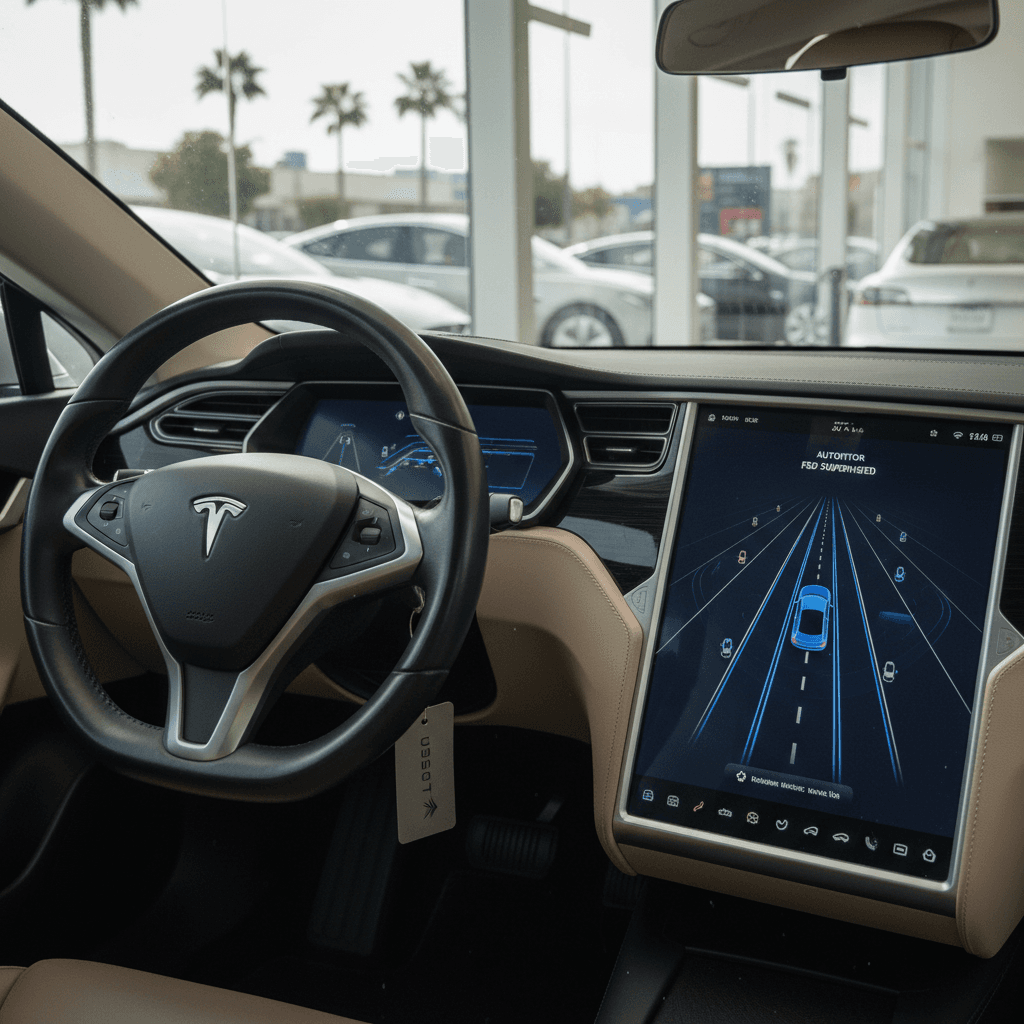
Checklist: Inspecting Autopilot on a used Tesla
Whether you’re at a dealership, a marketplace location, or a seller’s driveway, use this checklist to evaluate Autopilot on a used Tesla before you commit.
Used‑Tesla Autopilot inspection steps
1. Confirm feature packages in software
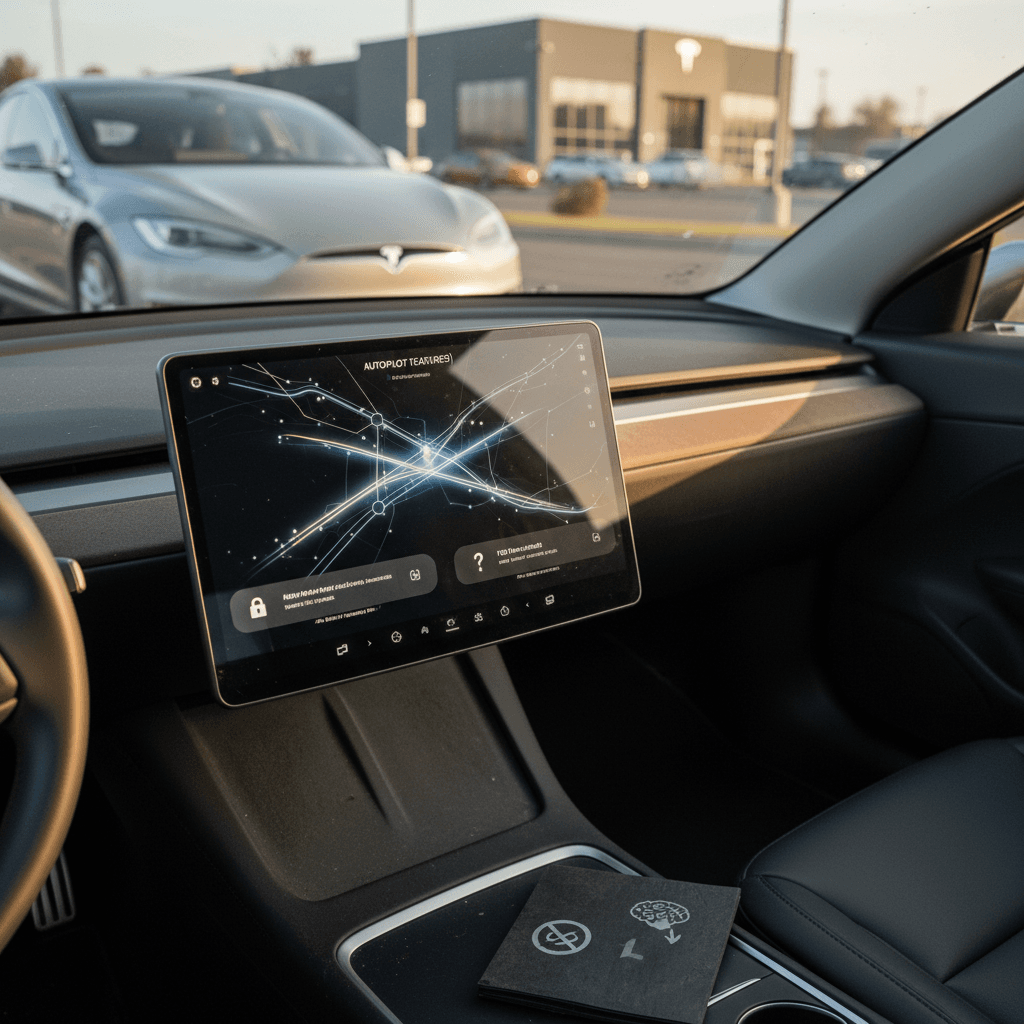
On the center screen, open ‘Software’ and ‘Additional Vehicle Information’ to see whether Autopilot, Enhanced Autopilot, and/or Full Self‑Driving (Supervised) are listed as active.
2. Check for active subscriptions
If you see FSD (Supervised) in use, ask whether it’s tied to a monthly subscription. You’ll want to know what you’re actually getting once the car moves into your own Tesla account.
3. Inspect cameras and sensors
Walk around the car and look for cracked, fogged, or taped‑over cameras. On older cars with ultrasonic sensors, make sure none are missing or damaged.
4. Test basic Autopilot on a safe road
On a clear stretch of road where it’s legal and safe, engage Autopilot to verify that lane‑keeping and adaptive cruise behave as expected. Stay fully attentive and ready to take over.
5. Look for dashboard warnings
Watch for Autopilot‑related alerts like camera obstruction, calibration issues, or persistent system errors. These may signal upcoming repair costs.
6. Ask for software and service history
Review service records and software update status. Frequent Autopilot faults or a long gap since the last update can be red flags.
Never test Autopilot hands‑free
Safety limits and legal reality of Autopilot on used cars
The badge on the trunk doesn’t change the legal reality: even on a used Tesla with every driver‑assist box checked, you are the driver. Laws and enforcement are getting stricter, particularly as regulators push Tesla to tone down “Autopilot” marketing and emphasize the ‘Supervised’ part of FSD.
- In every U.S. state today, Tesla’s systems are classified as driver‑assistance, not autonomous driving.
- Insurance and liability still treat you as the responsible human driver, even if Autopilot was active in a crash.
- Feature availability can change with over‑the‑air updates. A used car that once had an experimental beta feature may see that feature limited or modified later.
- Misusing Autopilot, like using defeat devices or ignoring steering‑wheel warnings, can get your account flagged and features restricted, even if you’re the second or third owner.
State laws are evolving
Used Tesla from dealer vs private sale: Autopilot differences
The way you buy a used Tesla can shape how confident you feel about its Autopilot story. Franchise dealers, direct‑to‑consumer retailers, marketplaces, and private sellers each bring different strengths and gaps.
Buying from a dealer or marketplace
- More likely to have pulled basic build data and options, including Autopilot status.
- May perform a safety and software health check, but depth varies widely.
- Some, like Recharged, specialize in EVs and explicitly evaluate driver‑assist hardware along with the battery.
Buying from a private seller
- Owner may know the car’s history in detail but may also overestimate what the system can do.
- Less likely to provide formal inspection reports, so you’ll rely heavily on your own due diligence.
- Pricing may be more negotiable, especially if Autopilot status is unclear or tied to a subscription.
Get everything in writing
How Recharged evaluates Autopilot on used Teslas
Because driver‑assistance touches both safety and value, Recharged bakes it directly into how we inspect and price used Teslas on the platform.
Inside the Recharged approach to Autopilot on used Teslas
How it shows up in the Recharged Score and shopping experience
Hardware & software verification
We confirm each vehicle’s Autopilot hardware generation, installed packages, and current software status before listing, so you’re not guessing between HW3 and HW4 or wondering what’s active.
Recharged Score report
Every Tesla includes a Recharged Score Report that covers battery health, charging behavior, and key tech systems, including Autopilot‑related hardware where relevant.
EV‑specialist support
Our EV specialists can walk you through the pros and cons of Autopilot on a specific VIN and help you compare it to other used EVs, not just other Teslas.
Ready to find your next EV?
Browse VehiclesIf you’re trading in a Tesla or selling it through Recharged’s instant offer or consignment options, that same process works in your favor. Documented Autopilot and FSD (Supervised) status, combined with strong battery health, can help your car stand out to buyers who care about tech as much as torque.
FAQ: Tesla Autopilot on used cars
Frequently asked questions about Tesla Autopilot on used cars
Bottom line: How to shop a used Tesla for Autopilot
When you see Tesla Autopilot on used cars in a listing, treat it as an invitation to ask sharper questions, not a promise of hands‑off driving. Focus first on battery health and overall condition, then verify which Autopilot or FSD (Supervised) package is truly active today and what hardware is under the skin.
If you’re shopping on Recharged, you’ll see that work already done for you in the Recharged Score Report, with clear notes on driver‑assistance hardware and software alongside battery diagnostics and fair‑market pricing. Whether you end up in a lightly optioned Model 3 with basic Autopilot or a long‑range Model Y with FSD (Supervised) on HW4, going in with clear expectations is the best way to enjoy the tech, and avoid paying for features you’ll never use.