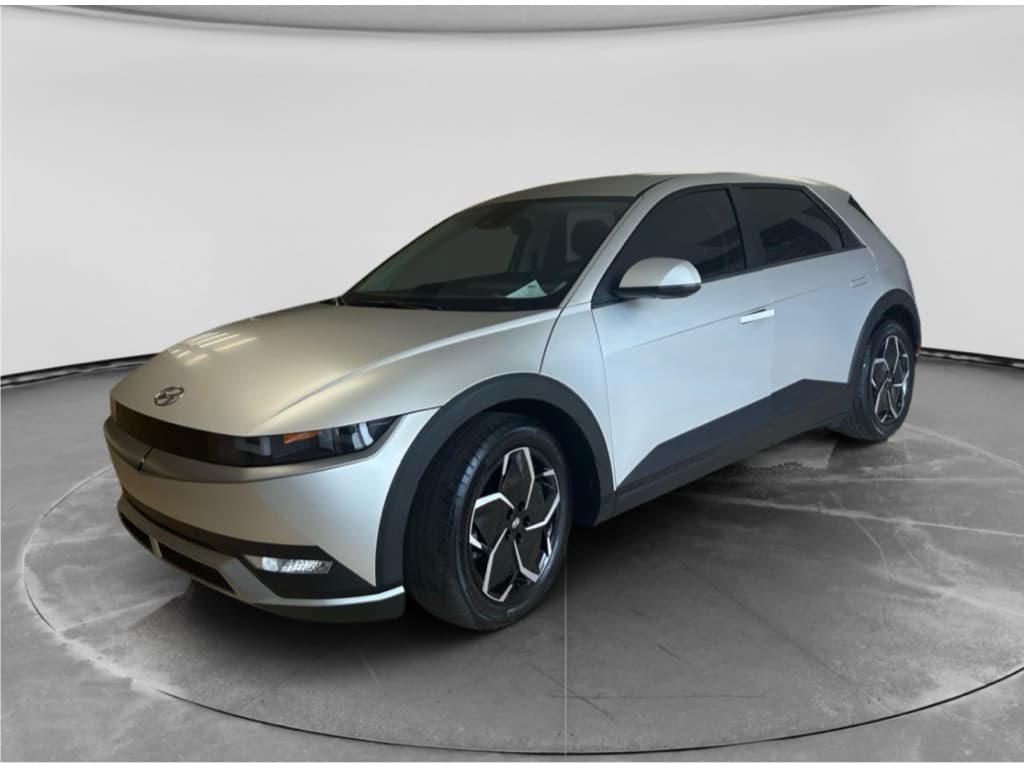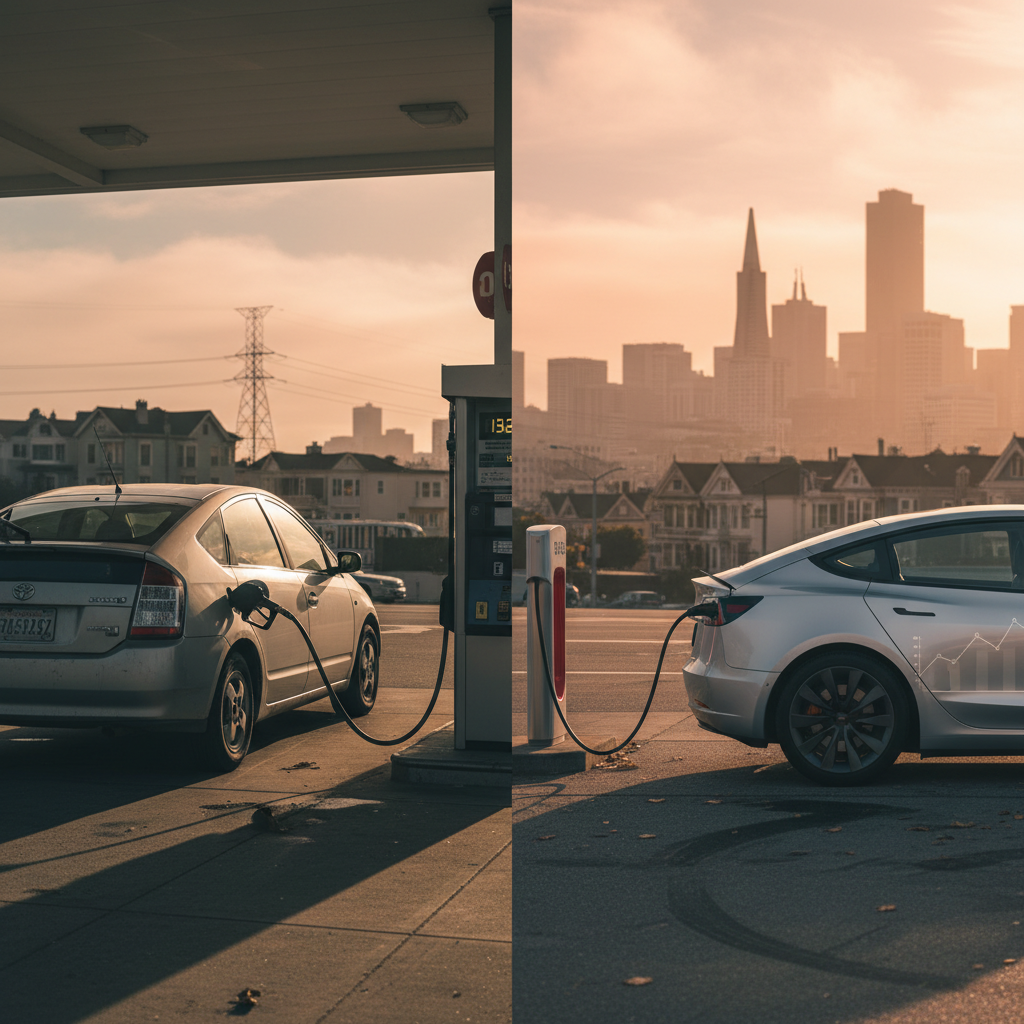
If you’re driving a Hyundai Tucson today and eyeing a Hyundai Ioniq 5, you’re probably wondering one thing: how much money will this actually save me? The short answer: swapping gas for electrons can carve thousands of dollars out of your running costs over a few years, if your driving and charging habits are a good fit.
What this guide covers
Why drivers are trading Tucson for Ioniq 5
Tucson owners are used to a comfortable, practical compact SUV. The Ioniq 5 is cut from the same cloth in terms of space and versatility, but it adds the instant torque of an EV, futuristic cabin tech, and the ability to slash gasoline stops from your weekly routine. For many households, the decision to switch is less about being an early adopter and more about taming monthly costs while keeping that do‑everything family crossover feel.
- Similar footprint and interior space to a Tucson, but with a flat-floor EV platform that opens up legroom
- Far lower per‑mile energy cost when you can charge at home at typical U.S. electricity rates
- Less routine maintenance, no oil changes, less wear on brakes thanks to regenerative braking
- Strong performance and smooth driving feel, especially in stop‑and‑go traffic
- Available used inventory that avoids new‑car sticker shock
Baseline: how a gas Hyundai Tucson spends your money
To understand what you’ll save by switching, you first need a baseline for your Hyundai Tucson’s fuel and maintenance costs. We’ll focus on a recent‑generation, gasoline‑only Tucson, what many owners are driving today.
Typical U.S. Hyundai Tucson ownership profile
Let’s put those numbers to work. At 28 mpg and 12,000 miles per year, your Tucson burns about 429 gallons of fuel annually. At a conservative $3.50 per gallon, that’s roughly $1,500 per year in gasoline alone. Add about $750 per year for routine maintenance (oil changes, engine air filters, transmission fluid, occasional brakes, etc.), and you’re in the neighborhood of $2,250 per year just to keep the Tucson moving and properly serviced.
Your Tucson’s numbers may differ
Electric side: how efficient the Hyundai Ioniq 5 really is
On the EV side, the Hyundai Ioniq 5 is one of the more efficient electric crossovers on sale. Depending on configuration, the EPA rates many Ioniq 5 trims around the low‑to‑mid 30 kWh per 100 miles range, roughly 3.0–3.3 miles per kWh in mixed driving for rear‑wheel‑drive models, a bit lower for all‑wheel drive.
- To keep the math simple, we’ll assume 30 kWh/100 miles (3.3 mi/kWh) for an efficient RWD Ioniq 5.
- For a heavier AWD model or lots of highway driving, 32–34 kWh/100 miles (2.9–3.1 mi/kWh) is more realistic.
- Real owners routinely see anywhere from about 2.5 to 4.0 mi/kWh depending on climate, speed, and driving style.
Pick a conservative efficiency number
Head-to-head: fuel vs electricity costs
Now comes the part everyone cares about: How much cheaper is it to feed electrons to an Ioniq 5 than gasoline to a Tucson? We’ll stick with the same 12,000‑mile‑per‑year driver and use a reasonable national average for home electricity.
Gas vs electricity: annual energy cost comparison
Assumes 12,000 miles per year, 28 mpg Hyundai Tucson, 3.3 mi/kWh Hyundai Ioniq 5 RWD, national‑average home electricity around $0.19/kWh, and $3.50/gal gasoline.
| Scenario | Energy Use Assumption | Price Assumption | Annual Energy Cost |
|---|---|---|---|
| Gas Hyundai Tucson | 28 mpg, 12,000 miles/year | $3.50 per gallon gasoline | ≈ $1,500 |
| Ioniq 5 @ home charging | 3.3 mi/kWh, 12,000 miles/year | $0.19 per kWh electricity | ≈ $690 |
| Ioniq 5 mix: 80% home, 20% public DC fast charge | Same efficiency; DC fast ~3× cost of home | Weighted average ≈ $0.23 per kWh | ≈ $840 |
Even with rising electricity prices, home‑charged EV miles are usually far cheaper than gas miles.
With optimistic but realistic home charging, you’re looking at around $690 a year in electricity to drive 12,000 miles in an Ioniq 5, less than half the $1,500 you’re feeding into your Tucson’s gas tank. Even if 20% of your miles come from more expensive public fast charging, you still land around $840 per year.
Quick fuel‑cost headline
How the Tucson burns your money
- Needs roughly 429 gallons of gas per year at 12,000 miles.
- Every gas‑price spike hits your budget instantly.
- Idling in traffic = 0 mpg, but the engine still burns fuel.
How the Ioniq 5 sips electrons
- Needs roughly 3,600 kWh per year at 3.3 mi/kWh and 12,000 miles.
- Home charging locks in predictable, usually lower energy costs.
- Stop‑and‑go traffic often helps efficiency thanks to regenerative braking.
Beyond fuel: maintenance and other savings
Energy is only half the story. The other half is what you’ll stop spending on keeping an internal‑combustion engine happy. EVs don’t just swap the fuel source; they simplify the whole drivetrain.
Where the Hyundai Ioniq 5 saves you on upkeep
Less under the hood means fewer line items on your service receipts.
No oil or transmission service
Brakes last longer
Fewer wear parts overall
Across several years, many owners find that a compact gas SUV like the Tucson averages around $700–$900 per year in maintenance and minor repairs once the free‑service window is over, especially if they stick to the dealer. An Ioniq 5 is more likely to live in the $300–$500 per year band for the same period, mostly for inspections, tire rotations, cabin filters, and the occasional brake or coolant service.
Don’t forget tires
Ownership math: payback timeline and total savings
Let’s pull these pieces together into something that looks like a real ownership decision. We’ll assume you’re considering selling or trading your Tucson and stepping into a used Ioniq 5, because a smart used buy is where the numbers get especially friendly.
Estimated annual savings: Tucson vs Ioniq 5
Representative annual savings for a typical 12,000‑mile driver moving from a gas Hyundai Tucson to a Hyundai Ioniq 5, with mostly home charging.
| Category | Tucson (Gas SUV) | Ioniq 5 (EV) | Estimated Annual Difference |
|---|---|---|---|
| Fuel / Electricity | ≈ $1,500 | ≈ $700–$850 | Save ≈ $650–$800 |
| Maintenance | ≈ $750 | ≈ $350 | Save ≈ $400 |
| Total running costs | ≈ $2,250 | ≈ $1,050–$1,200 | Save ≈ $1,050–$1,200 |
Your exact numbers will depend on fuel and electricity prices where you live, and how you drive.
Add it up and it’s reasonable for a typical driver to expect on the order of $1,000–$1,200 per year in lower running costs when switching from a Tucson to an Ioniq 5, assuming mostly home charging and no unusual repair surprises on either vehicle.
What about the price difference?
How different drivers experience the savings
Heavy commuters (15,000–18,000 miles/year)
See the <strong>biggest savings</strong>; more miles = more gas avoided.
Fuel savings alone can approach or exceed <strong>$1,000/year</strong>.
Likely to hit a comfortable payback in 3–5 years if buying used.
Average drivers (10,000–12,000 miles/year)
Save a solid <strong>$800–$1,200 per year</strong> between fuel and maintenance.
Savings are meaningful but won’t erase a large price gap overnight.
Best bet: look for a fairly priced, low‑mileage used Ioniq 5.
Low‑mileage drivers (<8,000 miles/year)
Fuel savings may land closer to <strong>$400–$600/year</strong>.
The math is softer, switching is more about experience and emissions than pure dollars.
Buying used and leveraging incentives becomes more important.
Real-world variables that change your savings
No cost‑of‑ownership story is complete without some fine print. Your actual savings can swing up or down depending on how and where you drive, and how you charge your Ioniq 5.
Key factors that tilt the math
Understand these before you jump from Tucson to Ioniq 5.
Local gas and power prices
Home charging vs public
Climate and seasons
Driving style
Apartment and condo charging caution
Used Hyundai Ioniq 5 buying tips
Because the Ioniq 5 has been on sale for several model years now, the used market is where many Tucson owners can make the numbers work. A smart pre‑owned purchase lowers your monthly payment while letting the fuel and maintenance savings do their thing.
Checklist for shopping a used Ioniq 5 after a Tucson
1. Prioritize battery health
The battery pack is the heart of any EV. Look for objective health data, not just a dashboard range estimate. Vehicles listed on Recharged include a <strong>Recharged Score battery health report</strong>, so you know how much usable capacity remains before you buy.
2. Match range to your real driving
If your Tucson rarely sees more than 80 miles in a day, you don’t need the longest‑range Ioniq 5 on the planet. Right‑sizing range keeps your purchase price and charging time in check.
3. Decide on RWD vs AWD
Rear‑wheel drive Ioniq 5s tend to be more efficient and less expensive on the used market; all‑wheel drive adds traction and power but burns more kWh per mile. Think honestly about your weather and how often you truly needed AWD in your Tucson.
4. Inspect charging history and hardware
Ask how the previous owner charged the car. Mostly home Level 2 charging is great. Check for a healthy charge port, intact charge‑port door, and that included cables and adapters are present and undamaged.
5. Compare total monthly cost, not just price
When you run the numbers, include your expected <strong>fuel and maintenance savings</strong>. A slightly higher payment on a used Ioniq 5 can still leave you with a lower all‑in monthly cost than keeping your paid‑off Tucson once you factor in gas and service.
6. Consider warranty coverage
Hyundai offers generous EV and battery warranties on the Ioniq 5. Verify how much factory coverage remains, and whether a certified pre‑owned (CPO) vehicle or extended protection makes sense for your risk tolerance.
How Recharged helps you make the switch
Stepping out of a Tucson and into an Ioniq 5 isn’t just a test‑drive decision; it’s a spreadsheet decision. That’s where Recharged is built to help. Every EV on our marketplace comes with a Recharged Score Report that verifies battery health, checks pricing against the market, and surfaces the details you actually need to compare ownership costs.
Support for your Tucson → Ioniq 5 transition
Built to make used EV ownership simple and transparent.
Fair pricing & financing
Trade‑in or sell your Tucson
Nationwide EV delivery & support
See your payment and savings together
Ready to find your next EV?
Browse VehiclesFAQ: switching from Hyundai Tucson to Hyundai Ioniq 5
Common questions about moving from Tucson to Ioniq 5
Bottom line: is switching from Tucson to Ioniq 5 worth it?
If your daily life looks like most American drivers, around 10,000–12,000 miles a year, predictable commuting, and a place to plug in at home, the financial case for swapping a gas Hyundai Tucson for a Hyundai Ioniq 5 is strong. You’re likely to cut your running costs by roughly a thousand dollars a year, drive something quieter and quicker, and step into the next generation of Hyundai’s design and tech.
The key is to buy thoughtfully: focus on battery health, right‑size range and drivetrain for your climate, and look at total monthly cost rather than price alone. That’s exactly what Recharged is built for, pairing transparent used‑EV listings, verified battery diagnostics, and flexible financing with real‑world ownership math. Do that, and trading your Tucson for an Ioniq 5 stops being a leap of faith and starts looking like a well‑timed, well‑reasoned upgrade.