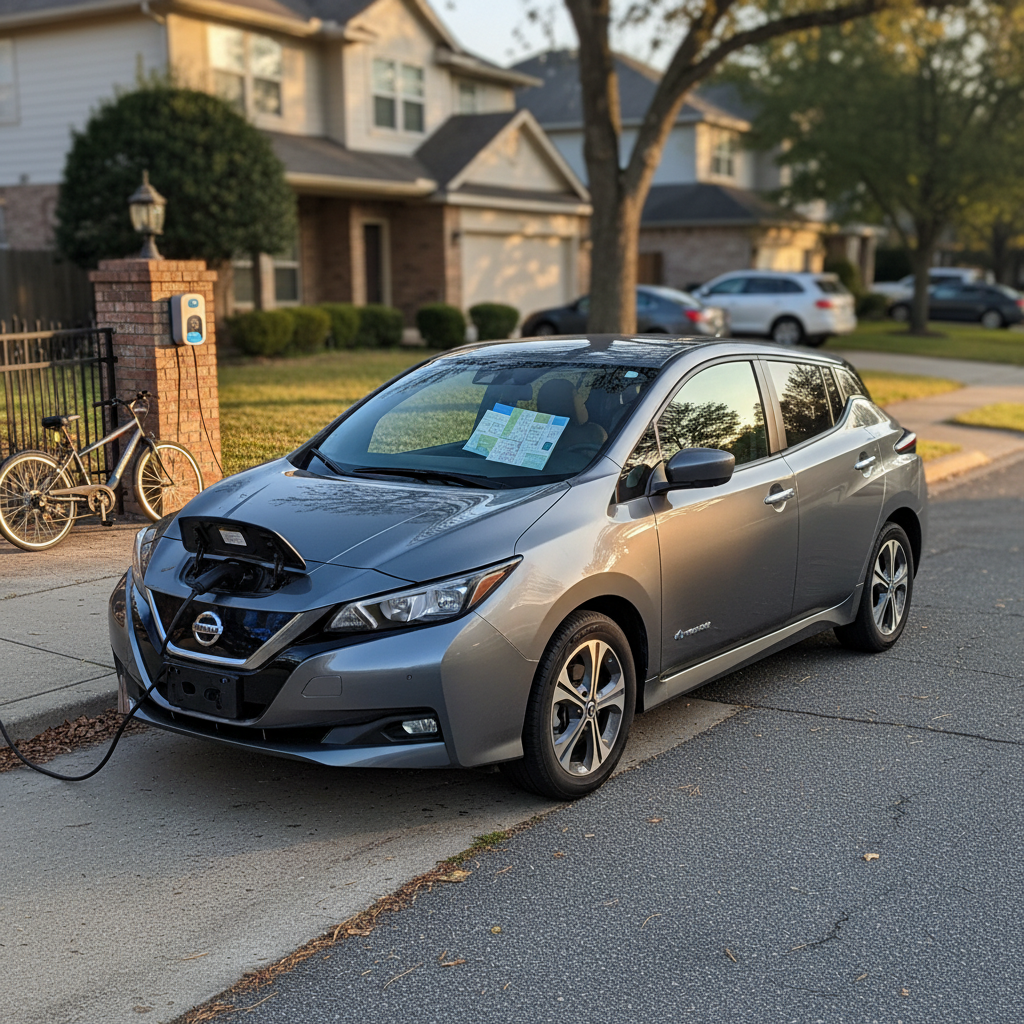
If you were counting on a big **commercial electric vehicle tax credit in 2026**, you’re not alone, and you may be staring at a very different picture than the one Congress painted back in 2022. The rules changed fast, and a lot of fleet managers and small‑business owners are trying to figure out whether EVs still make financial sense without that easy line item on the tax return.
Quick snapshot for 2026
Overview: What Happened to the Commercial EV Tax Credit by 2026?
Let’s start with the headline: **there is no broad, go‑buy-an-EV‑and-get-a-huge-federal-tax-credit program for commercial buyers in 2026** the way there was in 2023–2024. The original Inflation Reduction Act created Section 45W, the Qualified Commercial Clean Vehicle Credit, with generous caps and a long runway out to 2032. But in 2025, a new federal law (often nicknamed the “One, Big, Beautiful Bill,” or OBBB) rewrote that story and accelerated the sunset of multiple clean‑vehicle incentives.
- The 45W commercial clean vehicle credit applied to vehicles **acquired before a specific cutoff date in 2025**.
- Leasing companies had been using 45W to pass along up to $7,500 on light‑duty EV leases, the so‑called **“lease loophole.”**
- Starting after **September 30, 2025**, that lease‑based benefit effectively disappears for new leases where the vehicle hasn’t already been placed in service.
- By calendar year **2026**, most businesses looking at new EV purchases will not see a straightforward federal credit show up like it did a couple of years earlier.
Important timing note
How the 45W Commercial Clean Vehicle Credit Worked
To understand what’s different in 2026, it helps to know how Section 45W was originally structured. Even if you can’t claim it now, these rules still matter for audits and for any vehicles your business placed in service before the cutoff.
45W quick specs (pre‑sunset)
These rules applied to vehicles that qualified and were placed in service before the accelerated phase‑out.
Who it was for
Businesses and tax‑exempt organizations that bought or leased clean vehicles for commercial use, everything from sales cars to step vans.
How much you could claim
The credit was generally the lesser of:
- 30% of the vehicle’s basis if it had no gas/diesel engine (like a BEV or FCEV), or 15% if it did, and
- the vehicle’s incremental cost versus a comparable gas/diesel model.
On top of that, there were hard caps: up to $7,500 for light‑duty vehicles (under 14,000 lbs GVWR) and up to $40,000 for heavier vehicles.
Vehicle requirements
- Primarily used in the U.S.
- New, not used, for original 45W treatment.
- Battery or fuel cell meeting minimum capacity thresholds.
- Purchased or leased for business or commercial use, not personal commuting only.
The IRS and Department of Energy also published **incremental cost safe harbors**, tables that said, in effect, “for a Class 2b electric van, we’ll assume the incremental cost is X.” That made it easier for fleet buyers to claim the credit without hiring a cost engineer to justify every number.
Why 45W Mattered to Fleets
Key Changes From the 2025 OBBB Bill
In mid‑2025, Congress passed what’s informally known as the **One, Big, Beautiful Bill (OBBB)**, a wide‑ranging tax package that, among many other things, **pulled forward the end date for multiple EV incentives.** That includes the commercial clean vehicle credit under Section 45W.
1. Earlier cutoff for 45W
Under the new law, the 45W credit is **not allowed for vehicles acquired after a specified date in 2025**. In addition, the vehicle generally must be placed in service before October 1, 2025 to benefit from the old leasing work‑around.
If your business ordered a van in late 2025 but the upfit took until 2026, you may be holding a vehicle that no longer unlocks any federal commercial clean‑vehicle credit.
2. The end of the “lease loophole”
Leasing companies had been claiming 45W on their own returns and then passing some or all of the value to customers as capitalized cost reductions or lease cash. OBBB specifically shut that off for leases started after September 30, 2025, unless the vehicle qualified and was placed in service under the prior rules.
That’s why many advertised “EV lease bonus” offers quietly downsized or disappeared heading into 2026.
Don’t count on grandfathering without paperwork
Are Any Commercial EV Tax Credits Left in 2026?
By spring 2026, the simple answer for most businesses buying **new** commercial EVs is: **no broad federal tax credit like 45W is available on fresh purchases.** The IRA‑era credits did not simply fade out quietly; they were actively curtailed.
Commercial EV incentives landscape in 2026
Where does that leave you if you’re speccing vehicles today?
New commercial EV purchases
- No widely available Section 45W credit for vehicles acquired in 2026.
- Manufacturers may still advertise discounts, but those are now marketing incentives, not federal subsidies.
- Your main federal tools are now deductions (Section 179, bonus depreciation) and standard depreciation over time.
Existing vehicles & prior‑year purchases
- If you legitimately claimed 45W for vehicles placed in service before the 2025 cutoffs, those credits remain valid for those tax years.
- Amended returns can sometimes be filed if you qualified in a prior year but didn’t claim, subject to IRS time limits, talk to a tax professional.
- Careful record‑keeping is crucial; expect more questions, not fewer.
Think “total cost,” not just credits
Tax Deduction Alternatives: Section 179, Bonus Depreciation & More
Without 45W, the game shifts from credits to **deductions**. The good news? You still have solid tools to soften the upfront hit of a commercial EV, even in 2026. You’re just lowering your taxable income rather than getting a dollar‑for‑dollar credit.
Common tax tools for commercial EVs in 2026
Always verify current limits and phase‑downs with your tax advisor, numbers below are directional, not legal advice.
| Tool | What it does | Best for | Key limitations |
|---|---|---|---|
| Section 179 expensing | Lets you deduct part or all of the purchase price of qualifying business equipment in the year you place it in service. | Smaller fleets buying light‑ and some medium‑duty EVs. | Annual dollar limits; business‑income limits; some vehicles may be excluded or capped. |
| Bonus depreciation | Allows a large percentage of the vehicle’s cost to be depreciated in year one. | Larger fleets with strong taxable income that want quick write‑offs. | Phase‑down schedule under recent tax law; interacts with Section 179. |
| MACRS depreciation | Spreads the cost over several years using standard schedules. | Any commercial EVs held longer‑term. | Slower benefit than a credit, but still meaningful over the life of the vehicle. |
| Operating expense deductions | Deducts electricity, insurance, maintenance, and related operating costs. | All fleets and small businesses with EVs in everyday service. | You only get the deduction after you incur the cost, no upfront boost. |
How deductions differ from the old 45W credit
Credit vs. deduction: why it feels different
Leasing Strategies After the ‘Lease Loophole’ Closes
For a few years, leasing was the magic key. The lessor claimed 45W, then quietly baked much of that value into your monthly payment. With that pathway closing after September 30, 2025, you need a more old‑fashioned approach to choosing between leasing and buying.
How to think about commercial EV leasing in 2026
1. Compare lifetime cost, not just monthly payments
Without a federal credit hiding in the fine print, compare the **full cost of ownership**: capital cost, interest or money factor, expected residual value, and operating costs. EVs often shine on fuel and maintenance, which can still tip the scales.
2. Ask dealers what’s really subsidizing the lease
If a 2026 EV lease looks too good to be true, it’s likely subsidized by **manufacturer marketing money**, not a federal credit. That matters when you think about how long those offers will last.
3. Consider residual risk
Battery health, resale values, and tech changes can make residuals tricky. Leasing may still be appealing if you’d rather let the lessor carry the long‑term risk on cutting‑edge models.
4. Line up your tax treatment
If you lease through your business, verify with your accountant how the payments are deducted and how that compares to depreciation and interest deductions on a purchase.
Used EVs and leasing: where deals still live
State, Local, and Utility Incentives Still on the Table
This is where the picture brightens again. While the big federal commercial EV credit has largely left the stage, **state, regional, and utility programs did not all vanish with it.** In some regions, those programs matter more to your bottom line than 45W ever did.
Common non‑federal incentives businesses still see in 2026
Exact programs change constantly, always check for fresh updates before signing a purchase order.
Charging infrastructure rebates
- Utility or state rebates for installing Level 2 or DC fast charging at your depot.
- Often cover a portion of equipment and make‑ready costs.
- May require keeping chargers in service for a minimum term.
Vehicle purchase vouchers
- In some states and metro areas, fleets can still apply for point‑of‑sale vouchers on medium‑ and heavy‑duty EVs.
- These can knock tens of thousands off the price of electric box trucks, step vans, and shuttle buses.
Registration & toll benefits
- Reduced registration fees or exemptions from certain local surcharges.
- Occasional access to HOV lanes or reduced bridge/tunnel tolls for zero‑emission commercial vehicles.
Build incentives into your RFPs
Planning Commercial EV Purchases in 2026 and Beyond
In 2023, you could almost back into an EV decision: see if the vehicle qualified, apply the credit, and shrug if the rest of the math was fuzzy. In 2026, the calculation looks more like classic fleet planning, only with electrons instead of diesel.
Different playbooks for different buyers
Small businesses (1–10 vehicles)
Start with **one or two pilot EVs** rather than flipping the whole fleet at once.
Prioritize routes where fuel savings are obvious, short‑haul, stop‑and‑go, or fixed local loops.
Lean on **Section 179** and any available state EV or charger rebates to offset the first purchases.
Consider buying **used commercial EVs** with verified battery health to keep capital costs down.
Regional fleets (10–100 vehicles)
Run a detailed **total cost of ownership (TCO) model** comparing EV and ICE for your core duty cycles.
Phase in EVs on depots where you can justify **shared charging infrastructure**.
Use a mix of purchase and lease depending on route stability and your appetite for residual‑value risk.
Standardize on a handful of models to simplify parts, training, and telematics.
National & enterprise fleets
Treat electrification as a **multi‑year capital plan**, not a series of one‑off experiments.
Organize an internal incentives team or partner to **chase every regional voucher and grant**.
Negotiate directly with OEMs and charging providers for **volume pricing** now that federal credits no longer carry the load.
Invest in data: track energy use, maintenance, and downtime to continually refine your electrification strategy.

What to put in your 2026 EV business case
How Recharged Helps Fleets and Small Businesses
You’re not just picking a powertrain; you’re making a multi‑year capital bet. That’s where working with an EV‑focused partner makes a difference. **Recharged** is built from the ground up for people who want the benefits of electric vehicles without the guesswork and fine print.
What Recharged brings to your commercial EV decision
Especially valuable now that the easy federal credit is gone.
Verified battery health
Fair pricing & total‑cost view
Financing, trade‑ins & delivery
Ready to find your next EV?
Browse VehiclesIf you’re planning to electrify a portion of your sales cars, service vehicles, or light‑duty delivery fleet, our EV specialists can walk you through **model selection, range needs, and funding options**, all in plain English. And if you’re near Richmond, VA, you can explore vehicles in person at our Experience Center before you commit.
FAQ: Commercial Electric Vehicle Tax Credit in 2026
Frequently Asked Questions
Bottom Line: Making EVs Pencil Out Without a Big Federal Credit
The **commercial electric vehicle tax credit in 2026** is mostly a story about what’s gone away. The generous 45W era, especially the lease‑driven deals, has largely closed its book. But that doesn’t mean electrification stops making financial sense for your business, it just means you need to think like a fleet manager again, not a coupon clipper.
In this new landscape, the winners will be the businesses that treat EVs as part of a **carefully modeled, incentive‑aware plan**: squeezing value from state and utility programs, using tax deductions wisely, and choosing vehicles with proven battery health and realistic range. If you’re ready to run those numbers with a partner who lives and breathes electric vehicles, **Recharged** is here to help, from choosing the right used EVs to arranging financing, trade‑ins, and delivery that fit your balance sheet as well as your routes.