Connecticut’s electric car charging network has grown from a handful of plugs at town halls into a dense web of home, workplace, and public stations along I‑95, I‑84, and in city centers. If you’re trying to decide whether an EV works for your life in the state, you need more than a station map, you need to understand how the Connecticut electric car charging network actually fits into daily driving, weekend trips, and your electric bill.
The short version
Why Connecticut’s EV charging network matters right now
Over the last few years, Connecticut has quietly become one of the more EV‑friendly states in the Northeast. As of 2023, there were about 36,000 electric vehicles registered in the state, and EVs accounted for roughly a quarter of new registrations in late 2021. That growth has only accelerated since, which means more demand on a grid and road network that were designed for gasoline.
At the same time, federal policy has whiplashed. The National Electric Vehicle Infrastructure (NEVI) program, which originally set aside about $52 million for Connecticut, has been paused and re‑tooled by the current administration. That’s created uncertainty for long‑term build‑out, even as early NEVI‑funded sites come online along major corridors.
The result is a classic transitional moment: Connecticut’s electric car charging network is good enough that thousands of households can comfortably go electric today, but not yet so mature that you can ignore planning, incentives, and connector standards. Understanding where the network is strong, and where it’s not, lets you choose the right EV, the right charging mix, and the right expectations.
Connecticut EV & charging snapshot
Connecticut’s EV landscape at a glance
Connecticut’s EV strategy is unusual in one way: instead of scattering a patchwork of small grants, the state leaned heavily on the two major investor‑owned utilities, Eversource and United Illuminating (UI), to drive charging deployment.
Key pillars of Connecticut’s EV ecosystem
Policy, utilities, and federal money all play a role
State policy & PURA
Connecticut’s Public Utilities Regulatory Authority (PURA) launched a nine‑year EV Charging Program in 2022. It sets targets for more than 65,000 charging ports by 2030 and pushes utilities to prioritize equity, grid benefits, and managed charging.
Utility‑backed build‑out
Eversource and UI offer rebates and make‑ready funding for residential, multifamily, workplace, fleet, and public charging. These programs can cover up to 50% of hardware costs and most or all of the wiring work for certain sites.
Federal corridors (NEVI)
Under NEVI, Connecticut is slated to receive about $52 million for DC fast charging along key corridors like I‑95, I‑84, I‑91, and Route 15. Federal uncertainty has slowed new awards, but early sites still anchor the highway network.
Policy whiplash is real
Public charging in Connecticut: Level 2 vs. DC fast
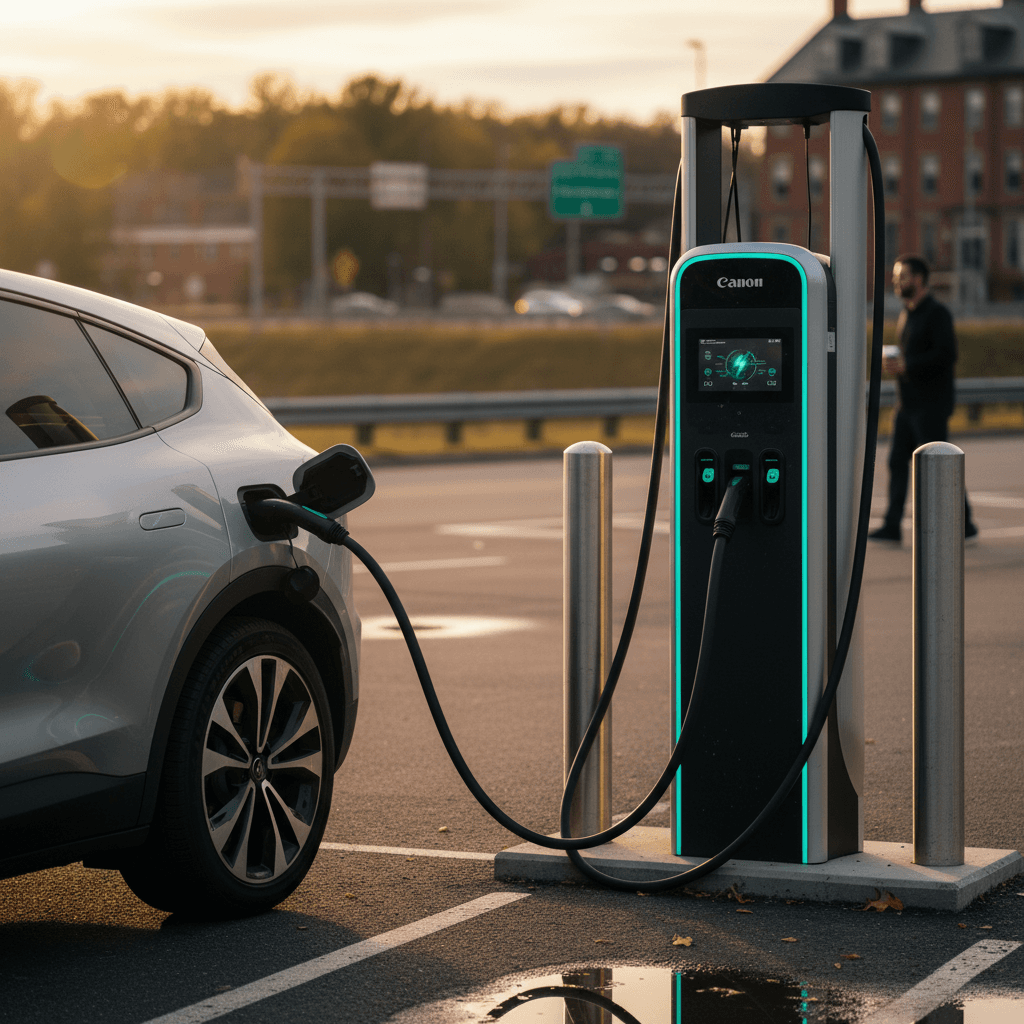
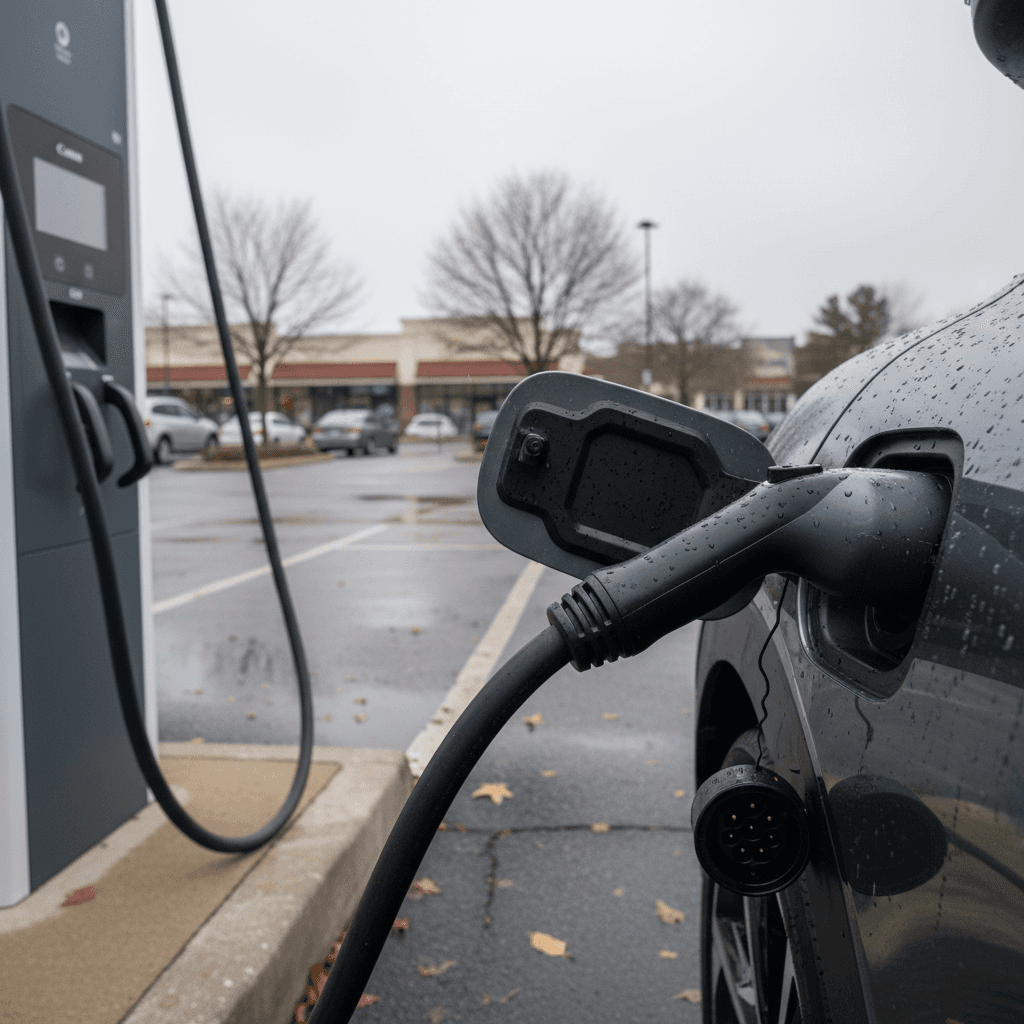
When you zoom in on the Connecticut electric car charging network, you’re really talking about two different layers:
- Level 2 (AC) charging: 6–11 kW stations at workplaces, municipal lots, hotels, and shopping centers. These add roughly 20–35 miles of range per hour, ideal for parking sessions of a few hours or more.
- DC fast charging (DCFC): 50–350 kW stations along highways and major arterials. These are your road‑trip workhorses, adding 150–200 miles of range in 20–40 minutes on compatible EVs.
Connecticut’s early build‑out leaned heavily on Level 2, especially in wealthier coastal towns and city cores. Over the last two to three years, utilities and private networks have shifted attention toward fewer, higher‑power DC fast hubs that can serve more drivers with less real estate.
How much public charging will you really use?
Where the fast chargers are: corridors and hotspots
Even with federal uncertainty, the pattern is clear: DC fast chargers in Connecticut follow drivers and dollars. You’ll find the densest clusters where interstate traffic, retail, and relatively high incomes meet.
Connecticut DC fast‑charging hotspots
Major corridors and regions where DC fast charging is already reasonably strong, and where it’s still catching up.
| Region / Corridor | Coverage today | What you’ll typically find | Things to watch |
|---|---|---|---|
| I‑95 coastal corridor (Stamford–New Haven–New London) | Strong | Multiple Tesla Supercharger sites (some NACS‑ready for non‑Teslas), Electrify America, EVgo, and utility‑backed DC fast chargers near malls and service areas. | Daytime congestion at popular sites; some older stations limited to 50 kW. |
| I‑84 (Danbury–Waterbury–Hartford) | Improving | Growing mix of non‑Tesla fast chargers at plazas and retail centers; Tesla hubs filling gaps. | Spacing between sites can still be 40–60 miles, plan winter trips carefully. |
| I‑91 & Springfield / Hartford metros | Moderate | Municipal Level 2 plus scattered DC fast hubs near shopping and airports. | Inner‑city locations sometimes ICEd or blocked; check recent check‑ins in apps. |
| Route 7 & Litchfield Hills | Patchy | Small clusters of Level 2, a few fast chargers at highway‑adjacent stops. | Rural gaps remain; plug‑in hybrids or larger‑battery EVs are more forgiving here. |
| College towns (Storrs, New Haven, Middletown) | Moderate | Campus and municipal Level 2, with limited but improving DC fast around retail. | Campus parking rules and time limits can complicate charging during the school year. |
Exact site counts change month to month, but this overview reflects how the network feels on the ground in 2025–2026.
Notable Connecticut fast‑charging hubs
Utilities at the core: Eversource, UI, and local programs
Unlike many states, Connecticut’s charging story can’t be told without talking about the utilities. Eversource and UI don’t just deliver electricity; they co‑fund much of the hardware that makes public and workplace charging viable.
How Eversource and UI shape Connecticut’s charging network
Rebates, make‑ready funding, and managed charging
Residential incentives
Through the statewide EV Charging Program, residential customers can receive rebates (historically up to around $1,000) to offset a networked Level 2 charger and/or home wiring upgrades. As of 2025, new Connecticut legislation has narrowed eligibility, income‑qualified and residents of high‑poverty / low‑opportunity areas get priority, so always check the current rules before you count on a rebate.
Multifamily & workplace
For apartments, condos, workplaces, and fleets, Eversource and UI can cover up to 50% of charger hardware and a large share (sometimes all) of the make‑ready work. For Level 2, that can reach roughly $20,000 per site in standard areas and more in environmental‑justice communities. DC fast‑charging projects can see support north of $150,000 per site when sited and sized well.
Managed charging rewards
If you enroll an eligible EV or smart charger in a managed charging program, you can earn monthly bill credits, typically around $10/month for charging mostly off‑peak, or about $25/month if you let the utility dynamically schedule your charging. In practice, that can offset a noticeable chunk of your EV’s fuel cost if you mostly charge at home.
Incentive rules are shifting
On top of statewide programs, a few municipal utilities run their own incentives. For example, Norwich Public Utilities offers its own charger rebates that don’t require managed charging participation. If you’re not served by Eversource or UI, check your local utility’s website or call directly.
NEVI and highway corridors: What it really means in CT
The NEVI program was supposed to be the backbone of a coast‑to‑coast DC fast‑charging network, with strict requirements: at least four 150 kW ports every 50 miles along designated corridors. Connecticut planned to use its roughly $52 million to harden I‑95, I‑84, I‑91, and the Merritt / Wilbur Cross into reliable EV routes.
Some of that has happened, early NEVI‑funded sites are operating, and the state’s corridor plans are public. But the federal pause means that new awards and approvals are on hold, even as already‑contracted projects proceed. For you as a driver, that translates into a network that looks half‑built in certain stretches: excellent clusters near some exits, 60‑mile deserts in others.
If you mostly drive within Connecticut
- You’ll feel NEVI most on long north–south and east–west hops, like Hartford–Danbury or New Haven–Springfield.
- Trip‑planning apps already show NEVI sites as they come online, so rely on real‑time data rather than old press releases.
- The pause may delay upgrades from older 50 kW sites to modern 150+ kW hubs.
If you road‑trip out of state
- Connecticut’s segments of I‑95 and I‑84 connect into neighboring states’ NEVI plans, but those are also subject to federal delays.
- Plan winter trips with conservative charging stops; don’t assume every 50‑mile gap will be filled on schedule.
- Lean on robust private networks (Tesla Supercharger, large Electrify America sites) as your primary backbone when possible.
Home and workplace charging: The smart way to use the network
If you own or lease an EV in Connecticut, the most important part of the charging network is the part you control: home and workplace charging. Public infrastructure closes gaps; it is not where you want to get most of your miles if you can avoid it.
Smart charging strategy for Connecticut drivers
1. Start with your panel and parking
If you have a driveway or garage and at least a 100‑amp panel, a 32–40 amp Level 2 charger will usually cover any Connecticut commute. Apartment and condo dwellers should ask property managers about tapping into Eversource/UI multifamily incentives.
2. Enroll in managed charging if eligible
Letting the utility nudge your charge times can unlock monthly bill credits and, indirectly, supports more EV adoption statewide by smoothing demand peaks.
3. Think in miles per day, not max kW
Most Connecticut households drive fewer than 40 miles per day. A modest Level 2 charger can replace that in under two hours each night, even in winter.
4. Use public Level 2 as overflow
Stations at town halls, parking garages, and colleges are perfect for topping up during work or errands, especially if you don’t have home charging.
5. Reserve DC fast for road trips
Frequent DC fast charging is convenient but hard on both your wallet and, over time, your battery. Use it for I‑95 runs or ski trips, not every weekday.
Rebates pair well with used EVs
Tesla Superchargers and NACS access in Connecticut
Tesla’s Supercharger network has quietly become a significant part of the Connecticut electric car charging network, even for non‑Tesla drivers. Two trends matter here:
- NACS adoption: Major automakers are shifting to Tesla’s North American Charging Standard (NACS) connector on new EVs beginning in 2025–2026, with adapters for some existing CCS cars.
- Open Superchargers: Tesla is opening select Supercharger sites to non‑Tesla EVs, either via built‑in adapters (Magic Dock) or NACS hardware paired with automaker‑supplied adapters. Connecticut already has multi‑stall sites, like the Stamford Town Center hub, that support this transition.
If you drive a Tesla
- You have the best coverage of any brand in Connecticut today, with Superchargers along I‑95 and key inland routes.
- V3 and emerging V4 sites routinely deliver very fast charging, especially in fair weather.
- You can still use CCS and Level 2 networks with the right adapters, but most owners rarely need to.
If you drive a non‑Tesla
- Check whether your automaker provides a NACS adapter and whether your model is approved for Supercharger access.
- Don’t assume every Connecticut Supercharger is open to you, use the Tesla app or your automaker’s app to confirm site eligibility.
- Treat Superchargers as a valuable backup to CCS‑based networks, especially for I‑95 and I‑84 drives.
Connector confusion is temporary, but real
How to plan trips and daily driving on Connecticut’s network
Even in a relatively well‑served state like Connecticut, the difference between a smooth EV experience and a frustrating one often comes down to planning. The good news is that once you dial in a routine, you’ll spend less time thinking about gas, or charging, than you do today.
Planning strategies for different Connecticut drivers
Match your habits to the network, not the other way around
Suburban commuter
Profile: 20–50 mile round‑trip, home driveway, occasional trips to NYC or Boston.
- Install a 32–40 amp Level 2 charger if possible.
- Enroll in a managed charging program and set a low overnight rate schedule.
- Use public DC fast only for longer weekend trips.
Urban apartment dweller
Profile: Street or lot parking in cities like New Haven, Hartford, or Stamford.
- Prioritize a building with on‑site Level 2 or reliable nearby public options.
- Lean on municipal garages, workplace chargers, and DC fast hubs at shopping centers.
- Consider a plug‑in hybrid if your access to overnight charging is highly uncertain.
Weekend adventurer
Profile: Regular ski trips or hikes into northern New England.
- Favor EVs with strong real‑world winter range.
- Plot fast‑charging stops on I‑84, I‑91, and into MA/VT/NH ahead of time.
- In winter, plan to arrive at DC fast chargers with 20–30% state of charge, not 5–10%.
Use multiple apps, not just one
Future outlook: Gaps, risks, and opportunities
Looking ahead to the late 2020s, three things will shape Connecticut’s electric car charging network more than any single ribbon‑cutting:
- Utility program stability: PURA’s nine‑year EV Charging Program provides a relatively predictable backbone of funding through 2030. If regulators, utilities, and lawmakers keep it intact, you’ll see steady expansion of home, workplace, and public Level 2, plus selective DC fast hubs.
- Federal policy volatility: NEVI’s pause shows how exposed corridor fast‑charging is to federal politics. Connecticut can’t fully backfill that money on its own, so expect stop‑and‑go progress on the most expensive highway sites.
- NACS consolidation: As more automakers ship NACS ports and open up Tesla access, the state’s effective fast‑charging density improves without pouring more concrete. But that also concentrates power in fewer networks, which regulators will be watching closely.
“The core question isn’t whether EV charging will get built in Connecticut, it’s who pays, where it goes first, and how much friction drivers tolerate along the way.”
For drivers, the pragmatic takeaway is straightforward: Connecticut already has enough charging for many households to ditch gasoline today, especially if you can charge where you sleep or work. The network will get denser and faster over the next five years, but pockets of frustration will persist, particularly in rural areas and for drivers who depend entirely on public charging. Going in with clear eyes and a solid plan is the best way to future‑proof your next EV purchase.
FAQ: Connecticut electric car charging network
Common questions about Connecticut’s EV charging network
How Recharged helps Connecticut EV drivers
Choosing the right EV in a state where charging depends so much on utilities, federal policy, and evolving connector standards can feel overwhelming. That’s where Recharged comes in. Every used EV on our marketplace comes with a Recharged Score Report that verifies battery health, charging behavior, and fair market pricing, so you’re not guessing how the previous owner treated the pack or whether the car will comfortably handle your Connecticut commute.
If you’re ready to go electric in Connecticut, you don’t have to navigate the charging landscape alone. You can browse vehicles online, explore financing, get an instant offer for your trade‑in, and have your next EV delivered to your driveway, or visit our Experience Center in Richmond, VA if you want to talk through charging options in person. When you understand how the Connecticut electric car charging network works, and you pair that knowledge with the right used EV, switching away from gasoline stops being a gamble and starts looking like an upgrade.