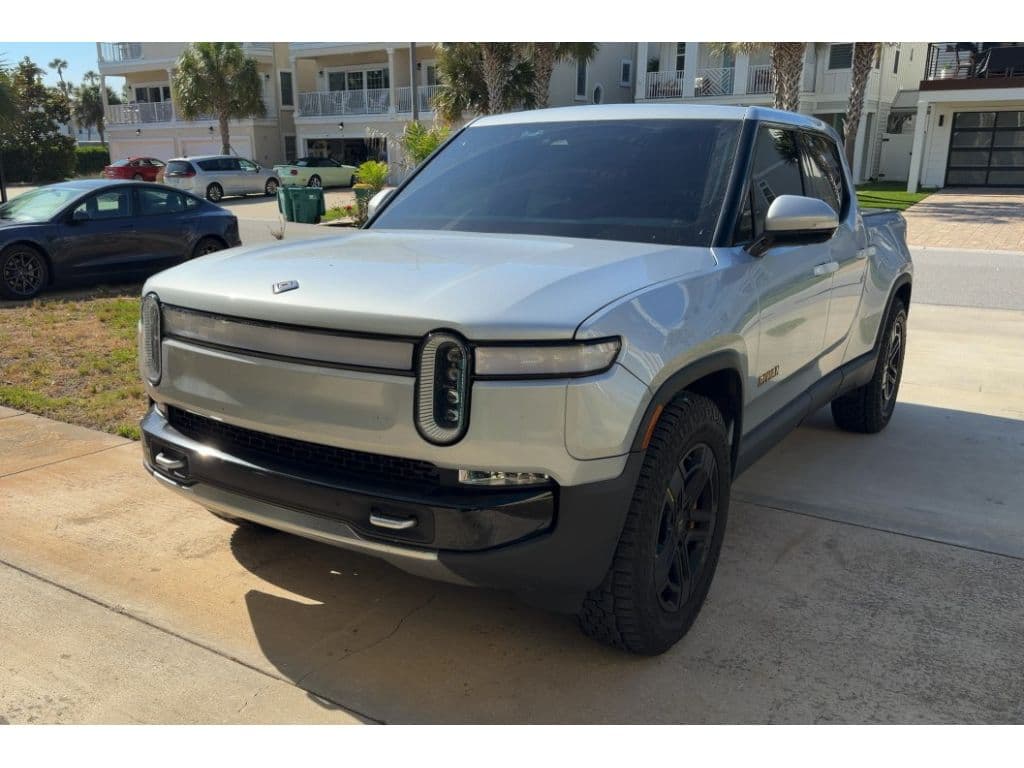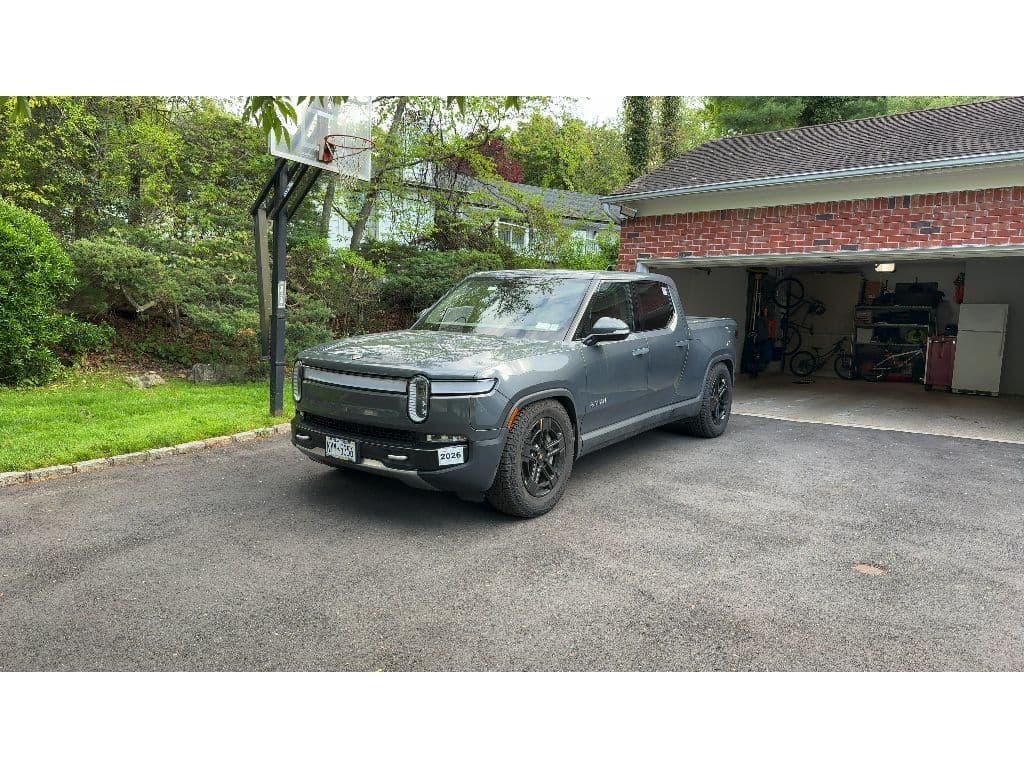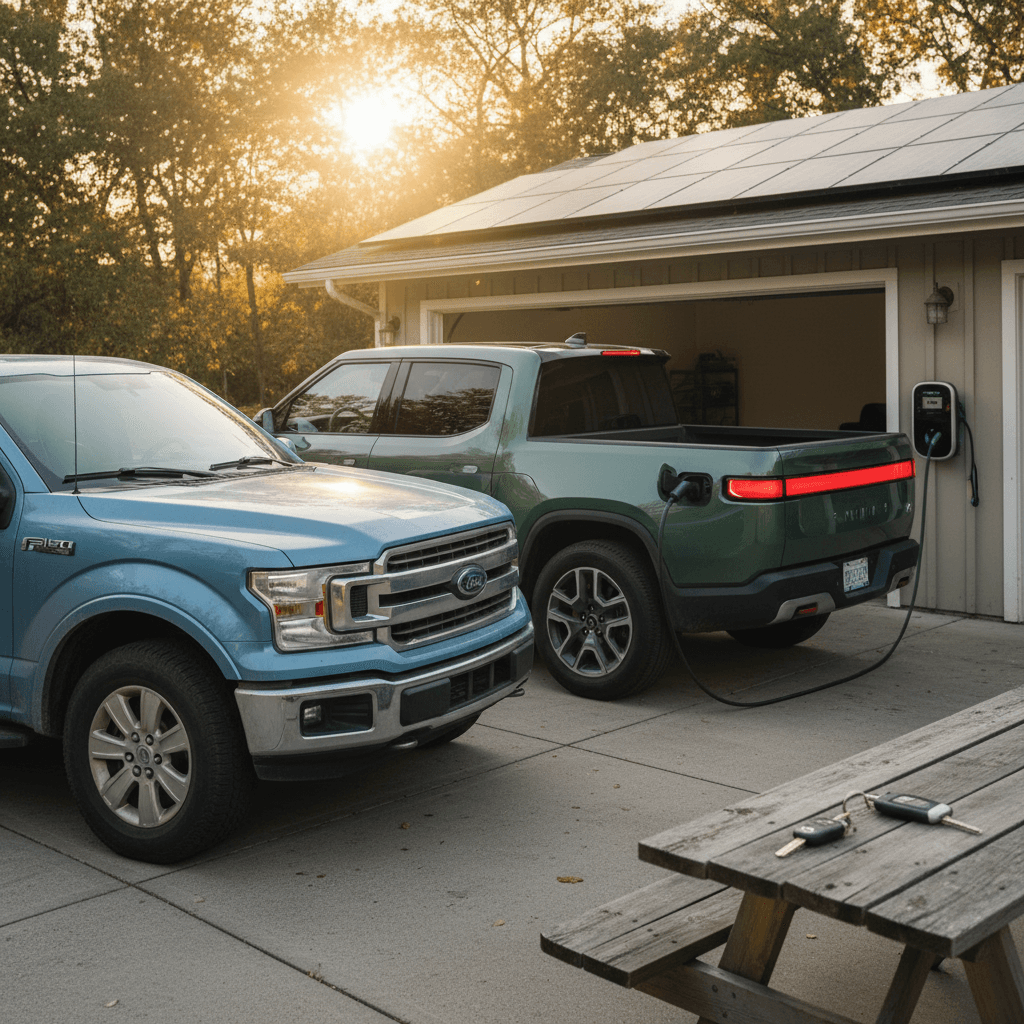
If you’ve been living with a Ford F-150 and you’re eyeing a Rivian R1T, you’re probably not just chasing novelty. You want to know whether switching from a Ford F-150 to a Rivian R1T delivers real cost savings once you add up fuel, maintenance, insurance, and resale value. The answer is that it can, sometimes dramatically, depending on how and where you drive.
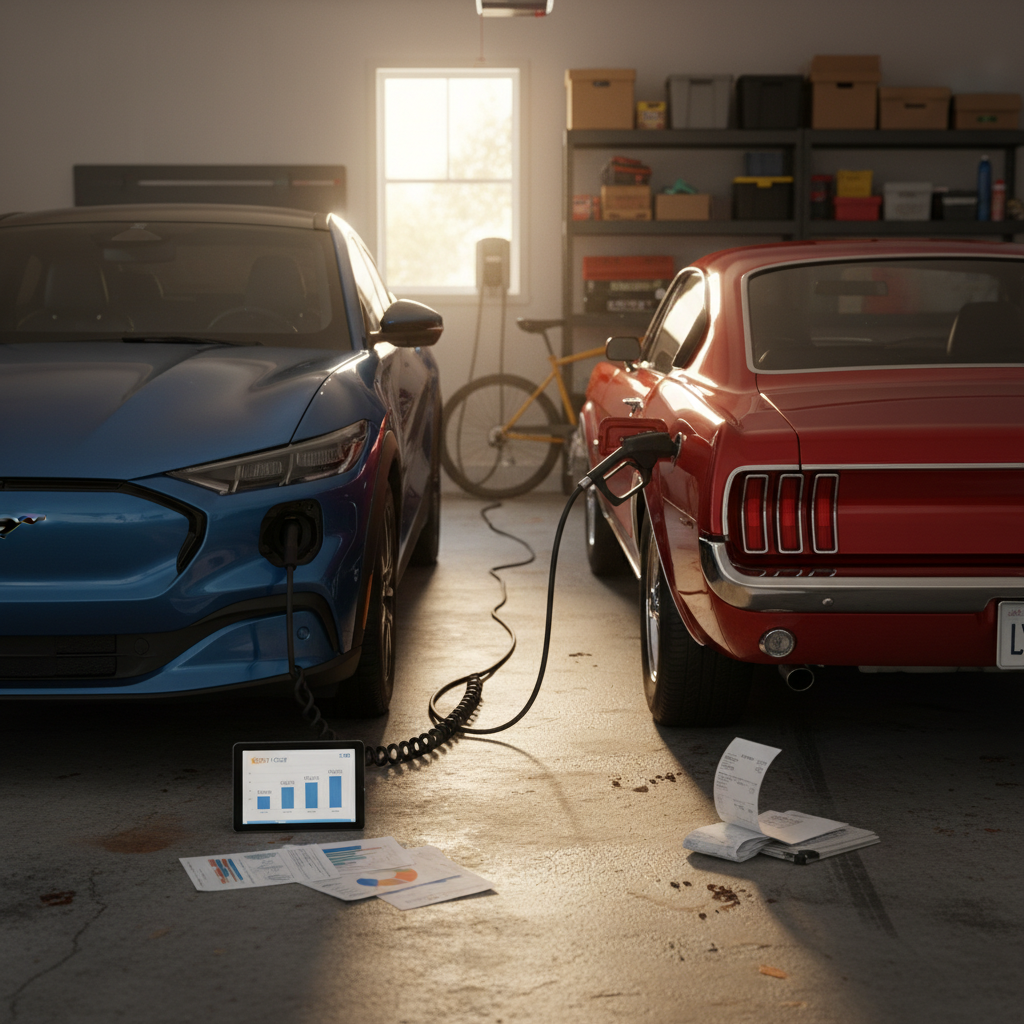
Gas to electrons: a big shift
Why Drivers Are Switching from F-150 to Rivian R1T
For generations, the Ford F-150 has been America’s default pickup, tough, familiar, and everywhere. The Rivian R1T doesn’t try to copy that formula; it rewrites it with instant torque, a quiet cabin, and a very different cost profile. Many owners who switch are after three things: lower operating costs, a more refined daily driving experience, and the satisfaction of cutting fuel use without giving up capability.
- You’re putting serious miles on your F-150 and are tired of fuel bills that swing with gas prices.
- You use your truck as a daily commuter more than as a heavy work rig.
- You want modern tech, over-the-air updates, and advanced driver assistance built in.
- You’re planning to keep your next truck long enough for operating-cost savings to matter.
Think in total cost, not just monthly payment
Key Cost Differences at a Glance
Where R1T Ownership Can Save You Money
These aren’t promises; they’re directional guideposts. Your exact savings will depend on the F-150 engine and drivetrain you’re coming from, your local electricity and gas prices, how much you tow, and how long you keep the truck. But they set the stage for why the R1T can be more than just a lifestyle upgrade.
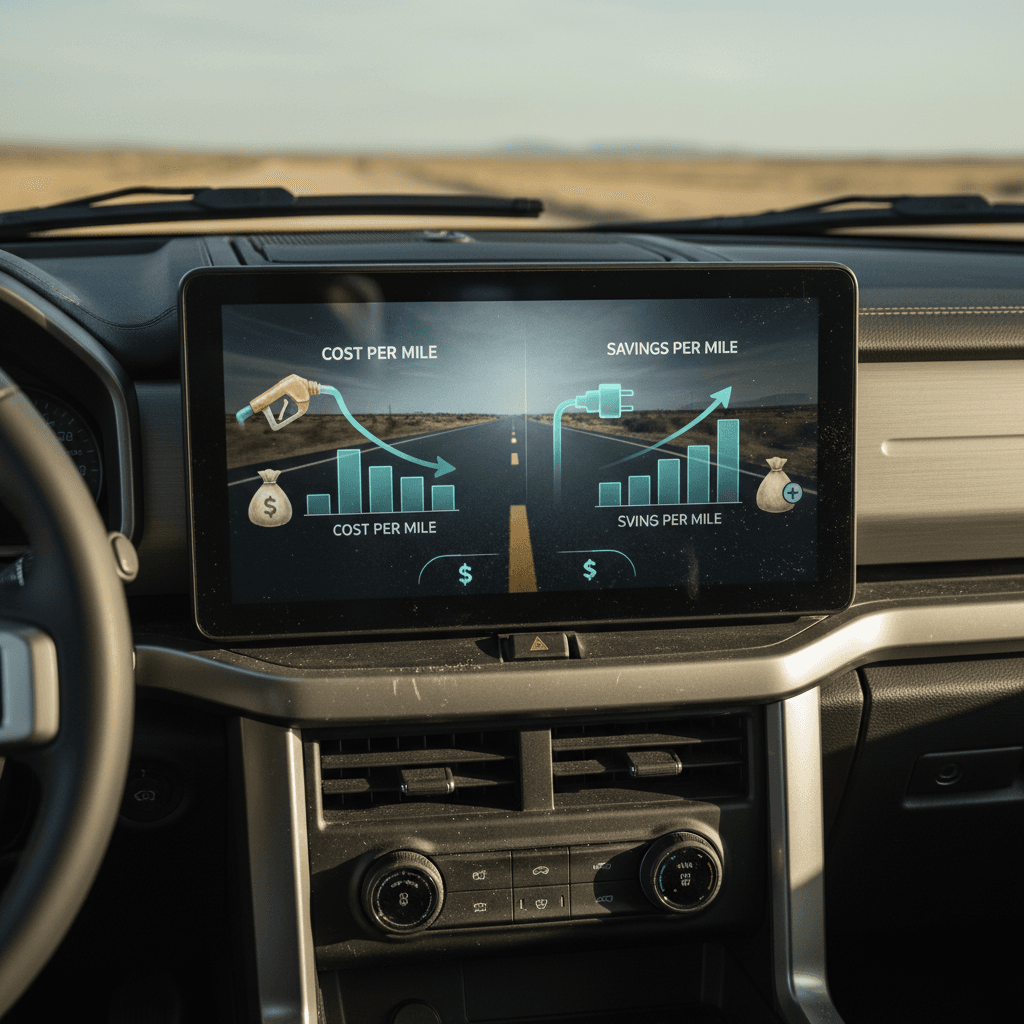
Fuel vs. Electricity: What You’ll Spend to Go the Same Mile
Start with the line item that stings the most: fuel. A typical gasoline F-150 might average 17–20 mpg combined in real-world use, especially if it’s 4×4 and carries larger wheels or accessories. A Rivian R1T, by contrast, commonly delivers around 2.1–2.4 miles per kWh in mixed driving, depending on tire choice, climate, and speed.
Illustrative F-150 Fuel Cost
Let’s assume you drive 12,000 miles per year and your gas F-150 averages 18 mpg combined.
- Annual fuel used: 12,000 ÷ 18 ≈ 667 gallons
- At $3.75 per gallon (recent U.S. average), that’s about $2,500 per year
- That works out to roughly 21¢ per mile just in fuel
Illustrative Rivian R1T Electricity Cost
Now assume a Rivian R1T averaging 2.2 miles per kWh and mostly home charging at 16¢ per kWh (a representative retail rate in many U.S. areas).
- Energy used: 12,000 ÷ 2.2 ≈ 5,455 kWh per year
- At 16¢ per kWh, that’s roughly $875 per year
- That’s about 7–8¢ per mile in electricity
Annual energy savings potential
Public DC fast charging, especially on road trips, will cost more per kWh than what you pay at home, so your savings will shrink if you rely on it heavily. Even then, many owners find that EV road-trip energy costs are comparable to or slightly less than what they paid in gas, while their day‑to‑day commuting costs drop sharply.
Your local rates matter
Maintenance and Repairs: How Much Lower in an EV Truck?
An internal-combustion F-150 has hundreds of moving parts in the engine and transmission alone. A Rivian R1T’s powertrain is largely solid-state: electric motors, inverters, and a battery pack with no oil to change, spark plugs to replace, or exhaust system to rust away. That doesn’t make it maintenance‑free, but it shifts where the money goes.
Typical Maintenance Differences: F-150 vs. Rivian R1T
Numbers will vary, but the direction is consistent for most owners.
Ford F‑150: Engine & Drivetrain
- Regular oil changes every 5,000–7,500 miles
- Transmission fluid services over time
- More frequent brake work with heavy use
- Potential timing components, gaskets, exhaust repairs as the truck ages
Rivian R1T: EV Systems
- No oil, spark plugs, or exhaust to service
- Regenerative braking can extend brake pad life significantly
- Software updates can improve efficiency and features over time
- Maintenance focuses on tires, brake fluid, cabin filters, and inspections
If you average the routine service on a gasoline F-150, oil changes, filters, transmission services, and incidental items, it’s common to see annual maintenance spend in the $700–$1,000 range once you’re out of the “free maintenance” window. For a Rivian R1T, many owners report substantially lower routine maintenance outlays, often dominated by tire costs and occasional inspections, especially in the first several years.
Brake wear is a quiet savings line
Insurance, Tires, and Other Running Costs
Not every cost line tilts in the Rivian’s favor. While you save on fuel and many types of maintenance, insurance and tires can be higher with an R1T than with a typical F‑150, especially if you’re moving from an older or lower‑trim Ford.
- Insurance: New, high‑value EVs can cost more to insure than older or lower‑value trucks. If you’re moving from a well‑used F‑150 into a new or nearly new R1T, expect a step up in premiums unless you offset it with higher deductibles or bundled policies.
- Tires: The R1T is quick and heavy, and many examples ride on large, all‑terrain tires. Those can wear faster and cost more to replace than the standard tires on many F‑150s, something to budget for every 25,000–40,000 miles depending on driving style.
- Registration and fees: Some states charge additional EV registration fees to replace lost fuel‑tax revenue. It’s usually not enough to erase fuel savings, but it’s worth checking for your state.
Don’t ignore tire costs
Purchase Price, Tax Credits, and Used R1T Pricing
Up front, a Rivian R1T is typically more expensive than a lightly‑equipped F‑150, and closer in price to well‑optioned trims. New‑truck pricing can move quickly with incentives and options, so the cleaner way to compare is often total cost of ownership over several years rather than sticker price alone.
Illustrative Price Landscape: F-150 vs. Rivian R1T
High‑level ranges only; real‑world prices depend heavily on trim, year, miles, condition, and incentives.
| Truck & Market | Typical Scenario | Approximate Price Range |
|---|---|---|
| New Ford F‑150 | Mainstream trims (XLT/Lariat) with 4×4 | Mid $40,000s–$60,000s+ |
| New Rivian R1T | Adventure or similar configuration | High $70,000s and up depending on options |
| Used Ford F‑150 | 5‑year‑old, average miles | Mid $20,000s–$40,000s+ |
| Used Rivian R1T | Early build with moderate miles | Often mid $50,000s–$60,000s+ on the used market |
Use these as directional anchors, not precise quotes. Always check current listings and offers.
Tax incentives can narrow the gap
5‑Year Cost of Ownership Example: F-150 vs. R1T
To see how all of this comes together, let’s build a straightforward, 5‑year comparison for a driver putting 12,000 miles per year on their truck. These are estimates, not guarantees, but they’ll give you a feel for the direction and scale of the savings.
Illustrative 5‑Year Ownership Costs
Assumes 12,000 miles per year, mostly home charging for the R1T, and average national fuel and electricity prices over time.
| Category | Gas Ford F‑150 | Rivian R1T (Mostly Home Charging) |
|---|---|---|
| Fuel / Electricity | ≈ $12,500 (gas) | ≈ $4,400 (electricity) |
| Routine Maintenance | ≈ $3,500 | ≈ $1,800 |
| Tires | ≈ $1,800 | ≈ $2,400 |
| Insurance (incremental vs. F‑150) | Baseline | + $1,000–$1,500 total |
| Extra Fees (EV registration, etc.) | N/A | + a few hundred |
| Estimated 5‑Year Operating Cost | ≈ $17,800 | ≈ $9,000–$10,500 |
Actual results will depend on local prices, driving style, and how you buy and finance each truck.
In this simple scenario, the Rivian R1T delivers on the order of $7,000–$9,000 in operating‑cost savings over five years compared with a gasoline F‑150, largely driven by lower energy and maintenance costs. That doesn’t necessarily mean your total ownership cost will be lower, because purchase price and financing may be higher, but it does mean that a higher payment can be partially offset by lower running costs.
How to adapt this math to your life
Lifestyle and Usage Factors That Affect Your Savings
No cost‑of‑ownership conversation exists in a vacuum. The way you use your F-150 today, and the way you’d use a Rivian R1T tomorrow, plays a huge role in whether the switch pencils out.
Key Questions to Ask Yourself
1. How many miles do you really drive?
The more you drive each year, the more a Rivian’s lower per‑mile energy and maintenance costs can add up. If you’re only logging 6,000 miles annually, savings will be modest. At 15,000–20,000 miles, they can be substantial.
2. Can you charge at home most nights?
Home charging is usually the biggest unlock for savings. If you’ll rely on public DC fast chargers for everyday use, your energy costs will be higher and the financial case weaker, though still competitive in many situations.
3. How often are you towing or hauling at the limit?
Heavy towing burns fuel in an F-150 and eats range in an R1T. If you tow frequently and for long distances, build conservative assumptions into your EV range and charging‑cost calculations.
4. Are you moving from an old F‑150 or a new one?
Jumping from a fully paid‑off older F‑150 into a brand‑new R1T is a bigger financial leap than trading out of a newer, financed Ford. Compare apples to apples: total cost of ownership for a similarly new truck vs. the R1T.
5. How long do you tend to keep your trucks?
If you swap vehicles every two years, you may not give the R1T’s operating‑cost advantages time to shine. If you typically keep a truck 5–8 years, the long‑term savings picture is much more compelling.
How Buying a Used Rivian R1T Changes the Math
One of the most powerful ways to make the switch from an F-150 to a Rivian R1T pencil out is to buy used instead of new. Early‑build R1Ts are increasingly appearing on the used market, often at a meaningful discount to their original MSRP but with plenty of life left in the battery and drivetrain.
Why a Used R1T Can Be a Sweet Spot
You let the first owner take the biggest depreciation hit.
Lower Entry Price
Battery Health Transparency
EV‑Savvy Shopping Experience
Used EV tax credit potential
Because you’re combining a lower purchase price with the same fuel and maintenance savings, a well‑bought used R1T can sometimes beat the total cost of ownership of a new F‑150 while giving you a more modern driving experience. That’s where a data‑rich marketplace like Recharged can tilt the odds in your favor.
How Recharged Helps You Run the Numbers
Evaluating a switch from a Ford F-150 to a Rivian R1T isn’t just about glancing at a window sticker. It’s about understanding how battery health, real‑world range, and market pricing intersect with your daily life. That’s exactly the gap Recharged was built to fill.
What Recharged Brings to Your F‑150 → R1T Journey
From battery diagnostics to financing, the goal is clarity, start to finish.
Recharged Score Battery Health Report
Seamless Buying, Selling, or Trading
Ready to find your next EV?
Browse VehiclesInstead of juggling separate conversations with a truck dealer, a bank, and an EV expert, you can treat Recharged as your single point of contact, from exploring whether the switch makes financial sense to seeing a specific truck’s diagnostics and finalizing delivery details.
FAQ: Switching from an F-150 to a Rivian R1T
Frequently Asked Questions
Is Switching from an F-150 to a Rivian R1T Worth It?
If you’re driving an F-150 today and considering a Rivian R1T, you’re not just changing trucks, you’re changing your cost structure. For many owners, especially those who drive a lot and can charge at home, the R1T delivers meaningful long‑term savings on fuel and maintenance while adding refinement, tech, and performance that are hard to match in a traditional pickup.
At the same time, you have to treat this like any major financial decision: weigh the higher purchase price and potential insurance increase against your projected operating savings and the way you actually use your truck. That’s where an objective, data‑driven view of battery health, pricing, and financing can turn a hunch into a confident decision.
If you’re ready to see how the numbers look for your situation, explore used Rivian R1T listings on Recharged, review each truck’s Recharged Score, and compare those ownership costs to what you’re spending to keep your F-150 on the road. The right truck, bought at the right price with clear battery data, can make switching from gas to electrons feel less like a gamble and more like a smart long‑term move.