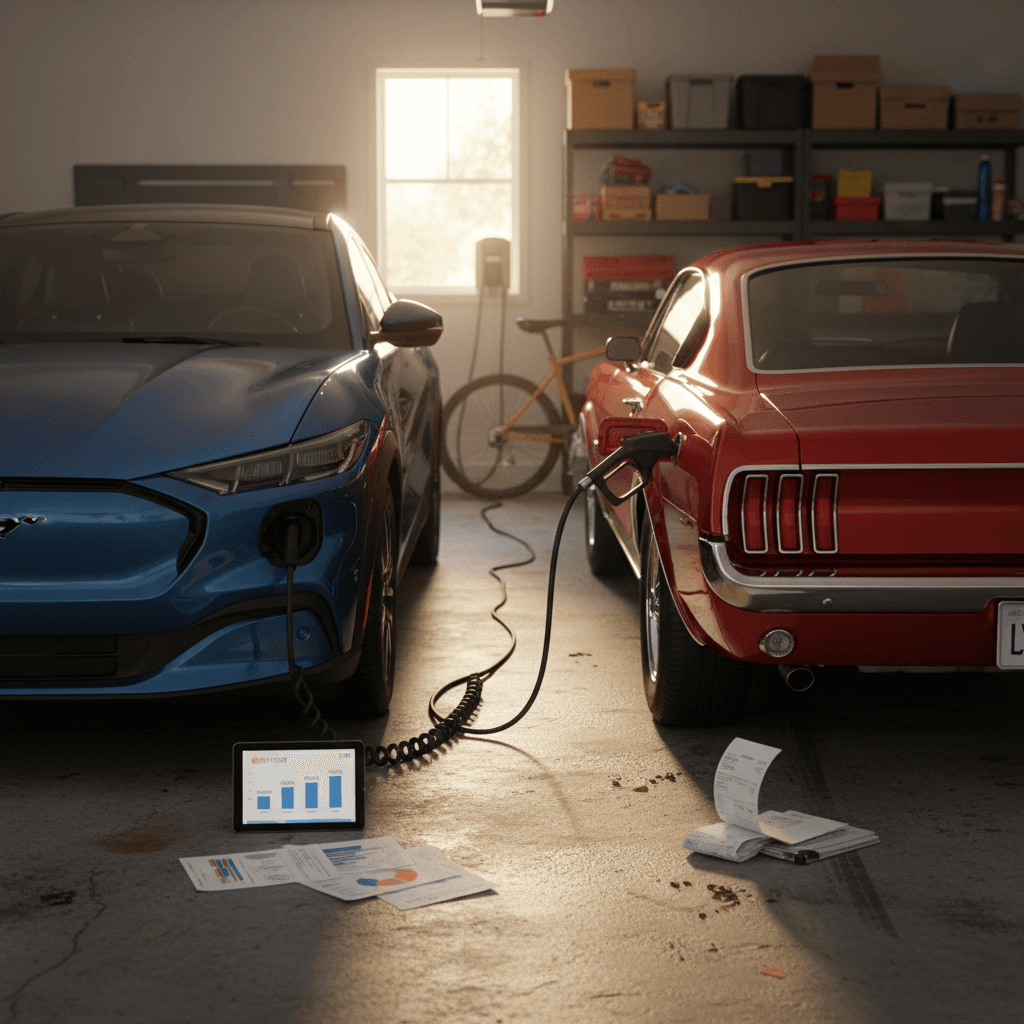
The question behind every electric SUV test drive isn’t about horsepower; it’s about your wallet. You want to know what the Ford Mustang Mach-E maintenance cost really looks like over five or ten years, and whether this sleek crossover quietly eats money like the old V6 Explorer in your past, or simply asks for tire rotations and an occasional cabin filter while you spend your weekends doing literally anything else.
Short answer
Ford Mustang Mach-E maintenance cost at a glance
Mach-E maintenance by the numbers
Key idea
How much does Mustang Mach-E maintenance really cost?
Let’s put hard numbers to the anxiety. Independent ownership-cost analyses peg 5‑year Mustang Mach-E maintenance at roughly $3,800–$4,300 for a typical new example driven 15,000 miles per year. That works out to around $750–$875 per year, before optional items like detailing or tire upgrades.
Estimated 5‑year maintenance cost: new Ford Mustang Mach-E
Approximate maintenance-only costs (no fuel, insurance, or taxes) for a typical new Mach‑E driven 15,000 miles per year. Numbers are rounded, your actual cost will vary.
| Year of ownership | Typical service focus | Estimated maintenance cost |
|---|---|---|
| Year 1 | Tire rotation, inspection | $150–$250 |
| Year 2 | Rotation, cabin air filter, inspection | $250–$350 |
| Year 3 | Rotation, brake fluid, inspection | $350–$500 |
| Year 4 | Rotation, possible pads, inspection | $450–$750 |
| Year 5 | Rotation, fluids, likely tires | $900–$1,300 |
| Total (5 yrs) | Basic maintenance plus one tire set | ≈ $3,800–$4,300 |
These are directional averages based on mainstream ownership-cost tools and real-world service menus, not guarantees.
Mileage matters more than calendar time
Scheduled service: what the Mach-E actually needs
Open the Mach‑E maintenance booklet and you’ll notice what’s missing: there’s no schedule for oil changes, transmission flushes, or spark plugs. Instead, Ford leans on a short, repeatable checklist, more checkup than surgery.
Core Mach-E service intervals
The recurring drumbeat of Mach‑E maintenance is almost boring, and that’s the point.
Every 10,000 miles or 1 year
- Tire rotation
- Brake inspection
- Suspension & steering inspection
- Fluid level checks (including coolant & washer fluid)
Every 20,000 miles or 2 years
- Cabin air filter replacement
- Standard 10,000‑mile checks
The cabin filter is your main recurring "part" on the Mach‑E service menu.
Every 3 years
- Brake fluid replacement
- General inspection
EVs rely heavily on regenerative braking, but the hydraulic system still needs fresh fluid for safety.
What about the high-voltage battery?
Common Mach-E maintenance items and typical prices
Because the Mach‑E’s scheduled maintenance is so minimal, most of your recurring spend rolls up into four buckets: tires, brakes, fluid service, and cabin air filtration. Here’s how those usually price out at retail shops and dealers in the U.S.
Typical Mustang Mach-E maintenance items and price ranges
Approximate U.S. shop prices as of 2025–2026 for out-of-warranty service. Local labor rates and tax will shift the totals.
| Service | Suggested interval | Typical cost range |
|---|---|---|
| Tire rotation | 10,000 miles / 1 year | $40–$80 (often bundled with inspection) |
| Four new tires (18–20") | 30,000–45,000 miles (driving style dependent) | $800–$1,400 installed |
| Cabin air filter | 20,000 miles / 2 years | $60–$150 (DIY closer to $25–$40) |
| Brake fluid flush | 3 years | $150–$250 |
| Front brake pads & rotor resurface/replace | 40,000–70,000 miles (city vs highway) | $350–$700 |
| Multi-point inspection only | Annually | $0–$150 (often free with other work) |
Think of these as realistic ballpark figures, not quotes. Always get an estimate before authorizing work.
Where EVs win big
Ford Mustang Mach-E vs gas SUV: maintenance cost comparison
If you’re cross-shopping a Mach‑E with a gasoline Escape, RAV4, or CR‑V, the interesting question isn’t whether the EV is cheaper to feed, it is, it’s how much less it costs to keep on the road when the new-car smell is long gone.
Typical compact gas SUV
- Oil & filter changes 2–3 times a year: $250–$450
- Transmission service and coolant flushes over 5 years: $600–$1,000+
- Plugs, ignition, belts, exhaust as mileage climbs: another $800–$1,500+
- More frequent brake jobs (no regen): pads and rotors every 30k–40k miles
Ford Mustang Mach‑E
- No engine, no transmission service, no exhaust system
- Annual inspection, tire rotations, cabin filter, brake fluid every 3 years
- Brakes often last far longer thanks to regeneration
- Most of your spend goes into tires and the occasional software or hardware bulletin at the dealer (usually covered under warranty or recall).
Big picture: total ownership costs
Years 1–10: how Mach-E maintenance costs change over time
The Mach‑E ages differently from a traditional SUV. Gas vehicles quietly get more expensive to maintain as they accumulate complex wear: gaskets, pumps, catalytic converters. With the Mach‑E, the cost curve is flatter; your two big variables over ten years are tires and brakes, with battery health riding shotgun.
Owner’s-eye view of Mach-E maintenance by age
Years 1–2: The honeymoon
Expect a single annual visit to rotate tires and get a multi‑point inspection. Out of pocket, you might spend $150–$300 per year if you’re not doing DIY tasks.
Years 3–5: Fluid service & first wear items
Add the 3‑year brake fluid service, another cabin filter, and, depending on mileage, your first set of tires. Annualized, this is where your average creeps toward $700–$900 per year.
Years 6–8: Tires again, brakes if you’re enthusiastic
On a commuter‑driven Mach‑E, you may just be doing your second set of tires and, finally, front pads and rotors. Highway-heavy drivers may still be on the originals.
Years 9–10: Battery health becomes the headline
High‑mileage examples may show noticeable range loss. Software updates and battery diagnostics become more important than traditional wrenching. Catastrophic pack failures are rare but expensive; this is when a verified battery-health report really matters if you plan to buy or sell.
Reliability, recalls, and surprise costs
No modern EV is recall‑proof, and the Mach‑E is no exception. Ford has issued software‑driven fixes for everything from high‑voltage contactors to the drama of doors that don’t want to open or, more recently, park modules that don’t always stay parked. The crucial detail for you is that recall work is performed at no cost to the owner.
Don’t ignore recall notices
Outside of recalls and warranty campaigns, the surprise expenses owners most often talk about are curb‑rash wheel repairs, out‑of‑warranty infotainment quirks, and, in harsh climates, premature tire wear. None of these are Mach‑E exclusives; they’re simply the going price of driving a heavy, torquey crossover with big wheels.
How to keep your Mach-E maintenance costs low
Six simple ways to keep Mach-E maintenance affordable
Most of them are boring. That’s good, boring is cheap.
Rotate tires on schedule
Every 10,000 miles, minimum. With 4,600+ lb and instant torque, the Mach‑E will chew through front tires if you skip rotations.
Watch alignment
After big potholes or curb hits, get an alignment check. A slightly off‑kilter toe setting can cut tire life in half, which is a $400–$700 mistake.
Respect the 3‑year brake fluid change
Brake systems hate moisture. A $200 fluid service now is cheaper than a $1,000 ABS module later.
Use scheduled charging
Keeping daily charge limits around 70–80% and avoiding constant DC fast charging helps preserve battery health, which is the ultimate maintenance "bill" you don’t want.
DIY the easy stuff
Cabin filters and wiper blades are simple DIY jobs. Doing them yourself can shave $100–$200 off annual costs.
Stay current on software
Over‑the‑air updates often include bug fixes and efficiency tweaks. Think of them as free maintenance that improves range and reliability.
Budgeting rule of thumb
Maintenance considerations for used Mustang Mach-E buyers
On the used market, the Mach‑E is in its sweet spot: heavy early depreciation, relatively light wear, and buyers who finally feel the numbers pencil out. The trick is making sure you’re not inheriting someone else’s deferred maintenance, or battery abuse.
- Look for documented annual service visits (or at least regular tire rotations and brake checks).
- Check for completed software updates and recall work, especially around battery contactors, door latches, and park modules.
- Inspect tires closely; uneven wear hints at alignment issues or enthusiastic driving.
- Confirm that brake fluid has been changed at least once if the vehicle is 3+ years old.
- Ask how often the previous owner DC fast‑charged and whether they routinely charged to 100%. Frequent fast charging and constant 100% charging can accelerate battery aging.
How Recharged fits in
Ford Mustang Mach-E maintenance FAQ
Ford Mustang Mach-E maintenance FAQ
If you’ve ever sat in a dealer service lounge doing mental math on whether to fix the crossover you have or trade it for the one in the showroom, the Ford Mustang Mach‑E is a refreshing change of pace. Its maintenance cost profile is simple, predictable, and generally lower than a comparable gas SUV. The car is hard on tires and honest about software, but it doesn’t live to drain your savings with mechanical drama. Get the right example, especially in the used market, with verified battery health, and you’re buying into a decade of quietly inexpensive ownership, not just a quick jolt of electric novelty.