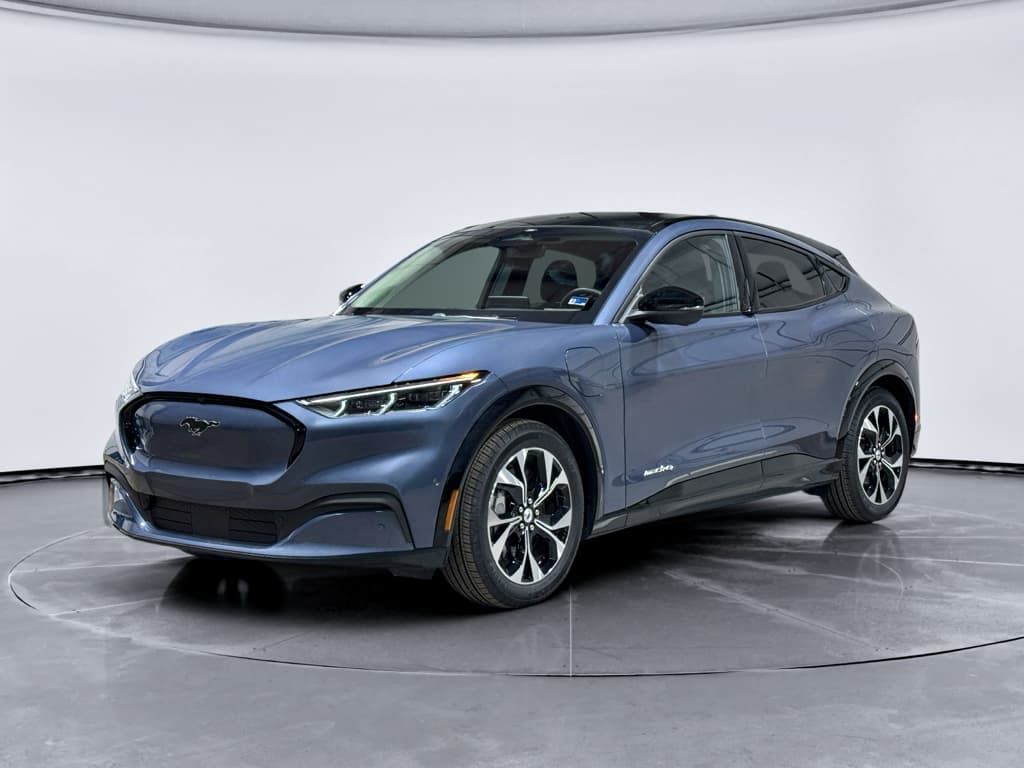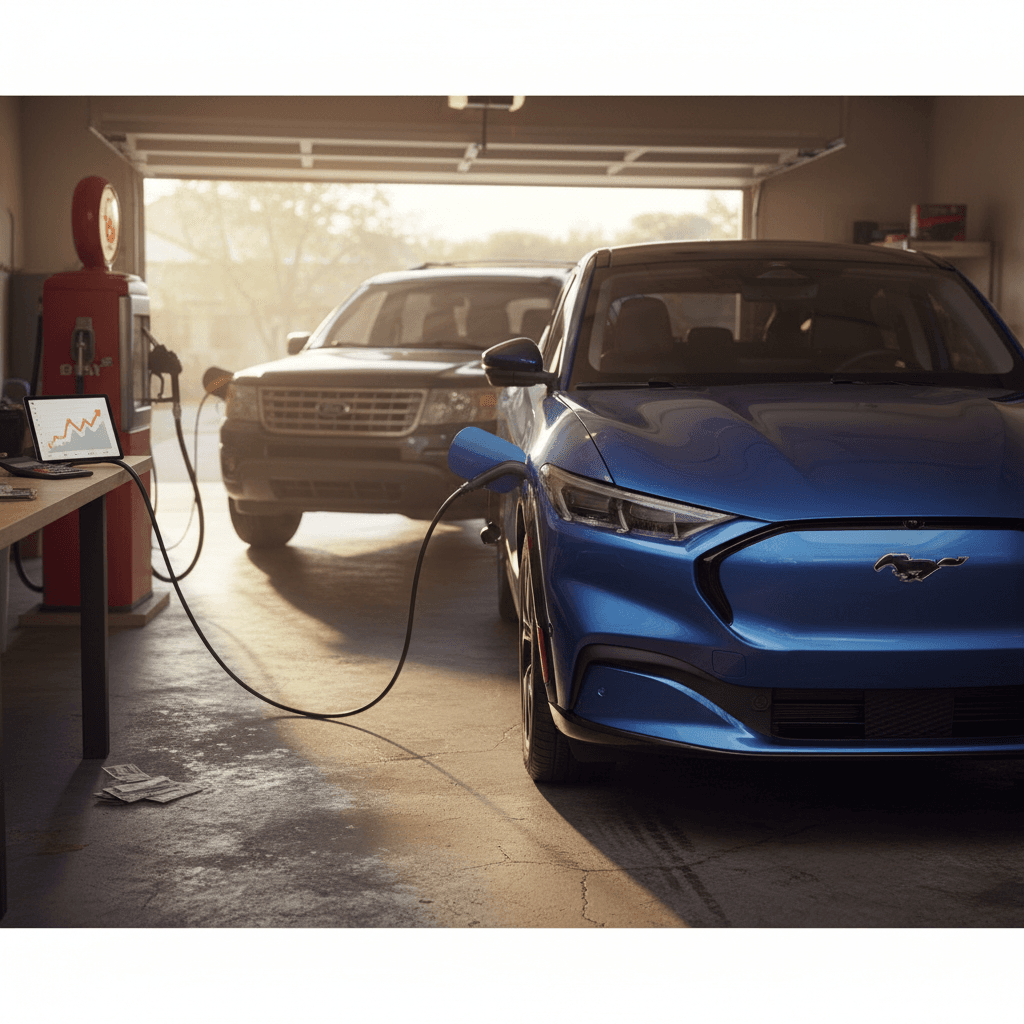
If you’re driving a Ford Explorer and eyeing the all-electric Ford Mustang Mach‑E, the big question isn’t philosophy, it’s math: how much money do I actually save? This guide breaks down real-world switching from Ford Explorer to Ford Mustang Mach‑E cost savings, fuel, maintenance, insurance, and payments, so you can decide if trading gas for electrons makes sense for your household.
The short answer
Why Switch from Explorer to Mustang Mach‑E?
The Explorer is the American default setting: big, tall, three rows, a familiar rumble and a familiar gas bill. The Mustang Mach‑E is Ford admitting, out loud, that the future is electric, and that family cars can also be fun. The switch isn’t just about saving the planet; it’s about monthly cash flow, driving feel, and whether you’re ready to swap gas stations for a charging cable in your garage.
- You’re tired of $70–$100 fill‑ups and want predictable energy costs.
- You mostly drive with one or two rows occupied and rarely max out the Explorer’s third row.
- You’d like quicker acceleration and quieter commuting without paying luxury‑SUV money.
- You’re intrigued by EV tech but still want a familiar Ford badge and dealer network.
When the Explorer still makes more sense
Quick Look: Explorer vs Mustang Mach‑E Cost Savings
Typical Annual Savings: Explorer to Mach‑E
Before we dive into the line items, here’s the high‑altitude view. A reasonably efficient Explorer, think recent V6 or turbo‑4 AWD, burns through enough fuel in a year to make your Mach‑E’s electricity bill look like a rounding error. Add in maintenance and small policy perks, and the Mach‑E quietly claws back over a thousand dollars a year for the average driver.
Ford Explorer vs Ford Mustang Mach‑E: Ownership Snapshot
Illustrative comparison for a typical U.S. driver at 12,000 miles per year. Numbers are rounded and will vary by model year, trim, fuel prices, and local electricity rates.
| Ford Explorer (Gas) | Ford Mustang Mach‑E (EV) | |
|---|---|---|
| Energy cost per year* | $1,900–$2,200 | $650–$900 |
| Routine maintenance** | $600–$800 | $250–$400 |
| Oil changes | 3–4 per year | None |
| Brake jobs | More frequent (engine braking limited) | Less frequent (strong regen) |
| Typical range per “fill” | 350–450 miles | 220–310 miles (battery & trim dependent) |
| Home fueling | No | Yes, with Level 2 charger |
| Tailpipe emissions | High | Zero |
Use this table as a directional guide, not a quote from your utility or insurance agent.
A note on the numbers
Fuel vs Electricity: Where Most Savings Happen
Let’s put some hard numbers behind those fuel savings. Your Explorer is essentially a rolling chemical fireplace; the Mach‑E is a smartphone on wheels. One turns most of its energy into heat and noise, the other into motion.
1. Your Explorer’s annual fuel cost
Take a fairly recent Explorer with an average of 21 mpg combined.
- Annual miles: 12,000
- Fuel used: 12,000 ÷ 21 ≈ 571 gallons
- If gas is $3.50/gal: 571 × 3.50 ≈ $2,000/year
If you drive more than 12,000 miles or pay over $4/gal, that number gets ugly fast.
2. Your Mach‑E’s electricity cost
A typical Mach‑E averages roughly 3 mi/kWh in mixed driving.
- Annual miles: 12,000
- Energy used: 12,000 ÷ 3 ≈ 4,000 kWh
- If home electricity is $0.15/kWh: 4,000 × 0.15 = $600/year
Even at $0.20/kWh, you’re around $800, still far below gas.
Fuel vs electricity: the headline
Public fast charging vs home charging
Maintenance and Repairs: Why the Mach‑E Is Cheaper to Keep
If the Explorer is a Rube Goldberg machine of belts, gears, pumps and pistons, the Mach‑E is a laptop with wheels and child seats. Less mechanical drama, fewer routine visits, and more of your money staying in your pocket.
Key Maintenance Differences: Explorer vs Mach‑E
Where the EV quietly wins every year
Oil & filters
Explorer: 3–4 oil changes per year, plus engine air filters and accessories.
Mach‑E: No oil changes, ever. Cabin filter still applies, but far fewer fluid services.
Brakes & drivetrain
Explorer: Conventional brakes handle most stopping. Transmission, exhaust, spark plugs all aging together.
Mach‑E: Strong regenerative braking reduces wear on pads and rotors; no multi‑gear automatic, no exhaust, no spark plugs.
Routine service
Explorer: More frequent dealer visits and more things to inspect.
Mach‑E: Longer service intervals, mostly software checks, tires, and basics.
Roll all that up and you get something like this: your Explorer might run $600–$800 per year in routine service and wear items over a few years of ownership, while a Mach‑E tends to land closer to $250–$400 per year, dominated by tire rotations and the occasional cabin filter.
The big maintenance wild card: tires
Insurance, Registration, and Taxes
Insurance is where the story gets nuanced. Explorers are common, relatively simple to fix, and body shops know them. The Mach‑E, being newer and packed with sensors, can be more expensive to insure in some ZIP codes, especially when new.
- In many regions, Mach‑E insurance is roughly in line with a well‑equipped Explorer, especially on used models with lower replacement value.
- Some states offer reduced registration fees or tax rebates for EVs, while others tack on an “EV fee” to make up for lost gas‑tax revenue.
- If you can park in a garage or driveway and drive fewer miles, both insurance and wear‑and‑tear favor the Mach‑E.
How to compare insurance properly
Monthly Payments: New vs Used Mach‑E
Here’s where a lot of Explorer owners get hung up. A brand‑new Mustang Mach‑E can sticker for serious money, especially in premium trims. On paper, your payment might go up, and all those sweet energy savings disappear into the financing line item. That’s why the used Mach‑E market is so important.
Depreciation is your friend here
How to think about payments when switching
1. Compare out‑the‑door prices, not just stickers
A loaded new Explorer and a lightly‑used Mach‑E can end up in the same price neighborhood once you factor in dealer incentives, taxes, and fees.
2. Look at total monthly cost
Add your <strong>payment + fuel + maintenance</strong>. A Mach‑E payment that’s $75 higher can still save you money if it cuts $150 out of your gas and service spend.
3. Consider used EV financing
Special EV financing programs and competitive used‑car rates can narrow the gap even more. At Recharged, you can <strong>pre‑qualify with no impact to your credit</strong> and see exactly how a used Mach‑E fits your budget.
4. Don’t ignore trade‑in value
Your Explorer is a valuable asset. Getting a fair trade‑in or instant offer can make the jump to a Mach‑E much more affordable up front.
Lifestyle Fit: Will a Mach‑E Work Like Your Explorer?
There’s the spreadsheet, and then there’s your life. The Explorer is the family room on wheels; the Mach‑E is more like a well‑designed loft. Fewer seats, more tech, and a very different energy habit.
Explorer vs Mach‑E: Daily‑Life Tradeoffs
What you gain and what you give up
Space & seating
Explorer: True three‑row SUV. Great if you routinely carry six or seven people.
Mach‑E: Two rows only, but generous cargo area. Ideal for families of four or five who rarely use the third row.
Performance & refinement
Explorer: Respectable power, traditional shifting, more engine noise.
Mach‑E: Instant torque, smooth single‑speed feel, quiet cruising. Your kids may never want to go back.
Refueling routine
Explorer: Weekly gas station visits, subject to price swings.
Mach‑E: Mostly plugs in at home overnight. Road trips require planning around fast chargers.
Weather & range
Explorer: Range unaffected by cold, but winter fuel economy still drops.
Mach‑E: Cold weather cuts range, so you plan a bit more, but pre‑conditioning and home charging offset the pain.
Road‑trip reality check
How to Run Your Own Explorer‑to‑Mach‑E Math
You don’t need a Ph.D. in spreadsheets to see whether switching from a Ford Explorer to a Ford Mustang Mach‑E saves you money. You just need five numbers and a few minutes.
5‑Step DIY Cost‑Comparison Checklist
1. Grab your annual mileage
Look at last year’s inspection paperwork or your insurance renewal. If you can’t find it, 12,000–15,000 miles is a realistic range for many U.S. drivers.
2. Calculate Explorer fuel cost
Use: <strong>(annual miles ÷ your mpg) × local gas price</strong>. If your trip computer shows 19 mpg and gas is $3.80, plug those in.
3. Estimate Mach‑E energy cost
Use: <strong>(annual miles ÷ 3 mi/kWh) × electricity rate</strong>. For most households that’s 4,000–5,000 kWh per year at $0.12–$0.20/kWh.
4. Estimate annual maintenance
Look back at your Explorer’s last 12–24 months of service: oil, brakes, fluids, emissions tests. Then assume roughly half to two‑thirds of that for a Mach‑E, excluding tires.
5. Compare total monthly cost
Add payment + fuel + maintenance for both vehicles. That’s your real "monthly" number. If the Mach‑E wins there, the switch is doing what you want.
Use your bills as a reality check
How Recharged Makes the Switch Less Risky
Switching from a known quantity like a Ford Explorer to a relatively new EV platform like the Mustang Mach‑E can feel like jumping into the deep end. This is exactly the gap Recharged is built to close, especially if you’re considering a used Mach‑E to get the best balance of price and savings.
Why Consider a Used Mach‑E Through Recharged?
Lower costs, more transparency
Verified battery health
Every vehicle includes a Recharged Score Report with a detailed battery‑health diagnostic, so you’re not guessing about degradation or future range.
Financing built for EVs
Recharged offers EV‑friendly financing and pre‑qualification, letting you see payment options without impacting your credit, and compare them against your current Explorer loan.
Trade‑in & delivery
You can trade in or get an instant offer on your Explorer, then have your Mach‑E delivered nationwide, or visit Recharged’s Experience Center in Richmond, VA, if you want to see one in person.
Ready to find your next EV?
Browse VehiclesFrom hypothetical to actual
FAQ: Switching from Ford Explorer to Ford Mustang Mach‑E Cost Savings
Frequently Asked Questions
Bottom Line: Who Should Switch, and Who Shouldn’t
If your Explorer spends its life shuttling kids, commuting, and doing the occasional road trip, not pulling horse trailers up mountain passes, a Ford Mustang Mach‑E is a compelling, and often cheaper, successor. The biggest wins are clear: dramatically lower energy costs, simpler maintenance, and a driving experience that makes your old V6 feel like dial‑up internet.
You’ll want to run your own numbers, double‑check insurance quotes, and make sure your household can live happily with two rows instead of three. But for many Explorer owners, especially those willing to buy a used Mach‑E with a verified battery report, the math quietly nudges in one direction: away from the pump and toward the plug. And if you’re ready to see how a specific Mach‑E stacks up against your Explorer, Recharged can help you line up the battery data, pricing, financing, and trade‑in offer needed to make the decision feel less like a leap and more like a well‑planned step.