If you’re looking at a used Subaru Solterra or thinking about what your own Solterra will be worth down the road, the big question is simple: what is Subaru Solterra value after 3 years? Three years is the first major decision point for leases, loans, and trade‑ins, and with a relatively new EV like the Solterra, the data can be confusing.
Model years to focus on
Quick take: How the Subaru Solterra holds value after 3 years
Subaru Solterra value snapshot (first 3–5 years)
Early depreciation modeling and real‑world transactions suggest that a typical Subaru Solterra keeps roughly 70–75% of its original MSRP after three years, with condition, mileage, and incentives playing a big role. That’s not class‑leading, but it’s also not a disaster, especially when you factor in the all‑wheel drive and Subaru brand equity that many used‑EV shoppers specifically want.
Rule of thumb for 3‑year value
Why 3‑Year Value Matters for the Solterra
Three years is when many EV leases end, when early adopters decide whether to keep or trade, and when you see the first meaningful wave of used Subaru Solterra inventory hit the market. For a vehicle like the Solterra, Subaru’s first modern EV and a twin of Toyota’s bZ4X, that period tells you whether the market views it as a keeper or a discounted experiment.
- If you’re an owner, 3‑year value shapes whether it’s smarter to buy out your lease, trade into something newer, or hold for the long term.
- If you’re a shopper, 3‑year‑old Solterras are often where the steepest depreciation is behind you, but there’s still plenty of warranty coverage left.
- For lenders and insurers, 3‑year data is a key input into risk models, which indirectly affects your payment and coverage costs.
The "EV depreciation panic" trap
Subaru Solterra 3‑year depreciation in context
Because the Solterra launched for the 2023 model year, we’re just now getting meaningful data on how it behaves through the first 36 months. Depreciation models from multiple valuation sites point toward a roughly 25–30% drop in value over the first three years, assuming average mileage and no major accidents.
Illustrative Subaru Solterra depreciation curve
Approximate retained value for a Solterra that originally stickered around $45,000, assuming average use and no severe damage.
| Age | Odometer | Approx. Market Value | % of Original MSRP | What It Means |
|---|---|---|---|---|
| New | 0 miles | $45,000 | 100% | Typical MSRP for a well‑equipped Solterra when new. |
| Year 1 | 12,000 miles | $34,000–$36,000 | 75–80% | Early hit from initial depreciation and factory incentives. |
| Year 3 | 30,000–36,000 miles | $30,000–$33,000 | 67–73% | Where many off‑lease and early‑ownership vehicles land. |
| Year 5 | 50,000–60,000 miles | $18,000–$20,000 | 40–45% | Deeper EV price compression and out‑of‑bumper‑to‑bumper warranty. |
These are directional estimates for educational purposes, not guaranteed resale amounts.
That 3‑year, roughly 70% retention rate lines up with what we’re seeing across the broader compact EV crossover space. It’s weaker than top performers like the Model Y, but not far off all‑wheel‑drive rivals from Hyundai, Kia, and Toyota when you factor in real‑world transaction prices and incentives.
Lease residuals as a signal
Market reality: used Solterra prices in 2025–2026
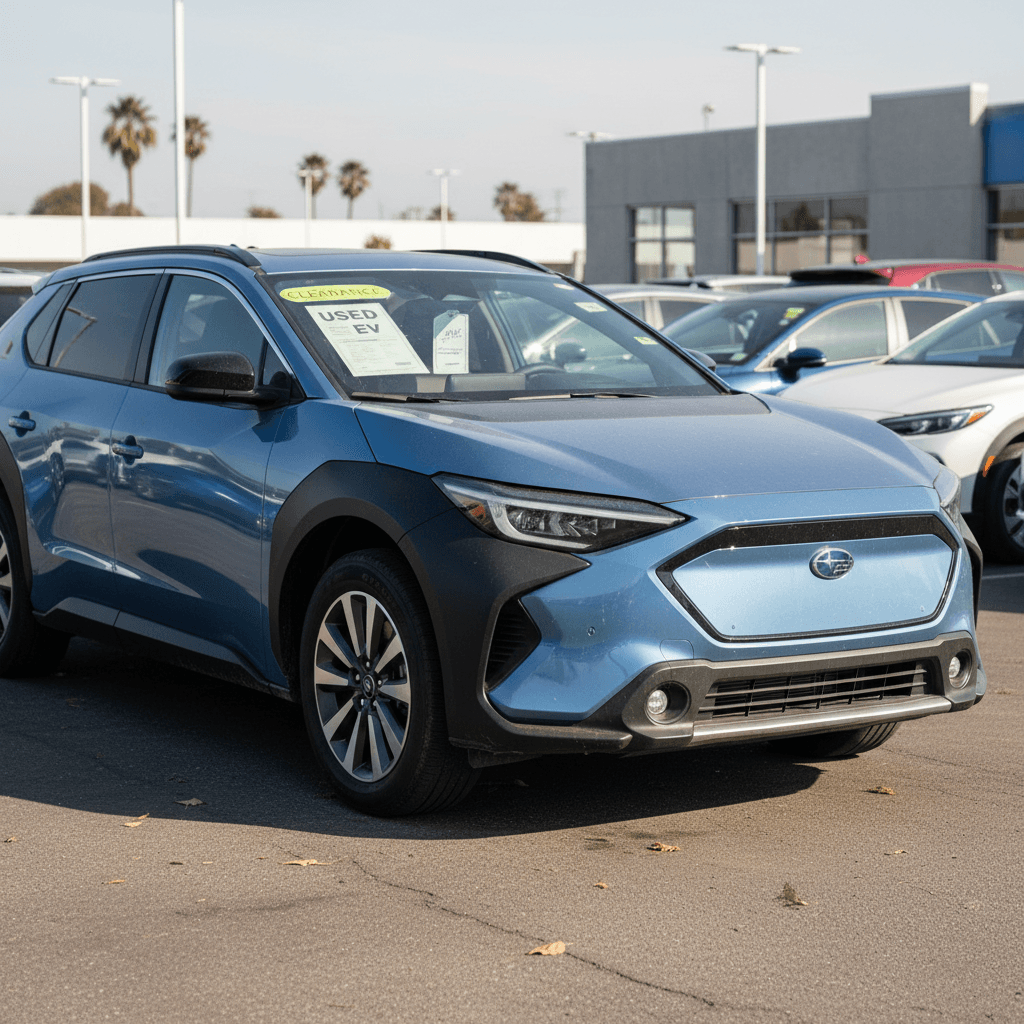
Guidebook models are helpful, but actual used Solterra listings in late‑2025 and early‑2026 tell the more practical story. Nationwide listing aggregates often show average used Solterra asking prices in the mid‑$20,000s to low‑$30,000s, with some higher‑mileage or heavily incentivized units dipping into the low‑$20,000s.
Typical 3‑year‑old Subaru Solterra price bands
What you’re likely to see on dealer lots and marketplaces
Budget end
Low $20,000s
- Higher mileage (40k+)
- Prior rental or fleet use
- Base Premium trim, fewer options
- May have cosmetic wear or minor accidents
Sweet spot
Mid‑to‑upper $20,000s
- 20k–35k miles
- Limited or Touring trims
- Clean history, one owner
- Documented service, mostly highway or commuter use
Top of market
Low $30,000s
- Under ~20k miles
- Touring with options
- CPO or factory extended coverage
- Strong battery health documentation
Local factors matter. In Subaru‑dense regions (the Pacific Northwest, Colorado, parts of New England), used Solterras can command a premium because shoppers specifically want a winter‑capable, all‑wheel‑drive EV SUV. In markets with heavy new‑EV discounts or aggressive subsidized leases, 3‑year‑old values can feel softer.
Why the Solterra depreciates the way it does
Main forces pushing value down
- New‑EV price cuts: Subaru cut Solterra MSRPs by thousands of dollars for the 2025 model year, which pulls used values down to stay competitive.
- Rapid tech progress: Faster‑charging, longer‑range rivals pressure resale values for early‑generation EVs that charge slower or go fewer miles per charge.
- Recall headlines and brand newness: Early wheel‑hub recalls shared with Toyota’s bZ4X and limited charger‑network awareness made some shoppers hesitant.
Forces supporting value
- Standard AWD and Subaru image: Many used‑EV shoppers in snow states want exactly what the Solterra offers: all‑wheel drive and Subaru’s safety story.
- Conservative battery tuning: Real‑world owner reports so far show modest battery degradation, which supports confidence at resale.
- Shared Toyota/Subaru engineering: Parts and service knowledge are spreading quickly, making long‑term ownership less scary for second owners.
Solterra vs bZ4X in the used market
Battery health and warranty: impact on 3‑year value
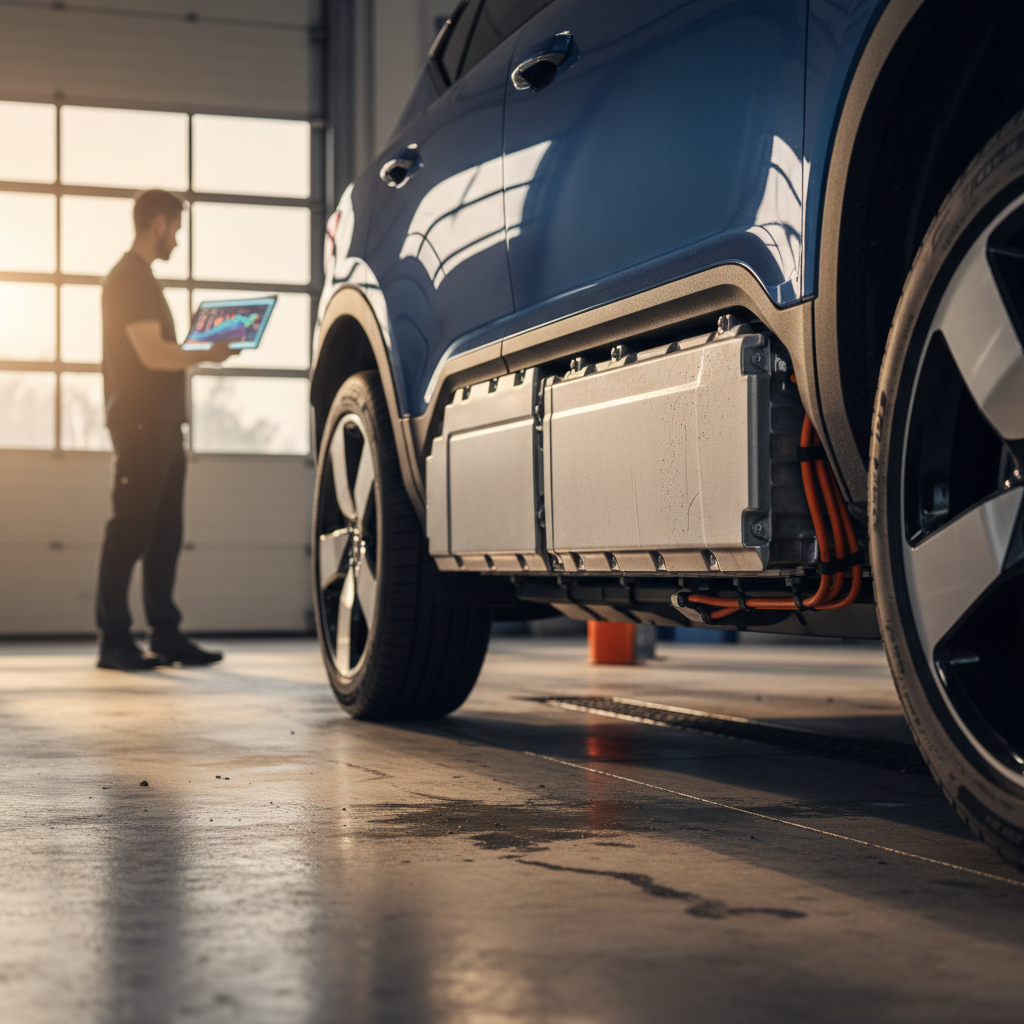
Battery confidence is the backbone of 3‑year EV value. The Solterra uses a relatively conservative battery and charging strategy, and it carries an 8‑year / 100,000‑mile high‑voltage battery warranty. Subaru also specifies a minimum capacity retention threshold, if the pack degrades faster than that within the warranty period, you may qualify for repair or replacement.
Why conservative tuning helps resale
- A 3‑year‑old Solterra is still very early in its battery life curve, usually with 5–10 years of warranty runway left depending on mileage.
- Owners who avoid repeated DC fast‑charging from very low states of charge, and who park in moderate temperatures, tend to see the least degradation.
- Vehicles with documented battery‑health readings (from dealer diagnostics or trusted third‑party tests) can command a noticeable price premium over similar Solterras without data.
How a battery report moves the needle
On Recharged, every vehicle includes a Recharged Score battery health report that quantifies degradation, fast‑charging history, and pack consistency. If you’re buying a 3‑year‑old Solterra, that kind of transparency is the difference between gambling on a good pack and knowing you’ve found one.
How a 3‑year‑old Solterra compares to rivals
Subaru Solterra vs key 3‑year‑old EV rivals
High‑level comparison of where a 3‑year‑old Solterra tends to land versus similar compact EV SUVs.
| Model (3 yrs old) | Typical Price Band | Value Position | Notable Strengths | Potential Drawbacks |
|---|---|---|---|---|
| Subaru Solterra | Mid‑$20k to low‑$30k | Middle of pack | Standard AWD, Subaru safety image, comfortable ride, conservative battery tuning | Slower fast‑charging than newer rivals, modest brand awareness as an EV |
| Toyota bZ4X | Similar to Solterra | Similar | Toyota badge, efficiency, widely available service network | Mixed early‑recall headlines, FWD trims less winter‑friendly |
| Hyundai Ioniq 5 / Kia EV6 | Upper‑$20k to mid‑$30k | Stronger | Fast charging, design, tech, longer EPA range on many trims | Some markets see softer pricing due to incentives and rapid new‑model updates |
| Tesla Model Y | Low‑$30k to low‑$40k | Stronger | Brand pull, Supercharger access, strong performance, software experience | Rides firmer, interior quality polarizing, RWD variants less snow‑oriented |
Assumes average mileage, clean history, and non‑performance trims.
In value terms, the Solterra sits in a pragmatic middle lane. It doesn’t deliver the resale firepower of a Model Y, but it also isn’t punished as harshly as some first‑generation compliance‑car EVs. If you value AWD, safety, and predictable Subaru ownership over outright range or charging bragging rights, that middle lane can be attractive at the right price.
Tips to protect your Solterra’s value through year three
Six ways Solterra owners can defend 3‑year value
1. Keep mileage in a normal band
Depreciation models assume roughly 10,000–12,000 miles per year. If you’re far above that, expect your 3‑year value to come in meaningfully lower than guides suggest. If you’re far below, document it, low‑mileage examples deserve a premium, but buyers won’t just take your word for it.
2. Baby the battery during fast‑charging
Avoid running the pack to 0% and then repeatedly DC fast‑charging to 100%. Instead, try to fast‑charge between roughly 10–80% when road‑tripping, and use Level 2 home charging for daily use. That keeps degradation modest and your future resale conversation easy.
3. Stay on top of software and recall updates
The Solterra has seen important software and hardware campaigns. Completing them promptly and keeping documentation on hand reassures the next owner that they’re not inheriting unfinished work, or early‑build quirks.
4. Maintain a clean, damage‑free body
Small dings, curbed wheels, and interior wear all add up. At resale time, a clean Solterra with original paint and glass will often bring thousands more than a comparable vehicle with cosmetic or structural accident history.
5. Keep detailed service records
Even though EVs need less routine maintenance than gas SUVs, things like tire rotations, brake inspections, cabin filters, and software updates are still important. A tidy folder, or digital record, of services done on time supports both private‑sale and trade‑in value.
6. Time your sale around market swings
Tax‑credit rules, local incentives, and new‑model announcements can all move EV values quickly. If you can, avoid selling right after a major new‑EV price cut, and consider listing in late fall or winter in snow‑belt states where AWD demand peaks.
Shopping checklist for a 3‑year‑old Solterra
If you’re on the buy side, a 3‑year‑old Solterra can be a very rational sweet spot, provided you separate the strong examples from the merely cheap ones. Use this checklist as a starting point when you’re walking a lot or scrolling listings.
What to verify on a 3‑year‑old Subaru Solterra
Confirm battery health and charging history
Ask for a recent battery‑health report or diagnostic readout. Look for relatively low degradation, consistent cell voltages, and no history of repeated DC fast‑charging every day. On Recharged, this is built into the Recharged Score report so you don’t have to guess.
Review recall and campaign status
Make sure all safety recalls and service campaigns are complete, especially early wheel‑hub and software updates. A Subaru dealer can pull this by VIN, and the history should match what you see in the paperwork.
Inspect tires and brakes
Heavy EVs like the Solterra can be hard on tires if they’re driven aggressively. Uneven wear suggests alignment issues or rough use. Healthy tires and brakes reduce your immediate post‑purchase costs and hint at a careful prior owner.
Check for winter or off‑road abuse
Standard AWD and X‑Mode entice owners into deeper snow and mild trails. Look underneath for rust, scrapes, and bent components. Light use is fine; heavy trail rash or corrosion is a reason to negotiate hard or walk away.
Evaluate charging behavior on a test drive
If possible, plug into a DC fast charger and watch how quickly the car ramps and sustains charge rates. You’re looking for behavior that matches expectations for the platform, not drastically slower rates that could indicate battery or thermal issues.
Compare total cost vs newer incentives
Before signing anything, compare your 3‑year‑old Solterra out‑the‑door price and financing to current deals on new EVs in your area. In some regions, aggressive new‑EV incentives can narrow the gap more than you’d expect.
When a 3‑year‑old Solterra is a good buy, and when to walk
Signs it’s a smart buy
- Price sits in the segment‑correct range for its mileage and trim, without being the suspicious outlier.
- Battery‑health documentation shows modest degradation with no red flags.
- Clean title, no major accidents, service and recall work all up to date.
- The use case, AWD, modest range, strong safety, matches your real‑world needs.
Signals you should walk away
- Deal is only attractive compared to wildly overpriced new EVs, not to the current incentive‑adjusted market.
- Seller can’t or won’t provide battery or recall documentation.
- Evidence of heavy fast‑charging, abuse, or structural accident repair.
- You need frequent long‑distance DC‑fast‑charge road‑trips, the Solterra’s charging curve simply isn’t optimized for that use case.
Don’t buy on price alone
FAQ: Subaru Solterra value after 3 years
Frequently asked questions about 3‑year Solterra value
Bottom line on Subaru Solterra 3‑year value
Three years in, the Subaru Solterra looks like a sensible, middle‑of‑the‑pack performer on value rather than a runaway winner or a cautionary tale. You can expect roughly a 25–30% hit in the first three years, landing in a resale range that makes sense relative to its strengths, standard AWD, safety tech, and conservative battery tuning, and its limitations in range and fast‑charging.
For owners, that means you can defend your Subaru Solterra value after 3 years by protecting the battery, keeping up with software and recall work, and documenting care. For shoppers, it means focusing less on the scariest EV headlines and more on the particular Solterra in front of you: its price versus market, its battery health, and whether AWD, comfort, and Subaru’s character are what you actually need.
If you want help making that call, Recharged was built for exactly this moment in the EV market. With Recharged Score battery diagnostics, fair‑market pricing, EV‑savvy financing options, trade‑in tools, and nationwide delivery, you can shop 3‑year‑old Solterras, and their rivals, with the kind of transparency that used‑car buyers have been missing for decades.