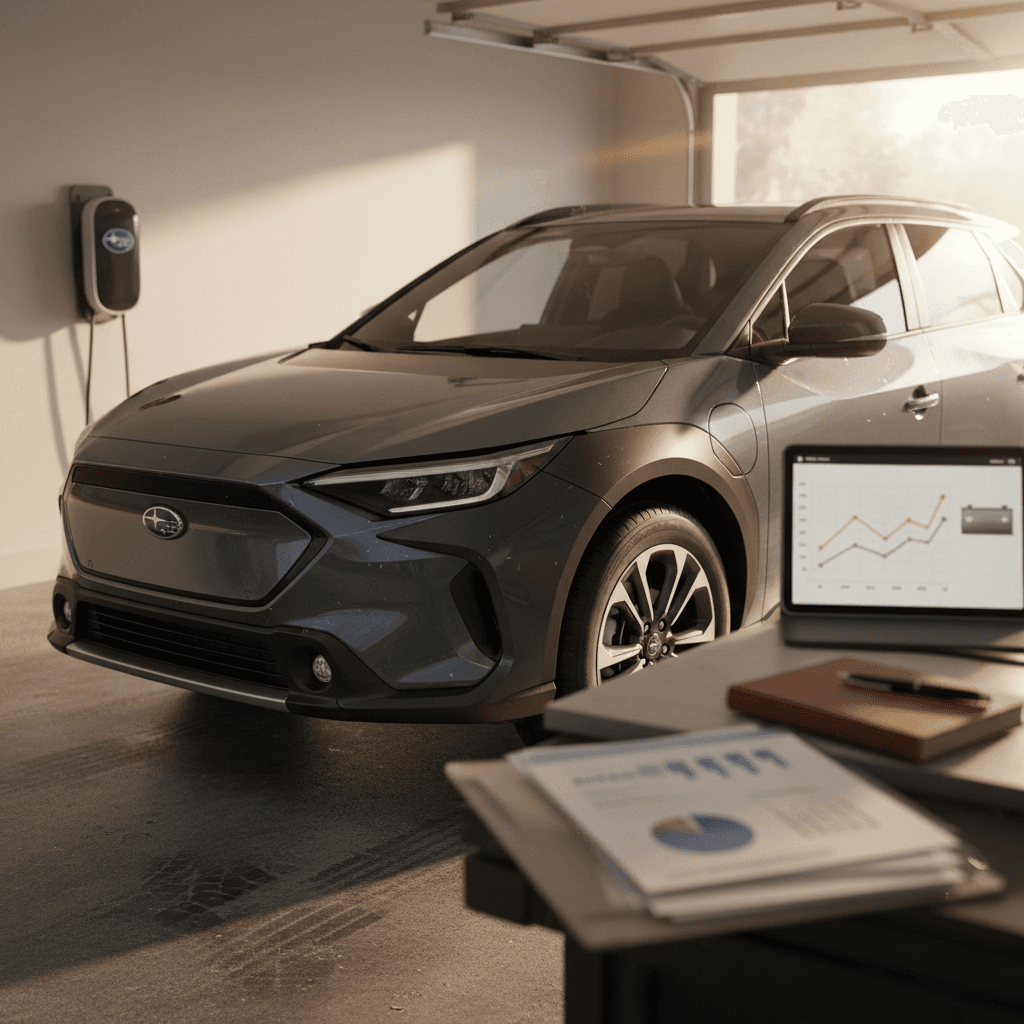
If you’re eyeing a Subaru Solterra, you’re probably wondering what the true cost of ownership over 5 years really looks like, beyond the window sticker and the hype. Electric SUVs can be cheaper to run than gas, but the story changes once you add depreciation, insurance, home charging hardware, and real‑world efficiency into the mix. Let’s walk through what you’re likely to spend (and save) with a Solterra over a typical 5‑year ownership window.
How we built these 5‑year Solterra numbers
Why the Subaru Solterra 5‑year cost story matters
Total cost of ownership is where EVs quietly earn their keep. On paper, the Subaru Solterra can look pricey next to a gas RAV4 or Subaru Forester. Over five years, though, you’re stacking up lower fuel costs, fewer maintenance line items, and the potential for tax incentives or dealer discounts, especially if you buy used.
- You’re deciding between a Solterra and a gas SUV and want a 5‑year cost comparison.
- You’re trying to decide whether to buy new vs. used.
- You’re already sold on EVs but worried about depreciation and battery health.
- You want to know if the Solterra’s all‑wheel‑drive efficiency penalty is a budget buster.
Used EVs change the math
Subaru Solterra basics: price range and efficiency
Before we talk ownership costs, it helps to know what kind of Solterra we’re talking about. All trims in the U.S. come with dual‑motor all‑wheel drive, a battery around 72–73 kWh usable, and EPA‑rated efficiency of roughly 32 kWh per 100 miles (about 3.1 mi/kWh) depending on year and trim.
Subaru Solterra at a glance (recent model years)
Approximate new‑car pricing and key efficiency numbers for the Subaru Solterra in the U.S. market.
| Item | Typical Range |
|---|---|
| New MSRP (recent model years) | ~$45,000–$54,000 |
| Typical used price (2–3 years old) | ~$28,000–$38,000 |
| Battery capacity (usable) | ≈72–73 kWh |
| EPA efficiency | ≈32 kWh/100 mi |
| EPA range (AWD) | High‑200s miles in ideal conditions |
Exact MSRP and range vary by model year and trim, but this gives you the ballpark for 5‑year cost planning.
Real‑world range vs. brochure numbers
5‑year cost summary: Subaru Solterra vs gas SUV
Approximate 5‑year ownership snapshot (12,000 miles/year)
Those ranges bake in purchase, depreciation, fuel or electricity, typical maintenance, and insurance. In many markets, a new Solterra still costs a bit more to own than a comparable gas SUV over five years, mostly because of higher purchase price and steeper early depreciation. But a well‑priced used Solterra can flip that equation in your favor.
Purchase price, financing, and incentives
Let’s start with the big check: getting a Solterra into your driveway. Recent new Solterra models tend to list in the mid‑$40,000s to low‑$50,000s before destination and fees. Incentives, whether federal, state, or dealer cash, can move that number meaningfully, especially if you qualify for used‑EV tax credits or a low APR.
New Subaru Solterra (recent model years)
- Typical transaction price: roughly $45,000–$54,000 depending on trim and discounts.
- Loan term: 60–72 months is common.
- Upside: full warranty, latest software and efficiency updates.
- Downside: you absorb the steepest 2–3 years of depreciation.
Used Subaru Solterra (2–3 years old)
- Typical asking prices: about $28,000–$38,000 depending on miles and condition.
- Loan term: often 48–72 months; rate may be slightly higher than new.
- Upside: lower monthly payment and much gentler 5‑year depreciation curve.
- Downside: you need proof the battery and charging health are solid.
Where Recharged fits in
Ready to find your next EV?
Browse VehiclesCharging costs for 5 years with a Subaru Solterra
Electricity is where the Solterra quietly starts paying you back. With efficiency around 32 kWh per 100 miles, you’re using about 0.32 kWh per mile. Multiply that by your local electricity rate and annual mileage, and you have your fuel budget.
Subaru Solterra 5‑year charging cost estimates
Assuming 12,000 miles per year and a mix of home and public charging.
| Scenario | Assumptions | Approx. 5‑year charging cost |
|---|---|---|
| Home‑heavy charging | $0.15/kWh, 90% of miles charged at home | ≈$2,900 |
| Mixed charging | $0.18/kWh home, occasional DC fast charging | ≈$3,300–$3,800 |
| Public‑heavy urban charging | Higher rates at public Level 2/DC fast chargers | ≈$4,000+ |
Your numbers will flex with local electricity prices, driving style, and how often you fast‑charge.
Compare that to gas
Don’t forget the home charger. A Level 2 unit plus installation typically runs $800–$2,000 depending on your electrical panel and whether you need a new circuit. Amortized over five years, that’s $160–$400 per year, often still leaving you ahead versus gasoline.
Maintenance and repairs: how much do you really save?
Like every EV, the Subaru Solterra skips oil changes, spark plugs, and most exhaust and transmission service. Brake wear is lighter thanks to regenerative braking. Over five years, that usually adds up to noticeably lower service bills than a gas SUV, even if you pay a little more for tires.
Typical 5‑year maintenance: Solterra vs. gas SUV
Assumes 12,000 miles/year and factory‑recommended service.
Routine service
Solterra: cabin filters, brake fluid, tire rotations, inspections.
Expect modest, predictable bills unless something unusual breaks.
Big mechanical items
Solterra: no timing belt, no oil pump, no complex multi‑gear transmission.
Most expensive component, the battery pack, is covered by a long warranty window.
Estimated 5‑year maintenance spend
Solterra: roughly $2,000–$3,000 in routine care.
Gas SUV: more like $3,000–$4,500, especially if you keep up with all fluids.
Battery replacement anxiety vs. reality
Insurance costs for a Subaru Solterra
Insurance is the one line item where EVs, including the Solterra, can sting a bit. Higher vehicle prices, expensive electronics, and aluminum bodywork tend to push premiums up versus an equivalent gas SUV. The good news: different carriers treat EVs very differently, so shopping around matters more here than with a basic compact sedan.
What drives Solterra insurance costs up?
- Higher MSRP than many gas competitors.
- Costly ADAS (advanced driver‑assist) sensors in bumpers and windshields.
- Limited repair network in some regions, especially early on.
How to keep premiums closer to earth
- Get quotes from EV‑friendly insurers that price based on actual loss data, not fear of batteries.
- Bundle home and auto, and ask about telematics or low‑mileage discounts.
- Choose higher deductibles if it fits your emergency‑fund comfort level.
Real‑world Solterra quotes in the U.S. vary wildly by state, driver history, and mileage, but it’s realistic to plan on paying somewhat more than you would for a Forester or RAV4. Over five years, that might mean an extra $1,000–$2,000 in insurance versus a mainstream gas compact SUV, or roughly a wash once you factor in your fuel savings.
Depreciation and resale value after 5 years
Depreciation has been the wild card for almost every EV, and the Solterra is no exception. Early Solterra buyers have watched values slide quickly as discounts, incentives, and a flood of newer EVs hit the market. That volatility hurts if you buy new and trade out in three to five years, but it’s exactly why smart used‑EV shoppers are finding bargains.
Illustrative 5‑year depreciation: new Subaru Solterra
Example of how a new Solterra’s value might change over five years in today’s market.
| Year | Estimated value | What that means for you |
|---|---|---|
| Purchase (Year 0) | $50,000 (example) | You pay near‑MSRP for a new Solterra Limited/Touring. |
| Year 1 | $40,000–$42,000 | Heavy first‑year drop typical of many new EVs. |
| Year 3 | $32,000–$35,000 | Used prices stabilize as early discounts and incentives are baked in. |
| Year 5 | $26,000–$30,000 | Total 5‑year depreciation of roughly $20,000–$24,000 on this example. |
Your numbers will vary, but this shows why buying used can flatten your depreciation curve.
Used Solterra depreciation looks very different
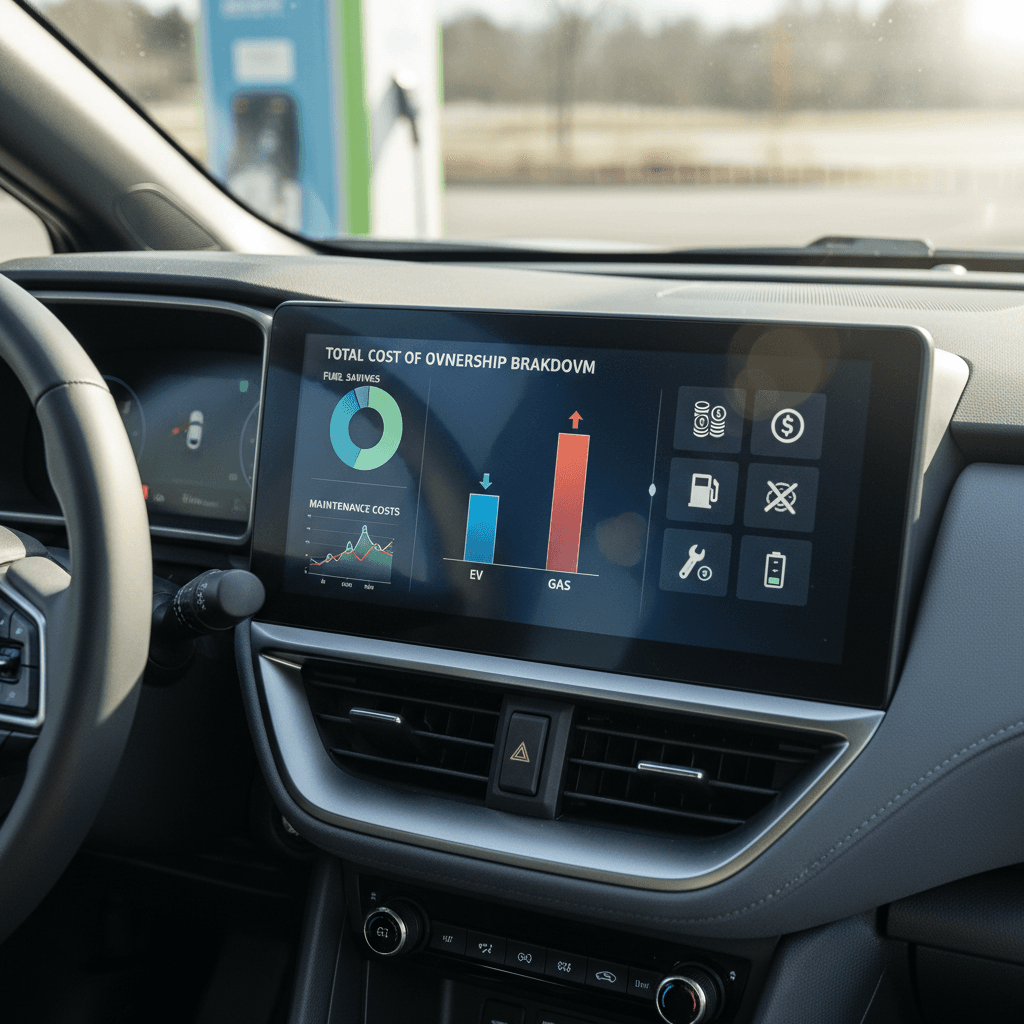
Used vs. new Solterra: which has the better 5‑year cost?
If you’re focused squarely on 5‑year cost of ownership, a clean, low‑mileage used Subaru Solterra often makes more financial sense than a brand‑new one. Someone else already took that first big depreciation hit, and as long as the battery checks out, you can enjoy most of the same efficiency and tech for far less money.
Quick decision checklist: new vs. used Solterra
1. How long will you keep it?
If you plan to keep the Solterra 8–10 years, buying new can make sense, you’ll spread depreciation over a longer window. If you’re thinking 4–6 years, lightly used usually wins.
2. Are you eligible for EV tax credits?
New and used EV credits have different rules and income caps. If a credit knocks several thousand off a new Solterra, it may narrow the gap with used, run the math.
3. Can you verify battery health?
For a used Solterra, ask for a third‑party battery‑health report or buy through a marketplace like Recharged that includes a <strong>Recharged Score battery diagnostic</strong> with every car.
4. How sensitive are you to tech updates?
Later model years may have better efficiency, charging behavior, or driver‑assist tuning. If those changes matter to you, factor that into the price difference.
Ways to lower your Subaru Solterra 5‑year costs
You can’t control everything, interest rates, resale market mood, or the price of copper in your motor windings. But you do control how you buy, charge, and insure your Solterra. Small decisions there can move the needle thousands of dollars over a five‑year span.
Six practical ways to shrink your 5‑year Solterra bill
Most of these are simple habit or shopping tweaks, not major sacrifices.
1. Prioritize home charging
Home electricity is almost always cheaper than DC fast charging. Even a few extra home sessions per month can shave hundreds off your 5‑year fuel bill.
2. Use off‑peak rates
If your utility offers time‑of‑use plans, schedule your Solterra to charge overnight when rates are low. That can cut your per‑kWh cost dramatically.
3. Moderate highway speed
Driving 5–10 mph slower on the highway can add meaningful range and reduce how often you pay DC fast‑charging prices.
4. Keep tires healthy
Proper inflation and good alignment preserve efficiency and keep expensive, EV‑rated tires from wearing prematurely.
5. Shop insurance aggressively
Re‑quote your policy every year or two, and seek out insurers that publish EV‑friendly underwriting policies.
6. Buy smart on the used market
Target Solterras with verified battery health, clean histories, and realistic pricing. Recharged’s fair‑market pricing tools and EV‑specialist support are built for exactly this problem.
Subaru Solterra 5‑year cost FAQ
Frequently asked questions about 5‑year Solterra ownership costs
Bottom line: Is a Subaru Solterra worth it over 5 years?
Look beyond the sticker, and the Subaru Solterra’s 5‑year true cost of ownership is a mixed but encouraging picture. New, it can be a little more expensive to own than a gas compact SUV, thanks to higher upfront price and fast early depreciation, even as it saves you hundreds per year on fuel and maintenance. Buy the right Solterra used, though, and the script flips: you keep the all‑weather confidence, smooth EV torque, and lower running costs, without paying a premium for the badge on day one.
If you’re serious about a Solterra but want the numbers to make sense, look closely at lightly used examples with verified battery health and realistic pricing. That’s where marketplaces like Recharged shine: you get a Recharged Score Report with battery diagnostics, fair‑market pricing analysis, financing options, trade‑in support, and even nationwide delivery. Put all of that together, and a Subaru Solterra can be not just the adventurous choice, but the smart financial one over your next five years on the road.