If you’re eyeing a 2023 Hyundai IONIQ 5, especially used, you’ve probably heard the horror stories right alongside the rave reviews. The reality sits in the messy middle: most 2023 IONIQ 5s are enjoyable, trouble-free EVs, but a meaningful minority have real issues that can leave you stranded or stuck at the dealer. This guide walks through the most common 2023 Hyundai IONIQ 5 problems and fixes, so you know what’s normal, what’s a red flag, and what you can prevent or repair.
Quick take
2023 IONIQ 5 reliability in one glance
How the 2023 IONIQ 5 is behaving in the real world
Overall, owner reviews, long‑term tests, and complaint data paint the 2023 IONIQ 5 as fundamentally solid hardware with some immature systems around it. The motor, battery pack, and basic structure are holding up well; the headaches tend to come from the charging hardware, 12‑volt system, and software.
Used-buyer tip
Biggest 2023 Hyundai IONIQ 5 problems to know
Top 2023 IONIQ 5 problems (and where they show up)
Not every car has these issues, but these are the patterns shoppers and owners should watch for.
ICCU & charging failures
Intermittent or complete loss of AC/DC charging, sometimes preceded by warning chimes or a "Check Electric Vehicle System" message. The culprit is often the Integrated Charging Control Unit (ICCU).
12-volt battery drain & no-start
Car won’t ‘start’ after sitting, even though the main traction battery still has range. Often traced to a weak 12‑volt battery or modules that don’t sleep properly.
Warning lights & brake messages
Random warning icons, “Check Brake System” messages, or clusters flickering after software updates. Sometimes linked to low 12‑volt voltage or recall-related software.
Beyond those headline items, owners also talk about DC fast‑charging that doesn’t always hit the dazzling numbers from the brochure, occasional infotainment or app glitches, quick‑wearing tires, and a few squeaks and rattles. Let’s unpack each of the big problem areas and the realistic fixes.
ICCU failures and no-charge situations
If there’s one phrase you’ll see again and again in IONIQ 5 forums, it’s ICCU failure. The Integrated Charging Control Unit manages how power flows between the high‑voltage battery, onboard AC charger, DC fast‑charge hardware, and the 12‑volt system. When it misbehaves, your IONIQ 5 can suddenly refuse to fast‑charge, slow‑charge, or charge at all.
- Repeatedly aborted DC fast‑charging sessions, often around 60–80% state of charge.
- Level 2 home charging that throttles way back in speed or cuts out entirely.
- Warning messages such as “Check Electric Vehicle System,” sometimes with a loud pop or clunk before power loss.
- In more serious cases, the car won’t go into gear or shows drastically reduced range.
Why ICCU issues matter
How to tell if your 2023 IONIQ 5 has an ICCU problem
1. Compare different chargers
If the car fails to charge on multiple trusted Level 2 and DC fast chargers, the odds shift away from ‘bad station’ and toward an onboard fault like the ICCU or onboard charger.
2. Watch for repeatable behavior
Slowdowns at the exact same state of charge, or sessions that always quit after 5–10 minutes, point to the car rather than the network.
3. Check for stored warnings
Even if the dash is clear now, a dealer can scan for historical “Check Electric Vehicle System” codes that may indicate a deeper issue.
4. Ask about past repairs
On a used car, ask specifically whether the ICCU or onboard charger has ever been replaced and whether repairs were done under a recall or TSB.
How Hyundai typically fixes it
- Warranty replacement of the ICCU and related wiring or fuses.
- Software updates that adjust how aggressively the system charges and manages heat.
- In some cases, replacement of the onboard AC charger or DC components.
For an in‑warranty 2023 IONIQ 5, you shouldn’t be paying out of pocket for a confirmed ICCU failure.
What you can do as an owner
- Document every failed charging session with station, time, SOC, and photos.
- Use the same public charger on another EV (if possible) to rule out a station fault.
- If you’re shopping used, add a full fast‑charge test to your pre‑purchase inspection.
- Buy from a seller who can show recall and repair paperwork, or work with Recharged, where this history is checked and summarized in the Recharged Score.
12-volt battery drain and no-start problems
The IONIQ 5, like every modern EV, still relies on an old‑fashioned 12‑volt battery to wake up the computers, run the brake booster, and close the high‑voltage contactors. When that battery is weak or drains overnight, your car can appear “dead,” even with plenty of range left in the big traction battery.
- Car won’t ‘start,’ shift into gear, or release the parking brake after sitting for a day or two.
- Multiple warning lights, flickering screens, or random “Check Brake System” messages that disappear after a reboot.
- Reports of the Bluelink/connected services module or infotainment head unit staying awake and drawing power after shutdown.
Easy first check
Preventing and fixing 12-volt issues on a 2023 IONIQ 5
1. Test the 12-volt annually
Once the car is 3–4 years old, have the 12‑volt battery load‑tested yearly. Replace it proactively if it’s marginal, especially in hot or very cold climates.
2. Keep software up to date
Dealer‑installed software updates can improve how quickly modules go to sleep and reduce parasitic drain. Ask your service advisor to check for outstanding updates at every visit.
3. Use a smart maintainer if it sits
If you don’t drive often, a quality 12‑volt maintainer (connected correctly to the jump posts) can keep the system topped up between trips.
4. Record patterns before service
Note how long the car sat, temperatures, and what accessories were used. That diary can help a technician decide whether you’re seeing normal behavior or a deeper electrical fault.
Charging quirks: DC fast and Level 2 issues
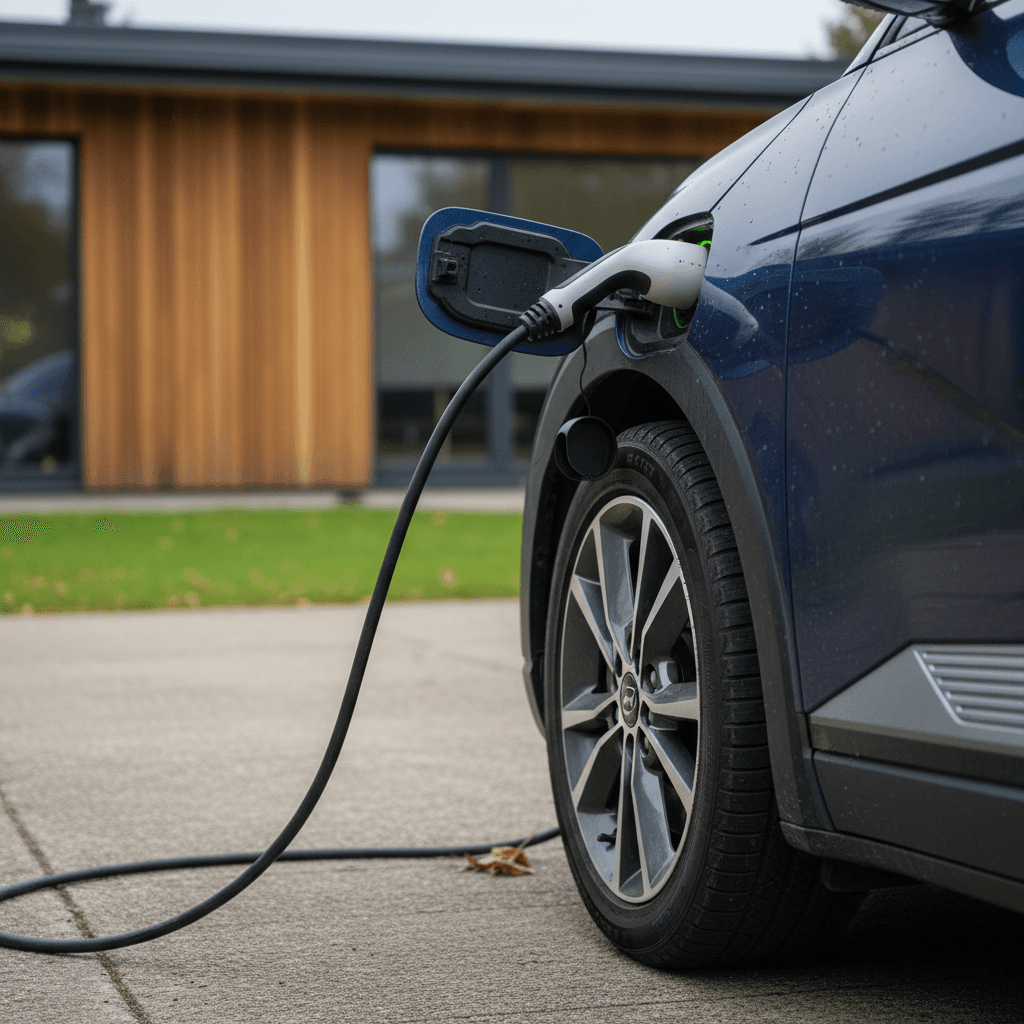
Hyundai launched the IONIQ 5 with eye‑popping fast‑charge claims: 10–80% in as little as 18 minutes under perfect conditions. In the real world, charging behavior varies wildly based on temperature, software version, and the health of the onboard hardware.
Typical 2023 IONIQ 5 charging complaints
Some are normal EV behavior; others warrant a trip to the dealer.
DC fast charging slower than expected
Cold battery, crowded stations, or conservative software can all slow charging. If speeds are only low during winter or right after highway runs, it may be normal.
Interrupted Level 2 charging
Owners report home charging that drops from 40 amps to 30 or less, or stops entirely. In some cases this has been addressed with software updates and, where necessary, hardware replacements.
Temperature-sensitive performance
In very cold climates, the pack may not precondition aggressively enough before DC fast‑charging, leading to slower speeds and longer road‑trip stops.
Onboard charger failures
Less common but more serious: the car won’t accept AC charging at all, even from multiple stations. That can indicate a failing onboard charger or ICCU, which requires dealer diagnosis.
Normal vs. not-normal
Brakes, warning lights, and safety recalls
Most 2023 IONIQ 5 owners will never experience dramatic brake failures. But a handful of drivers have reported “Check Brake System” warnings and, in rare cases, braking that suddenly feels weak or inconsistent, often intertwined with low 12‑volt voltage or software issues.
- Instrument cluster warnings that pop up after a recent software or recall update.
- ABS, stability control, or brake warnings that coincide with a weak 12‑volt battery.
- Isolated reports of brake assist dropping out, followed by dealer replacement of control units and 12‑volt components.
If you ever lose braking force
Why recall history matters on a 2023 IONIQ 5
Recall campaigns and service bulletins continue to evolve as Hyundai refines the IONIQ 5 platform.
| Issue type | Typical fix | What you should see in records |
|---|---|---|
| Charging/ICCU related | Software update plus hardware replacement on affected VINs | Repair order showing ICCU, fuses, or charger components replaced and post‑repair test drive |
| Electrical/cluster warnings | Software reflash of control units, sometimes 12‑volt battery replacement | RO noting instrument‑cluster update and verification that warning lights are cleared |
| Misc. safety items | Varies by campaign: harness inspections, sensor replacements, etc. | Recall campaign codes marked as COMPLETED with dealer stamp or digital confirmation |
Ask any seller for documentation that recall work has been completed, especially on 2022–2023 builds.
Software glitches: infotainment, apps, and driver aids
Like most modern EVs, the 2023 IONIQ 5 carries more code than chrome. Owners report the usual mix of infotainment and driver‑assist quirks: slow start‑up of the center screen, intermittent Bluetooth pairing, Bluelink app connection failures, and lane‑keeping or adaptive cruise that sometimes demand recalibration.
- Center screen freezes or reboots during navigation.
- Bluelink app unable to connect or show current charge status until a software update.
- Occasional false parking sensor beeps or warnings in tight spaces.
- Driver‑assist alerts that show up after a windshield or radar‑sensor replacement.
The usual fix is boring, but effective
Ride comfort, tires, and build-quality complaints
The IONIQ 5’s long wheelbase and big battery pack make it feel planted, but they also give it some quirks. Owners who love the car overall still grumble about fast‑wearing tires, a relatively firm ride on rough pavement, and, on some examples, squeaks from the rear suspension or hatch area.
Common comfort and build-quality complaints
These are more annoyances than deal-breakers, but worth budgeting for.
Short-lived tires
The combination of heavy curb weight and strong torque can chew through OEM tires faster than many owners expect. Alignment and tire pressure become important.
Firm ride on bad roads
Big wheels and short sidewalls look great but don’t love potholes. Try a thorough test drive over the worst pavement near you.
Interior rattles & trim noises
Isolated reports of rear‑suspension clunks and hatch‑area squeaks. Usually handled under warranty with revised bushings or trim adjustments.
Test-drive like you own it
What to check before buying a used 2023 IONIQ 5
Used EVs live and die on two things: battery/charging health and software or recall history. The 2023 IONIQ 5 is no exception. A clean‑history car with uneventful charging behavior can be a terrific long‑term buy; a neglected one can become your full‑time project.
Pre-purchase checklist for a 2023 IONIQ 5
1. Scan for recalls and completed campaigns
Run the VIN through Hyundai’s recall tool and ask for service records. Every open recall should be completed before you take delivery, or clearly scheduled, with the seller on the hook.
2. Do a full charging test
Charge on a reliable Level 2 (at least 40 amps) from ~20–80%, then, if possible, on a reputable DC fast charger. Watch for sudden drop‑offs, error messages, or sessions that abort across multiple stations.
3. Inspect 12-volt and electronics behavior
Start the car several times, check for slow boot‑ups, flickering clusters, or transient warnings. If a shop can perform a pre‑purchase inspection, ask them to load‑test the 12‑volt battery.
4. Check for ICCU or charger repairs
A documented ICCU or onboard charger replacement isn’t necessarily a deal‑breaker, it may mean the big failure already happened and was fixed. But walk away from cars with vague or missing paperwork.
5. Review battery health data critically
Onboard state‑of‑health readouts are a helpful clue, not gospel. Look for consistency between reported SOH, actual range, and driving history. A <strong>Recharged Score</strong> uses independent diagnostics to validate what the car is telling you.
6. Drive it like your daily life
Simulate your commute: highway speeds, hills, and stop‑and‑go. Confirm the ride, noise levels, and driver‑assist systems work the way you expect.
How Recharged can simplify this
How recalls and warranty work on a used IONIQ 5
Hyundai’s EV warranty is one of the stronger ones on paper, and most 2023 IONIQ 5s in the U.S. are still comfortably inside their coverage windows. That matters when you’re staring down a potential ICCU or charger replacement.
Key U.S. warranty coverage on a 2023 IONIQ 5 (typical Hyundai terms)
Always confirm with Hyundai or your dealer using the specific VIN and in‑service date.
| Component | Typical coverage | What it means for you |
|---|---|---|
| High-voltage battery pack | 10 years / 100,000 miles (original owner, often transferable) | Defects in materials or workmanship are covered; gradual range loss is harder to claim unless extreme. |
| Electric drivetrain & major EV components | 5 years / 60,000 miles (bumper-to-bumper), plus EV-specific coverage | Covers many control units, but dealers still have to confirm a failure before replacing parts. |
| 12-volt battery | Shorter term (often 3 years, sometimes prorated) | A weak 12‑volt on a 3‑year‑old car may be considered wear and tear rather than a defect. |
| Corrosion & body | 7+ years on perforation | Not usually at issue on a 2023 yet, but good long‑term peace of mind. |
Exact coverage can vary by region and original sale date, but this is the general roadmap.
Recalls vs. warranty: what’s the difference?
- Recalls are safety‑related and completed for free, regardless of ownership changes or mileage.
- Warranty repairs cover defects within time/mileage limits, but diagnosis is up to the dealer and Hyundai.
- A used 2023 IONIQ 5 with all recalls done and several warranty visits for software updates is not necessarily a lemon, it may be better sorted than a car that’s never seen a service bay.
How Recharged fits in
When you buy a used IONIQ 5 through Recharged, our team:
- Runs the VIN for open recalls and confirms completion where possible.
- Checks diagnostic data for charging‑system and battery anomalies.
- Packages everything in a Recharged Score Report so you can see, at a glance, whether this 2023 IONIQ 5 has been loved, neglected, or repaired properly.
FAQ: 2023 Hyundai IONIQ 5 problems and fixes
Frequently asked questions
Bottom line: should you buy a 2023 IONIQ 5 used?
The 2023 Hyundai IONIQ 5 is one of the most interesting EVs on the road: spacious, quick, and genuinely pleasant to live with when everything is working as intended. Its reputation has been dented not by failing motors or battery packs, but by a cluster of charging‑system problems, 12‑volt quirks, and software growing pains that hit some owners hard and others not at all.
If you go in with clear eyes, armed with a thorough pre‑purchase inspection, a fast‑charge test, and proof of recall and ICCU/charger repair history, a 2023 IONIQ 5 can be a smart, future‑proofed used EV. If you’d rather not play detective, buying through Recharged means every IONIQ 5 comes with a Recharged Score Report, verified battery and charging diagnostics, fair pricing, expert EV support, and the option for financing, trade‑in, and nationwide delivery. That way, you spend your time planning road trips, not reading service bulletins.