Two years into Rivian R1T ownership is when the honeymoon ends and the truth shows up: rattles, recalls, real‑world range and the monthly bill from your tire guy. If you’re eyeing a **used Rivian R1T** or wondering how this electric adventure truck ages, this 2‑year owner review pulls together real‑world experiences, common issues and what to look for before you buy.
What this review is, and isn’t
Two years with a Rivian R1T: what this review covers
- How R1T owners actually use their trucks after 2 years
- Driving experience and performance once the novelty wears off
- Battery health and real‑world range vs. day‑one impressions
- Charging life at home and on road trips
- The reliability story: 12V batteries, suspension, rattles and recalls
- Running costs: electricity, tires, insurance and depreciation
- How to evaluate a used R1T, and where a Recharged Score helps
How owners actually use the R1T after two years
Scroll through long‑term owner reports and a pattern emerges. The R1T starts life as a weekend‑adventure toy and quickly becomes the **daily‑driver plus everything‑else vehicle**. Two years in, owners are using it to commute, haul lumber, tow campers and shepherd kids to school, often all in the same week.
Typical 2‑year R1T ownership patterns
Most owners fall into one of these buckets, sometimes all three.
Daily driver
Many R1Ts rack up 20,000–40,000 miles in two years, mostly in All‑Purpose or Conserve mode. Owners praise the quiet cabin and instant torque in traffic.
Adventure rig
Regular trips to trailheads, ski mountains and national parks. Air suspension and drive modes see real use, not just brochure duty.
Work truck substitute
Home projects, yard runs, towing boats and campers. The gear tunnel, frunk and bed make it a practical replacement for a traditional half‑ton for many owners.
Mileage matters more than age
Driving experience: still special, or wearing thin?
Two years in, most owners still describe the **driving experience as the R1T’s superpower**. The truck hasn’t aged into something ordinary; it’s aged into muscle memory.
What stands out after 24+ months
The good, the brilliant and the mildly annoying.
Effortless speed
Even base dual‑motor trucks feel indecently quick, and quad‑motor variants are still shocking on on‑ramps. Owners rarely complain of “not enough power” after two years.
Ride & handling
Adaptive air suspension can be plush in All‑Purpose and composed in Sport. Some long‑term owners note an increase in minor rattles over rough roads as miles pile on.
Software & UI
Over‑the‑air updates keep the truck feeling new, better drive modes, improved range estimates, new features. The flip side: an occasional reboot to tame a frozen camera or blacked‑out map screen.
Not a set‑and‑forget appliance
Battery health and real-world range after 2 years
The looming question with any used EV is battery degradation: how much range do you lose in two years? Long‑term Rivian owners with early‑build R1Ts, often with **40,000–80,000 miles**, report surprisingly little measurable loss, typically in the low single‑digit percentages, if they notice any at all.
Owner-reported battery health snapshots
Day to day, what you’ll notice more than degradation is **how you drive and what you bolt to the truck**. Off‑road tires, roof boxes, cold weather and 80‑mph cruising will all carve away range long before cell chemistry does.
Cold weather reality check
Charging life: at home and on the road
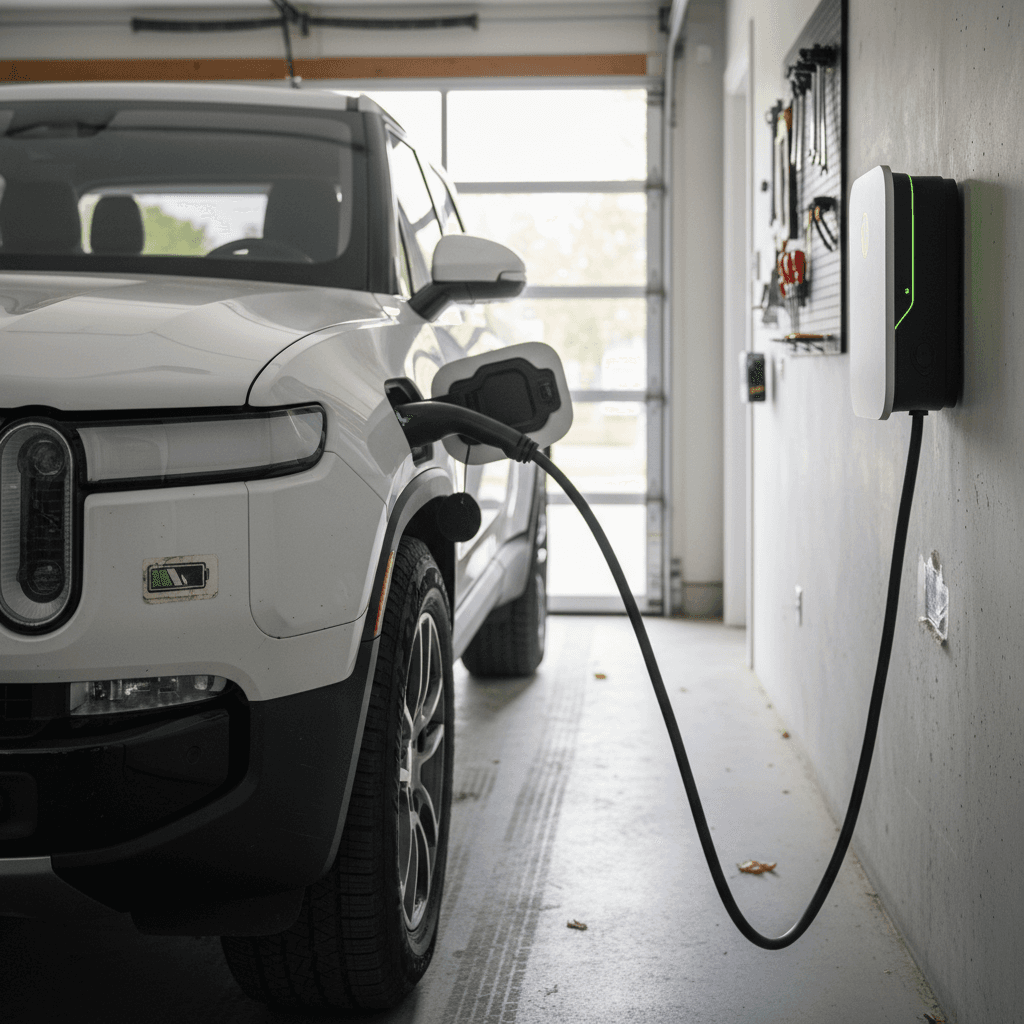
Ask 2‑year owners what makes the R1T easy to live with and you’ll hear one refrain: **home Level 2 charging**. Plug in at night, wake up to a full "tank". That rhythm does more to erase gas‑station nostalgia than any spec sheet.
Home charging after 2 years
- Most owners install a 240V Level 2 charger in the garage or driveway.
- Charging to 70–80% daily and 100% for trips is common practice.
- Electricity costs are usually much lower than fuel, especially with off‑peak rates.
- Once set up, home charging becomes background noise in your life.
Road trip reality
- Rivian’s native routing and growing fast‑charge access (including adapters for Tesla Superchargers) make long drives feasible.
- Plan on more, shorter stops than in a gas truck, but many owners like the break.
- High speeds, headwinds and big trailers can turn a 300‑mile estimate into 180–220 real miles.
Planning to buy used? Ask where it lived
Reliability and common issues in years 1–2
This is where the Rivian R1T stops being a dream sequence and starts being a machine built by humans in an Illinois factory. Two years in, the **pattern isn’t catastrophic failure**; it’s a drumbeat of small, sometimes annoying issues, punctuated for a minority by more serious repairs.
Common 1–2 year R1T issues (and what they mean for used buyers)
Not every truck will see these problems, but they’re the complaints that recur most often in owner communities and service bulletins.
| Area | Typical complaint | Severity for daily use | What to check on a used R1T |
|---|---|---|---|
| 12V battery | Early‑life failures that leave the truck unresponsive until jump‑started or serviced. | Medium | Look for 12V battery service history and any related recalls or campaigns addressed. |
| Tonneau cover | Sticking, failing to open/close, or broken covers on early trucks. | Low–Medium | Operate the cover several times; ask if it’s been replaced with the updated design. |
| Suspension & half shafts | Clicks, vibrations under acceleration; occasional damper or half‑shaft replacements. | Medium | Drive at low speed in turns and under light throttle; listen for clicks or shudder. Review suspension repair history. |
| Water leaks & trim | Water under driver’s mat, misaligned doors, wind noise, rattles. | Low–Medium | Inspect carpets for staining, check door alignment and listen for rattles on rough roads. |
| Software & cameras | Blackout navigation screen, frozen cameras, random alerts requiring a reboot. | Low | On a test drive, cycle cameras and navigation; confirm the truck is on a recent software build. |
Use this as a checklist when reviewing service records or a pre‑purchase inspection report.
Don’t ignore campaigns and recalls
“I still very much enjoy driving this truck and have zero regrets with my purchase… Minor issues, but it kicks ass.”
Ownership costs: tires, insurance and depreciation
The R1T is an electric truck, not a financial loophole. Two years in, owners discover that while they save at the plug, they pay dearly at the tire shop and in the insurance portal.
5-year cost snapshot for a new R1T (for context)
Those numbers are for new trucks, but they tell you why **buying used can make a lot of sense**. The first owner absorbs the steepest depreciation curve; you pick up the truck once its value has taken that initial hit.
Where the money goes after 2 years
What long‑term R1T owners actually complain about paying for.
Insurance
Premiums are typically higher than for a mainstream half‑ton, thanks to price, performance and repair complexity. Shop quotes before you fall in love with a specific truck.
Tires
Heavy, powerful EV trucks eat tires. Many owners see 20,000–25,000 miles from a set of road‑biased tires with spirited driving; aggressive off‑road rubber can wear faster.
Depreciation & financing
Two‑year‑old trucks have already taken their biggest value hit, which is why a used R1T can be much better value than a new build, especially if you finance smartly.
Where used buyers win
Everyday usability: space, tech and ride comfort
Past the marketing shots of kayaks at golden hour, the question is simple: does the R1T work as a day‑to‑day family and work truck after a couple of winters, a few road trips and a pile of Costco runs?
What owners still love in year 2
- Versatile storage: The gear tunnel, frunk and under‑bed space solve the “where does this go?” problem better than most trucks.
- Cabin design: Minimal but warm, with materials that have generally aged well if cared for.
- Quiet and quick: For commuters, the combination of silence and shove never really gets old.
- OTA improvements: The infotainment, range estimation and drive modes keep getting better over time.
Annoyances that show up with miles
- Rattles & squeaks: Door and dash noises on rough pavement become more common as miles accumulate.
- Camera glitches: Occasional bouts of inoperative cameras or sensors that require a reboot.
- Feature reliability: Early powered accessories like the tonneau cover can be fussy if not updated.
- Learning curve: New EV drivers need time to trust range estimates and charging plans.
Is a used Rivian R1T a good buy today?
If what you want is a simple appliance, the answer is no. If what you want is an **electric truck with character**, the R1T, especially at two to three years old, can be a very compelling buy, provided you go in with open eyes.
Who a 2–3-year-old R1T is (and isn’t) for
Match your expectations to the truck’s personality.
Great fit for
- Drivers who value performance and design as much as utility.
- Homeowners with easy access to Level 2 charging.
- Families who want one do‑it‑all vehicle rather than two niche cars.
- Buyers comfortable with app‑centric, software‑driven vehicles.
Think twice if
- You have no way to install home charging and rely solely on public stations.
- You live far from a Rivian service center and can’t tolerate occasional visits.
- You need heavy towing range every weekend; physics will bill you.
Compared with rivals
- More distinctive and adventurous than the Ford F‑150 Lightning.
- More premium and lifestyle‑oriented than a Silverado EV work truck.
- Less polished dealer/service network than legacy brands, for now.
How to shop smart for a used R1T
A two‑year‑old R1T can be brilliant or exhausting. The difference is how it was used, how it was maintained, and how carefully you buy. Here’s how to tilt the odds in your favor.
Used Rivian R1T 2-year inspection checklist
1. Pull the digital paper trail
Review service history for 12V battery work, suspension repairs, water leaks, and any major body repairs. Confirm that recall and campaign work is complete.
2. Evaluate battery and charging behavior
Look at typical charge limits (70–80% is healthy), how often fast charging was used, and current range estimates vs. original EPA numbers.
3. Inspect tires, wheels and suspension
Uneven tire wear or vibrations on acceleration can hint at alignment or half‑shaft issues. Budget realistically for new tires if you’re near 20,000–25,000 miles.
4. Test software, cameras and accessories
On a long test drive, stress‑test the infotainment, cameras and driver‑assist features. Open/close the tonneau, frunk, tailgate and gear tunnel several times.
5. Listen, literally
On rough pavement, listen for rattles, squeaks and wind noise. Some is normal in a truck; excessive noise can signal poor build or incomplete repairs.
6. Confirm remaining warranty
The electric powertrain warranty extends well beyond two years; make sure you know exactly how much coverage and roadside support you’ll inherit.
How Recharged simplifies this
Rivian R1T 2-year ownership FAQ
Frequently asked questions about 2-year-old Rivian R1Ts
Bottom line: two years into Rivian R1T ownership
Two years in, the Rivian R1T is not a science experiment, and it’s not an anvil, either. It’s a wildly capable, deeply charismatic electric truck that asks a little more attention from its owner than a vanilla crossover, but pays you back every time you pull away from a stoplight in eerie silence and absurd haste.
If you want a used R1T to be **boring**, look elsewhere. If you want it to be **brilliant**, shop carefully, lean on verified battery and service data, and buy from someone who understands EVs. That’s exactly what Recharged exists to do: surface the trucks with the healthiest batteries, the cleanest histories and the fairest prices, then back them with EV‑savvy humans who’ll walk you through the whole thing.
Do that, and a 2‑ or 3‑year‑old Rivian R1T stops being a risk and starts being what it always looked like in the photos: the truck that finally lets you have your off‑road‑hero fantasy and your daily commute, without a gas receipt in sight.