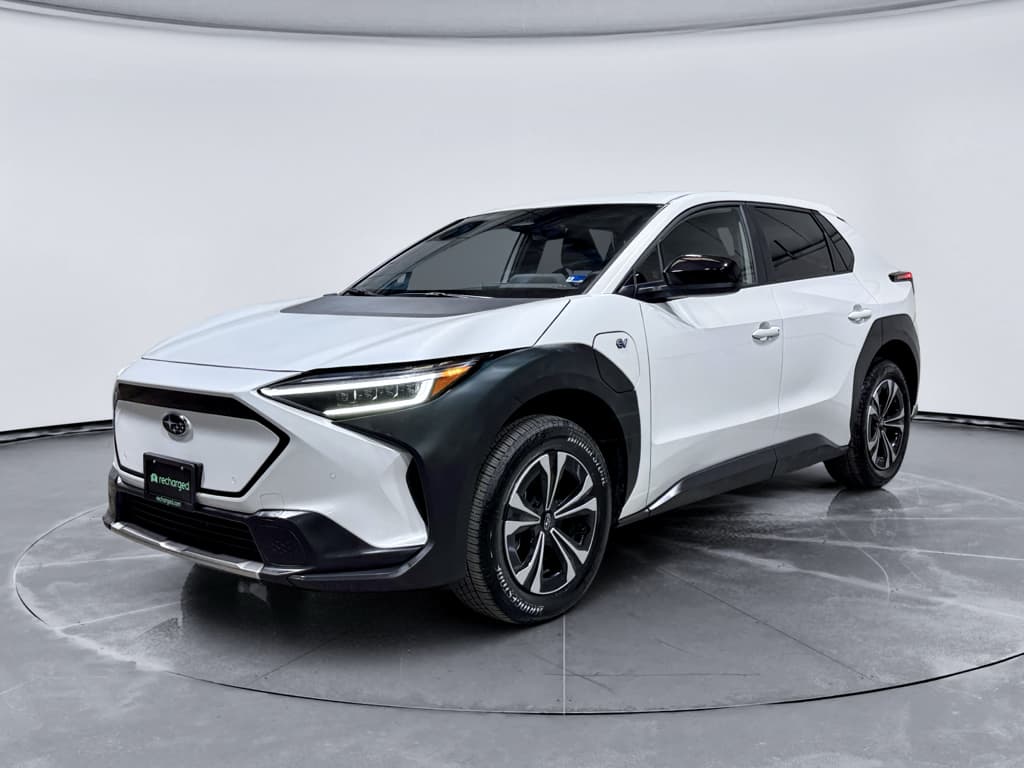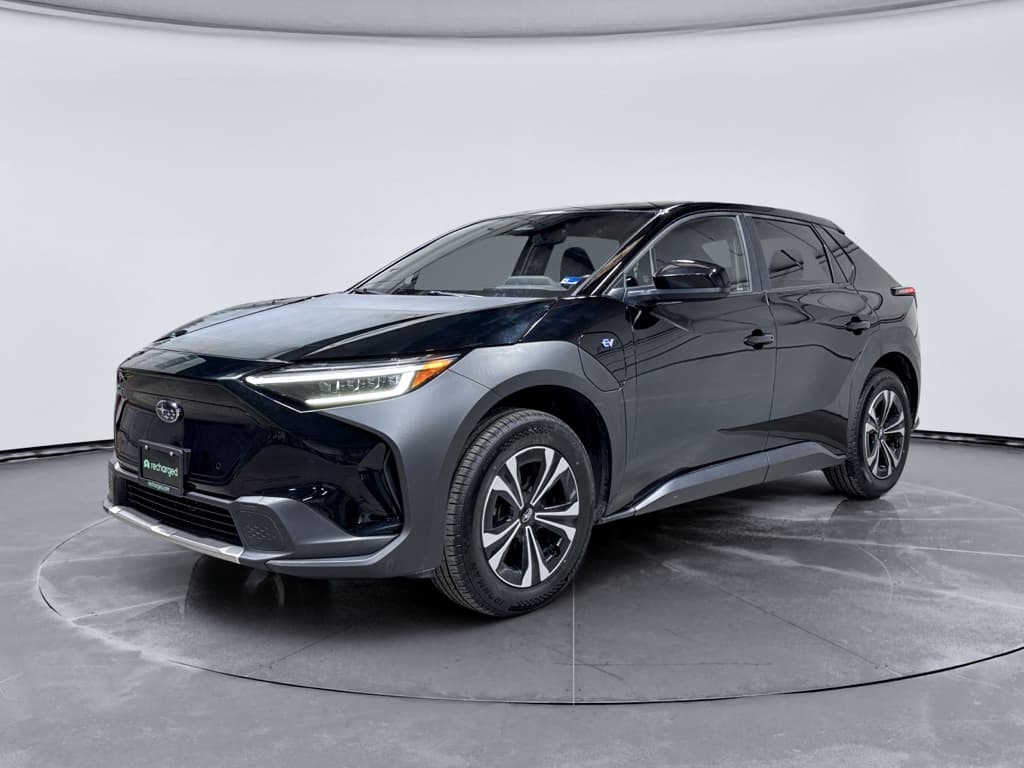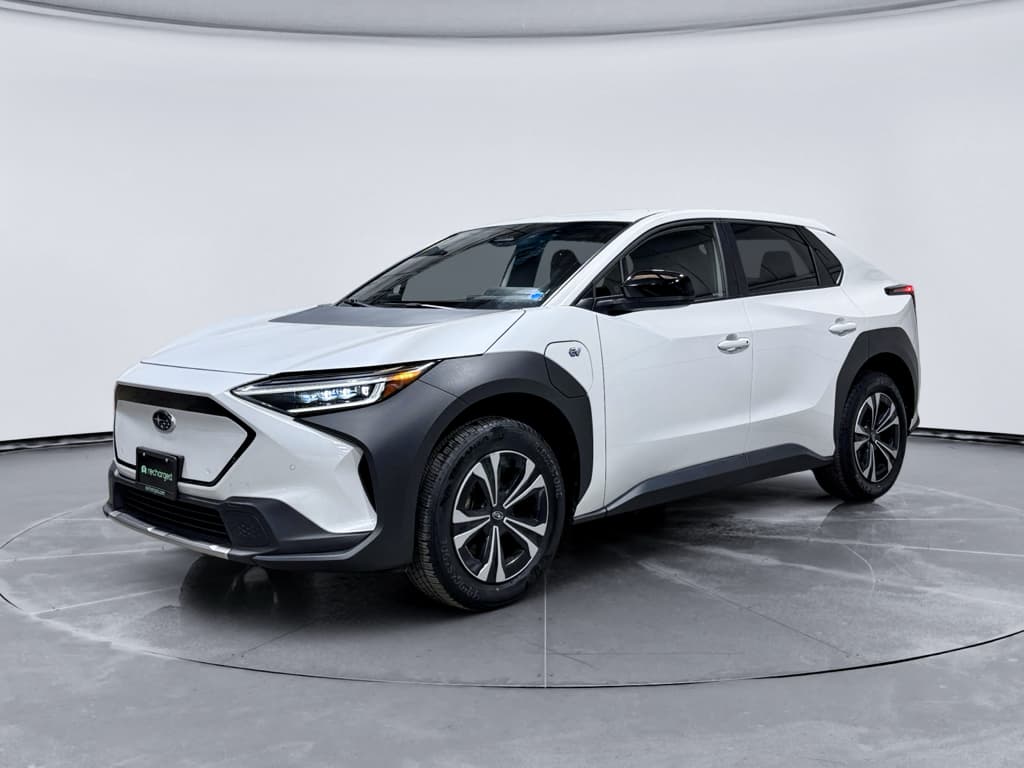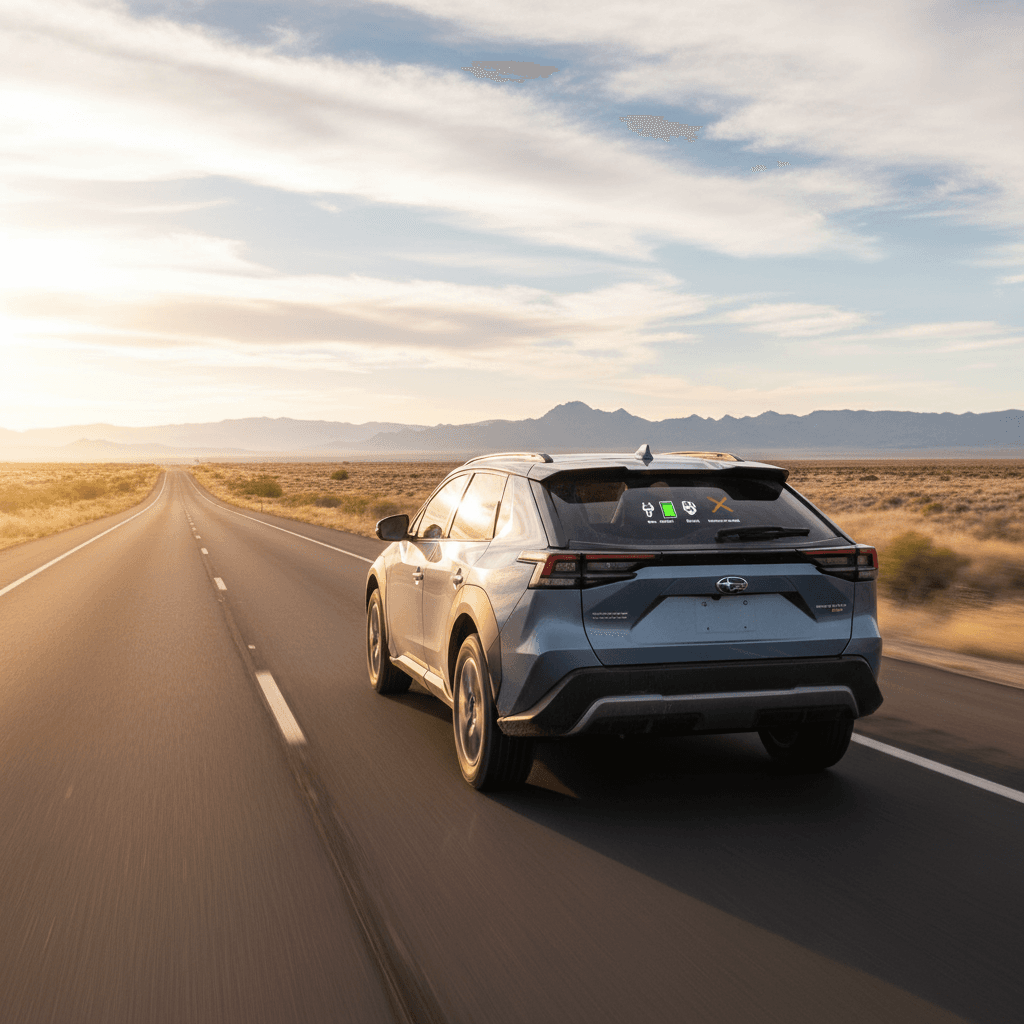
If you’re looking at a Subaru Solterra, you’ve probably noticed a gap between the EPA rating and what people report as the Subaru Solterra real‑world range on the highway. On paper it’s a 220‑plus‑mile crossover; in real life at 70–75 mph, it behaves more like a 180–210‑mile road‑trip EV. Let’s unpack why, what you can realistically expect, and how to plan trips without white‑knuckle range anxiety.
Quick takeaway
Why Subaru Solterra highway range feels different from the brochure
The Solterra’s EPA‑rated range sits around 222–227 miles for 2023–2025 U.S. models, depending on trim and wheel size. That’s the combined city/highway figure. In reality, sustained highway driving at U.S. speeds is tougher on efficiency than the EPA test, and the Solterra adds a few unique quirks: a relatively small usable battery (around 65 kWh), standard all‑wheel drive, and a fairly upright crossover shape that pushes more air than a sleek sedan.
Put differently: the Solterra is honest but conservative. It can be quite efficient around town, but highway speeds expose its modest battery size and aerodynamics. That doesn’t make it a bad road‑trip EV, but it does mean you need realistic expectations and a good charging plan.
Subaru Solterra range and battery at a glance
EPA range vs real‑world: what the numbers actually say
To understand the Subaru Solterra’s real‑world highway range, you first need to separate the EPA label from actual long‑distance driving tests:
- Most 2023–2025 Solterra trims carry an EPA range rating of roughly 222–227 miles.
- Car and Driver’s 75‑mph test saw a Touring‑trim Solterra deliver about 200 miles before the pack hit empty on the highway.
- Consumer‑style 70‑mph tests have landed in the same ballpark, around 200–210 miles in mild weather.
- Range‑modeling tools that use EPA data and battery capacity estimate roughly 170–185 miles at 70–75 mph in ideal conditions, and less in winter.
So when you see owners reporting 190, 200, or 205 miles between highway fast‑charges, that’s not the Solterra underperforming the rating so much as the rating including a lot of slower city miles. Highway‑only driving is always harsher, and Subaru’s pack simply isn’t as big as some rivals.
Don’t plan around the EPA number at 75 mph
Typical Subaru Solterra real‑world highway range by speed and weather
Highway range is mainly a function of speed, temperature, and elevation changes. To make this concrete, here’s a simplified look at what you can expect from a healthy‑battery 2023–2025 Solterra with all‑season tires, starting at ~90–95% charge and stopping around 5–10% remaining (how most people actually drive).
Subaru Solterra real‑world highway range estimates (2023–2025)
Approximate usable highway range between charges for a healthy Solterra in different conditions. These are planning numbers, not guarantees.
| Speed & Conditions | Mild weather (~70°F) | Cold weather (~20°F) |
|---|---|---|
| 60 mph, mostly flat | ~215–225 miles | ~170–185 miles |
| 65 mph, mixed terrain | ~200–210 miles | ~160–175 miles |
| 70 mph, mostly flat | ~185–200 miles | ~145–165 miles |
| 75 mph, typical interstate | ~175–190 miles | ~135–155 miles |
Assumptions: AWD Solterra, moderate cargo, no trailer, climate control set to a comfortable level.
How this compares to the EPA rating
Planning road trips: how far you can comfortably go between charges
For road trips, the most useful question isn’t the maximum distance on a full pack; it’s how far you can comfortably run between fast‑charges without stress. Because DC fast‑charging slows dramatically after ~70–80% state of charge, you want to live in the middle of the pack as much as possible.
2023–2025 Solterra (smaller pack)
- Ideal highway window: Charge from ~10% up to 70–80% on DC fast chargers.
- Comfortable leg length at 70–75 mph: ~130–160 miles between stops in mild weather.
- Practical strategy: Plan to stop every 2–2.5 hours for a 25–40 minute fast‑charge, depending on charger power and how low you arrive.
2026+ Solterra (larger battery)
- Updated models get an EPA range up to the mid‑280‑mile range, with similar or better efficiency.
- Comfortable 70–75 mph leg length: closer to 170–200 miles between fast‑charges in mild weather.
- You’re still typically stopping every 2.5–3 hours, but you enjoy a longer buffer if chargers are spaced out.
Use time, not just miles, to plan
Driving style, passengers, and cargo: how much they cut range
Once you’re at highway speeds, range is governed primarily by aerodynamic drag and speed, not just weight. But passengers, cargo, roof accessories, and your right foot still matter. In the Solterra’s case, small changes can add up because the battery isn’t huge to begin with.
How real‑world factors change Solterra highway range
Rough impact on a healthy 2023–2025 Solterra at 70–75 mph
Driving 80+ mph
Pushing into the low‑80s can add 10–20% energy use vs. 70 mph, easily shaving 20–30 miles off a full‑charge highway stint.
Headwinds & hills
Strong headwinds or long climbs can temporarily push consumption from ~2.7 to well over 3.2+ mi/kWh, cutting effective range by ~15–20%.
Passengers & cargo
A full car and packed cargo area typically cost 5–10% in range at highway speeds, noticeable, but not catastrophic.
Roof box or bike rack
Roof loads hurt the Solterra more than weight alone. Expect 10–25% less range with a big roof box or multiple bikes up top.
Heavy A/C or heat use
At 70°F with light A/C, impact is small. In very hot or cold weather, climate control plus battery conditioning can eat 10–25% of usable energy.
Aggressive passing & bursts
Short bursts to pass aren’t a big deal, but a generally aggressive style (hard accelerations, frequent speed swings) can trim another 5–10% off range.
The compounding effect
Cold‑weather highway range in the Subaru Solterra
Subaru has leaned into the Solterra’s all‑weather positioning, and newer model years add better battery conditioning for cold‑weather charging. But physics still wins: cold batteries hold less usable energy and heaters draw a lot of power, especially at highway speeds where you can’t recapture much via regenerative braking.
- Modeling based on EPA data suggests a drop from roughly ~181 miles of 70‑mph highway range in mild weather to ~147 miles in deep‑winter conditions for early‑model Solterras.
- Owner and media tests around 70 mph often report 15–25% less range in the 20–30°F band, even more below that if you’re pre‑conditioning the cabin on battery power and running high heat on the road.
- Short city trips in winter can look worse than highway, lots of energy goes to heat while the car barely covers any miles.
5 ways to protect Solterra range in winter
1. Pre‑heat while plugged in
Use the app or in‑car timer to warm the cabin and battery while connected to Level 2. That way, most of the heater’s energy comes from the grid, not your pack.
2. Drop cruising speed a bit
On a long winter stretch, backing down from 75 mph to 65–68 mph can easily save 10–15% in consumption, regaining tens of miles of range over a full charge.
3. Use seat and wheel heaters
They draw much less power than blasting cabin heat. You can often run a slightly cooler cabin temperature and stay comfortable using the seat and steering‑wheel heaters.
4. Watch mi/kWh, not just “guess‑o‑meter” range
The Solterra’s range estimate will jump around more in winter. Treat it as a suggestion and focus on your current mi/kWh efficiency and distance to the next charger.
5. Plan closer‑spaced chargers
In very cold weather, assume you have ~130–150 miles of comfortable highway range in a 2023–2025 Solterra and build in extra options if a station is down.
2026+ Solterra updates: does the new battery fix highway range?
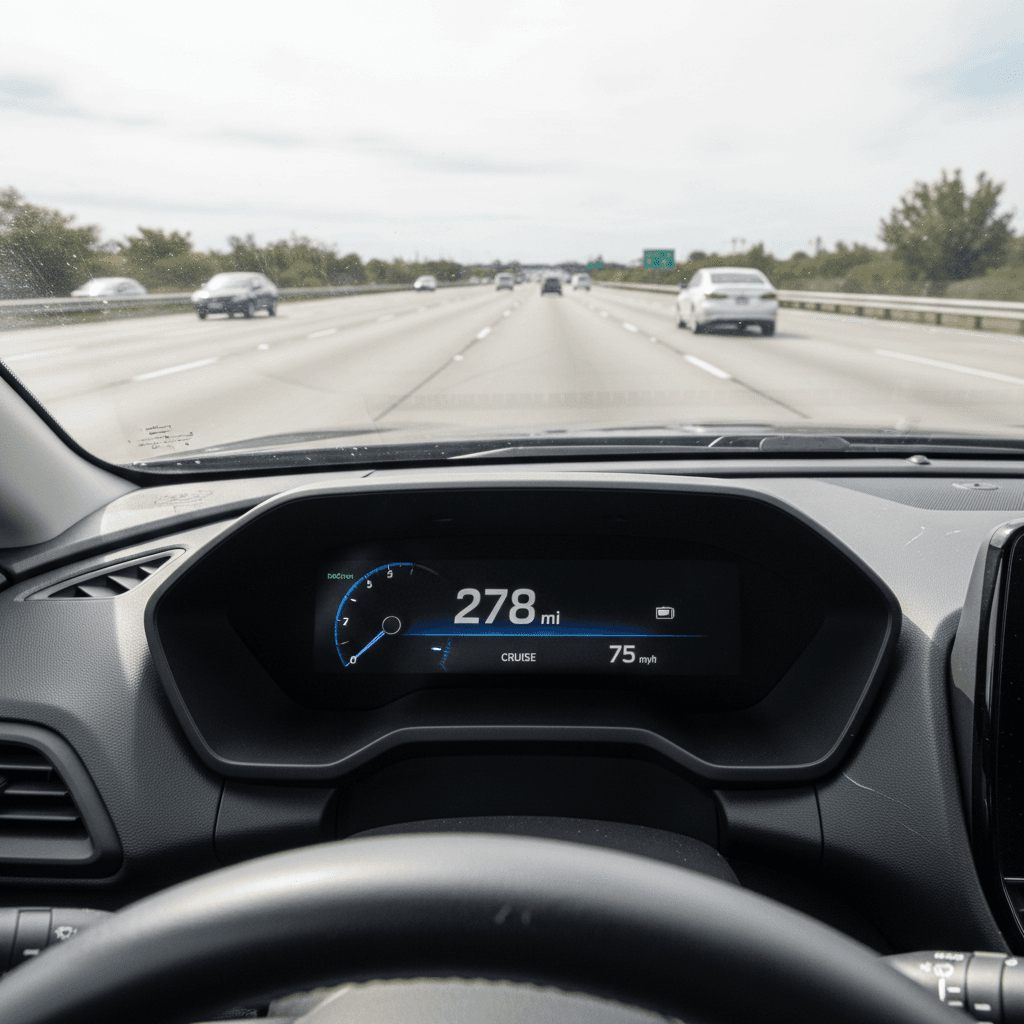
For the 2026 model year, Subaru gives the Solterra a meaningful hardware upgrade: a larger battery (around mid‑70‑kWh usable), improved efficiency, and a switch to the NACS charging port with faster DC rates. EPA estimates climb to the high‑200‑mile range (around 278–285 miles, depending on trim), which finally puts it squarely in the mix with Hyundai Ioniq 5, Kia EV6, and other mainstream crossovers.
Early Solterra vs updated 2026 model: highway range lens
Why the later cars feel more relaxed on the interstate
2023–2025 Solterra
- EPA: ~222–227 miles.
- Typical 70–75 mph range: ~175–200 miles in mild weather.
- Best used as a regional adventure EV with more frequent, shorter fast‑charge stops on long trips.
2026+ Solterra
- EPA: mid‑280‑mile range on some trims.
- Typical 70–75 mph range: roughly low‑ to mid‑200‑mile real‑world legs.
- Thanks to the larger pack and better efficiency, you gain a bigger buffer when chargers are sparse.
Good news for used buyers
Buying a used Solterra? Range questions to ask first
Because the Solterra’s pack isn’t massive, battery health and use history matter more than with a 100‑kWh luxury EV. A 5–10% loss of capacity is the difference between making a charger comfortably or arriving with the warning light on. When you’re shopping used, you want to anchor your expectations in today’s real‑world range, not yesterday’s brochure.
Used Subaru Solterra range & battery checklist
1. Ask for recent highway‑range experience
Have the seller describe a recent highway trip: speed, temperature, and how many miles they covered from what state of charge to what. You’re looking for real‑world, not guesses.
2. Check average efficiency (mi/kWh)
On a test drive, reset the trip computer before a 15–20‑mile highway loop. At 65–70 mph in mild weather, you should see roughly 2.7–3.2 mi/kWh in a healthy early‑model Solterra.
3. Look for fast‑charge behavior
On a DC fast charger, note how quickly the car ramps up and where it tapers. Extremely slow charging at moderate state of charge may hint at pack or thermal‑management issues.
4. Inspect tires and wheels
Big, aggressive aftermarket tires or non‑OEM wheels can hurt efficiency and range. Factor that into your expectations or budget for a switch back to more efficient rubber.
5. Get an independent battery‑health report
Whenever possible, use a third‑party diagnostic to measure usable capacity, not just what the dash says. Every vehicle listed on Recharged includes a Recharged Score battery‑health report so you know how much real range you’re actually buying.
6. Match range to your use case
If you routinely drive 180‑plus miles between chargers at 75 mph, you may want a 2026‑up Solterra or a different EV. For mixed driving and 120–150‑mile highway legs, a healthy early‑model Solterra can be a great fit.
How Recharged helps de‑risk range on used EVs
FAQ: Subaru Solterra real‑world highway range
Frequently asked questions
Bottom line: What to expect from Solterra highway range
If you’re expecting Tesla‑like road‑trip legs from a Subaru Solterra, you’ll be disappointed. If you’re looking for a capable, all‑weather electric crossover with honest efficiency and you understand how its real‑world highway range behaves, it can fit very well into everyday life and thoughtfully planned trips.
For 2023–2025 cars, think of it as a 180‑mile highway EV with 130–160‑mile comfortable legs in normal weather, less in winter. For 2026‑and‑newer models, the larger battery finally moves it into the low‑ to mid‑200‑mile real‑world highway club. In both cases, the key is matching the car’s true capabilities to your routes, and, if you’re buying used, insisting on clear battery‑health information so you’re not guessing at what that highway range will look like three winters from now.
If you want help figuring out whether a Solterra, or another used EV, fits your range needs, Recharged’s EV specialists and Recharged Score battery‑health reports are built for exactly that problem, so you can shop with the same confidence you bring to your favorite hiking trail or ski line.