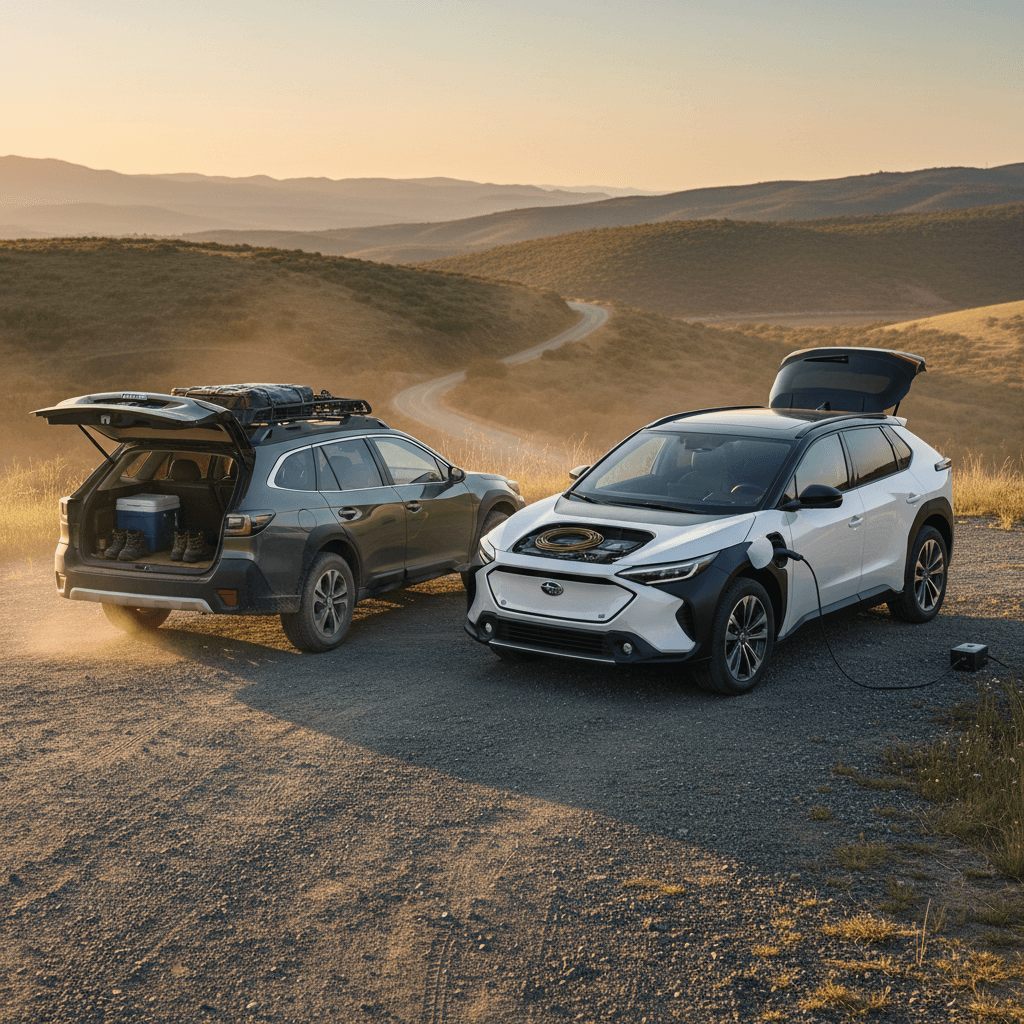
If you’re a longtime Subaru driver, the idea of trading a trusty Outback for the all‑electric Subaru Solterra is both exciting and a little unnerving. This review is written specifically for Outback owners who are EV‑curious and want a candid, owner‑style look at what really changes when you move from gas to Subaru’s first electric SUV.
Short answer
Who this Outback-to-Solterra review is for
This guide focuses on U.S. drivers who currently own or lease a late‑model Subaru Outback (including Wilderness) and are wondering whether to switch to a Subaru Solterra now, especially as lease deals on 2023–2025 models and early used inventory become more attractive. We’ll compare the two like an owner would: in terms of daily use, comfort, cargo, winter performance, range, and long‑term costs, not just spec sheets.
- You already like Subaru’s driving feel and safety tech.
- You want to cut fuel stops, and maybe your carbon footprint.
- You’re worried about Solterra’s range, charging speed, and cargo space versus your Outback.
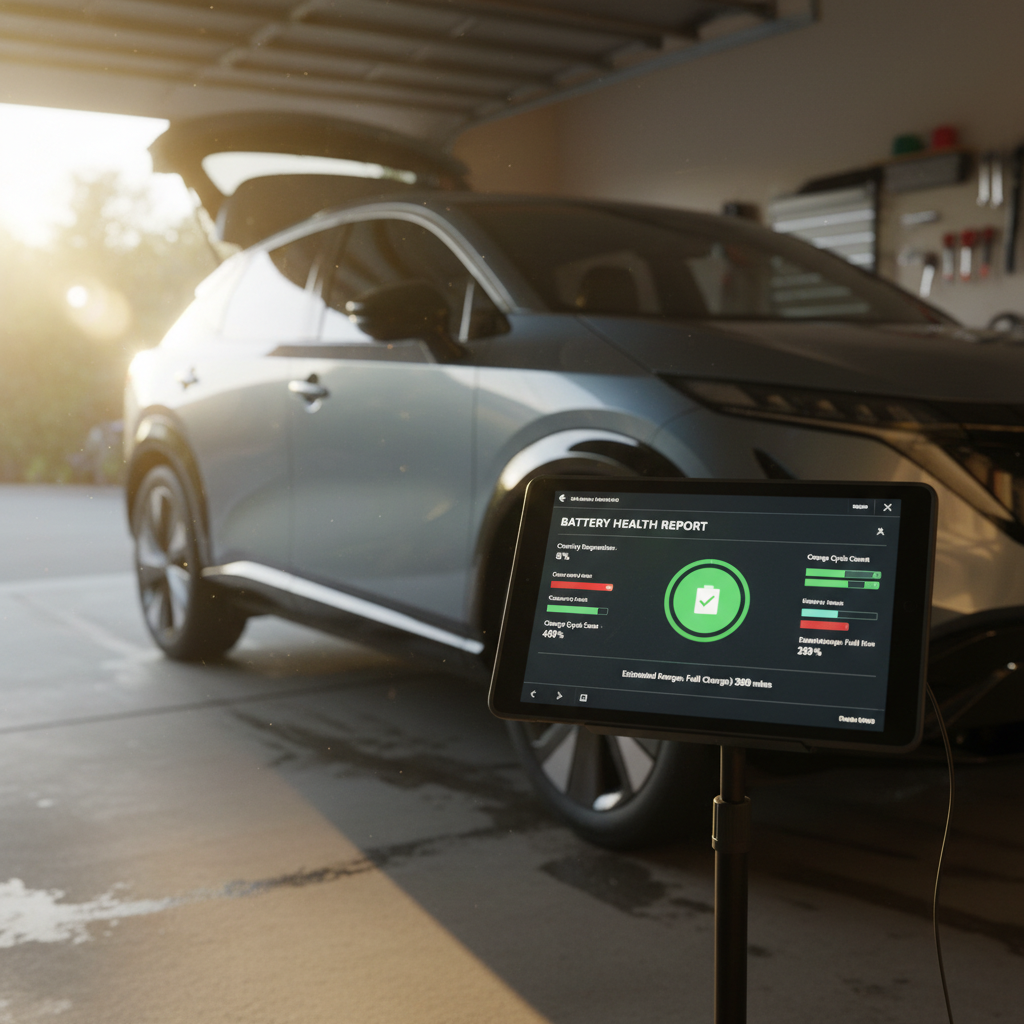
- You’re considering a used or off‑lease Solterra and want to understand battery health and depreciation.
Headline takeaways: Outback owner switching to Solterra
Subaru Outback vs Subaru Solterra: key numbers at a glance
Big‑picture takeaway
Driving feel, AWD, and ground clearance
From behind the wheel, the Subaru Solterra feels more familiar to an Outback owner than many other EVs. Subaru kept its Symmetrical All‑Wheel Drive ethos and wrapped it around an electric platform. All U.S. Solterras come with dual electric motors and standard AWD, plus dual‑function X‑MODE with Grip Control, letting you dial in settings for snow, dirt, deep snow, and mud, similar to what you find in an Outback, only now with instant electric torque.
How it feels vs your Outback
- Throttle response: The Solterra jumps off the line more eagerly than a base Outback because all 215 hp and 248 lb‑ft of torque are right there from zero rpm.
- Ride and handling: The battery pack keeps weight low in the chassis, so the Solterra feels planted in corners. Ride is similar in firmness to an Outback on 18‑inch wheels; Limited/Touring‑style trims with 20s feel a bit busier.
- Noise: Much quieter around town. You lose engine noise entirely, and Subaru has done a good job suppressing wind and road roar.
Off‑pavement confidence
- Ground clearance: Solterra offers about 8.3 inches of clearance, just a tick below many Outback trims but still generous for a compact EV SUV.
- X‑MODE tuning: If you’re used to crawling snowy driveways or muddy trailheads, the EV version of X‑MODE feels reassuringly Subaru: smooth torque modulation and solid traction.
- Limitation: For truly rough two‑tracks, the Outback’s longer wheelbase and larger cargo hold still make it the better camping and overlanding rig.
Performance expectations
Space, cargo, and family duty
Here’s where the Subaru Outback still earns its reputation as the Swiss Army knife of family vehicles. It’s simply the more spacious hauler. The Outback offers around 34–35 cubic feet of cargo space behind the rear seats and about 80.5 cubic feet with them folded. In the Solterra, you’re in the mid‑20s behind the second row and roughly mid‑60s cubic feet with the seats down, depending on how you measure and trim choice.
Outback vs. Solterra: interior space snapshot
Approximate figures for late‑model Subaru Outback vs Subaru Solterra. Always confirm your specific model year’s specs.
| Feature | Subaru Outback | Subaru Solterra |
|---|---|---|
| Seating capacity | 5 | 5 |
| Cargo behind 2nd row | ~34–35 ft³ | Mid‑20s ft³ (approx.) |
| Max cargo (seats folded) | ~80.5 ft³ | ~63–65 ft³ (approx.) |
| Roof rails & crossbars | Standard/available | Available, but payload drops faster due to EV weight |
| 3rd row option | No | No |
If you routinely max out your Outback’s cargo area, the Solterra will feel like a size down.
Child seats and dogs
Range, charging, and road‑trip reality
Moving from an Outback to a Solterra means trading five‑minute gas stops for overnight charging at home and occasional 30–45‑minute DC fast‑charge sessions on the road. Recent Solterra models use a battery of about 72.8 kWh and are EPA‑rated roughly 222–228 miles of range depending on trim and wheels. In real‑world U.S. driving, many owners see something like 180–220 miles per charge depending on speed, temperature, and terrain.
How Solterra range feels to an Outback owner
Think in use‑cases, not just the EPA number.
Daily commuting
If your round‑trip commute is under 60–70 miles, the Solterra is easy: you charge at home overnight, start every day full, and may only plug in a few times a week.
Weekend trips
For 150–200‑mile weekend drives, you’ll probably plan one DC fast‑charge stop each way. Figure 30–45 minutes from low state of charge to ~80%, depending on charger power and conditions.
Cross‑country travel
The Outback still wins here. The Solterra’s modest range and average DC charging speeds mean more stops and more time at chargers. It’s doable, but it’s a different rhythm of travel.
Key charging questions to answer before you switch
1. Can you install Level 2 at home?
A 240‑volt Level 2 charger in your garage or driveway is the single biggest factor in Solterra happiness. Without it, you’ll rely heavily on public charging and that gets old fast.
2. What’s your real daily mileage?
Look at a month of real driving. If you rarely exceed 100–120 miles in a day, Solterra’s range is probably workable. If you often drive 250+ miles in a day, you’ll either plan carefully or keep the Outback for those trips.
3. Are fast chargers on your usual routes?
Check apps like PlugShare or Chargeway to see DC fast‑charging coverage along your regular road‑trip corridors. Corridor coverage has improved, but gaps remain, especially away from interstates.
4. Do you frequently tow?
The U.S.‑spec Solterra currently isn’t rated to tow, while many Outback configurations can tow up to 2,700–3,500 pounds. If towing is non‑negotiable, the Outback stays.
Cold‑weather reality check
Costs, payback, and the growing used Solterra market
Moving from an Outback to a Solterra changes your cost picture dramatically: you’ll likely spend more up front (or carry a bigger payment) but spend much less on energy and routine maintenance. Because the Solterra launched in 2023 and has seen aggressive lease and financing deals on 2023–2025 inventory as of 2025–2026, the used and off‑lease market is starting to get interesting.
Where you save
- Energy cost: Home charging is typically the equivalent of paying roughly $1–$2 per “gallon” of fuel, depending on your local electricity rate. Public fast charging can be higher, but many owners still beat gasoline costs.
- Maintenance: No oil changes, no timing belts, fewer moving parts in the drivetrain, and regenerative braking can stretch brake pad life compared with an Outback.
- Incentives: Depending on when and how you buy, you may see federal or state EV incentives on new or nearly new Solterras. Always check current rules before you assume.
Where it can cost more
- Up‑front price: New Solterras often sticker higher than comparable Outbacks. However, discounts and lease cash have narrowed that gap on 2023–2025 models.
- Depreciation: Early‑generation EVs can depreciate faster than popular gas models. That’s a negative if you buy new, but a big positive if you’re shopping used.
- Home charging setup: Installing a 240‑volt circuit and Level 2 charger can run hundreds to a couple thousand dollars, depending on your electrical panel and distance.
How Recharged helps with used Solterra shopping
Ready to find your next EV?
Browse VehiclesWinter driving and bad‑weather confidence
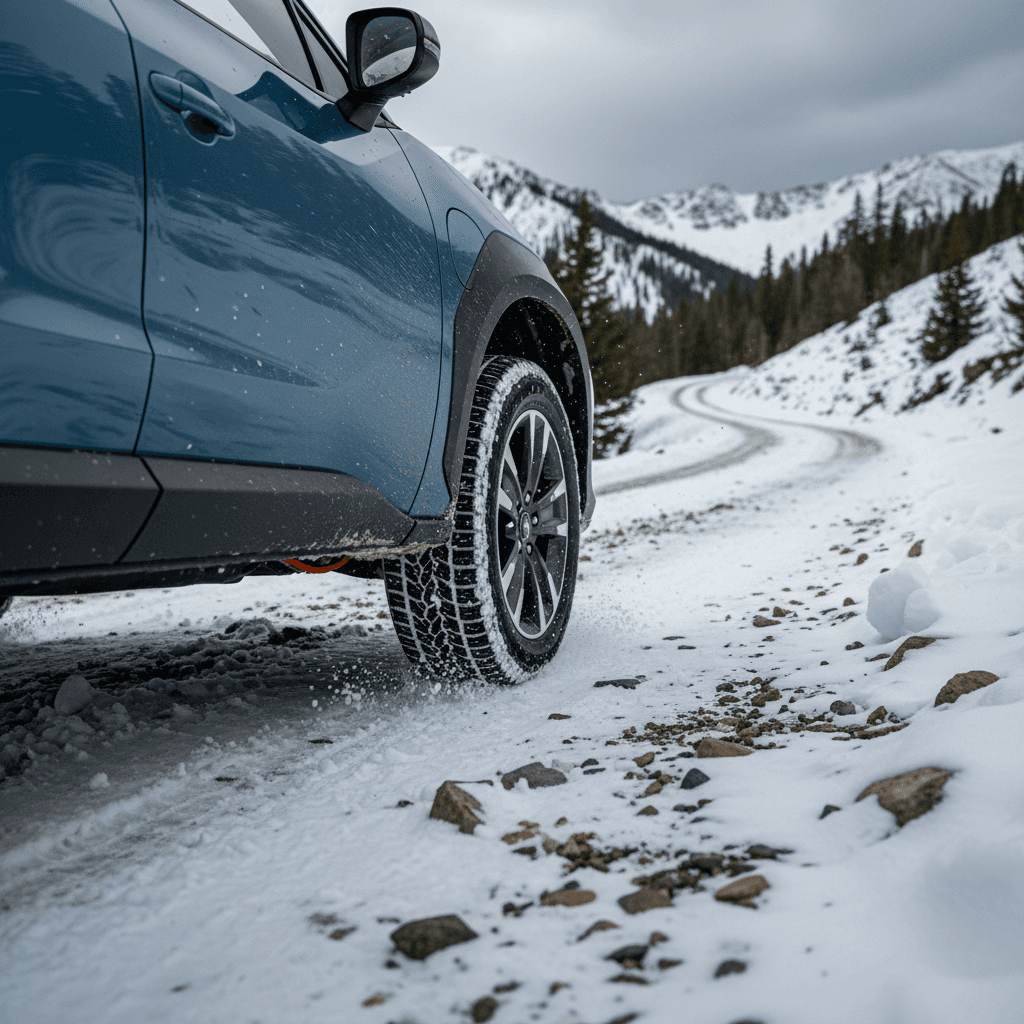
If you bought your Outback for snow days, ski trips, or mucky trailheads, this might be the most important section. Subaru tuned the Solterra to behave like a Subaru in bad weather: you get standard AWD, X‑MODE, hill‑descent control, and generous ground clearance. Paired with good winter tires, the Solterra is more than a match for typical winter commutes and plowed mountain roads.
- Battery weight keeps the center of gravity low, which helps stability on slick surfaces.
- Fine torque control from dual electric motors allows very smooth traction management.
- You still need appropriate tires; the factory all‑seasons are a compromise, just like on an Outback.
- Deep, unplowed snow and heavily rutted tracks still favor the Outback’s longer wagon body and available Wilderness‑grade clearance and tires.
Cold‑weather strategy for Solterra owners
Ownership experience: Tech, noise, and comfort
From the driver’s seat, the Solterra feels like Subaru’s attempt to nudge loyalists into a more modern, EV‑appropriate cabin. You get a large central touchscreen, available digital instrumentation, and a generally quieter, smoother ride than an Outback, especially around town where the lack of engine noise is most noticeable.
Living with a Solterra after an Outback
What will feel better, and what might annoy you.
Quieter and smoother
No engine noise at start‑up, no idle vibration, and less drivetrain drama in stop‑and‑go traffic. That alone makes commuting feel calmer.
Tech and controls
Larger screens and EV‑specific displays are a step up from older Outbacks. Some Outback owners miss physical knobs and simpler menus, test the interface before you commit.
One‑pedal‑ish driving
Adjustable regenerative braking lets you slow the car significantly just by easing off the accelerator. It’s not full one‑pedal like some EVs, but it quickly becomes second nature and reduces brake use.
“Solterra is a sweet ride, nimble and sure‑footed for its size, with a smooth and comfortable feel. We keep it for local trips and it shines there.”
Cabin and interface quirks
Should you switch? Simple Outback‑to‑Solterra decision guide
Two common upgrade paths for Outback owners
Great candidates to switch to Solterra now
You drive <strong>under 75–100 miles most days</strong> and take only a few long road trips a year.
You can install, or already have, a <strong>Level 2 home charger</strong>.
You don’t tow, or you’re fine keeping a second gas vehicle for towing and long‑haul trips.
You mostly haul people, groceries, bikes, and moderate camping gear, not full sheets of plywood or giant roof boxes every weekend.
You value <strong>quiet, low‑maintenance commuting</strong> more than ultimate cargo or towing capacity.
Better to keep the Outback (for now)
You regularly drive <strong>200–300+ miles in a single day</strong> and don’t want to plan charging stops.
You rely on your Outback to <strong>tow 2,000–3,500 pounds</strong> several times a year.
Your cargo area is constantly full, dogs, kids, sports gear, home‑improvement runs, and you’re already using every inch of Outback space.
You can’t easily install Level 2 charging where you live today (or your landlord won’t cooperate).
Your region still has sparse or unreliable DC fast‑charging on the routes you care about most.
What to do on your Solterra test drive as an Outback owner
Replicate your commute
Drive the same mix of city and highway you do now. Watch how range drops and how the Solterra feels over familiar potholes, on‑ramps, and hills.
Load it like a normal weekend
Bring the stroller, the cooler, the dog crate, whatever you actually use. Fold the seats, test the hatch opening, and see if anything suddenly becomes awkward.
Try X‑MODE on bad pavement
Even if it’s not snowing, find a rough dirt road or steep gravel driveway. Engage X‑MODE and feel how the car meters out traction compared with your Outback.
Experiment with regen levels
Use the steering‑wheel paddles to adjust regenerative braking. A few miles later you’ll know whether you like the pseudo one‑pedal feel.
Talk numbers with used examples
Even if you’re considering new, ask to see battery health and pricing on certified used Solterras. It’ll give you a sense of how they’re holding value, and whether a nearly new car is the smarter buy. At Recharged, this is exactly what the <strong>Recharged Score</strong> is designed to show you.
FAQ: Outback owners considering the Solterra
Frequently asked questions
Bottom line for Subaru loyalists
For many Subaru Outback owners, the Solterra is less a radical departure and more a refinement of what they already like: all‑weather confidence, sensible size, and a focus on real‑world usability over flash. You trade infinite road‑trip range and class‑leading cargo room for near‑silent operation, instant torque, and the convenience of waking up with a “full tank” every morning.
If your life is built around long‑distance towing and maxed‑out cargo, the math still favors keeping or replacing your Outback with another gas or hybrid model. But if your driving is mostly local and you can charge at home, a new or used Subaru Solterra, especially one with a verified Recharged Score battery health report, can be a smart, satisfying next chapter in your Subaru story.