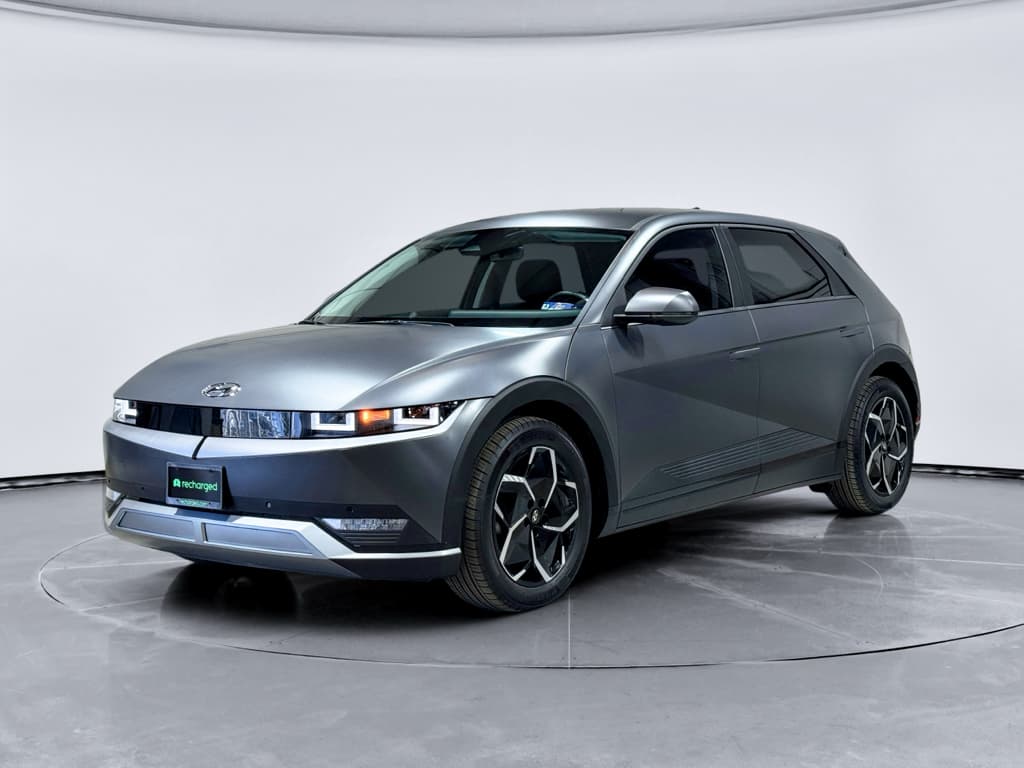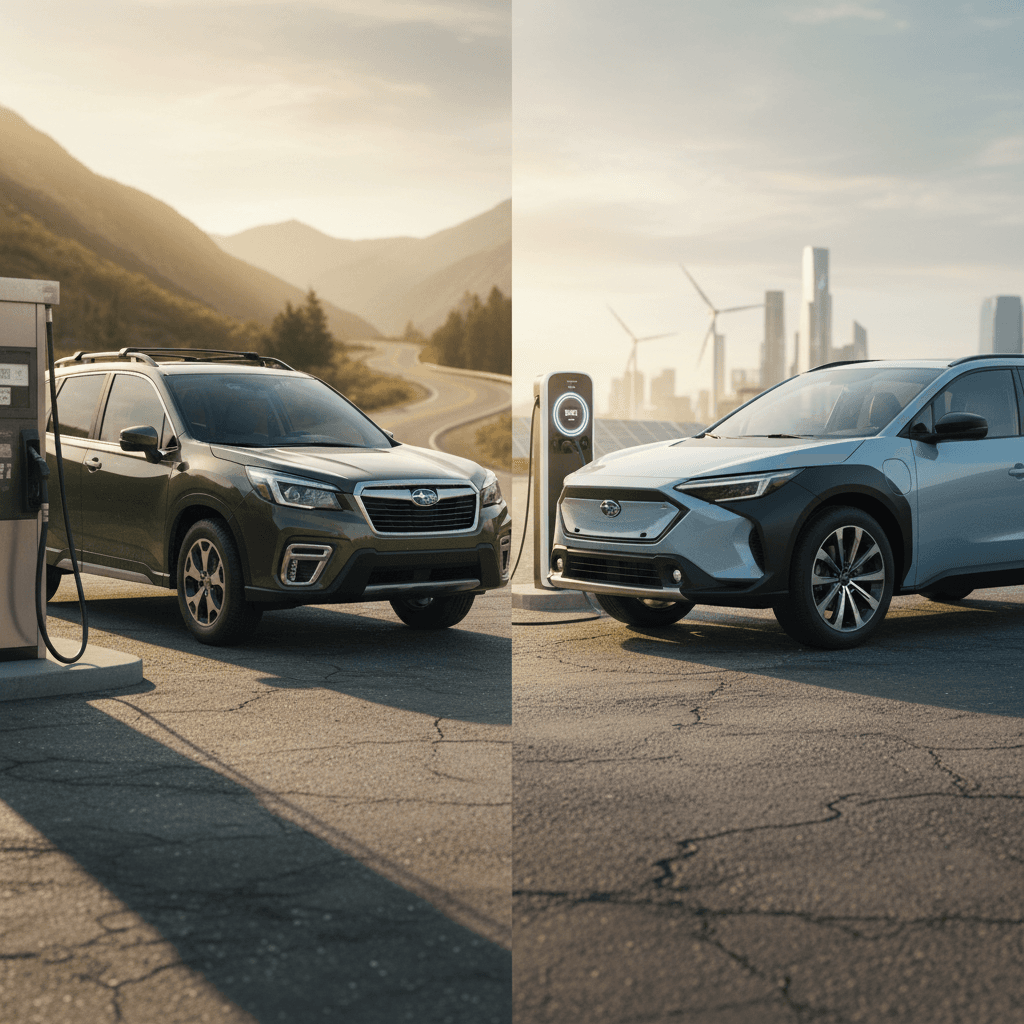
If you’re cross-shopping a Subaru Forester against the all‑electric Subaru Solterra, the sticker price only tells part of the story. The real question is Subaru Forester vs Subaru Solterra total cost of ownership, once you factor in fuel (or electricity), maintenance, insurance, incentives, and resale value, which one actually costs you less to own over time?
Big picture
Why Subaru Forester vs Solterra ownership costs matter
Forester buyers tend to be pragmatic: you care about reliability, all‑weather capability, and value. The Solterra targets the same buyer but swaps gas for electrons. On paper the Solterra is more expensive, but EVs can pay you back through lower running costs and potential tax credits. With gas prices and interest rates both volatile, understanding the true cost per mile matters more than ever, especially if you’re deciding between a traditional compact SUV and an electric one from the same brand.
Forester vs Solterra cost levers at a glance
Quick takeaway: which is cheaper to own?
Forester vs Solterra: fast verdict
Assuming US average energy prices and 12,000 miles per year
Subaru Forester (gas)
- Lower upfront price and often better discounts.
- Higher ongoing costs for fuel and maintenance.
- Better fit if you drive under ~8,000 miles/year, have very cheap gas, or can’t easily charge at home.
Subaru Solterra (EV)
- Higher sticker price, but often eligible for EV incentives and strong lease deals.
- Significantly cheaper per mile to power and maintain.
- Starts to pull ahead in total cost of ownership if you drive a lot, pay typical US electricity rates, and can charge at home.
Rule of thumb
Baseline vehicles and assumptions
To keep this comparison grounded, we’ll use realistic, but simplified, numbers for a new Forester and Solterra. Actual deals vary by region and incentives change frequently, so treat this as a framework, not an exact quote.
Baseline Subaru Forester vs Solterra assumptions
Approximate US‑market pricing and efficiency to compare 5‑year ownership costs.
| Item | Subaru Forester (gas) | Subaru Solterra (EV) |
|---|---|---|
| MSRP (well-equipped trim) | $34,000 | $48,000 |
| Effective price after typical discounts/incentives | $33,000 | $40,000–$44,000 (after potential EV incentives or discounts) |
| EPA combined efficiency | ~29 mpg | ~3.1 mi/kWh |
| Fuel / electricity price assumption | $3.75 per gallon | $0.16 per kWh home charging |
| Annual miles driven | 12,000 | 12,000 |
| Ownership horizon | 5 years | 5 years |
Numbers are rounded and for illustration only; always check current pricing and incentives.
About the numbers
Fuel vs electricity: where Solterra gains ground
The biggest day‑to‑day cost difference between the Forester and Solterra is how you power them. Once you translate gasoline and electricity into cost per mile, the gap is stark, especially if you mostly charge at home.
Subaru Forester fuel cost
- Assumed efficiency: 29 mpg combined.
- Assumed gas price: $3.75/gal (US average can swing widely).
- Annual miles: 12,000.
Annual fuel use: 12,000 ÷ 29 ≈ 414 gallons.
Annual fuel spend: 414 × $3.75 ≈ $1,550 per year.
5‑year fuel cost: roughly $7,750 before any gas price spikes.
Subaru Solterra electricity cost
- Assumed efficiency: 3.1 mi/kWh.
- Assumed home electricity: $0.16/kWh.
- Annual miles: 12,000.
Annual energy use: 12,000 ÷ 3.1 ≈ 3,870 kWh.
Annual charging cost: 3,870 × $0.16 ≈ $620 per year.
Even if a quarter of your charging is at higher‑priced public DC fast chargers, many drivers will still land around $700–$800 per year.
5‑year electricity cost: roughly $3,100–$4,000, so Solterra can save $3,500+ on energy alone vs a Forester.
Energy savings add up
Maintenance and repairs: gas complexity vs EV simplicity
Subaru has a strong reputation for durability, but physics still matters: the Forester’s gasoline engine and traditional drivetrain have hundreds of moving parts that an EV simply doesn’t. That shows up in routine maintenance and the likelihood of out‑of‑warranty repairs as the vehicle ages.
Maintenance profiles: Forester vs Solterra
What you’ll actually pay to keep each Subaru running
Forester (gas) maintenance
- Regular oil and filter changes.
- Transmission and differential fluid services.
- More wear items in the exhaust and emissions systems.
- Higher chance of engine‑related repairs after the warranty period.
Rough rule: plan on $700–$900 per year over the first 5–6 years, including tires and brakes.
Solterra (EV) maintenance
- No oil changes or spark plugs.
- Simpler drivetrain with fewer fluids.
- Regenerative braking can extend brake life.
- Battery and electric drivetrain components usually covered by long warranties.
Rough rule: many EV owners see 30–40% lower routine maintenance spend vs a comparable gas SUV over the first 5–8 years.
EV battery anxiety
Insurance, taxes, and fees
Insurance is one place where the Forester can keep an edge. EVs like the Solterra often cost more to repair if they’re in a serious crash, and higher vehicle values can push premiums up. On the other hand, some states offer lower registration fees or property taxes for EVs, while others add small EV surcharges to replace lost gas‑tax revenue.
- Forester typically sees slightly lower insurance premiums than Solterra, all else equal.
- Solterra may face modest EV registration fees in some US states, but these are usually small relative to fuel savings.
- Neither model is an outlier on insurance like some luxury EVs; think in terms of a few hundred dollars a year difference, not thousands.
Net effect
Depreciation and resale value
Depreciation, the amount of value your vehicle loses over time, is the biggest but least visible cost for most owners. Historically, popular gas Subarus like the Forester have held value well. EV residuals have been more volatile because technology, incentives, and interest rates are all changing fast.
Forester depreciation profile
- Solid reputation for reliability and all‑weather capability.
- Large, stable used‑car demand for compact gas SUVs.
- Resale is relatively predictable even as EV adoption grows.
Over 5 years, it’s reasonable to expect a Forester to retain a healthy share of its value, especially if mileage is normal and maintenance is documented.
Solterra depreciation profile
- EV prices have been more volatile as new incentives appear and competitors cut prices.
- As more compelling EVs enter the segment, earlier models can face steeper early depreciation.
- Battery health is a key differentiator between good and bad used EVs.
The flip side for shoppers: this volatility means used Solterras can be relative bargains compared with what the first owner paid.
Depreciation hack
Incentives and tax credits for Subaru Solterra
The Forester doesn’t qualify for EV‑specific incentives, but the Solterra might, depending on how you buy and where you live. This is one of the biggest wildcards in total cost of ownership because a single credit can erase thousands of dollars of price difference on day one.
Where Solterra can win on incentives
1. Federal EV tax credit (new)
Depending on current rules and final assembly details, some Solterra configurations or leases may qualify for a federal clean vehicle tax credit or a leasing passthrough incentive. This can reduce your effective price by several thousand dollars.
2. State and local EV incentives
States and utilities may offer <strong>rebates, bill credits, or discounted EV‑only rates</strong> for home charging. These don’t show up on the window sticker but they improve your monthly cost picture.
3. Utility time‑of‑use rates
If your utility offers off‑peak EV charging rates, you can cut your Solterra’s charging cost dramatically by scheduling overnight charging. That widens the fuel‑vs‑electricity gap even more.
4. Used EV incentives
Certain regions offer <strong>incentives for used EVs</strong> as well, which can stack with the already‑lower depreciation prices. If you’re browsing used Solterras on a marketplace like Recharged, check what’s available in your ZIP code.
Incentives change constantly
5‑year Subaru Forester vs Solterra cost summary
Pulling these pieces together, here’s a simplified 5‑year picture for an average driver. These aren’t quotes; they’re a framework you can adjust for your actual prices and mileage.
Illustrative 5‑year total cost of ownership
Approximate 5‑year costs for an average US driver at 12,000 miles/year. Excludes financing interest.
| Category (5 years) | Subaru Forester (gas) | Subaru Solterra (EV) |
|---|---|---|
| Energy (fuel or electricity) | ~$7,750 | ~$3,500–$4,000 |
| Routine maintenance & repairs | ~$3,500–$4,500 | ~$2,000–$3,000 |
| Insurance & fees (incremental difference) | Baseline | + ~$500–$1,000 vs Forester |
| Depreciation (value lost) | Moderate; relatively stable | Potentially steeper early, but creates good used‑EV deals |
| Potential EV incentives | Not applicable | Up to several thousand dollars off effective price |
| Net 5‑year running costs (excluding purchase price and depreciation) | Higher ongoing costs | Noticeably lower ongoing costs, especially at higher mileage |
All numbers rounded; your real‑world totals will vary, but the relative differences are what matter.
What this table really says
Where used Subaru Solterra vs Forester gets interesting
New‑car pricing is just one side of the story. Because early EVs, including Solterra, have seen sharper depreciation, the used market can create opportunities that don’t exist with gas Subarus.
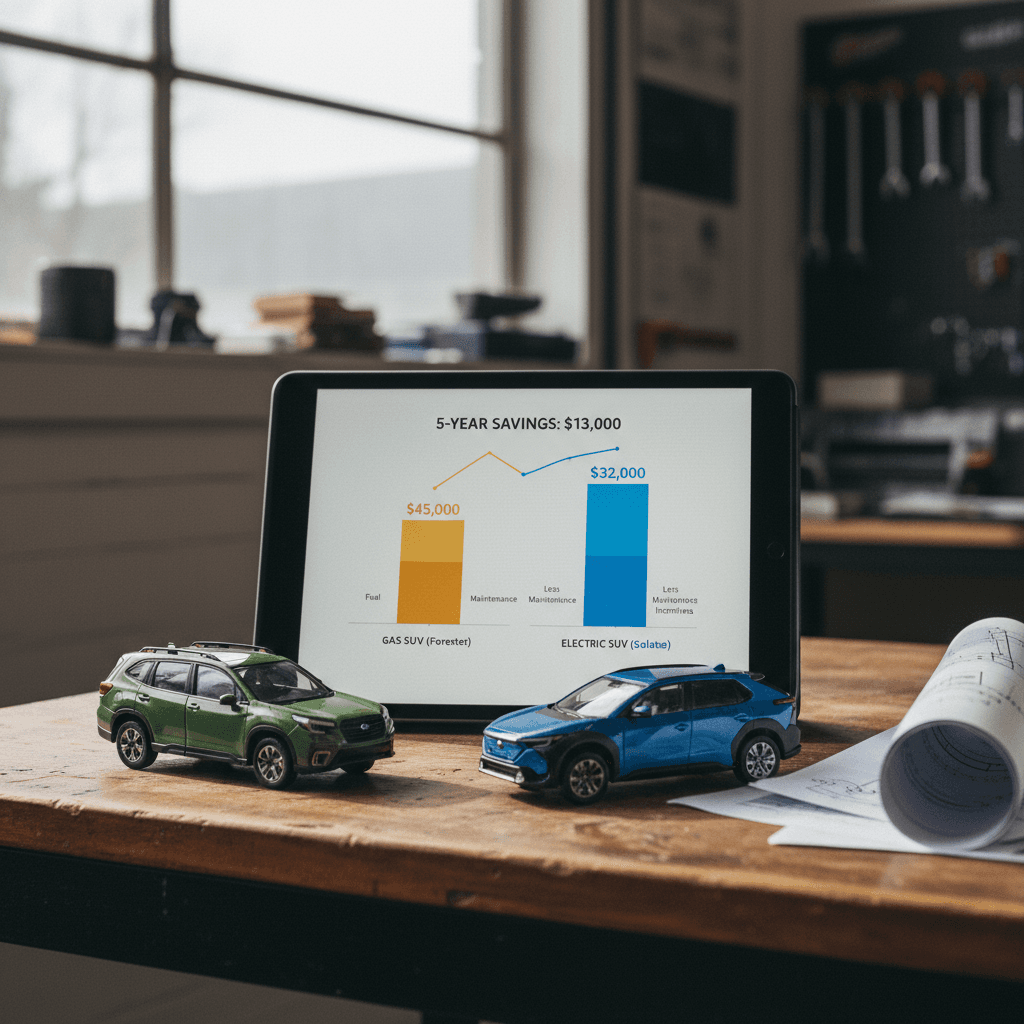
Why a used Solterra can undercut a new Forester on TCO
This is where EV‑first marketplaces like Recharged shine
Steep early depreciation
Battery health transparency
Lower running costs from day one
Smart shopper play
Ready to find your next EV?
Browse VehiclesWho should choose Forester vs Solterra?
Forester makes more sense if…
- You can’t reliably charge at home (street parking, no outlet, strict HOA).
- Your driving is mostly very low mileage (e.g., under 7,000 miles/year).
- You live in a region with scarce public charging and can’t easily change that.
- You can get excellent discounts or low APR on a Forester that you can’t match on a Solterra.
Solterra makes more sense if…
- You have (or can add) reliable home Level 2 charging.
- You drive average or above‑average miles each year, so lower energy and maintenance costs really stack up.
- You can claim attractive EV incentives or lease offers.
- You’re considering a used Solterra where someone else already took the largest depreciation hit.
Think in cost per mile, not just monthly payment
How Recharged helps you run the numbers
Shopping this decision in the real world means juggling prices, incentives, trade‑in value, and your own driving patterns. That’s exactly where a specialized EV marketplace adds value. Recharged was built to make EV ownership simple and transparent, especially when you’re comparing an electric SUV like Solterra against familiar gas options.
- Every used EV on Recharged includes a Recharged Score Report with verified battery health, so you can compare a used Solterra’s long‑term prospects to a used Forester’s service history.
- Recharged’s pricing tools focus on fair market value in today’s fast‑moving EV market, where depreciation curves don’t always look like traditional gas SUVs.
- You can plug in your trade‑in, explore financing, and see estimated monthly payments in a fully digital experience, then compare that to your current fuel and maintenance spend.
- Nationwide delivery and an EV‑savvy support team mean you can focus on the math and the driving experience, not the logistics.
Next step
FAQ: Subaru Forester vs Subaru Solterra ownership costs
Frequently asked questions
Choosing between a Subaru Forester and Subaru Solterra isn’t just a question of gas vs electric, it’s a question of how you use your vehicle and how you want your money to work over the next 5–10 years. The Forester keeps things familiar with predictable costs and easy fueling. The Solterra asks you to rethink refueling and incentives, but rewards that effort with lower day‑to‑day running costs and a quieter, more modern drive. If you want to see how those trade‑offs look with real vehicles and real battery data, a used‑EV marketplace like Recharged is the most transparent place to start running the numbers.