If you’re wondering, “Should I buy a used Chevy Bolt?” you’re not alone. The Bolt has become one of the most popular affordable EVs on the used market, thanks to great range and low running costs, but it also carries baggage from a widely publicized battery recall. This guide will walk you through the reality of owning a used Bolt EV or Bolt EUV in 2026 so you can decide with confidence.
Short answer
Is a used Chevy Bolt a good buy in 2026?
For many shoppers, the honest answer is yes, with caveats. A used Chevy Bolt EV or Bolt EUV delivers real-world range around 230–260 miles for most model years, a roomy hatchback layout, and some of the lowest operating costs of any used car. At the same time, early cars went through a major battery recall, DC fast charging is relatively slow, and depreciation has been steeper than average. Whether it’s a good buy for you depends on how you’ll use it and which year you choose.
Is a used Bolt a fit for you?
Match the Bolt’s strengths and weaknesses to your life
Great fit if…
- You drive mostly city or suburban miles
- You can charge at home or work
- You want 200+ miles of real range on a budget
- You value low maintenance and fuel costs
Maybe, if…
- You take a few road trips a year
- You’re okay with slower fast charging
- You don’t need a huge cargo area
Probably not ideal if…
- You road-trip every month
- You need a large SUV or third row
- You rely only on public DC fast charging
Quick take: Who the Bolt is, and isn’t, for
Who the Bolt suits best
- Daily commuters who drive 20–70 miles a day and can plug in overnight.
- Urban and suburban drivers who want a compact footprint but a surprisingly roomy interior.
- Budget-focused shoppers who want EV benefits, instant torque, quiet ride, low fuel cost, without a luxury price tag.
- First-time EV owners who want something simple, proven, and inexpensive to run.
Who should think twice
- Drivers who live on DC fast charging (apartments with no charging, sales reps on the road all day).
- Families who routinely carry five people plus luggage, the Bolt’s back seat and cargo area are good, but not minivan-level.
- Buyers who are very sensitive to resale value; the Bolt’s early depreciation has been steep, especially on older model years.
Chevy Bolt basics: model years, range, and charging
Before you can decide if you should buy a used Chevy Bolt, it helps to understand how the car evolved. There are really two bodies to think about on the used market today: the original Bolt EV hatchback (2017–2023 first generation) and the slightly larger Bolt EUV (2022–2023). Both share the same basic 65 kWh battery pack and 200 hp front motor, but they differ a bit in range and features.
Used Chevy Bolt EV & EUV snapshot (first generation)
Key specs for the most common used Bolt model years you’ll see in 2026.
| Model years | Body style | EPA rated range | Battery size | DC fast charging |
|---|---|---|---|---|
| 2017–2019 | Bolt EV | ~238 miles | 60 kWh | Optional CCS, up to ~55 kW |
| 2020–2021 | Bolt EV | ~259 miles | 66 kWh | Optional/standard CCS, up to ~55 kW |
| 2022–2023 | Bolt EV | ~259 miles | 65 kWh | Standard CCS, up to ~55 kW |
| 2022–2023 | Bolt EUV | ~247 miles | 65 kWh | Standard CCS, up to ~55 kW |
EPA range figures are approximate and can vary with weather, driving style, and battery age.
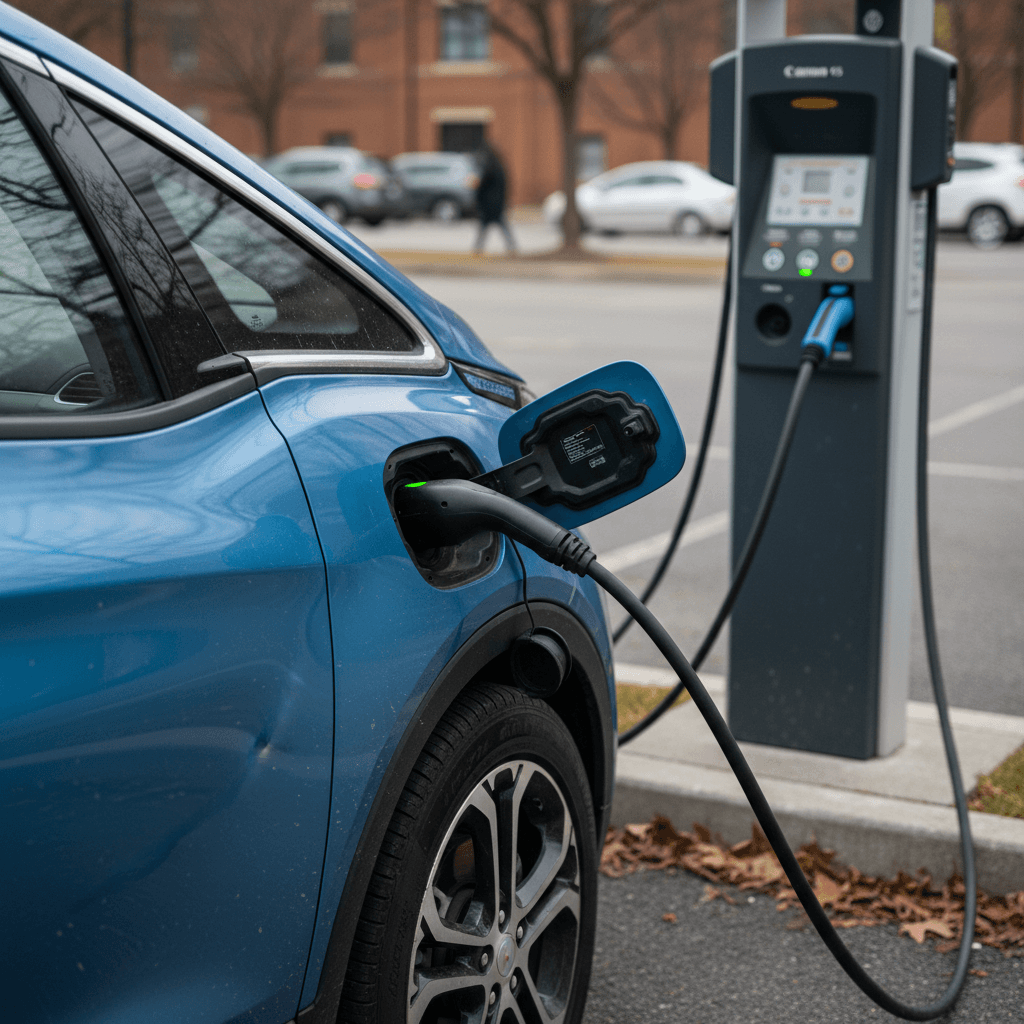
Charging reality check
The battery recall: what it means for used buyers
No discussion of whether you should buy a used Chevy Bolt is complete without the battery recall. Earlier Bolts (primarily 2017–2019, plus a slice of later years) were recalled after a small number of battery packs caught fire. GM ultimately replaced battery modules, or in many cases the entire pack, on affected vehicles.
- Most recalled Bolts received new battery packs manufactured to updated specs.
- A replacement pack typically resets battery age, which can actually be a plus for used shoppers.
- Software updates changed how the Bolt charges and manages the pack to emphasize safety.
Non‑negotiable for a used Bolt
How to double‑check recall and battery status
1. Run the VIN through GM’s recall tool
Use Chevrolet’s online recall lookup or ask a Chevy dealer’s service department to confirm that all battery-related recalls and campaigns are complete for that specific car.
2. Ask for battery service paperwork
Request service records showing whether modules or the entire pack were replaced. This can help you understand the true age of the battery you’re buying.
3. Review state-of-charge behavior
On a test drive, look for abnormal jumps in indicated range or state of charge. Sudden drops or erratic behavior can be a red flag worth investigating further.
4. Get an independent health report
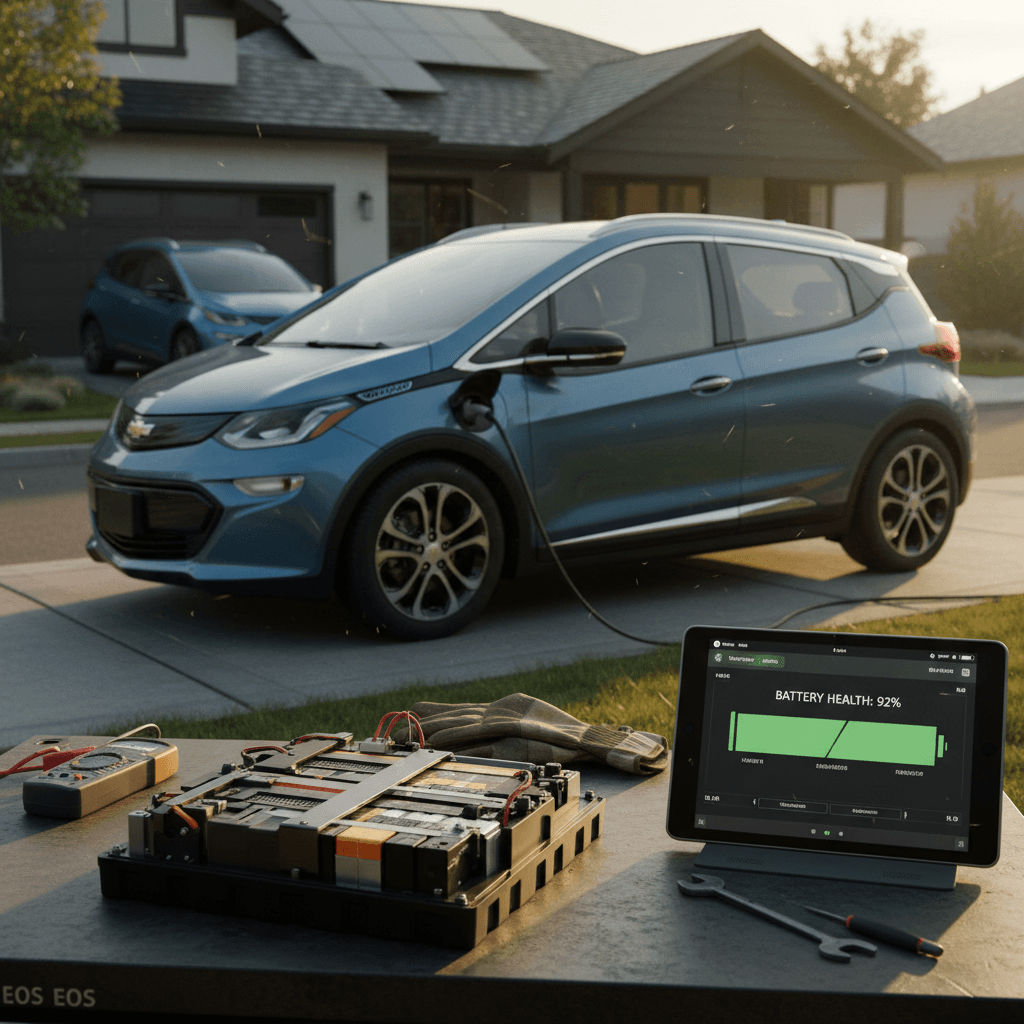
A third-party battery health test, or a <strong>Recharged Score</strong> battery report where available, can show how much usable capacity remains and whether it’s in line with similar Bolts.
Pros and cons of buying a used Chevy Bolt
Used Chevy Bolt: key pros and cons
What owners tend to love, and what they don’t
Big advantages
- Strong real‑world range: 230–260 miles is plenty for most daily driving.
- Compact outside, roomy inside: Tall roof and hatchback layout make it surprisingly practical.
- Very low running costs: Electricity is cheaper than gas, and maintenance is minimal, no oil changes, timing belts, or exhaust.
- One‑pedal driving and strong regen make it easy and even fun in traffic.
- Affordable prices on older model years thanks to above‑average depreciation.
Trade‑offs to consider
- Recall history can worry some buyers and insurers, even on repaired cars.
- Slower DC fast charging than many newer EVs, which lengthens road‑trip stops.
- No all‑wheel drive option and modest ground clearance.
- Interior refinement is functional but not premium; earlier seats in particular drew complaints until the 2022 refresh.
- Depreciation can be steep if you plan to sell again in just a few years.
Model‑year sweet spots
Price, depreciation, and total cost to own
Thanks to aggressive price cuts on new Bolts in their final years and the shadow of the recall, the car has depreciated faster than many gas compacts. That’s frustrating for first owners, but a real opportunity on the used side if you buy carefully and hold the car for several years.
Used Chevy Bolt value snapshot
Why steep depreciation can work in your favor
What to look for when shopping a used Bolt EV or EUV
A Bolt is still a car, so all the usual used‑car fundamentals apply: accident history, mileage, service records, and condition. But EVs add a few extra items to your checklist, especially around the battery and charging hardware.
Essential used Chevy Bolt shopping checklist
Confirm battery recall status and pack replacement
As mentioned earlier, verify that all battery recalls are complete and ask explicitly whether the car received new modules or a full pack. This affects both safety perception and long‑term battery health.
Check battery health and displayed range
With a full charge, compare displayed range to the EPA number for that model year. Some degradation is normal, but a large gap may warrant a closer look or a professional battery test.
Test Level 2 and, if possible, DC fast charging
If you can, plug into a Level 2 charger to verify the car charges properly and reaches expected power levels. For road‑trip peace of mind, a test session at a CCS fast charger is even better.
Inspect tires and brakes
EVs are heavier and can be harder on tires. Uneven wear can signal alignment issues. Because regen braking does a lot of work, pads and rotors often last a long time, but it’s still worth checking.
Evaluate interior comfort and tech
Pay attention to seat comfort (especially on pre‑2022 cars), visibility, and infotainment. Make sure features like Apple CarPlay/Android Auto (where equipped) and driver‑assist systems work as expected.
Review title history and prior use
Avoid cars with salvage or rebuilt titles unless you’re very comfortable with risk. Fleet and rideshare use isn’t an automatic pass/fail, but it can mean higher mileage and harder use.
Bolts you should approach with extra caution
Bolt vs. other affordable used EVs
When you’re deciding whether to buy a used Chevy Bolt, you’re often cross‑shopping it with cars like the Nissan Leaf, Hyundai Kona Electric, Kia Niro EV, or early Tesla Model 3s. Each takes a slightly different approach to price, range, and charging speed.
How the Bolt stacks up against common used EV alternatives
High‑level comparison for typical 2019–2022 examples in similar price brackets.
| Model | Typical range | DC fast charging | Interior size/feel | Standout trait |
|---|---|---|---|---|
| Chevy Bolt EV/EUV | ~238–259 mi (EV), ~247 mi (EUV) | Up to ~55 kW (CCS) | Compact outside, roomy hatch | Best blend of range and price |
| Nissan Leaf (40/62 kWh) | ~150–226 mi | CHAdeMO (often slower, network shrinking) | Comfortable but older tech | Often cheapest upfront |
| Hyundai Kona Electric | ~258 mi | Up to ~75 kW or more (CCS) | Small SUV feel | More efficient, sportier drive |
| Kia Niro EV | ~239–253 mi | Up to ~75 kW or more (CCS) | Small crossover | Balanced, practical package |
| Early Tesla Model 3 | ~220–310 mi | Much faster, Tesla Supercharger | More premium, sedan‑like | Superior road‑trip experience |
Exact specs vary by year and trim, but these patterns hold across much of the used market.
Where the Bolt hits the sweet spot
How Recharged helps with used Bolt shopping
Because the Bolt’s story is so battery‑centric, buying one is much easier when you have real data, not just a seller’s reassurance. That’s where Recharged can make a meaningful difference if you’re shopping used EVs.
Why shop for a used Bolt through Recharged
Tools and support built specifically for used EV buyers
Verified battery health
Transparent pricing & financing
EV‑savvy support & delivery
Ready to find your next EV?
Browse VehiclesFAQ: Used Chevy Bolt questions answered
Frequently asked questions about buying a used Chevy Bolt
Bottom line: Should you buy a used Chevy Bolt?
If you want a practical, efficient, and affordable EV primarily for commuting, errands, and the occasional road trip, and you’re willing to do your homework on recall status and battery health, a used Chevy Bolt can be one of the smartest buys on the market in 2026. You get real long‑range EV capability at compact‑car prices, with running costs that undercut nearly any gasoline alternative.
On the other hand, if your life is built around frequent long‑distance highway drives, oversized cargo needs, or you’re extremely sensitive to resale value, you may be happier in a larger, faster‑charging EV or even a plug‑in hybrid. The key is to match the Bolt to what you realistically do day in and day out, not just to a once‑a‑year road trip.
Whichever way you lean, approach any used Bolt with the same discipline you’d bring to any major purchase: verify the history, get objective battery data, and insist on transparent pricing. If you’d like a head start, Recharged can connect you with used Bolts that already come with a Recharged Score battery health report, fair market pricing, financing, and EV‑specialist support, so you can answer that question, “Should I buy a used Chevy Bolt?” with real confidence instead of guesswork.