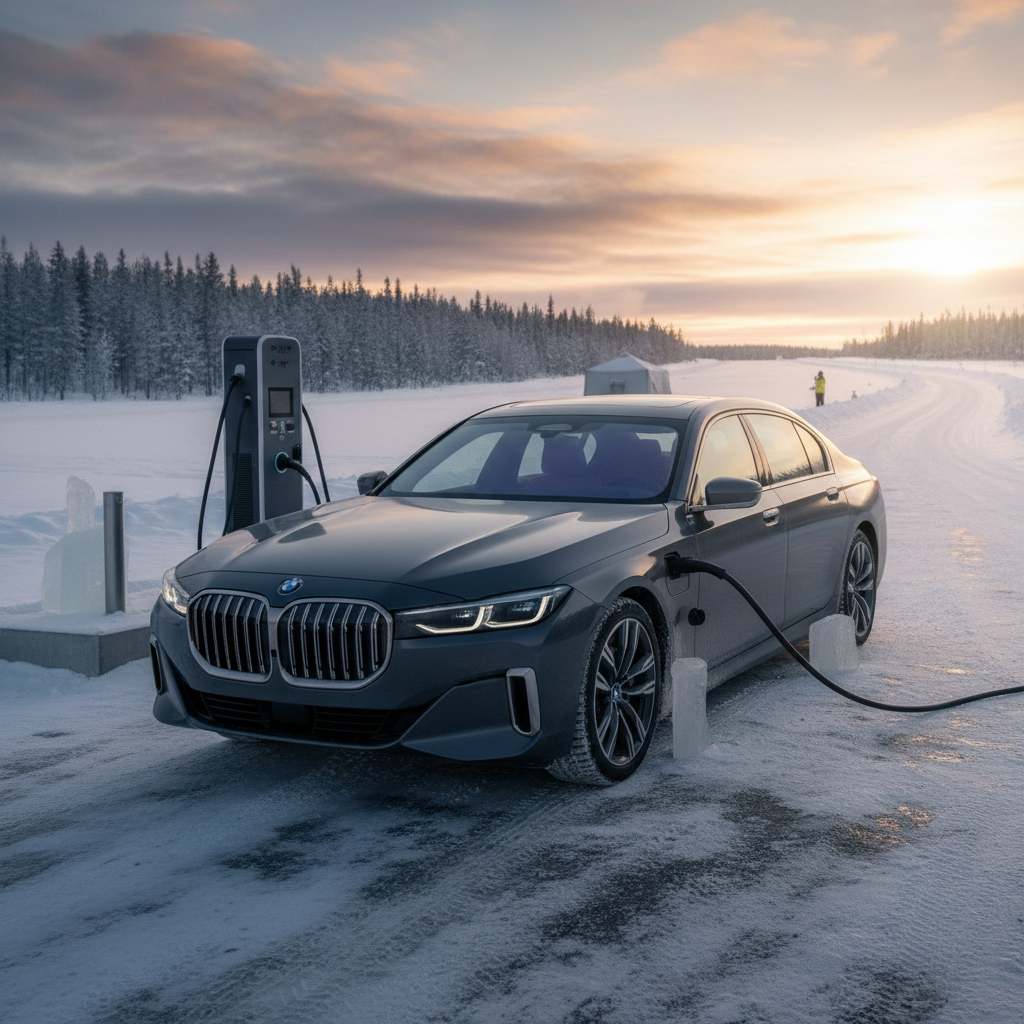
If you’re considering a BMW i7, or eyeing one on the used market, it’s natural to wonder: how long does the BMW i7 battery actually last? The i7’s massive 101.7 kWh usable pack is the heart of the car, and understanding its lifespan is critical to predicting long‑term costs, range, and resale value.
Short answer: how long will an i7 battery last?
BMW i7 battery lifespan basics
The BMW i7 is BMW’s all‑electric flagship 7 Series. All current trims, the eDrive50, xDrive60, and M70, share a large lithium‑ion battery pack with about 105.7 kWh gross and 101.7 kWh usable capacity. That big pack underpins EPA‑rated range roughly between the high‑200s and low‑300s miles, depending on trim and wheels.
BMW i7 key battery and range numbers
The key point for lifespan is that BMW deliberately doesn’t let you use 100% of the pack. That built‑in battery buffer is one of the quiet heroes of longevity: by preventing true 0% and 100% states of charge, BMW reduces stress on the cells and slows capacity loss over time.
Battery size, range, and why chemistry matters
Big pack, modest stress
The i7’s roughly 101.7 kWh usable battery is larger than what you’ll find in many midsize EVs. That means the car doesn’t need to draw as high a percentage of the pack for a typical commute. Lower depth of discharge per drive, especially on highway slogs, tends to extend battery lifespan compared with a smaller pack driven the same miles.
Modern battery chemistry
The i7 uses a high‑energy nickel‑rich lithium‑ion chemistry (similar to BMW’s i4 and iX), optimized for range rather than ultra‑cheap cost. Combined with liquid thermal management and sophisticated battery management software, this chemistry is designed to keep degradation slow and predictable for at least the term of the warranty and typically longer.
You won’t see BMW publish a specific “expected lifespan” number, that’s normal in this industry. Instead, the most concrete signal about how long they expect the battery to stay healthy comes from the high‑voltage battery warranty.
What the BMW warranty tells you about lifespan
For U.S. buyers, BMW backs the high‑voltage battery in its all‑electric models, including the i7, with a high‑voltage battery limited warranty of 8 years or 100,000 miles, whichever comes first. That coverage is in addition to the standard new‑vehicle warranty and is specifically focused on defects and excessive capacity loss.
BMW i7 battery warranty at a glance
What BMW is effectively promising about battery life
8 years / 100,000 miles
BMW’s high‑voltage battery warranty covers the i7 pack against defects in materials or workmanship for 8 years or 100,000 miles from the in‑service date, whichever comes first. In some regions or special cases, capacity loss is separately covered as well.
Capacity loss protection
BMW acknowledges that lithium‑ion batteries naturally lose capacity over time, but for modern EVs it also sets a minimum acceptable State of Health threshold during the warranty. In many markets, that’s around 70–75% of original capacity.
Signal about expected life
Car companies don’t gamble on 8‑year battery warranties. BMW’s coverage is a strong signal that an i7 battery, when used normally, is engineered to remain usable well beyond that window, even if you see some range loss.
Certified Pre‑Owned bonus
Real-world degradation: what i7 owners should expect
Because the i7 launched for the 2023 model year, we don’t yet have 10+ years of hard data the way we do for early Nissan Leafs or Teslas. But we can combine three things to form a realistic picture: BMW’s pack design and chemistry, owner reports from related BMW EVs, and what we know more broadly about modern liquid‑cooled EV batteries.
Typical modern EV battery degradation pattern (including i7)
Approximate, real‑world expectations for capacity loss if the car is driven and charged reasonably.
| Vehicle age | Cumulative miles | Typical remaining capacity | What that feels like in an i7 |
|---|---|---|---|
| Year 1–2 | 0–25,000 mi | ≈92–97% | You may not notice any range change unless you track data closely. |
| Year 3–5 | 25,000–60,000 mi | ≈88–94% | A modest drop – think 10–20 fewer miles of usable range in most conditions. |
| Year 6–8 | 60,000–100,000 mi | ≈82–90% | Range is still very usable; maybe 30–50 miles down from new depending on how and where you drive. |
| Year 9–12 | 100,000–150,000+ mi | ≈75–85% | Range loss becomes more noticeable, but many drivers can still use the car daily with some planning. |
Actual degradation varies car‑to‑car, but most well‑treated packs follow a similar curve: faster loss early, then a long slow tail.
The i7’s large pack helps here. Losing 10% of a 101.7 kWh usable battery is still roughly a 10 kWh hit, meaning you might see range drop from, say, 300 miles when new to about 270 miles in similar conditions. Annoying? Maybe. A deal‑breaker? For most owners, not at all.
Beware of dashboard “SOH” numbers
7 factors that shorten or extend BMW i7 battery life
- Average state of charge: Keeping the i7 at 50–70% when parked long‑term is easier on the cells than sitting at 100% or close to empty.
- Depth of discharge: Frequently running the pack near 0% then back to 100% adds more wear than cycling between, say, 20% and 80%.
- Fast‑charging habits: Occasional DC fast charging is fine, but relying on it for nearly every charge, especially at high SOC and in hot weather, can accelerate degradation.
- Climate and temperature management: Extreme heat is tough on lithium‑ion batteries. Parking in shade or a garage and letting the car manage pack temperature helps tremendously.
- Annual mileage: More miles means more full equivalent cycles. A high‑mileage executive shuttle will age its pack faster than a lightly used garage queen.
- Driving style: Heavy, repeated full‑throttle launches and high‑speed Autobahn‑style driving increase battery temperatures and load, modestly increasing wear over time.
- Software updates and battery management: BMW can and does refine battery and charging strategies over time via software. Keeping your i7 updated helps ensure you’re benefiting from the latest protections.
The good news
How to care for your i7 battery day to day
Practical habits to maximize BMW i7 battery lifespan
1. Use a conservative charge limit
For daily use, set your charge target to about <strong>70–80%</strong> instead of 100%. Save full charges for road trips when you really need every mile.
2. Prefer AC charging at home
Level 2 home charging is slower and gentler on the pack than frequent DC fast charging. It’s also cheaper, especially if you can schedule it for off‑peak hours.
3. Avoid sitting full or empty
Try not to leave the car parked for days at 100% or near 0%. If you’ll store the i7 for a while, aim for around 40–60% state of charge.
4. Protect it from extreme heat
Whenever possible, <strong>park in a garage or shade</strong>. The i7 has active thermal management, but you can help by not baking the car in direct summer sun unnecessarily.
5. Use preconditioning
Before a long drive or DC fast charge, use the car’s preconditioning to warm or cool the pack. That improves efficiency and reduces stress during charging.
6. Keep software current
Allow over‑the‑air or dealer updates. BMW occasionally tunes charging behavior, cooling logic, and other systems that can indirectly affect long‑term battery health.
Buying a used BMW i7? Battery health checklist
Because the i7 is a six‑figure luxury sedan new, many examples will enter the used market after a few years as leases end and first owners move on. That’s where battery lifespan really matters: you want confidence that the car still has strong range and that the remaining warranty is meaningful.
Used BMW i7 battery checks before you buy
How to avoid surprises on a six‑figure luxury EV
1. Check in‑service date
Look at the car’s original in‑service date and mileage. The 8‑year/100,000‑mile battery warranty clock starts when the first owner took delivery, not model year. A 2023 i7 first sold in late 2022 may only have 5–6 years of coverage left.
2. Compare indicated vs. expected range
Charge the car to a known percentage and look at the estimated range. Compare it with EPA numbers and independent tests for that trim. A modest gap is normal; a huge gap suggests either heavy degradation or unusual driving patterns.
3. Review charging history
If the seller has records, look at how the car was charged. Heavy DC fast‑charge use in a hot region doesn’t automatically make a car a no‑go, but it’s something to weigh alongside mileage and warranty remaining.
4. Scan for battery‑related fault codes
A pre‑purchase inspection should include checking for high‑voltage battery or thermal‑management fault codes. Even if the car drives fine, stored codes can reveal a rough past.
5. Get an objective battery health report
Whenever possible, rely on data‑driven battery diagnostics rather than guesswork. At Recharged, every used EV gets a Recharged Score that includes verified battery health based on real‑world pack behavior, not just dashboard guesses.
6. Weigh price vs. remaining life
Don’t just chase the lowest price. A slightly more expensive i7 with stronger battery health and more warranty remaining is often the better long‑term value.
How Recharged helps used i7 shoppers
Battery replacement, long-term ownership, and resale value
The question behind “How long does the BMW i7 battery last?” is often, “Will I ever need to replace it, and what will that cost?” While BMW doesn’t publish official retail pricing for complete i7 pack replacements, it’s safe to say that a brand‑new, factory battery installed out of warranty would be a very expensive repair, well into five figures.
Scenario 1: Sell within the warranty window
If you tend to switch cars every 4–6 years, you’ll likely move on from your i7 while the high‑voltage battery is still under warranty and before degradation is a major day‑to‑day concern. For this ownership style, battery lifespan is mostly a resale‑value question: a well‑documented i7 with good battery health should remain attractive on the used market.
Scenario 2: Keep the i7 10–15 years
If you plan to keep the car long‑term, assume that by years 10–15 you may be driving with 75–85% of the original usable capacity. For most U.S. driving patterns that still supports a comfortable daily range. At that point, your decision will be less “Do I replace the pack?” and more “Does this car’s remaining range still fit my life?”
Don’t bank on a full pack replacement pencil‑ing out
BMW i7 battery lifespan FAQ
Frequently asked questions about BMW i7 battery life
Key takeaways on BMW i7 battery lifespan
The BMW i7’s battery is a sophisticated, well‑protected pack designed to deliver strong range and performance not just for a few years, but across a long service life. BMW’s 8‑year/100,000‑mile high‑voltage battery warranty sets a confident baseline, and everything we know about modern liquid‑cooled EV batteries suggests that many i7s will remain very usable well beyond that window with reasonable care.
If you’re buying new, your main job is to adopt sensible charging habits and enjoy the car. If you’re shopping used, the real advantage comes from transparent battery health data. That’s where Recharged can help: every EV we sell comes with a Recharged Score, fair market pricing, and EV‑specialist support so you understand exactly what you’re getting, today and years down the road.