If you’re typing “sell my electric car in Virginia” into a search bar, you’re already discovering that selling an EV isn’t quite the same as unloading a used Civic. Battery health, fast‑charging speed, and even HOV‑lane rules now matter as much as leather seats and alloy wheels. The good news: if you take a methodical, Virginia‑specific approach, you can sell your electric car quickly and for a fair price, without feeling like you gave away the future of transportation at a yard sale.
Good news for Virginia EV sellers
Why selling an EV in Virginia feels different from a gas car
When you sell a gas car, buyers care about mileage, accidents, and whether the air conditioning still blows cold. When you sell an electric car in Virginia, they’re hunting for different clues: battery health, real‑world range on I‑95, and whether that used Tesla or Ioniq 5 has been fast‑charged to death. Understanding these differences is how you avoid lowball offers and confused buyers.
How EV buyers judge your car
Four questions every serious Virginia EV shopper will ask
Battery health
Charging speed
Real-world range
Total cost to own
Don’t ignore buyer education
How much is my electric car worth in Virginia?
Used EV price picture going into 2026
Those are national snapshots, but they translate surprisingly well to Virginia. On Richmond, Hampton Roads, and Northern Virginia lots, you’ll often see mainstream used EVs, Bolt EV, Kona Electric, Leaf Plus, ID.4, priced in the low‑to‑mid $20Ks, with newer long‑range crossovers and Teslas stretching higher, especially if they have strong fast‑charging and driver‑assist features.
- Check recent listings for your exact model, year, mileage, and trim on several sites, not just one marketplace.
- Look specifically at Virginia and nearby states; EV prices can swing with local incentives, gas prices, and charger density.
- Pay attention to asking prices that actually go pending or disappear, those are closer to what buyers will really pay.
Use battery health to justify your price
Three main ways to sell your electric car in Virginia
In Virginia, you’ll usually have three realistic paths: trade‑in at a dealer, sell privately, or use a dedicated used‑EV marketplace like Recharged. Each has its own mix of speed, effort, and final sale price.
Compare your EV‑selling options in Virginia
How the main selling paths stack up for a typical used EV owner in Virginia.
| Option | Typical price outcome | Time & effort | Pros for EVs | Cons for EVs |
|---|---|---|---|---|
| Dealer trade‑in | Lowest, but fast | Very low | Instant sale, can roll equity into your next car, no strangers at your house | Dealers often undervalue EVs, especially if they don’t understand battery health |
| Private sale | Highest price | High | You control the story, can highlight battery health and charging accessories | You handle photos, listings, test drives, and scammers yourself |
| Recharged marketplace / instant offer | Near‑retail, less haggling | Medium–low | EV‑savvy pricing, battery health diagnostics, digital paperwork, nationwide buyer pool | May not squeeze out every last dollar vs. a unicorn private‑sale buyer |
Private sale usually nets the highest price, but specialized EV marketplaces can get you close with far less hassle.
Where Recharged fits in
Step-by-step: how to sell your EV privately in Virginia
Private‑sale checklist for Virginia EV owners
1. Gather your paperwork
You’ll need your Virginia title (or lien payoff letter), registration, loan payoff info if you still owe money, and records of maintenance, tire replacement, and any battery or high‑voltage work.
2. Get a battery health and condition report
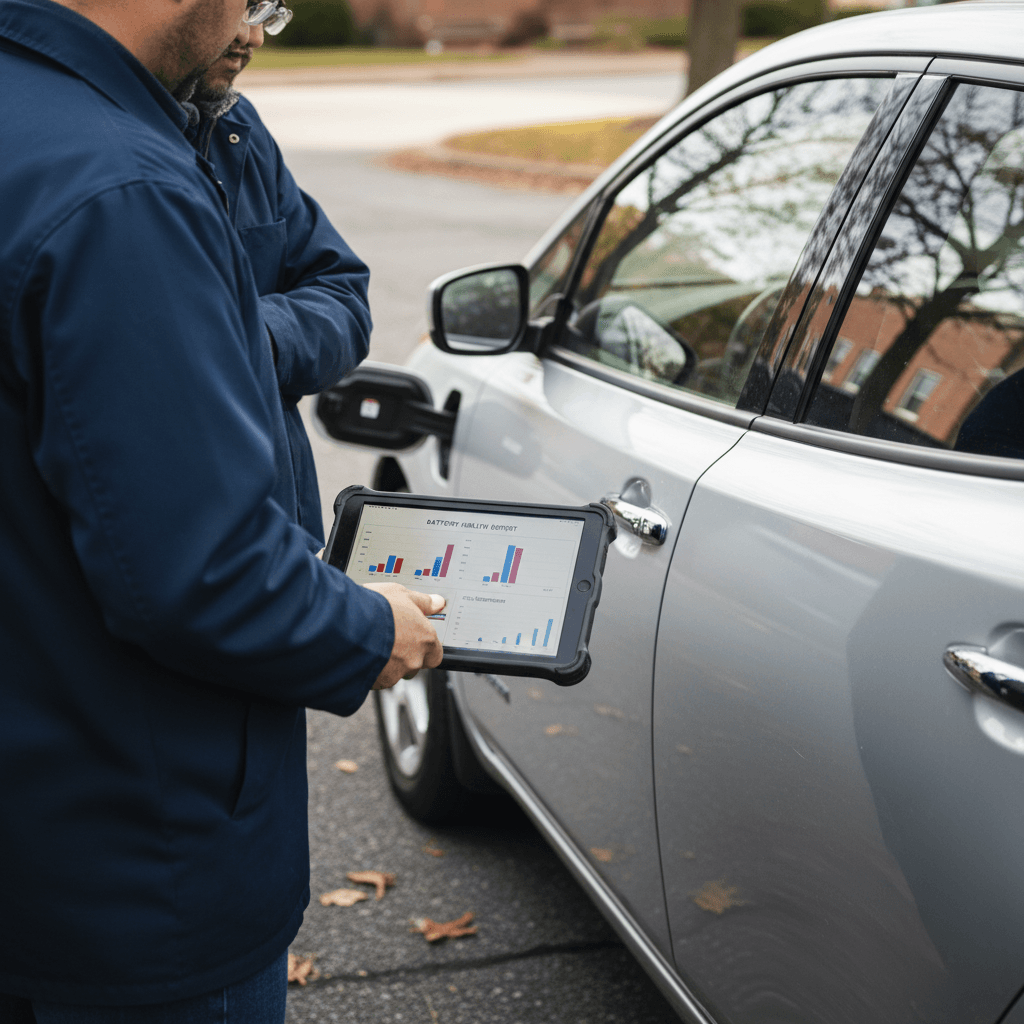
Buyers don’t want guesswork. A report like the <strong>Recharged Score</strong> shows pack health, expected range, and charging history in a format a non‑engineer can understand.
3. Set a realistic, EV‑savvy price
Price based on comparable listings in Virginia, then adjust up or down depending on battery health, DC‑fast‑charge capability, wheel/tire condition, and remaining factory battery warranty.
4. Create an honest, educational listing
Write the ad like you’re answering a nervous friend. Explain home charging, average range at 80%, what trips you’ve done, and which public networks you’ve used around Virginia.
5. Screen buyers and plan test drives
Meet in a safe, well‑lit place and verify insurance. For EV newbies, walk them through one normal drive plus a quick stop at a nearby Level 2 or DC fast charger if possible.
6. Complete payment, title transfer, and plates
For larger transactions, cashier’s checks or a bank‑to‑bank transfer are safest. Then sign over the Virginia title correctly, remove your plates, cancel insurance, and update any mileage‑based fee programs.
Safety first on test drives
Virginia-specific title, tax, and HOV details for EV sellers
Virginia doesn’t care that your car is electric when it comes to ownership paperwork, the state cares that it’s titled correctly, taxes are collected, and fees like the highway use fee or Mileage Choice program are squared away. Here’s what that looks like when you sell.
Key Virginia admin steps when you sell an EV
What to double‑check before you wave goodbye to the car
Signing over the title
Electronic title transfer
Mileage Choice & fees
About Virginia HOV lanes and EV perks
Getting your EV ready to sell
A clean, well‑presented EV with a strong battery story sells faster and for more money. You’re not just selling metal and rubber; you’re selling confidence that this car will take a Virginia commuter from Short Pump to downtown or from Norfolk to Williamsburg without charging‑roulette anxiety.
- Detail the EV, especially touchpoints: door handles, steering wheel, screen, charging port door, and cables. Smudged touchscreens and grimy charge cables scream neglect.
- Fix cheap, obvious issues: burned‑out bulbs, low tire pressure, minor scuffs on wheel faces. If a $50 fix scares away a $1,000 better offer, that’s bad math.
- Photograph like a dealer: front three‑quarter, rear three‑quarter, interior, instrument cluster showing current range, close‑ups of charging port and cable, and the home charging setup if you’re including it.
- Be precise about range: share a realistic commuting example: “I drive from Charlottesville to Richmond and back (~140 miles) and get home with 20% remaining in mild weather.”
- Decide what accessories are included: mobile charge cable, wallbox, roof racks, floor mats. In Virginia’s used EV market, including a Level 2 charger can be the tiebreaker.
Warm up the battery for test drives
How Recharged helps Virginia drivers sell their EVs
Selling an EV is part science experiment, part sales pitch. Recharged exists to handle the science so you can focus on the decision. Whether you’re in Richmond, Northern Virginia, or checking listings from the Blue Ridge, Recharged is built to make used EV ownership, and selling, simple and transparent.
What Recharged offers Virginia EV sellers
Designed from the ground up for used electric cars
Recharged Score battery diagnostics
Digital, guided selling
Trade‑in & delivery options
Ready to find your next EV?
Browse VehiclesGreat fit if…
- You want more than dealer trade‑in money but don’t want to manage a full private sale.
- Your EV has solid battery health you’d like to document and highlight.
- You’re open to trading into another used EV and want expert help comparing options.
Maybe go private if…
- You enjoy the process, are comfortable screening buyers, and have time to wait for a unicorn offer.
- Your car is especially rare, limited‑run performance model, unusual spec, or ultra‑low mileage.
- You live in an area with a hot micro‑market for your exact EV, such as a Tesla‑heavy Northern Virginia neighborhood.
FAQ: selling an electric car in Virginia
Frequently asked questions about selling your EV in Virginia
Bottom line: the best way to sell your EV in Virginia
Selling an electric car in Virginia means selling a story: how far it really goes, how you’ve treated the battery, and how simple day‑to‑day life has been with electrons instead of unleaded. If you can answer those questions clearly and back them up with data, you’re already ahead of most sellers, and most buyers will happily pay for that peace of mind.
For maximum dollars, a diligent private sale with a documented battery health report, smart pricing, and good photos is still the king. If you’d rather skip the Craigslist rodeo and the parking‑lot test drives, plugging into an EV‑specialist platform like Recharged gives you expert guidance, fair EV‑aware pricing, and buyers who actually understand what they’re looking at. Either way, in Virginia’s maturing used‑EV market, knowledge is leverage, and you now have plenty of both.