If you’re cross-shopping electric pickups, you’re probably wondering how much Rivian R1T cargo space with seats down you actually get. Specs tell part of the story, but what matters is whether you can haul camping gear, dogs, strollers, skis, or work equipment without fighting the truck every weekend.
Big picture
Rivian R1T cargo overview at a glance
Rivian R1T cargo highlights (approximate figures)
Rivian publishes cargo specs for the bed, gear tunnel, and frunk, but interior numbers behind the front seats aren’t as prominent. In practice, you should think of the R1T as a mid-size crew-cab truck on the inside with a lot of clever extra storage layered on top.
How much space do you get with the R1T rear seats folded?
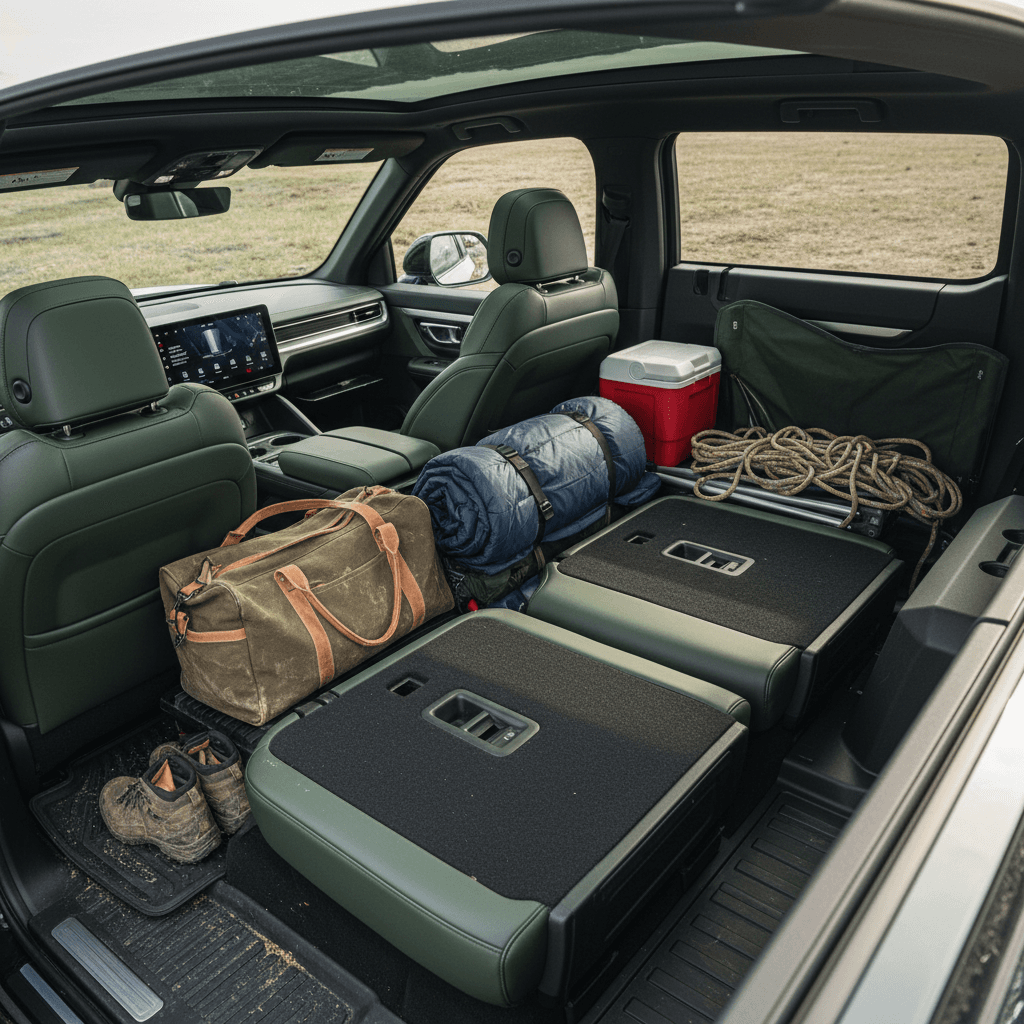
The R1T’s rear bench splits 60/40 and folds down toward the seat cushions, creating an extended flat(ish) load area behind the front seats. With the rear seats folded, you can think in terms of three key dimensions: width, length, and height.
- Width: Roughly 54 inches of usable width across the rear seating area, tapering slightly toward the doors.
- Length: Around 36–38 inches of depth from the rear-seat back to the rear door opening, and about 65+ inches from the back of the front seats to the rear of the cab when you factor in the footwells.
- Height: About 34–36 inches from floor to headliner at the rear, enough for stacked duffels or large dog crates.
Quick mental benchmark
In day-to-day use, that means you can easily fit two large hard-shell suitcases plus two carry-ons behind the front seats, or a pair of medium dog crates, while still leaving the bed and gear tunnel open for everything else.
Key interior and cargo dimensions that actually matter
Paper specs don’t always translate into real-world usability. Here’s a practical look at the R1T’s main cargo areas and how they interact with the cabin when you fold the rear seats down.
Approximate Rivian R1T cargo dimensions
These figures are rounded, based on manufacturer information and real-world measurements from owners. Use them as practical guidelines, not engineering blueprints.
| Area | Approx. Dimension | What It Fits Best |
|---|---|---|
| Rear cabin width (seats folded) | ~54 in | Dog crates, suitcases side-by-side, camping bins |
| Rear cabin max length (to back of front seats) | ~65–68 in | Folded bikes (front wheel removed), skis diagonally |
| Rear cabin height (floor to headliner) | ~34–36 in | Stacked duffels, tall storage bins |
| Bed length (tailgate up) | ~54 in | Coolers, toolboxes, bikes sideways |
| Bed length (tailgate down) | ~83–84 in | Plywood, lumber, kayaks (with tie-downs) |
| Bed width between wheel wells | ~50–51 in | Standard 4×8 sheets supported tailgate-down |
| Gear tunnel volume | ~11 cu ft | Chairs, tents, golf bags, recovery gear |
| Frunk volume | ~11 cu ft | Groceries, small luggage, charging cables |
Always test-fit oversized items if possible, especially if you’re shopping a used R1T with aftermarket accessories.
Mind the seat angle
Using every inch: bed, frunk, gear tunnel and underfloor bins
Cabin + bed = clean vs. dirty cargo
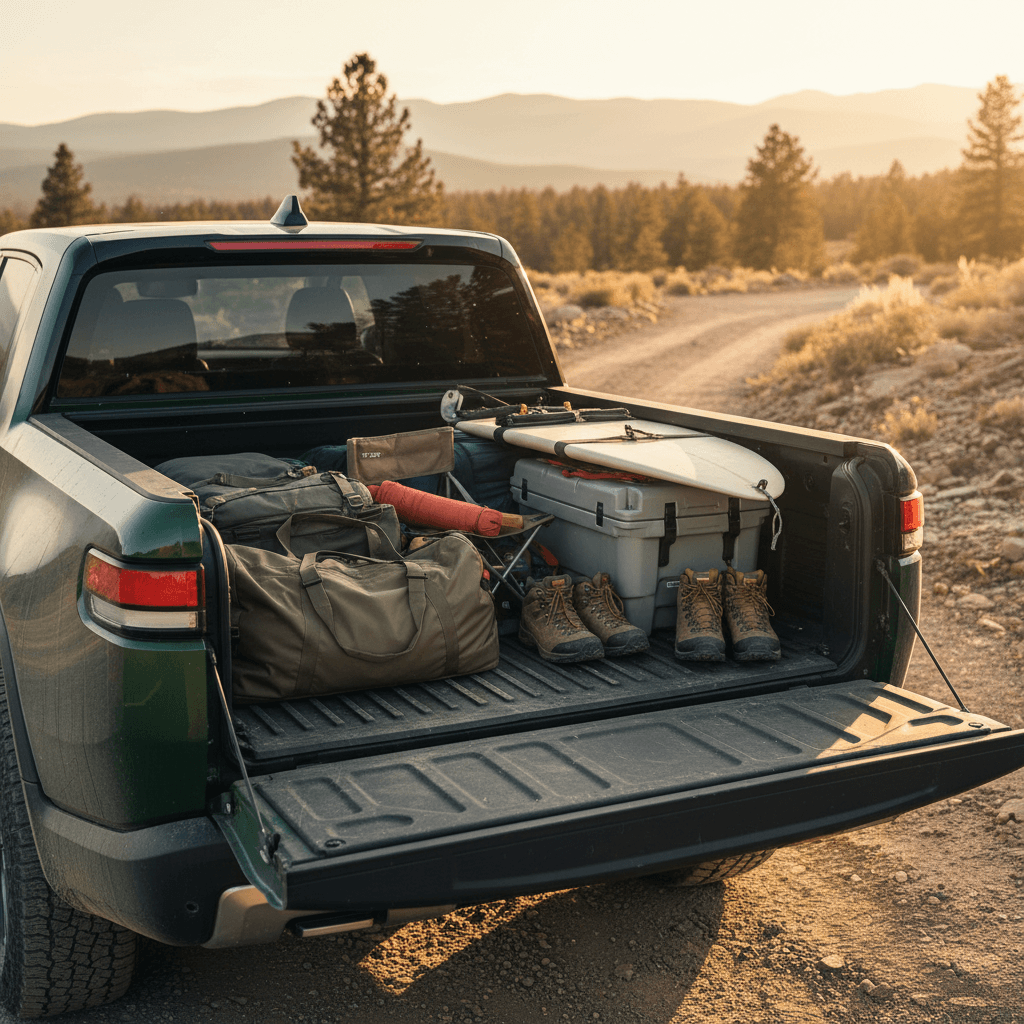
One of the R1T’s biggest advantages is how you can separate clean and dirty cargo. With the rear seats down, the cabin is ideal for luggage, pets, kids’ gear, or anything you don’t want exposed to weather. The bed, especially with the power tonneau on earlier builds or an aftermarket cover, is perfect for coolers, firewood, bikes, or muddy equipment.
Frunk, gear tunnel and bins
The front trunk (frunk) and gear tunnel act like built-in cargo organizers. Keep charging cables, recovery gear, and tools tucked away where they won’t slide around the cabin. The under-bed storage bin can swallow a couple of duffels or a full-size spare in some setups, freeing up cabin room when the seats are folded.
Why this matters on a used R1T
Real-world use cases: camping, family duty, and work gear
How owners actually use R1T cargo space
Three common scenarios where folding the rear seats pays off
Weekend camping and overlanding
Fold the rear seats for dry, secure storage of sleeping bags, clothes, and electronics. Put the messy stuff, stoves, fuel, firewood, in the bed and under-bed bin. Long gear like skis or fishing rods can run from the cabin into the bed with the rear glass window down.
Family road trips
With kids in the rear seats, you get traditional SUV-style cargo. On adults-only trips, fold the rear seats and you can easily pack four people’s luggage inside while using the bed for bikes or a roof box for overflow.
Work and trade use
Contractors and outdoor professionals use the R1T as a mobile office. The folded rear seats hold tool bags, laptops, and delicate gear, while the bed and gear tunnel swallow heavier equipment and ladders.
The bottom line is that the R1T’s cargo system is more modular than most gas trucks. You’re not forced to choose between a bare bed or a cramped crew cab, especially helpful if you’re trying to justify an electric truck as your household’s only vehicle.
Smart packing strategies with the seats down
Packing your Rivian R1T like a pro
1. Prioritize the cabin for valuables
With the rear seats folded, use the cabin for anything that should be climate-controlled or out of sight: laptops, camera gear, clothes, and important documents.
2. Use soft bags, not hard tubs
Because the folded rear seatbacks aren’t perfectly flat, <strong>soft duffel bags</strong> and packing cubes conform better and make it easier to build a level surface front-to-back.
3. Load by access frequency
Put items you’ll need during the drive, snacks, jackets, charging cables, within arm’s reach in the cabin. Stash once-a-day items in the gear tunnel or frunk, and seldom-used gear at the very back of the bed or in the underfloor bin.
4. Keep heavy items low and forward
Place heavier boxes on the cabin floor behind the front seats, not on top of the folded seatbacks. This improves stability and reduces the chance of cargo shifting under hard braking.
5. Protect the seatbacks and trim
A simple moving blanket or cargo liner across the folded seats helps prevent scuffs and dents from toolboxes, coolers, or hard luggage, especially important on a used R1T you want to keep in good shape.
6. Think through emergency access
Don’t bury your charging adapters, first-aid kit, or tire repair tools under layers of gear. The frunk is a great place for these, since it’s easy to reach even with the cabin and bed fully packed.
Safety first when loading up
R1T cargo room vs other electric trucks
On paper, some rivals offer bigger beds or more straightforward cargo boxes, but the R1T makes up ground with clever packaging. Here’s how it generally stacks up against other electric pickups from a utility standpoint.
Versus Ford F-150 Lightning
- Cabin: The Lightning’s cab feels larger and more traditional, with a bit more rear legroom, but lacks the R1T’s gear tunnel.
- Bed: The Ford’s 5.5-foot bed is longer than the R1T’s, which helps with building materials but makes the truck itself larger overall.
- Seats-down utility: Both offer foldable rear seats, but the R1T’s additional hidden storage lets you separate tools, clean cargo, and charging gear more efficiently.
Versus Chevy Silverado EV / GMC Sierra EV
- Cabin: GM’s Ultium-based trucks lean into full-size dimensions, so rear-seat legroom is generous, but again you lose the gear tunnel concept.
- Bed: Features like the midgate can create massive open cargo length, but that’s more about long lumber than everyday organizing.
- Practical takeaway: If you frequently haul long construction materials, GM or Ford might serve you better. If you want a smaller footprint truck that behaves like a Swiss Army knife, the R1T shines.
Where the R1T wins and loses
What to check on a used R1T’s cargo areas
If you’re shopping for a used Rivian R1T, cargo space isn’t just about dimensions, it’s also about condition and how the previous owner used the truck. Here’s what to inspect around the rear seats and storage areas.
Used R1T cargo inspection checklist
Check rear seat mechanisms
Fold the rear seats up and down several times. Listen for grinding or popping, and make sure both sections lock securely in place. Loose hardware or binding hinges can be expensive to address.
Inspect seatbacks and door sills
Look for deep gouges, tears, or compression marks that suggest heavy tools or equipment were tossed in the cabin. Cosmetic damage is common, but excessive wear may point to hard use.
Test gear tunnel doors and seals
Open both sides of the gear tunnel and look for water intrusion, rust, or damaged weatherstripping. A tight, dry seal is crucial if you plan to store electronics or valuables there.
Verify under-bed storage condition
Lift the bed floor panel and check the storage bin for cracks, standing water, or signs of impact. If the truck has hauled heavy loads, this area can take a beating.
Look for bed liner and tie-down use
Scratches in a metal bed are normal, but check for deep dents or bent tie-downs that indicate overloading. Spray-in liners help, but can also hide damage, run your hand along the surface to feel for ripples.
Confirm frunk drains and latches work
Open the frunk, test the power open/close (if equipped), and make sure the drain plugs are clear. You don’t want a small leak turning into a mold issue in a closed compartment.
How Recharged helps on cargo and condition
Ready to find your next EV?
Browse VehiclesFAQ: Rivian R1T cargo space and seats-down questions
Frequently asked questions about R1T cargo space
Is the Rivian R1T the right cargo setup for you?
If your definition of utility is an endless, open steel box, a full-size electric truck might speak to you more. But if you want a midsize-footprint EV pickup that can double as a family hauler, road-trip rig, and weekend work truck, the Rivian R1T’s combination of rear seats that fold, a versatile bed, a big frunk, and that signature gear tunnel is tough to beat.
As you weigh your options, especially on the used market, pay attention not just to specs, but to how you’ll actually use the truck. Picture your luggage, dogs, tools, or camping setup and map them onto the R1T’s different storage zones. And if you’d rather not do that alone, Recharged’s EV specialists can help you compare vehicles, review a Recharged Score battery and condition report, and line up financing, trade-in, and delivery so you end up with an electric truck that fits your life as well as it fits your gear.