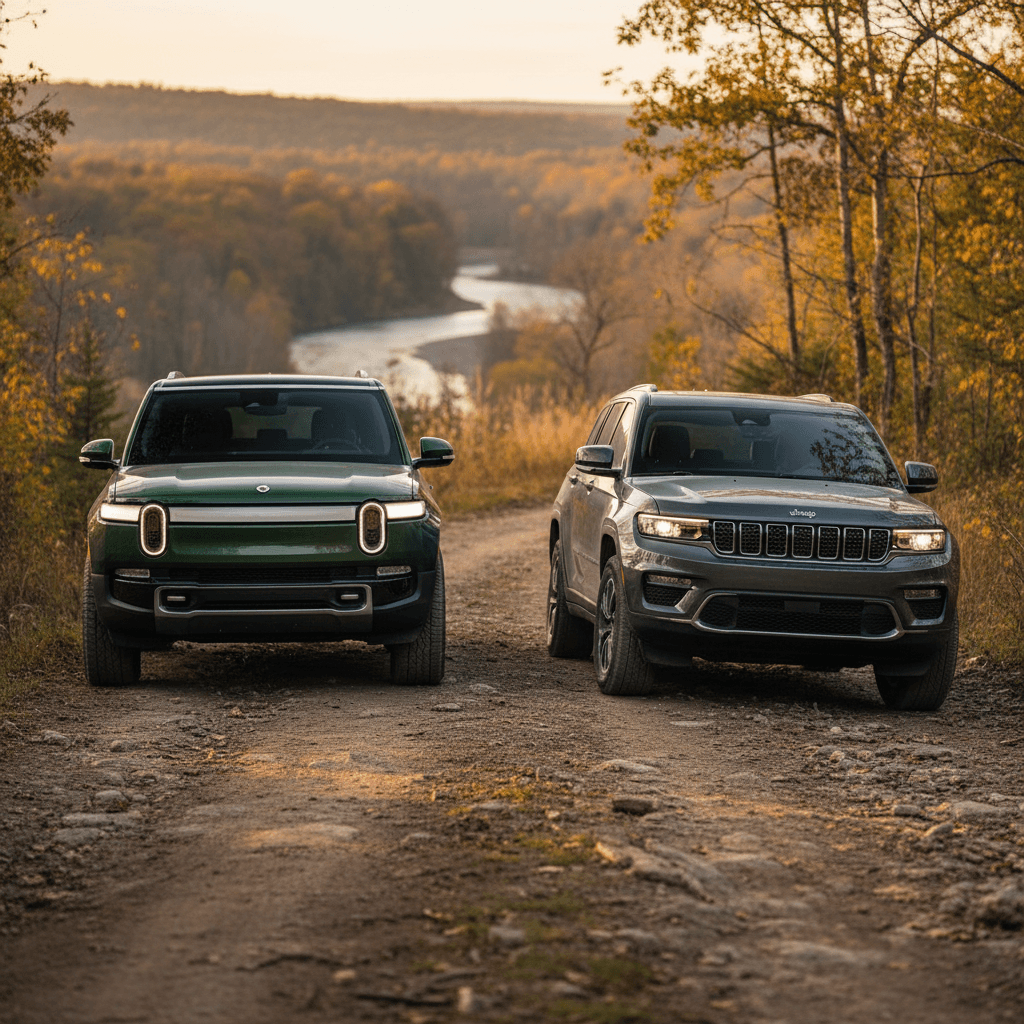
If you’re cross‑shopping a Rivian R1S vs Jeep Grand Cherokee, you’re really deciding between two different futures. One is a fully electric, tech‑heavy adventure SUV; the other is a familiar Jeep with gasoline or plug‑in hybrid power that fits into today’s fueling world with zero learning curve. This guide walks through specs, real‑world ownership and costs so you can decide which you should actually buy.
Two very different Jeeps in this comparison
Overview: Rivian R1S vs Jeep Grand Cherokee
How these SUVs are positioned
Electric startup vs legacy off‑road icon
Rivian R1S
What it is: A three‑row, all‑electric SUV with serious off‑road hardware, rapid acceleration, and a distinctive design. Think of it as a modern Range Rover with a battery and software‑first approach.
- Standard dual‑motor AWD; optional quad‑motor on earlier years
- Battery‑only driving, no gas backup
- Up to roughly 390+ miles of EPA range depending on pack and wheels
Jeep Grand Cherokee / 4xe
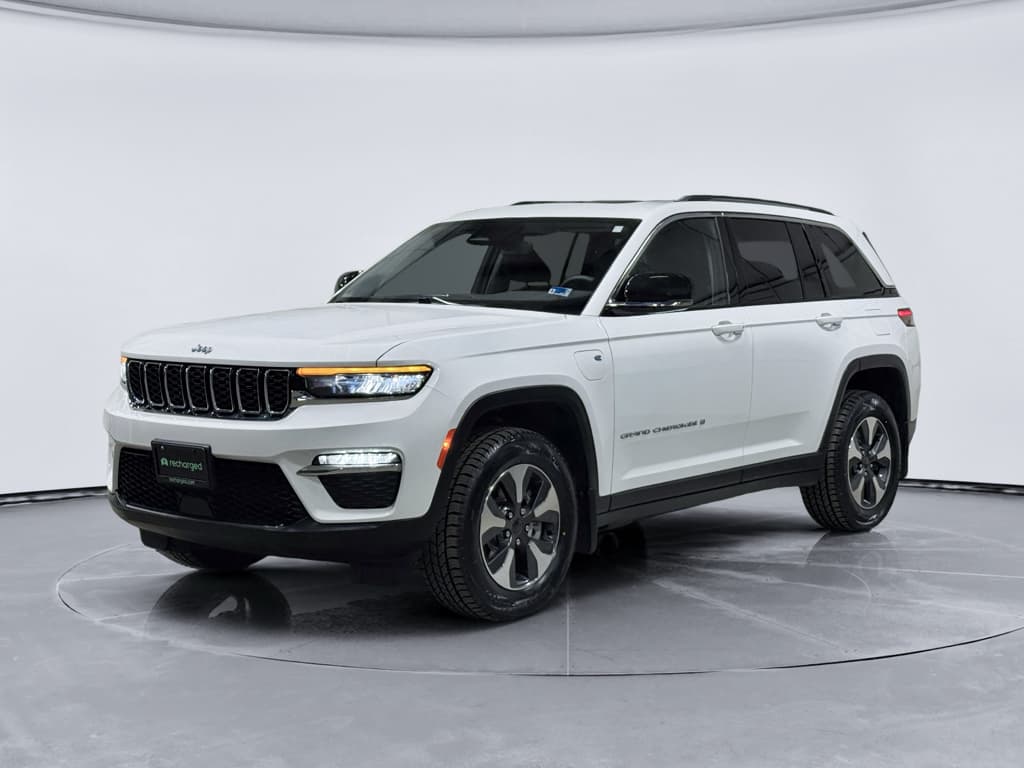
What it is: A two‑row (and optional three‑row in the L) midsize SUV built on decades of Jeep heritage. You can get conventional gas V6/V8 powertrains, or the 4xe plug‑in hybrid that adds a usable electric commute mode.
- Multiple trims from basic to luxury
- Available Trailhawk off‑road package
- 4xe: about 25 miles of electric range plus a gas engine
From 10,000 feet, the R1S is the more futuristic and expensive choice, optimized for electric performance and tech. The Grand Cherokee is more conservative, with a much lower starting price and easier road‑trip logistics, especially in parts of the U.S. where fast charging is still sparse.
Key numbers at a glance
Quick specs: electric R1S vs gas and 4xe Grand Cherokee
Core specs comparison
Approximate specs for popular configurations. Exact numbers vary by year, trim, wheels and options.
| Model | Powertrain | Drivetrain | Horsepower (approx.) | 0–60 mph (est.) | EPA range / EPA mpg‑equiv | Max towing |
|---|---|---|---|---|---|---|
| Rivian R1S Dual Motor Large | Dual‑motor electric | AWD | > 500 hp | ≈4.0 s | ~350 mi range | 7,700 lb |
| Rivian R1S Dual Motor Max | Dual‑motor electric | AWD | ≈ 533 hp | ≈3.5 s | ~390+ mi range | 7,700 lb |
| Rivian R1S Quad (earlier yrs) | Quad‑motor electric | AWD | ≈ 835 hp | ≈3.0 s | ≈ 320+ mi range | 7,700 lb |
| Grand Cherokee V6 | 3.6L gas V6 | RWD/4x4 | 293 hp | ≈7.0 s | Combined mpg in low‑20s | 6,200–6,500 lb (properly equipped) |
| Grand Cherokee 4xe | 2.0L turbo PHEV | 4x4 | 375 hp | ≈5.3 s | ≈25 mi EV + low‑20s mpg hybrid | 6,000 lb (typical rating) |
Rivian R1S vs Jeep Grand Cherokee and Grand Cherokee 4xe specs at a glance.
Spec sheet caution
Performance and driving character
Rivian R1S: instant torque and composure
The R1S is unapologetically quick. Even the more efficiency‑oriented dual‑motor versions deliver instant torque that makes most traditional SUVs feel sluggish. Earlier quad‑motor models push this into almost absurd territory, with around 835 horsepower and sports‑car acceleration.
Because the heavy battery is mounted low in the chassis, the R1S feels planted and stable in corners. Optional air suspension and adaptive dampers can raise the body for off‑road use or hunker down for highway efficiency and handling. Steering feel is modern‑EV light but accurate, and the overall impression is “luxury adventure wagon” more than classic truck‑based SUV.
Grand Cherokee: familiar, capable, but less dramatic
The gas V6 Grand Cherokee drives like a traditional midsize SUV: adequate power, smooth torque converter automatic, and a chassis tuned more for comfort than outright speed. It’s competent, not thrilling.
The Grand Cherokee 4xe is the outlier. Its electric motor fills in low‑rpm torque and can run silently in EV mode, so off‑the‑line punch is stronger than the V6 and close to some R1S trims in urban driving. Once the battery depletes, though, you’re back to a fairly normal turbo‑four hybrid experience.
If you care about fun, the R1S is in another league
Space, practicality, and towing
- Seating: R1S is a standard three‑row SUV; you can realistically seat 5 adults plus kids in the third row. The regular Grand Cherokee is two‑row only; if you need three rows in the Jeep world, you’re looking at the stretched Grand Cherokee L, not the standard model.
- Cargo: With its boxy shape and lack of a fuel tank or exhaust, the R1S offers generous cargo area plus a large front trunk (frunk). The Grand Cherokee’s cargo space is competitive for the class but doesn’t have the extra frunk storage.
- Off‑road: Properly optioned R1S models offer substantial ground clearance, underbody protection, and sophisticated traction control, rivaling or beating many traditional off‑road SUVs. Trailhawk and 4xe off‑road packages keep the Grand Cherokee legitimately capable on rough trails, but with more underbody plumbing to protect.
- Towing: The R1S is rated up to about 7,700 lb with the right hitch hardware, while most Grand Cherokees land in the 6,000–7,200 lb range depending on engine and equipment. In raw numbers they’re comparable; how they tow in practice is where they diverge.
Towing reality: electric vs gas
Range, fuel economy, and charging experience
Rivian R1S: pure EV range and charging
Depending on year, battery pack (Standard, Large, Max) and wheels, the R1S can deliver roughly 300–390+ miles of EPA range. In real highway driving, you’ll typically see somewhat less, especially with big off‑road tires or winter temps.
On a DC fast charger, owners commonly see 90–180 miles of range added in a 15–30 minute stop when conditions are right. Newer Rivian software also supports routing through fast‑charging networks and preconditioning the pack to speed up charging.
The tradeoff: you’re planning trips around public fast‑charging infrastructure. In major corridors this works fine; in rural America, you need to plan carefully. At home, if you can install Level 2 charging, you’ll leave every morning with a “full tank” for a few dollars in electricity.
Jeep Grand Cherokee / 4xe: electric taste, gas safety net
The standard Grand Cherokee is straightforward: you get fuel economy in the low‑ to mid‑20s mpg combined if you drive sensibly. Long trips are as simple as stopping at any gas station; range anxiety isn’t part of the conversation.
The Grand Cherokee 4xe plug‑in hybrid offers roughly 25 miles of electric range. For many commuters, that means you can run errands or commute silently on electrons most days, then fall back on gasoline for longer trips. It’s a compelling middle ground for buyers who can’t fully commit to charging infrastructure but want to cut fuel use.
There’s no DC fast charging on the 4xe; it’s a Level 1/Level 2 plug‑in. Think of it as a hybrid with a genuinely useful EV mode, not an EV with a backup engine.
When the R1S clearly wins on energy
Ownership costs, incentives, and resale
Key cost factors to compare
1. Upfront price
New Rivian R1S pricing has typically landed well above a comparably equipped Grand Cherokee or 4xe, especially when you factor in options. However, aggressive discounts, lease credits, and a growing used market are narrowing the gap. A used R1S can often be cross‑shopped against new or nearly new Grand Cherokees on price.
2. Fuel vs electricity
Electricity is typically cheaper per mile than gasoline, especially if you can charge overnight on a residential rate plan. A Grand Cherokee 4xe that’s plugged in diligently can be efficient around town, but long highway trips will still burn a lot of fuel compared to an R1S charged on a reliable fast‑charging network.
3. Maintenance
The R1S skips oil changes, spark plugs, exhaust systems and many other wear items. You still have tires, brakes, and suspension, but overall maintenance tends to be lower. The Grand Cherokee is a conventional vehicle with a known maintenance pattern; the 4xe adds plug‑in hardware to that stack, though Jeep has a long network of dealers to support it.
4. Incentives and tax credits
Federal EV and PHEV incentives have changed frequently. As of 2026, new Rivians generally no longer qualify for the federal purchase credit, but lease structures may still pass through value. The 4xe’s eligibility also depends on evolving rules. State and local incentives, as well as utility rebates for home charging, can materially change total cost of ownership for both.
5. Depreciation and resale value
Early EVs, including Rivians, have seen <strong>rapid depreciation</strong>, which is painful for first owners but creates opportunity in the used market. A used R1S with verified battery health can be a value play. Traditional SUVs like the Grand Cherokee generally follow more predictable residual curves, though fuel prices and emissions policy will shape demand over time.
Use data, not guesses, on a used R1S
Tech, safety, and everyday comfort
Cabin tech and safety: who does what better?
Both SUVs can be premium; they just get there differently.
Infotainment & UI
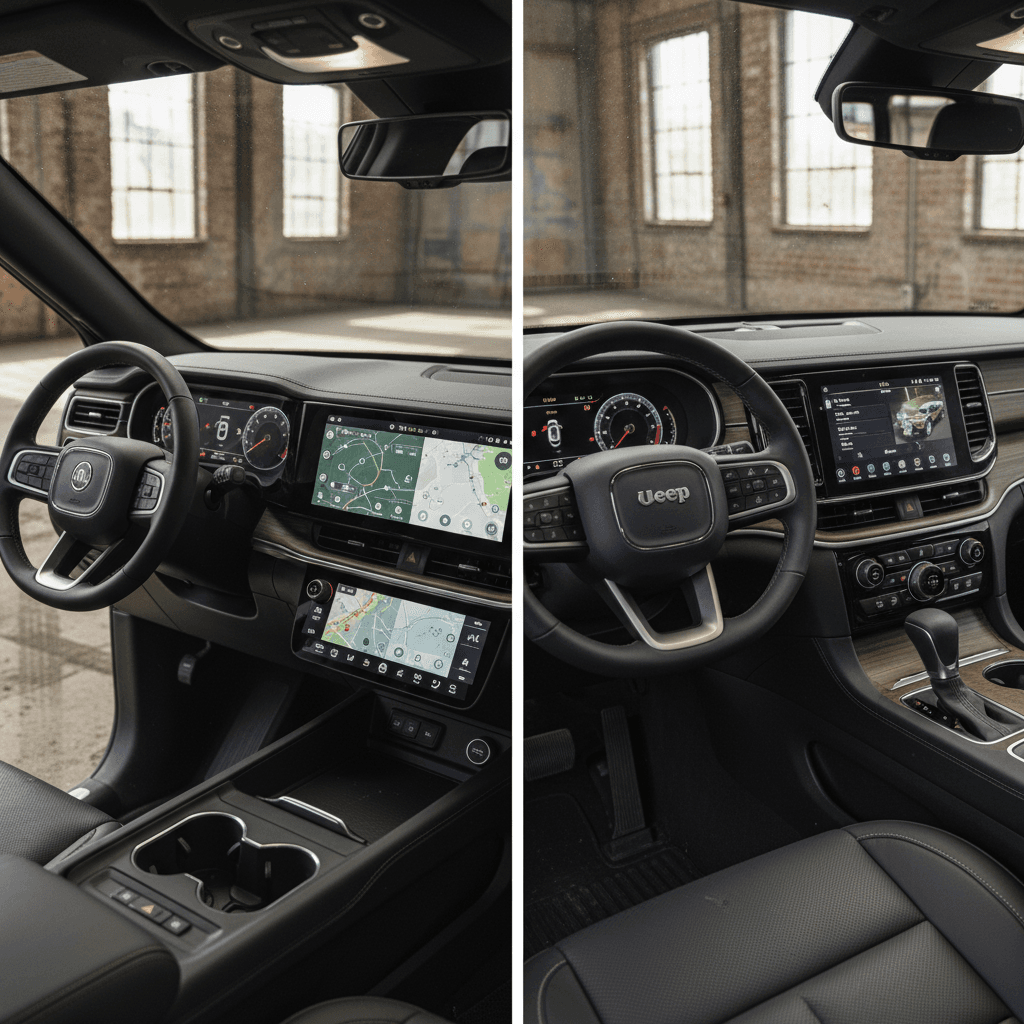
R1S: Minimalist, screen‑heavy interior with large central touchscreen and instrument display. Over‑the‑air updates add features and refine behavior, but learning curve and occasional software lag are real owner complaints.
Grand Cherokee: More conventional layout with physical controls plus Uconnect screens. Less futuristic, more familiar, especially if you’re not excited about running your car like a smartphone.
Driver assistance & safety
Both vehicles offer adaptive cruise, lane‑keeping, automatic emergency braking, and more as you move up trims.
- R1S leans on camera and radar‑based systems that improve via software.
- Grand Cherokee stacks traditional Jeep safety features with some available advanced tech packages, including hands‑free highway aids on certain trims.
Ride quality & noise
The R1S rides quietly at low speeds thanks to the absence of an engine, though big off‑road tires can still generate some roar. Air suspension on many trims smooths out rough pavement.
The Grand Cherokee is tuned for comfort but lets more engine and transmission noise into the cabin, especially when the 4xe’s gas engine kicks in under heavy load.
Early‑adopter vs mature product
Which should you buy? Recommendations by driver type
Best‑fit recommendations by use case
Daily commuter with home charging
If you have a garage or driveway and can install Level 2 charging, the <strong>Rivian R1S</strong> is the better long‑term bet for most commuters.
Your energy cost per mile will usually undercut gasoline by a wide margin, especially if your utility offers off‑peak EV rates.
You’ll rarely think about public fast charging if your daily driving is under 80–100 miles.
The Grand Cherokee 4xe is still a solid alternative if you want a smaller footprint or can’t reliably install a home charger.
Long‑distance road tripper or frequent tower
If you regularly tow long distances, boats, campers, enclosed trailers, the <strong>Grand Cherokee (especially V6/V8 or 4xe)</strong> is simply easier to live with right now.
You’ll still burn more fuel than you would electricity, but the ability to refuel in minutes across rural America matters on a tight schedule.
An R1S can tow comfortably, but you must plan routes around high‑power DC chargers, build in extra time, and accept frequent stops, great for some adventure profiles, frustrating for “get there fast” missions.
If you tow only occasionally and mostly within a single state, an R1S may still work beautifully with careful planning.
Urban family hauler and school‑run specialist
For city and suburban families who rarely leave the metro area, the <strong>R1S is incredibly compelling</strong>: quiet, quick, lots of space, and no tailpipe emissions around kids and schools.
The upright styling, glass, and cameras make parking surprisingly manageable for a big SUV.
A Grand Cherokee 4xe can be a great fit in dense areas where street parking makes home charging tough, just plug in when you can, then rely on gas.
If you’re in an apartment without any charging access, the 4xe is usually the more rational choice.
Budget‑conscious shopper
If you’re buying new and price is the primary driver, a <strong>Grand Cherokee</strong> (especially lower trims) will be substantially cheaper than a new R1S.
If you’re open to buying used, a <strong>used R1S</strong> with documented battery health and a clean inspection can sit in the same price band as better‑equipped Grand Cherokees, while offering EV performance and lower running costs.
On the Jeep side, an older Grand Cherokee (or a lightly used 4xe) still tends to follow more traditional depreciation curves, with plenty of independent mechanics available once it ages out of warranty.
How buying used changes the equation
On the new‑car lot, the R1S and a Grand Cherokee often feel worlds apart in price. But the used market compresses that gap dramatically, and for many shoppers that’s where the decision actually gets interesting.
Used Rivian R1S: upside and watch‑outs
- Upside: Early Rivian owners absorbed heavy depreciation, so you can sometimes buy an R1S for far less than its original MSRP, with plenty of warranty left.
- Battery health matters: Range is the whole ballgame on a used EV. You want objective data, not just an old window sticker.
- Software and hardware revisions: Rivian has quietly improved build quality, ride, and efficiency over time. Later builds often drive better and charge faster than early ones.
A service like the Recharged Score gives you a battery health diagnostic, pricing analysis, and condition report so you’re not guessing at whether the “deal” is actually a deal.
Used Grand Cherokee / 4xe: known quantity
- Lots of examples: There’s a deep used market with every trim, engine, and mile‑age level you can imagine.
- Independent shops: You’re not tied to the dealer network once the warranty is up, especially on standard gas models.
- 4xe complexity: The plug‑in hardware adds complexity; you’ll want service records and proof that recalls and software updates are current.
With any used Jeep, pay close attention to signs of hard off‑road use, neglected maintenance, and towing wear. A pre‑purchase inspection is money well spent.
Where Recharged fits in
Ready to find your next EV?
Browse VehiclesFAQ: Rivian R1S vs Jeep Grand Cherokee
Frequently asked questions
Bottom line: choosing the right SUV for you
Choosing between a Rivian R1S and Jeep Grand Cherokee isn’t just picking between brands; it’s choosing your place on the spectrum from traditional SUV to fully electric adventure rig. The R1S is the better fit if you can charge at home, value cutting‑edge performance and tech, and want to future‑proof your next family hauler. The Grand Cherokee, especially in 4xe form, makes more sense if you tow long distances, live far from robust charging infrastructure, or simply prefer the familiarity of gas with a taste of electrification.
If you’re leaning toward an R1S but want to keep financial risk in check, a used R1S with a Recharged Score Report is a smart middle path. You get the performance and efficiency of an EV, with transparent battery health, fair‑market pricing, and EV‑savvy support from first click to delivery. If, after all this, your gut still says “Jeep,” that’s fine too, at least now you’re making that choice with your eyes wide open rather than just reading a spec sheet.