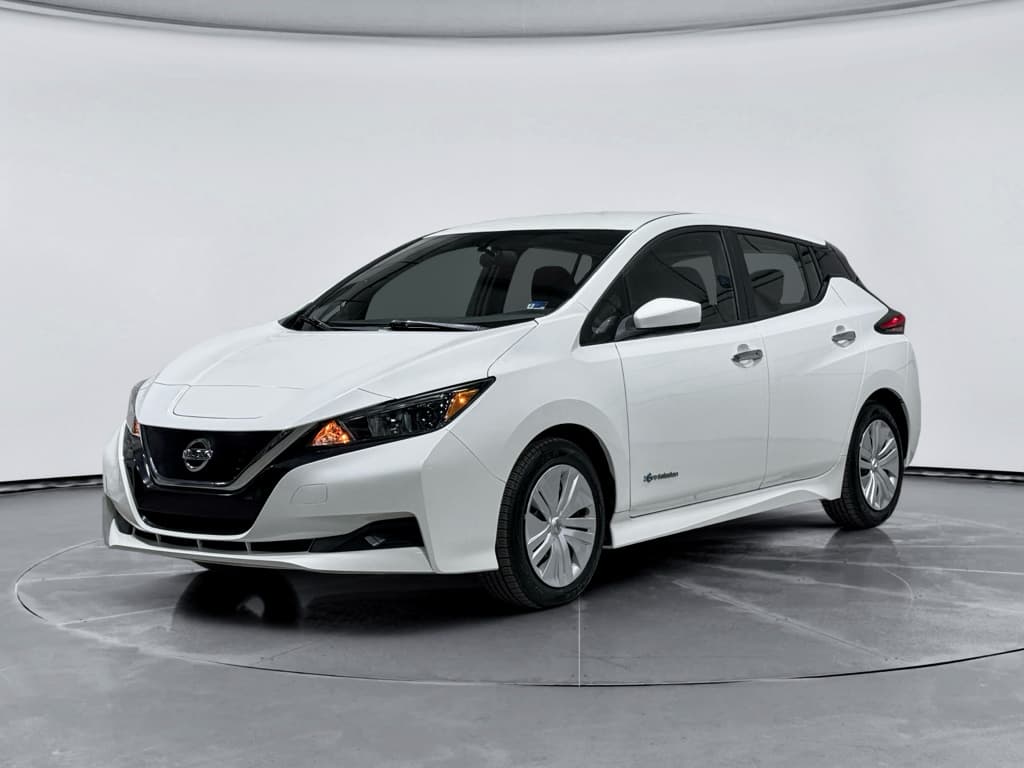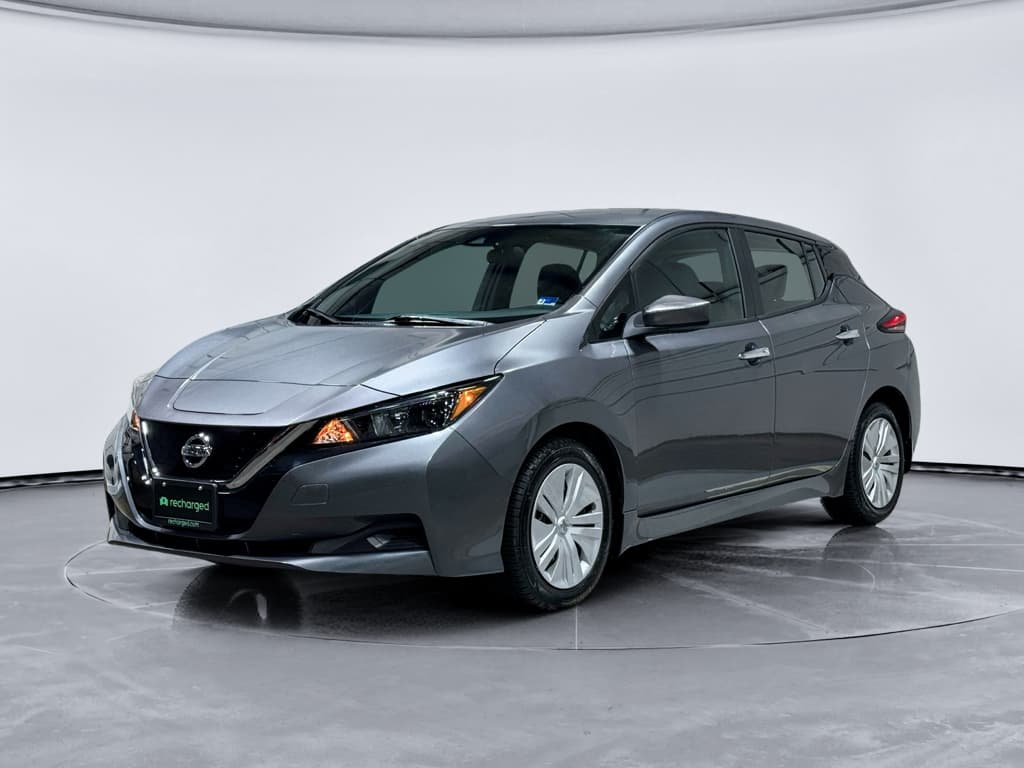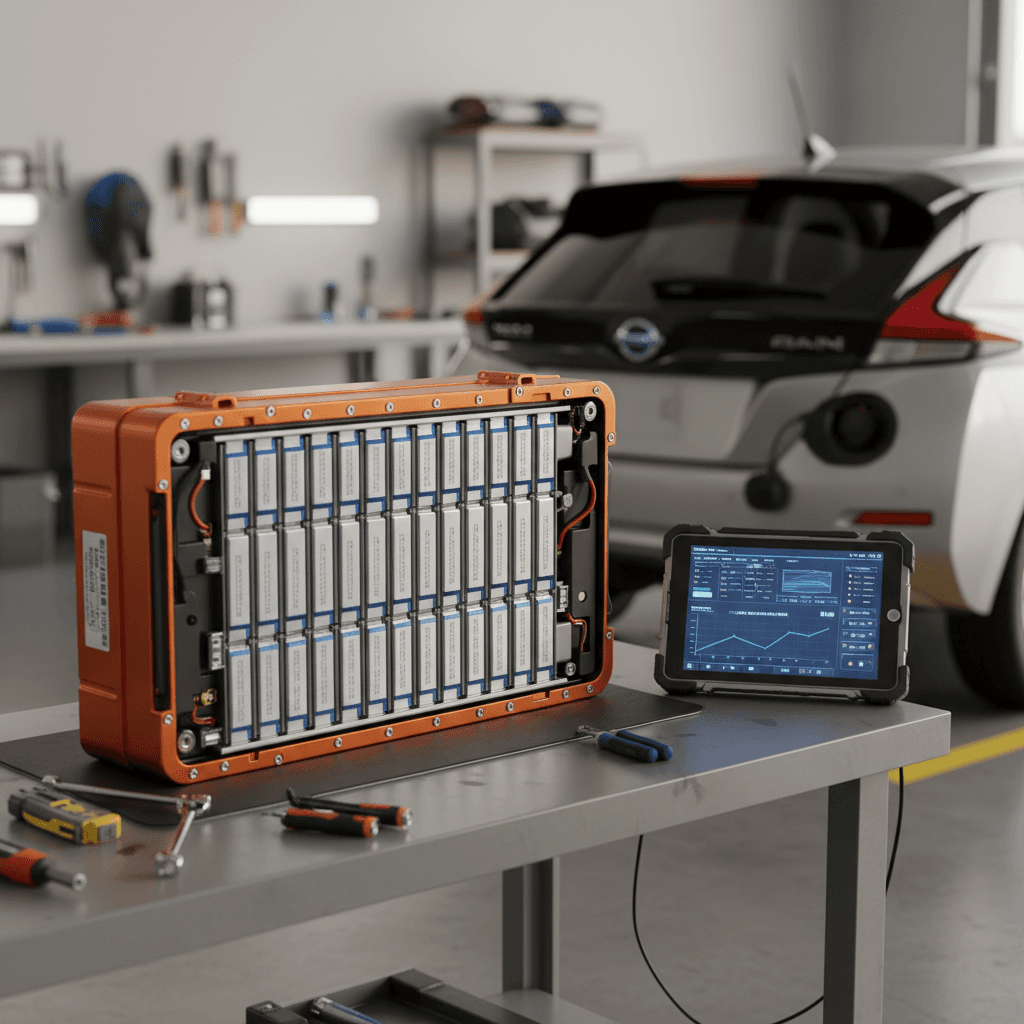
If you own, or are eyeing, a Nissan Leaf, the big question hovering over the quiet little hatchback is the battery. Specifically: what does the Nissan Leaf battery warranty actually cover, and when will Nissan step in if your range falls off a cliff? The short answer: there is solid coverage there, but the fine print matters, especially if you’re buying used.
Quick takeaway
Nissan Leaf battery warranty at a glance
Leaf lithium‑ion battery warranty basics (U.S.)
Nissan treats the Leaf’s traction battery as a separate component from the rest of the car. You’ll still have the standard 3‑year/36,000‑mile bumper‑to‑bumper and 5‑year/60,000‑mile powertrain coverage, but the high‑voltage pack gets its own long‑tail warranty window, similar to other modern EVs.
Check your build date, not just model year
What the Nissan Leaf battery warranty actually covers
The Leaf’s lithium‑ion battery warranty really has two layers of protection. They’re bundled together in the same 8‑year/100,000‑mile window, but they protect you from different problems:
- 1. Defects in materials or workmanship – If the pack, modules, or associated high‑voltage components fail due to a manufacturing defect (for example, a bad cell, internal short, or isolation fault), Nissan is on the hook to repair or replace the battery within the warranty period.
- 2. Excessive capacity loss – Separate from outright failure, Nissan also warrants that the Leaf’s battery will retain at least a minimum amount of usable capacity for a set period. When the pack fades below that threshold, the capacity warranty can trigger a repair or replacement.
On later Leafs sold in the U.S., that capacity warranty generally runs the same 8 years/100,000 miles as the defect warranty. Earlier cars had a shorter capacity‑loss window (we’ll break that down in a later section).
What Nissan usually does when coverage applies
How the Leaf’s capacity bar rule works in real life
The Leaf is unusual in that Nissan baked the warranty trigger into the dashboard itself. Instead of asking you to quote a percentage state of health, the warranty language talks about the 12‑segment capacity gauge to the right of the main battery charge meter.
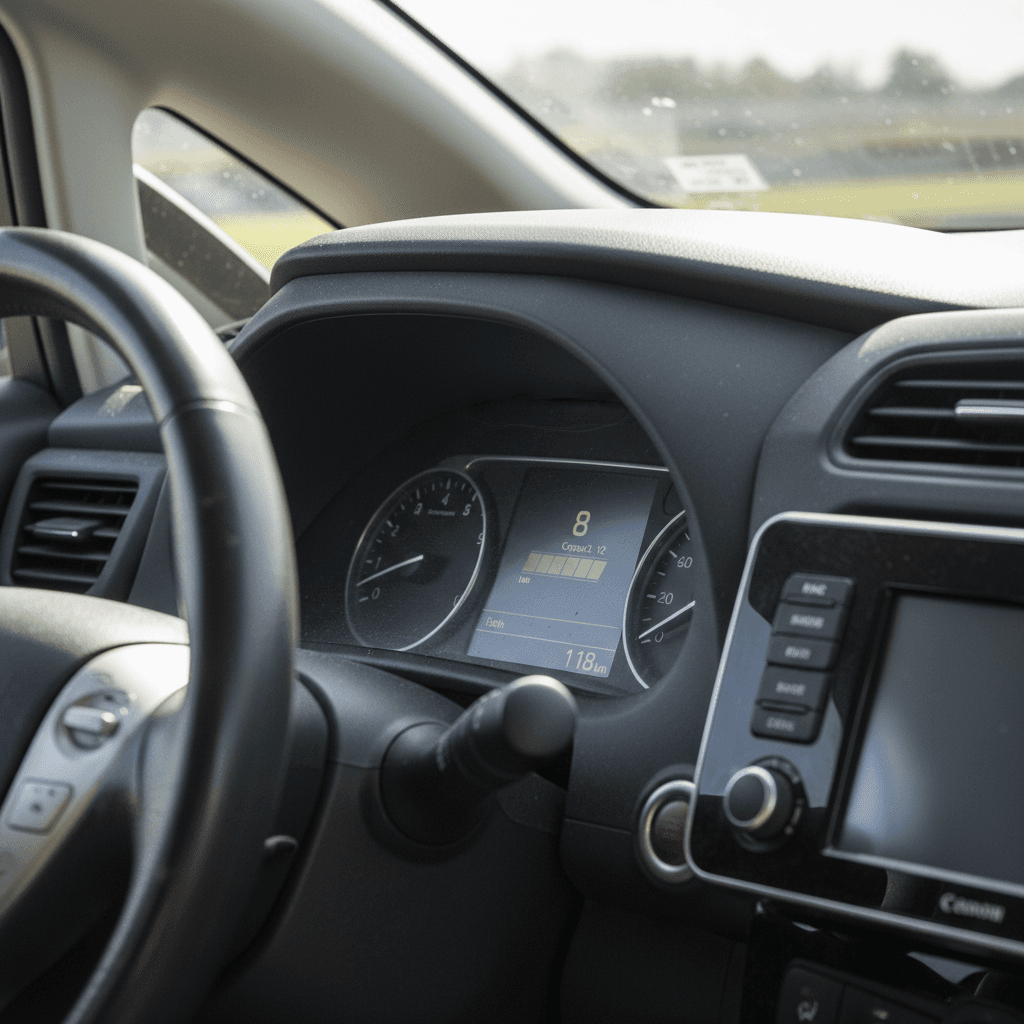
- When the car is new, you’ll see 12 capacity bars lit at a full charge.
- As the battery ages and loses total capacity, those bars disappear one by one over the years.
- The warranty defines “excessive” loss as the battery falling below a specified number of bars on that gauge within the coverage window. For many U.S. Leafs, that threshold is effectively 8 bars or fewer (roughly two‑thirds of original capacity).
Bars vs. percentage
It’s worth saying out loud: losing one or two bars is not a warranty event. That’s considered normal aging. The warranty is there as a backstop against a pack that’s degrading unusually quickly, not a promise to keep you at new‑car range forever.
What the Leaf battery warranty does NOT cover
No EV battery warranty is a blank check, and Nissan’s lawyers have been busy. Alongside the protections, there’s a long list of exclusions where you’re on your own, even if the car is under 8 years and 100,000 miles.
Common exclusions in the Leaf lithium‑ion battery warranty
These are the scenarios most likely to leave you paying out of pocket.
Heat & environment
- Battery aging from high ambient heat (e.g., hot climates)
- Degradation due to normal time and mileage
- Storage in very hot or very cold conditions
Owner misuse
- Damage from racing or competition
- Using non‑approved chargers or adapters
- Physical damage, flooding, or collision
Improper service
- Unauthorized modifications to the high‑voltage system
- Repairs done outside Nissan’s procedures
- Salvage or branded‑title vehicles
Normal wear ≠ warranty claim
Also note that the warranty generally doesn’t cover incidental costs, lost time, rental cars beyond what Nissan chooses to provide, or the hit to your resale value. The remedy is focused on repairing or replacing the battery, nothing more romantic than that.
New vs. used Leaf: how the battery warranty transfers
If you’re buying a used Leaf, the good news is that battery coverage in the U.S. is designed to follow the car, not the first owner. Nissan’s own warranty booklets describe the lithium‑ion battery warranty as transferable to subsequent owners for vehicles originally sold by an authorized Nissan dealer and registered in the U.S. or Canada.
- If the car is still within 8 years/100,000 miles from its original in‑service date, you inherit the remaining battery coverage.
- You don’t typically need to file any special paperwork, Nissan’s system keys off the VIN and in‑service date.
- There are exceptions: branded‑title/salvage vehicles, or cars moved across borders in the first six months, can lose eligibility. A quick VIN check with a Nissan dealer is worth your time.
How Recharged handles Leaf warranty status
Model years, bars, and coverage differences to know
The leaf has been around since 2011, and Nissan has tweaked the fine print along the way. If you’re browsing Craigslist and Carvana at 1 a.m., the differences matter.
High‑level Leaf battery warranty patterns (U.S. market)
Always confirm details for your specific VIN, but this gives you a workable mental map.
| Model years (approx.) | Typical pack size(s) | Defect warranty | Capacity‑loss warranty | Capacity trigger |
|---|---|---|---|---|
| 2011–2012 | 24 kWh | 8 yrs / 100k mi | 5 yrs / 60k mi (shorter) | Below ~9 bars |
| 2013–2015 | 24 kWh (with chemistry updates) | 8 yrs / 100k mi | 5 yrs / 60k mi (improved packs) | Below ~9 bars |
| 2016–2017 | 24 & 30 kWh | 8 yrs / 100k mi | Capacity coverage present but details vary; some 30 kWh packs had TSB/software updates | Below ~9 bars |
| 2018–2022 | 40 & 62 kWh | 8 yrs / 100k mi | Up to 8 yrs / 100k mi capacity coverage for many U.S. cars | At or below ~8 bars |
| 2023–2024+ | 40 & 60+ kWh | 8 yrs / 100k mi | 8 yrs / 100k mi capacity coverage typical | At or below ~8 bars |
Capacity‑loss coverage length and bar thresholds have evolved; defect coverage is more consistent.
Why exact bar numbers are fuzzy online
How to pursue a Leaf battery warranty claim
Suppose your Leaf is still under 8 years/100,000 miles, and you’ve watched the gauge descend to 8 capacity bars, or the car has thrown a high‑voltage fault. What happens next is not magic; it’s a process.
Step‑by‑step: starting a Leaf battery warranty claim
1. Confirm you’re within time and mileage
Check the odometer and the original in‑service date (a Nissan dealer can pull this from the VIN). If you’re past 8 years or 100,000 miles, the factory battery warranty is over, regardless of bar count.
2. Take clear photos of the capacity gauge
Charge the car to 100% and photograph the 12‑bar capacity gauge and the main battery charge meter. Dealers sometimes ask for these as part of the initial screening.
3. Schedule an EV‑qualified dealer visit
Not every Nissan store is fluent in high‑voltage diagnosis. When you call, ask specifically for a dealer with Leaf EV certification and recent experience handling battery claims.
4. Authorize the battery test
The dealer will run diagnostic tests and may keep the car overnight. This is where they verify bar count, state of health, and any diagnostic trouble codes before submitting to Nissan corporate.
5. Wait for Nissan’s decision
If the tests support a claim, the dealer sends documentation to Nissan. Approval can take days or weeks; pack replacements sometimes involve long lead times if batteries are back‑ordered.
6. Understand the remedy
Ask whether Nissan plans to replace the entire pack or repair modules, and what warranty applies to the new or repaired battery. Replacement packs typically get at least the remainder of the original coverage; sometimes more, depending on policy.
Don’t ignore warning lights
Warranty coverage vs. real‑world Leaf battery degradation
The brutal truth is that the Leaf’s pack, especially in early, air‑cooled cars, can lose range faster than other EVs in hot climates. That’s part of why the capacity warranty exists. But the warranty line (around 8 bars) and the line where the car stops fitting your life are not the same thing.
Warranty’s perspective
- A 9‑bar Leaf at 7 years old and 85,000 miles is probably still considered within spec.
- The pack may have lost 25–30% of its original capacity and still not trigger warranty coverage.
- As long as you’re above the bar threshold and under 8 years/100k, Nissan sees a battery doing its job.
Your perspective
- The same 9‑bar Leaf might struggle to cover a 60‑mile round‑trip commute in winter.
- Charging stops, hills, and high‑speed driving can make the reduced capacity feel much worse.
- From a daily‑use standpoint, the pack can feel “done” years before it looks bad on paper.
Range sanity check
Shopping used: how to read a Leaf battery report
On a used Leaf, battery health is the whole ballgame. A cheap Leaf with a tired pack is only a bargain if you live five miles from everything. Here’s how to make sense of what you’re seeing on the dash and in a battery report.
Three battery signals every used Leaf shopper should check
You don’t need to be an engineer, just know what “normal” looks like.
Capacity bars at 100%
Look at the 12‑bar capacity gauge with the car fully charged.
- 11–12 bars: Strong health for its age.
- 9–10 bars: Manageable for short commutes.
- 8 or fewer bars: Deep degradation; only interesting if warranty still applies or price is extremely low.
Estimated range vs. original
Compare the car’s indicated full‑charge range to its original EPA rating for that trim.
- Substantial shortfall (30–40%+) hints at a tired pack.
- Remember that driving style, temperature, and accessories also affect the estimate.
Third‑party health data
Tools like LeafSpy or a Recharged Score Report can show battery state of health in percentage terms.
- Mid‑80s% and up: Solid for many used Leafs.
- 70s% or lower: That’s retirement age for many owners, even if warranty technically remains.
At Recharged, every Leaf we list comes with a Recharged Score battery health diagnostic, so you’re not just squinting at a stack of bars. We tie that data to fair market pricing, remaining warranty time, and your likely real‑world range, based on how people actually drive.
FAQ: Nissan Leaf battery warranty
Frequently asked questions about the Nissan Leaf battery warranty
The Nissan Leaf battery warranty is both generous and unforgiving. It gives you a clear safety net, 8 years or 100,000 miles of protection against outright battery failure and unusually fast capacity loss, but it draws a bright, sometimes frustrating line at that bar threshold. If your Leaf lives a gentle life in a mild climate, you may never see the inside of a warranty bay. If you’re buying used, the smarter move is to shop the battery you’re actually getting, rather than daydreaming about a free replacement. That’s where tools like a Recharged Score battery health report, fair‑market pricing, and expert EV guidance turn a nervous Leaf purchase into an informed one.