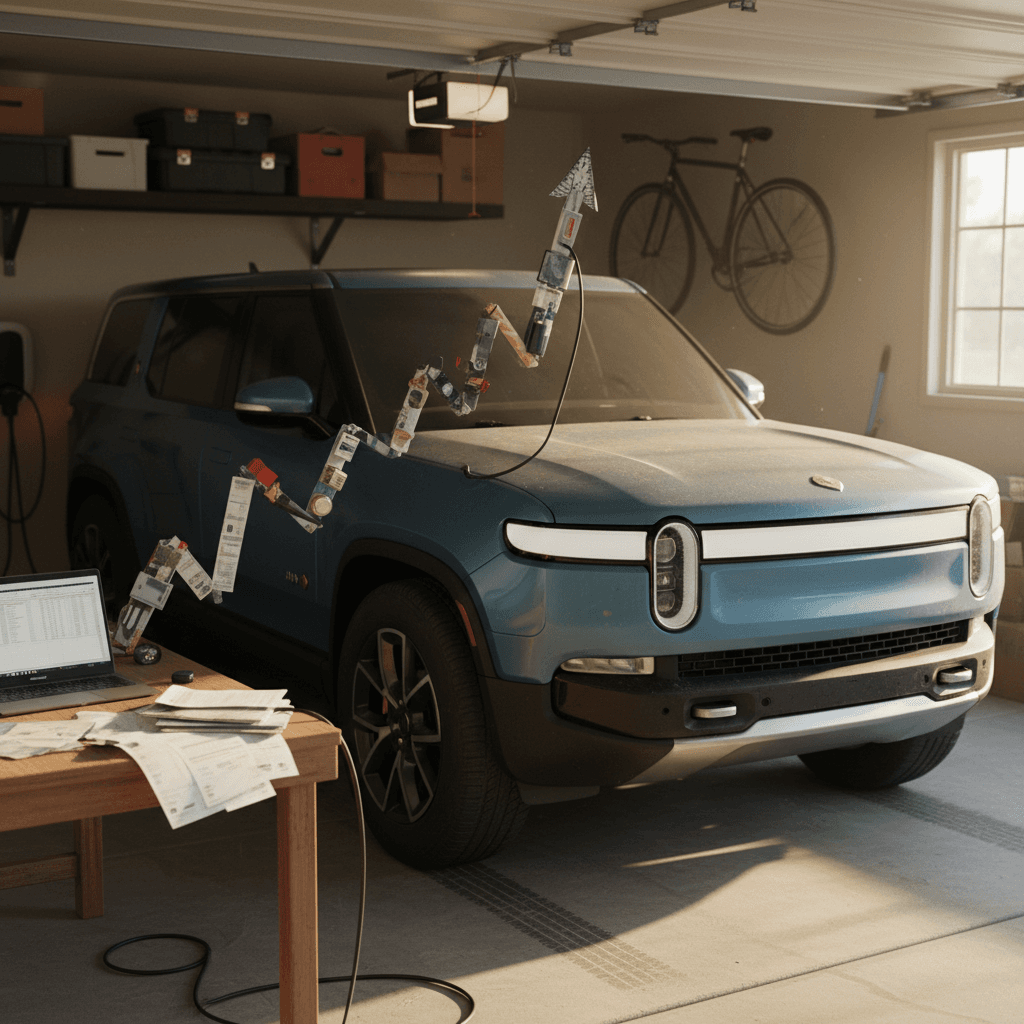
You don’t buy a Rivian R1S because it’s the rational, spreadsheet‑approved choice. You buy it because it’s a three‑row electric adventure brick that can climb a trail on Sunday and school‑run quietly on Monday. But eventually the romance meets the checking account. This guide walks through the Rivian R1S true cost of ownership over 5 years so you know exactly what you’re signing up for, especially if you’re cross‑shopping new versus used.
Read this as a realistic, not worst‑case, scenario
How much does a Rivian R1S really cost to own?
Headline 5‑year Rivian R1S ownership numbers (new)
On paper, five years with a new Rivian R1S easily crests the $100,000 mark in total outlay once you include depreciation. The good news: the cash costs you feel month to month, electricity, insurance, maintenance, are manageable if you plan for them, and buying used can knock tens of thousands off the depreciation hit.
5‑year cost summary for a Rivian R1S
Illustrative 5‑year Rivian R1S ownership cost (new)
Approximate 5‑year costs for a new Rivian R1S purchased in 2026, driven 15,000 miles per year. All figures are estimates in today’s dollars for a typical U.S. owner.
| Cost category | 5‑year estimate | Share of total | What’s included |
|---|---|---|---|
| Depreciation | $60,000–$65,000 | ~55–60% | Difference between purchase price and 5‑year resale value. |
| Electricity | $6,500–$8,500 | ~6–8% | Home charging plus some DC fast charging, ~75,000 miles. |
| Insurance | $13,000–$17,500 | ~12–16% | Full‑coverage policy, average‑risk driver in a typical‑cost state. |
| Maintenance & repairs | $2,000–$3,000 | ~2–3% | Scheduled service, repairs outside warranty, wiper blades, cabin filters, alignment, small surprises. |
| Tires | $3,000–$3,500 | ~3% | Two full sets of quality tires over 5 years, mounted and balanced. |
| Taxes & fees | $6,000–$8,000 | ~6–7% | Sales tax, registration, title, documentation fees where applicable. |
| Financing interest | $6,000–$9,000 | ~6–8% | Interest paid on a typical 72‑month loan at current EV rates. |
| Total estimated 5‑year cost | ≈$100,000–$115,000 | 100% | Your actual cash outlay plus lost value over 5 years. |
Use this as a framework, not a quote. High‑cost states, heavy DC fast‑charging, or expensive insurance markets will push numbers up.
Sticker price is only half the story
Assumptions behind this 5‑year R1S cost analysis
- 2026 Rivian R1S Dual Motor, nicely optioned, purchase price around $95,000 after destination and options.
- Bought new in early 2026, sold or traded after 5 years and 75,000 miles.
- Average U.S. electricity at $0.16–$0.20/kWh home, $0.35–$0.45/kWh fast‑charging; mix of 75% home, 25% DC fast charge.
- EPA‑style efficiency around 0.48–0.50 kWh per mile in mixed driving.
- Insurance for a clean‑record driver in an average‑cost state, full coverage, typical limits.
- Financed with a conventional 72‑month loan, small down payment, no major accidents or claim disasters.
Adjust the math for your situation
Depreciation: the biggest line item
Depreciation is where the Rivian R1S quietly does the most damage. Forecast models and early resale data suggest that a new R1S can shed roughly 50% of its value in five years of normal use, roughly in line with other expensive luxury SUVs, but magnified by the high starting price.
R1S depreciation: what to expect over 5 years
Think of depreciation as the price of admission to Rivian ownership.
Buying new in 2026
Assume you pay about $95,000 for a well‑optioned Dual Motor R1S.
- 3‑year resale: often in the mid‑$50,000s if miles are reasonable.
- 5‑year resale: roughly $45,000–$50,000 in today’s dollars if the EV market behaves.
That’s $45,000–$50,000 in depreciation, possibly more if the luxury EV segment softens.
Buying a 2–3‑year‑old used R1S
Start with a used R1S in the $60,000s instead:
- Someone else already took the 0‑to‑3‑year cliff.
- Your 5‑year horizon might see the truck go from mid‑$60Ks to low‑$40Ks.
Now you’re looking at $20,000–$25,000 of depreciation for your 5 years, half or less of the new‑car hit.
Where Recharged can tilt the numbers
Ready to find your next EV?
Browse VehiclesElectricity vs gas: what you’ll spend to drive it
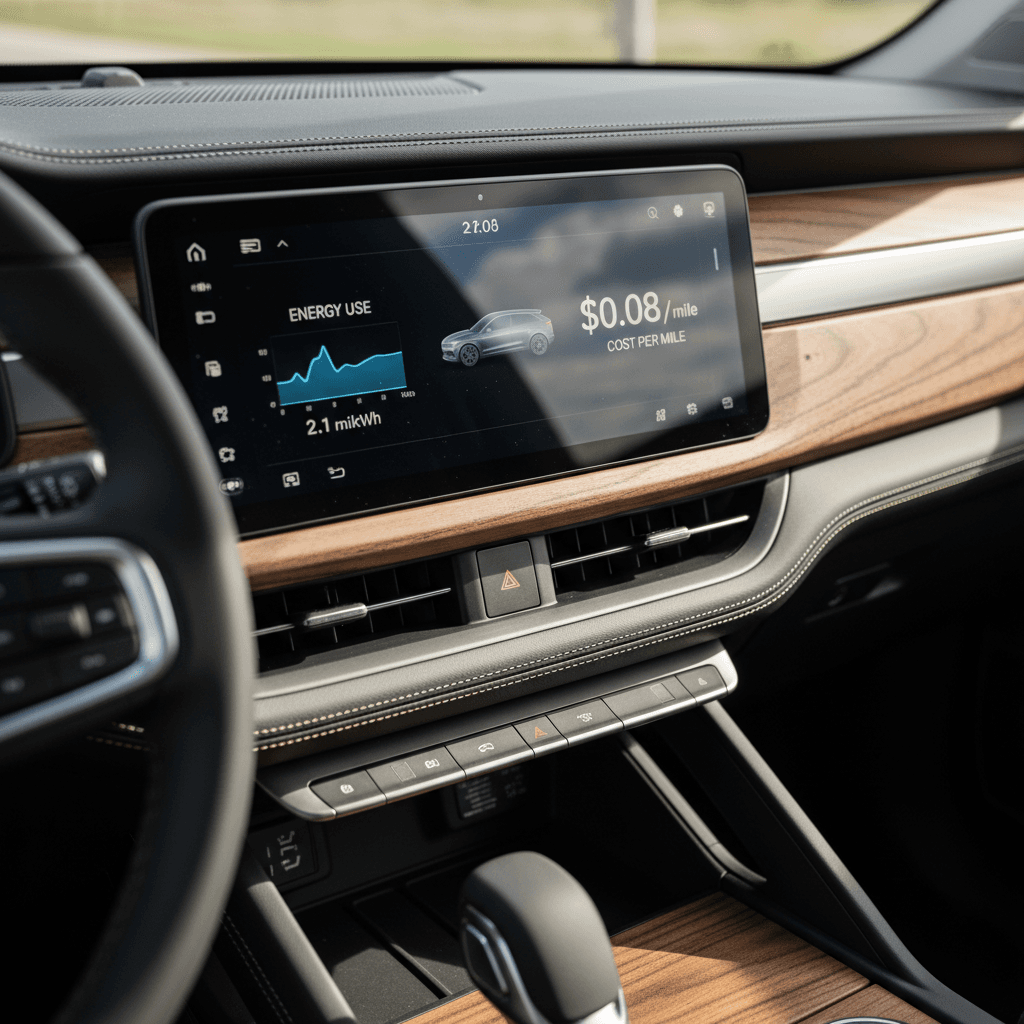
The Rivian R1S is not a hyper‑efficient pod. It’s a three‑row brick on 20‑ or 22‑inch wheels. Real owners often report consumption in the 2.0–2.3 miles per kWh range, especially with mixed city/highway use and some highway speeds.
5‑year energy cost: R1S electricity vs a comparable gas SUV
Assumes 75,000 miles over 5 years. Gas SUV is a similar three‑row luxury model averaging 18 mpg on regular fuel at $3.75/gal.
| Scenario | Key assumptions | 5‑year energy cost | Cost per mile |
|---|---|---|---|
| R1S, mostly home charging | 0.50 kWh/mi, 80% at $0.16/kWh, 20% at $0.40/kWh | ≈$6,750 | ≈$0.09/mi |
| R1S, heavy DC fast charging | 0.52 kWh/mi, 50% at $0.16/kWh, 50% at $0.45/kWh | ≈$8,750 | ≈$0.12/mi |
| Comparable gas SUV | 18 mpg, $3.75/gal average over 5 years | ≈$15,625 | ≈$0.21/mi |
If your local electricity is cheap, and you prioritize home charging, the R1S can save real money versus gas. In expensive electricity markets that gap narrows or disappears.
Electricity costs can be wildly local
Insurance costs: why the R1S isn’t cheap to cover
In the world of actuaries, the Rivian R1S is a tall, heavy, aluminum‑bodied EV with expensive cameras and sensors at every corner, and a brand‑new repair ecosystem. Translation: insurance is not the cheap line item in your budget.
What most owners actually pay
- Recent U.S. data and owner reports put typical R1S full‑coverage premiums around $2,500–$3,500 per year for a clean‑record driver.
- In high‑cost states, dense cities, or with lower deductibles, seeing quotes above $4,000 per year is not unusual.
- Multi‑car policies and strong credit can nudge that down; youthful drivers and city parking push it up.
Why it’s pricey to insure
- Aluminum body panels and complex paint processes are costly to repair.
- Calibrating ADAS hardware (sensors, cameras, radar) adds labor hours to even minor collisions.
- Parts pipelines and certified body shops are still maturing, so repairs can be slow and expensive.
Compared with a mainstream midsize SUV, you can easily be paying $500–$800 more per year in premiums for the privilege of an R1S badge.
Shop insurance quotes before you fall in love
Maintenance, repairs and tires on a Rivian R1S
Electric SUVs like the R1S delete oil changes, spark plugs and exhaust systems from your life, but they add weight, torque and complexity. Over five years you’re likely looking at modest maintenance costs, potentially spiky repair bills if you’re unlucky, and very real tire spend.
What you’re likely to replace (and pay for) in 5 years
Ignoring the battery pack for a moment, because it’s designed to outlast your loan.
Routine service
- Cabin air filters, brake fluid every few years, periodic alignments.
- Software updates are over‑the‑air, not a line item.
- Estimate: $800–$1,200 over 5 years if nothing weird happens.
Repairs outside warranty
- Unexpected suspension work, trim issues, door seals, infotainment glitches.
- EVs have fewer moving parts but more electronics; most R1S repairs so far are minor but can be pricey at dealer labor rates.
- Budget an extra $800–$1,200 as a comfort cushion.
Tires (the stealth expense)
- A heavy, 835‑horsepower brick eats tires.
- Expect new tires roughly every 30,000–40,000 miles with normal driving.
- Two sets of quality SUV tires, mounted and balanced: $3,000–$3,500 over 5 years.
Don’t ignore tire costs in your budget
Taxes, fees and financing charges
Sales tax and interest don’t make Instagram posts, but they very much exist. On a nearly six‑figure EV, these can rival your electricity spend over a 5‑year horizon.
The quiet costs: taxes, fees and interest
Assumes a $95,000 purchase price, 7% effective sales tax, and a 72‑month loan at 5.5% APR with minimal down payment.
| Line item | How it hits you | 5‑year impact |
|---|---|---|
| Sales tax | Paid upfront or rolled into financing; varies heavily by state. | ≈$6,500–$7,000 |
| Registration & fees | Annual registration, property tax in some states, documentation fees. | ≈$1,000–$1,500 |
| Financing interest | Monthly loan payments; interest front‑loaded in early years. | ≈$6,000–$9,000 over first 5 years of a 72‑month loan |
If you’re buying used or paying cash, your numbers may shrink dramatically here, which is one reason the used R1S story can look so different.
Used R1S + smaller loan = very different picture
How buying a used Rivian R1S changes the 5‑year math
If the new‑car cost curve feels like too much altitude, a used Rivian R1S can look far saner. Because early owners absorbed the 0‑to‑3‑year shock, your 5‑year window is riding the shallower side of the depreciation hill.
Scenario A: New R1S, 5‑year keep
- Buy at $95,000, sell after 5 years for ~$47,500.
- Depreciation hit: ≈$47,500.
- Sales tax at 7%: about $6,650.
- Interest on large loan balance: $7,000+ in early years.
Total economic cost over 5 years can easily breach $100,000 once you add energy, insurance, maintenance and tires.
Scenario B: 3‑year‑old used R1S via Recharged
- Buy certified used at, say, $65,000 with a clean Recharged Score battery report.
- Own for 5 years, then sell in low‑$40Ks.
- Depreciation hit: ≈$20,000–$25,000.
- Sales tax at 7%: about $4,550, more than $2,000 less than new.
- Smaller loan balance: thousands saved in interest.
Now your all‑in 5‑year cost can land in the $70,000s–$80,000s instead of the six‑figure club, with nearly the same driving experience.
What Recharged adds beyond a lower price tag
Is a Rivian R1S worth it financially?
The candid answer: the Rivian R1S is a luxury good. Financially, it behaves more like a Range Rover than a Prius. Five‑year ownership costs are high in absolute dollars, but they’re in‑family with other big, premium three‑row SUVs once you adjust for purchase price. Where the R1S claws back ground is at the pump, or rather, by not visiting one, and in lower routine maintenance.
You’re a good fit for an R1S if…
1. You can comfortably afford the payment and insurance
If the monthly loan plus a high‑three‑figure insurance bill makes you queasy, the R1S is going to feel like too much car even if you love it.
2. You have reliable home charging
Relying on DC fast chargers for most of your miles will shrink or erase your fuel‑savings advantage versus gas SUVs and add hassle to your life.
3. You value the experience as much as the spreadsheet
The R1S is outrageous fun: silent, brutally quick, adventure‑ready and family‑friendly. If that emotional return matters to you, the extra cost can be justified.
4. You’re willing to buy used or hold long term
Either buy a gently used R1S once depreciation has done some work, or plan to hold a new one well past five years to get full value out of that expensive aluminum and battery pack.
If you strip away the brand glow, a Rivian R1S 5‑year true cost of ownership story goes like this: depreciation is the tyrant, energy is the bargain, insurance stings, and maintenance is surprisingly tame if you avoid curbs and tire‑shredding launches. The smartest financial play is to let someone else sponsor the early years, then buy a documented used R1S from a specialist like Recharged, where battery health, pricing and the buying process are as transparent as the truck’s glass roof.