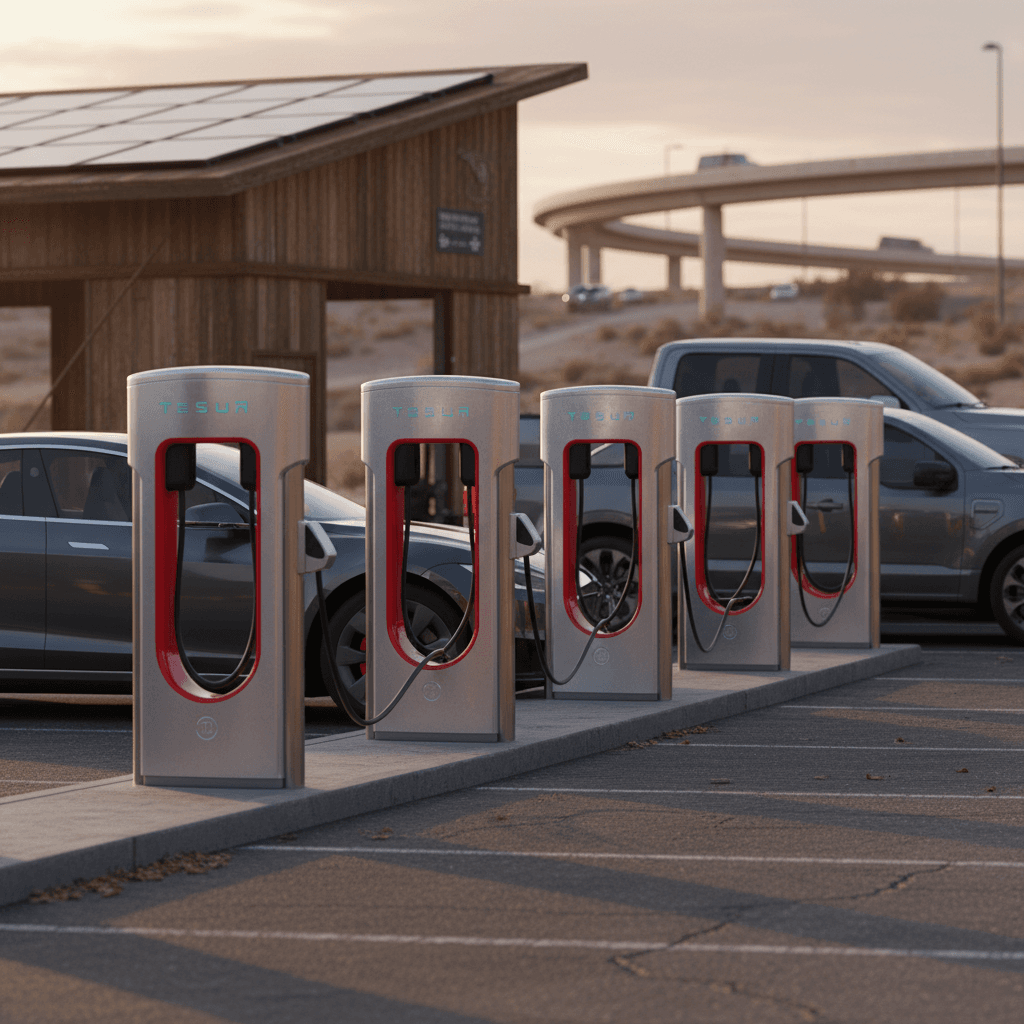
If you own a non‑Tesla EV, you’ve probably looked at Tesla Supercharger sites the way a kid looks through the window of a locked candy store. The good news is that the lock is finally coming off. In 2025–2026, a rapidly growing list of automakers are giving their EVs access to Tesla’s Supercharger network. The big question is no longer *if* you can plug in, but *how* and *with what hardware*. This guide lays out exactly which EVs can use Tesla Superchargers, what you need (NACS port vs. adapter vs. Magic Dock), and what all of this means if you’re shopping for a used EV through a marketplace like Recharged.
Quick answer
Overview: Why Tesla Superchargers Matter for Every EV Driver
Tesla’s network in context
For years, part of the Tesla pitch was: buy our car, get our private gas station. That moat is disappearing. Automakers are adopting Tesla’s North American Charging Standard (NACS) connector, and Tesla, in turn, is opening much of its Supercharger network to other brands. For you, that means more high‑speed chargers on more routes and fewer anxious glances at the remaining‑range readout.
If you’re shopping used, this shift is even more important. A three‑year‑old EV that suddenly gains access to thousands of dependable fast chargers is a fundamentally different ownership proposition. At Recharged, we see this play out in real time: shoppers ask not just about range and battery health, but specifically about Supercharger access and which adapter a given car needs.
How Supercharger Access Works: NACS, CCS, and Magic Dock
NACS: Tesla’s plug that became the standard
- NACS (North American Charging Standard) is Tesla’s slim DC fast‑charging connector.
- By 2025–2026, most new EVs sold in the U.S. will have a NACS port from the factory.
- If your car has NACS, it can usually plug straight into many Superchargers without an adapter.
CCS and Magic Dock: the transition period
- Most 2018–2024 non‑Tesla EVs have a CCS1 DC fast‑charge port.
- To use a Supercharger, those cars typically need a CCS‑to‑NACS adapter made by the automaker.
- Some older sites have Magic Dock, where a CCS adapter is built into the Supercharger handle, so no separate adapter is needed.
Not every Supercharger is open to you
Brands whose EVs can use Tesla Superchargers
Tesla itself maintains a running list of supported automakers for Supercharger access. Today, that roster covers most of the serious EV players in North America. As of early 2026, the following brands either already have access or are in the process of rolling it out via NACS ports and/or official adapters:
Current and emerging Supercharger‑compatible brands
What "compatible" really means depends on your model year and whether you have an adapter.
Ford
Mustang Mach‑E and F‑150 Lightning can use Superchargers with a Ford‑supplied NACS adapter. Future Ford EVs get NACS ports built‑in.
GM brands
Chevrolet, GMC, and Cadillac EVs (e.g., Blazer EV, Equinox EV, Lyriq, Silverado EV) are switching to NACS, with adapters for CCS‑equipped models.
Rivian
R1T, R1S and R2 models can access Superchargers using Rivian’s official adapter; newer Rivians gain native NACS ports.
Volvo & Polestar
XC40/C40, EX30, EX90, Polestar 2 and upcoming models add Supercharger access through adapters and then factory NACS ports.
Mercedes‑Benz
EQE, EQS and other Mercedes EVs can use Superchargers via a Mercedes NACS adapter, with billing handled through Mercedes me Charge.
Hyundai, Kia, Genesis
Ioniq 5/6, EV6, EV9, and related Genesis models gain access via OEM adapters first, then native NACS on newer trims.
Nissan
Ariya owners get NACS adapters for Superchargers; older CHAdeMO‑based Leafs generally do not participate.
Lucid
Lucid Air can now use Superchargers with Lucid’s NACS‑to‑CCS1 adapter, though charging speed may be lower than at 800‑V CCS sites.
BMW Group
BMW i4, i5, i7, iX, Mini EVs, and Rolls‑Royce Spectre use Superchargers with a BMW‑branded adapter and eventually native NACS ports.
VW Group: Audi, Porsche, VW
Audi e‑tron/Q8/Q4, Q6 e‑tron, VW ID. models and Porsche Taycan/Macan EVs gain access via adapters and future NACS ports.
Honda & Acura
Honda Prologue and Acura ZDX use a Honda‑designed CCS‑to‑NACS adapter to tap the Supercharger network, with future NACS ports planned.
Toyota, Subaru, JLR & others
Toyota bZ4X, Lexus RZ, Subaru Solterra, Jaguar I‑PACE and other JLR EVs are adopting NACS, with supported adapters for existing CCS models.
Rule of thumb for 2025–2026
Model‑by‑Model Highlights: Popular EVs and What They Need
Popular EVs and their Tesla Supercharger status
Always confirm specifics with the automaker and in your Tesla or OEM app, policies and access can change by software update.
| Model / Family | Brand | Supercharger access | What you usually need |
|---|---|---|---|
| Mustang Mach‑E / F‑150 Lightning | Ford | Yes (most trims, U.S./Canada) | Ford‑supplied NACS adapter or factory NACS port on newer models |
| Blazer EV / Equinox EV / Lyriq / Silverado EV | Chevy / Cadillac / GMC | Yes / rolling out | GM NACS adapter; newer EVs get native NACS ports |
| R1T / R1S / R2 | Rivian | Yes | Rivian NACS adapter or NACS port (newer builds) |
| Ioniq 5 & 6 / Kia EV6 & EV9 / Genesis GV60 | Hyundai–Kia–Genesis | Yes / rolling out | OEM CCS‑to‑NACS adapter; some late‑2025+ trims with NACS port |
| Volvo EX30/EX90, XC40/C40, Polestar 2/3 | Volvo / Polestar | Yes | Volvo/Polestar NACS adapter, native NACS on newer models |
| EQE / EQS SUV & sedan | Mercedes‑Benz | Yes | Mercedes NACS adapter; billing through Mercedes me Charge |
| BMW i4, i5, i7, iX; Mini EV; Rolls‑Royce Spectre | BMW Group | Yes | BMW Group NACS adapter; later NACS ports |
| Porsche Taycan / Macan EV; Audi Q4/Q6 e‑tron | Porsche / Audi | Yes (phased) | Free or paid NACS adapter depending on model year; NACS ports on 2026+ models |
| Nissan Ariya | Nissan | Yes | Nissan‑supplied NACS adapter; check model year |
| Lucid Air | Lucid | Yes (with caveats) | Lucid NACS‑to‑CCS1 adapter; limited to lower kW than peak CCS capability |
| Toyota bZ4X / Lexus RZ / Subaru Solterra | Toyota / Lexus / Subaru | Yes / rolling out | OEM adapter for CCS‑equipped EVs; future NACS ports |
| Honda Prologue / Acura ZDX | Honda / Acura | Yes | Honda/Acura CCS‑to‑NACS adapter; NACS ports on later EVs |
NACS = built‑in Tesla‑style port; Adapter = needs OEM CCS‑to‑NACS hardware; Magic Dock = can sometimes use special Supercharger sites without an adapter.
What about older or niche EVs?
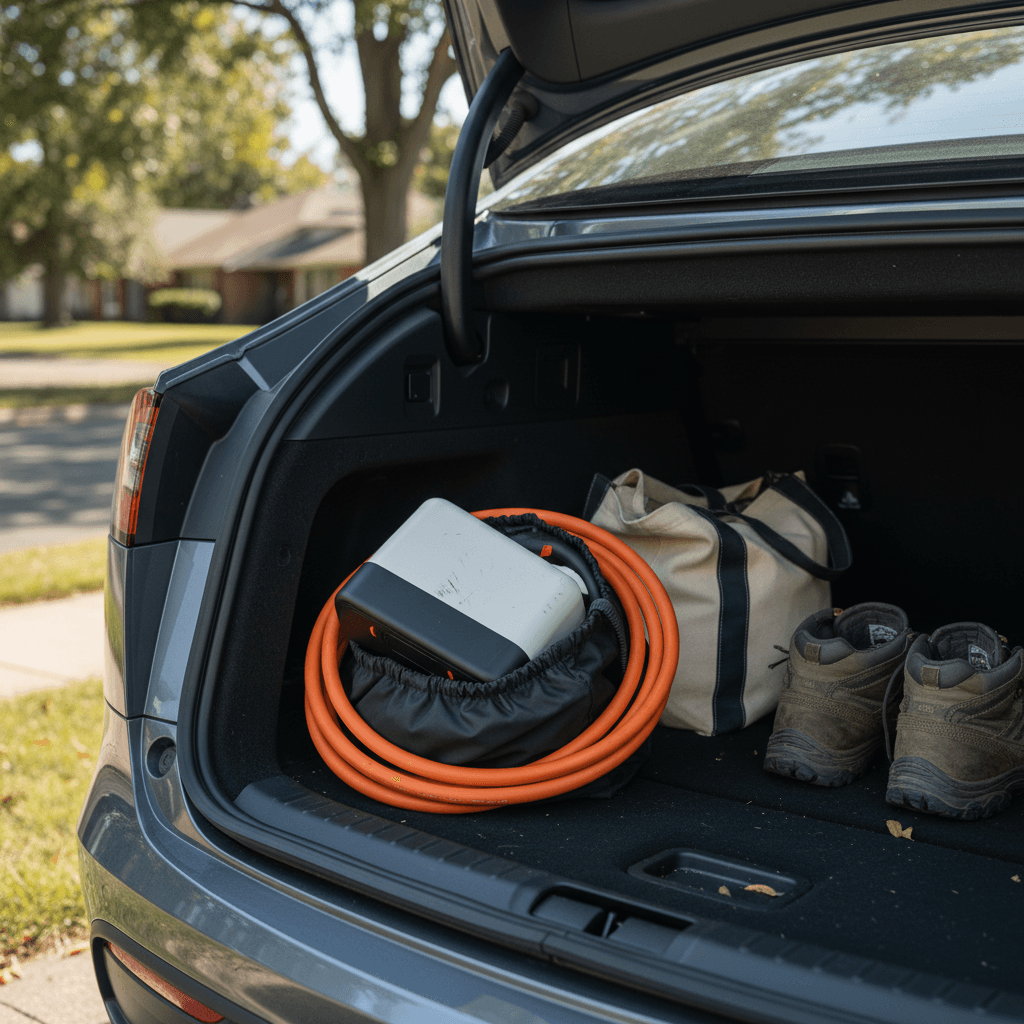
What you actually need to charge at a Supercharger
- A compatible EV (brand and model participating in Tesla’s program)
- The right connector: native NACS port or an official CCS‑to‑NACS adapter
- An app or in‑car system that can initiate and pay for the session (Tesla app or your automaker’s charging app)
- Access to an open Supercharger site that allows your brand (not all stalls do)
Where the payment happens
Limits, speed, and cost: the fine print non‑Tesla drivers miss
Charging speed isn’t always “Tesla‑quick”
- Your EV’s max DC charge rate and battery voltage may not line up perfectly with Tesla’s current hardware.
- Some 800‑volt EVs (Lucid, Porsche, Hyundai/Kia/Genesis) may charge more slowly on older 400‑V Superchargers than on the best CCS sites.
- If your car tops out at 150 kW, it doesn’t matter if the site advertises 250‑kW stalls, you’re capped by the vehicle.
Pricing, idle fees, and crowding still apply
- Non‑Tesla drivers usually pay per kWh or per‑minute rates similar to (or slightly higher than) Tesla owners at the same site.
- Idle fees kick in if you stay parked after your charge completes. Superchargers are built for fast in, fast out, not airport‑parking duty.
- Some congested stations may restrict non‑Tesla access during peak hours to protect availability for Tesla drivers.
Avoid sketchy third‑party adapters
Step‑by‑step: Using a Tesla Supercharger in a non‑Tesla EV
From 10% to sipping coffee: how a typical session works
1. Confirm your car and the station are compatible
In the Tesla app (or your automaker’s app), filter for sites that allow non‑Tesla vehicles or specifically your brand. Tap into the site details; if your car isn’t explicitly supported, assume it’s not.
2. Get the right adapter ready
If your EV doesn’t have a NACS port, keep the official CCS‑to‑NACS adapter in the trunk or frunk. Don’t count on buying one roadside, availability can be limited, and prices are higher at the last minute.
3. Precondition the battery if possible
Fast charging works best when the pack is warm. Many EVs let you route to the Supercharger in the car’s nav, triggering automatic <strong>battery preconditioning</strong> for faster initial charge rates.
4. Park carefully and mind the cable length
Supercharger cables are designed around Tesla’s charge‑port placement. Pull close to the pedestal and line up your port; some non‑Teslas need a bit of parking finesse to avoid stretching the cable.
5. Plug in and start the session
Attach the adapter (if needed), plug into your car, then start the session in the Tesla or OEM app. You should hear a relay click and see charge status in the app within a few seconds.
6. Monitor, unplug, and move
Once you’ve reached your target charge, typically 60–80% for road‑trips, stop the session in the app, unplug, stow the cable, and pull away promptly to avoid idle fees and bad charging manners.
Road‑trip strategy: Should you rely on Superchargers?
Superchargers as part of a bigger road‑trip toolbox
The best long‑distance plans use redundancy, not blind faith.
Use Superchargers as your backbone
For many non‑Tesla EVs, Tesla sites now make the most reliable spine of a long‑distance route. Plan major legs around them, but always have one or two CCS alternatives in your back pocket.
Mix in CCS and destination charging
High‑power CCS networks (Electrify America, EVgo, Ionna and others) plus Level 2 destination chargers at hotels and attractions give you flexibility when a Supercharger is busy, offline, or off your route.
Think in segments, not single stations
Superchargers and the used‑EV buyer: what to check before you sign
If you’re buying used, especially through an online marketplace, it’s easy to get lost in paint colors and speaker counts and forget the thing that actually gets you home: where you’ll charge on the road. Supercharger access is now a core feature, not an afterthought. Treat it like you would all‑wheel drive in a snowy climate.
Supercharger checklist for used‑EV shoppers
Confirm the brand’s Supercharger program
Look up whether the automaker officially supports Tesla Superchargers <strong>for your exact model and year</strong>. Don’t assume that what’s true for the latest model year applies to a three‑year‑old car.
Ask which adapter (if any) is included
An official NACS adapter can cost a couple hundred dollars and may be on backorder. When you negotiate, treat it like any other high‑value accessory, floor mats you can live without, a fast‑charge adapter you cannot.
Check charge‑port type in the listing
Make sure you know whether the car has CCS or an updated NACS port. Photos of the charge door are helpful; reputable platforms like <strong>Recharged</strong> should clearly label this in the specs.
Look at fast‑charge history and battery health
Heavy DC fast‑charging doesn’t automatically ruin a pack, but it matters. A transparent battery‑health report, like the <strong>Recharged Score</strong> included with every vehicle on Recharged, helps you understand how the previous owner used the car.
Map your real routes, not just marketing maps
Drop a pin on your regular road‑trip destinations and see how Superchargers line up along *your* roads. If you live at the dead spot between two charging corridors, network access may matter less than raw range or home‑charging convenience.
How Recharged can help
FAQ: Tesla Superchargers for non‑Tesla owners
Frequently asked questions
The bottom line is that the sentence “only Teslas can use Superchargers” is obsolete. The new reality is messier but far better for drivers: many EVs can tap Tesla’s network, though the details hinge on your badge, your model year, and the adapter in your glovebox. If you’re already an EV owner, investing in the right OEM NACS adapter and learning how your brand handles billing will make road‑trips calmer and charging stops shorter. If you’re shopping used, especially through a digital marketplace like Recharged, bake Supercharger access into your decision the same way you would battery health, price, and range. It’s not just another feature, it’s how confident you feel when the next charger is 120 miles away and the weather turns ugly.