If you’re looking up the Chevy Bolt EUV maintenance schedule, you’re already ahead of most owners. The good news: this is one of the least needy small SUVs on the road. No oil changes, no timing belts, no spark plugs, just a short list of items you hit every few years. The trick is knowing which items matter and which dealer “packages” you can politely decline.
Fast answer
Chevy Bolt EUV maintenance at a glance
Why the Bolt EUV is cheap to keep
Chevrolet doesn’t publish a glossy model-specific poster for the Bolt EUV, but the official 2022+ Chevy Bolt EUV Owner’s Manual and GM’s EV maintenance guidance line up with what Bolt owners see in the real world: long gaps between required service, with tires and inspections doing most of the work.
Always confirm in your specific manual
How Bolt EUV maintenance differs from a gas SUV
What you no longer pay for
- Engine oil & filter changes every 5,000–10,000 miles.
- Spark plugs, ignition components, fuel filters, and emissions hardware.
- Timing belts, exhaust systems, catalytic converters, and O2 sensors.
- Complex multi-speed transmissions and their fluid services.
What still matters (or matters more)
- Tires and alignment – instant torque wears tires faster if you’re aggressive.
- Brake fluid – hydraulic brakes still age, even with regen.
- Cabin air filter & HVAC – essential for comfort and defogging.
- Battery cooling system – coolant and hoses keep the high-voltage pack healthy.
- Software updates – for charging behavior, safety systems, and infotainment.
A simple mindset shift
Chevy Bolt EUV maintenance schedule by mileage
Below is a practical, owner-friendly Chevy Bolt EUV maintenance schedule built from GM’s EV guidance and Bolt EUV owner manuals. Use it as a roadmap, then sanity-check against your specific year in the myChevrolet app.
Chevy Bolt EUV maintenance schedule (typical U.S. driving)
Key maintenance items for a Chevy Bolt EUV from 0–120,000 miles. Miles are approximate; always follow your vehicle’s diagnostic alerts and Owner’s Manual.
| Mileage | Time (approx.) | What to do | Notes |
|---|---|---|---|
| Every month | , | Check tire pressures & washer fluid | Do this at home. The Bolt EUV is sensitive to low tire pressure for both safety and range. |
| 7,500 miles | ~6–12 months | Rotate tires; basic inspection | GM recommends 7,500‑mile rotations on its EVs. Many dealers bundle this with a multipoint inspection. |
| 15,000 miles | ~1–2 years | Rotate tires again; inspect brakes & suspension | Regen braking means pads often look new, still worth a visual check. |
| 22,500 miles | ~2 years | Replace cabin air filter; rotate tires | GM guidance for many EVs is a cabin filter every 22,500 miles or 2 years, whichever comes first. |
| 30,000–45,000 miles | ~3–4 years | Tire rotation every 7,500 miles; inspect 12V battery | You might be on your second set of tires depending on driving style. |
| 45,000 miles | ~4–5 years | Replace cabin air filter again; rotate tires | Easy DIY job, takes about 5 minutes with a $15–$25 filter. |
| 5 years (regardless of miles) | 5 years | Brake fluid test / change if needed | Many EV service guides call for a brake fluid check around the 5‑year mark. |
| 60,000–75,000 miles | ~5–7 years | Rotate tires as needed; inspect suspension & cooling system | Ask for a look at coolant hoses, charge port, and underbody panels. |
| 75,000 miles / 5+ years | 5–7 years | Coolant system inspection; possible fluid change | GM EVs typically have a long coolant life, but age and miles eventually catch up. |
| 90,000 miles | ~7–9 years | Cabin air filter, tire rotation, thorough inspection | Good time to plan any pre‑road‑trip work on an older Bolt EUV. |
| 100,000–120,000 miles | ~8–10+ years | Brake pads/rotors as needed; suspension components; 12V battery replacement | Regen often lets pads go past 100,000 miles, but rubber bushings and shocks don’t last forever. |
Core recurring services like tire rotations and cabin air filters do the heavy lifting for Bolt EUV maintenance.
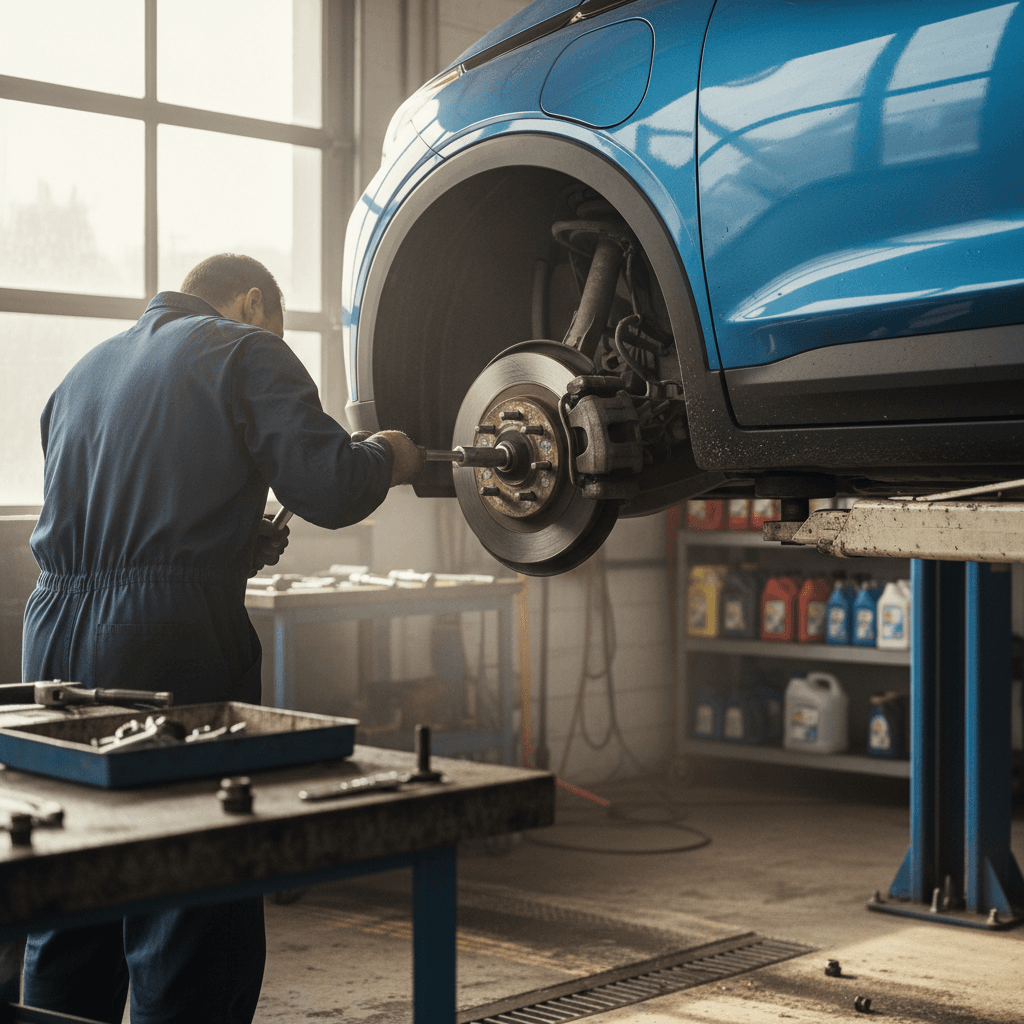
The two big, easy wins
Time-based services if you drive very little
Plenty of Bolt EUVs are urban runabouts that rack up more DoorDash receipts than miles. If you’re only doing a few thousand miles a year, you should think in years, not miles.
- Cabin air filter: every 2 years even if you’re far under 22,500 miles. It clogs with time, not just distance.
- Brake fluid: ask for a moisture test after 4–5 years. If it’s out of spec, flush and replace.
- Tires: inspect tread and sidewalls at least once a year. Low-mile cars still age their tires.
- Wiper blades: replace every 1–2 years, especially if the car parks outside.
- 12V battery: have it tested around year 5; replace proactively if borderline.
Don’t skip everything just because you don’t drive much
Real-world Bolt EUV maintenance costs over 100,000 miles
Chevy Bolt EV and EUV owners tend to have the same story: long stretches of nothing, punctuated by a set of tires here, a cabin filter there, and the occasional brake fluid change once the calendar starts to catch up.
What most Bolt EUV owners actually pay for
Typical items you’ll see between 0 and 100,000 miles (assuming no accidents or recalls).
Tires
Cost: ~$600–$900 per full set installed, depending on brand.
Instant torque + front‑heavy packaging can wear fronts faster. Rotations buy you time; budget for at least one full set by 50–60k miles.
Cabin air filters
Cost: $20–$40 DIY, $80–$150 at a dealer.
Most owners replace every 2 years. Do it yourself and it’s coffee‑money maintenance.
Brake fluid & coolant checks
Cost: $120–$250 for a brake fluid service; more if coolant is changed.
These are infrequent but important for a car you expect to keep 8–10+ years.
Less common but possible
- 12V battery replacement around year 5–8.
- Suspension wear items (bushings, links, shocks) after high miles or rough roads.
- Charge port or door repairs if damaged or corroded.
What you should almost never see
- High‑voltage battery replacement as a “maintenance” item. That’s a warranty or failure discussion, not a scheduled service.
- Regular “EV tune‑ups” or generic fuel system cleanings, your Bolt EUV doesn’t have a fuel system.
Red flags on a service quote
Dealer vs DIY: what you can safely do yourself
The Bolt EUV is a friendly car for light DIY work. You don’t need to be a backyard engineer to handle the simple stuff, but there are places you absolutely want a qualified EV technician.
DIY-friendly vs. dealer-only Bolt EUV tasks
DIY: Tire pressure & visual checks
You can (and should) check tire pressure, tread depth, washer fluid, and wiper condition at home. A $15 tire gauge and a few minutes in your driveway go a long way.
DIY: Cabin air filter replacement
On the Bolt EUV, the cabin filter sits behind the glovebox. YouTube plus a new filter is usually all you need, no special tools, about 10 minutes of your life.
DIY: Charge port care
Keeping the charge port clean and inspecting the rubber seal is easy owner work. Avoid metal tools; a soft brush and a dry cloth are enough.
Dealer: High-voltage battery & cooling
Anything touching the orange high‑voltage cabling, battery pack, or coolant manifolds belongs with a GM‑trained EV tech. This isn’t the place to improvise.
Dealer: Brake fluid flush & ABS work
You can inspect pads visually, but opening the brake system, bleeding, or touching ABS components is best left to a shop with the right tools and procedures.
Dealer: Software & safety system updates
Updates for airbags, driver‑assist sensors, and charging behavior often arrive via dealer campaigns. Check occasionally for pending updates in the myChevrolet app.
How to avoid overpaying
Maintenance checks when buying a used Bolt EUV
Shopping used is where maintenance history really counts. The Bolt EUV’s low upkeep can tempt owners to do nothing for years. That’s great for their wallet, not always great for yours.
Used Chevy Bolt EUV maintenance checklist
1. Verify tire and rotation history
Uneven tire wear can hint at skipped rotations, curb hits, or alignment issues. Ask for rotation receipts or at least inspect all four tires for matching brands and similar wear.
2. Check cabin air filter age
If the filter has never been changed after several years, what else was neglected? A filthy filter is cheap to replace, but it’s a window into the owner’s habits.
3. Review brake and coolant services
On a 5+ year-old Bolt EUV, you want evidence that brake fluid has at least been tested, and that the cooling system has been inspected for leaks or damage.
4. Scan for software & recall completion
Ask the seller for documentation of completed recalls and major software updates. These often include important tweaks to charging behavior and battery monitoring.
5. Get a battery health snapshot
For a used EV, the real story is the pack. Look for a report on estimated usable capacity, average DC fast‑charge use, and any high‑voltage system fault codes.
Where Recharged comes in
How Recharged makes Bolt EUV ownership easier
If you’re eyeing a Bolt EUV because you’re tired of playing whack‑a‑mole with gas‑car maintenance, you’re the audience Recharged was built for. We focus on used EVs exclusively, so the things that matter to an electric owner, battery health, charging performance, and long-term costs, are front and center.
Bolt EUV ownership with less guesswork
What you get if you buy or sell a Bolt EUV through Recharged.
Recharged Score battery report
Every vehicle gets a Recharged Score with a deep dive into pack health and charging history, so you’re not guessing about the most expensive component on the car.
Trade-in, instant offer, or consignment
Already own a Bolt EUV or another EV? Recharged can buy it outright, take it on consignment, or handle a trade‑in, all in a fully digital experience.
Nationwide EV delivery & support
Pick your car online and get nationwide delivery, with EV‑specialist support to walk you through charging, apps, and your maintenance roadmap.
Near Virginia? See a Bolt EUV in person
Ready to find your next EV?
Browse VehiclesChevy Bolt EUV maintenance FAQ
Frequently asked questions about Bolt EUV maintenance
Bottom line: a simple plan for a low‑drama Bolt EUV
The Chevy Bolt EUV’s maintenance schedule is refreshingly short: keep up with tire rotations, cabin filters, and the occasional fluid check, and the car tends to disappear into the background of your life, in the best possible way. No quarterly oil changes, no timing belt roulette at 90,000 miles, just a small checklist every year or two.
If you’re considering a used Bolt EUV, the real homework isn’t chasing stamps in a service book; it’s verifying the health of the battery and the honesty of the maintenance story. That’s exactly what Recharged’s Recharged Score Report and EV‑specialist inspections are built for. Do that once, follow the simple schedule above, and you can enjoy one of the lowest‑maintenance daily drivers on the market for years to come.