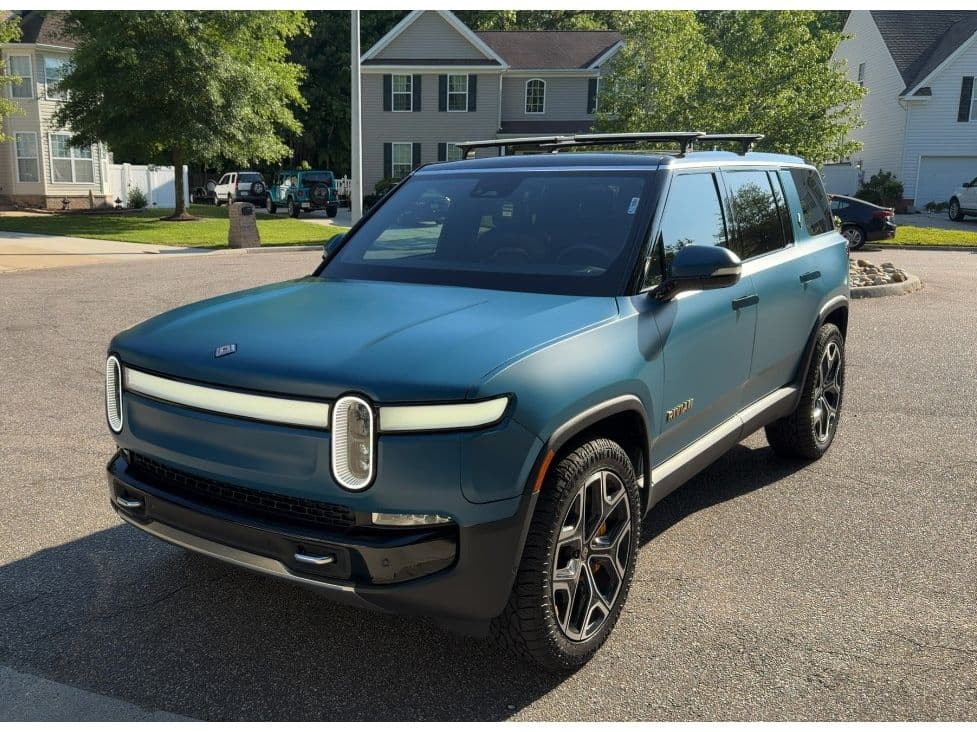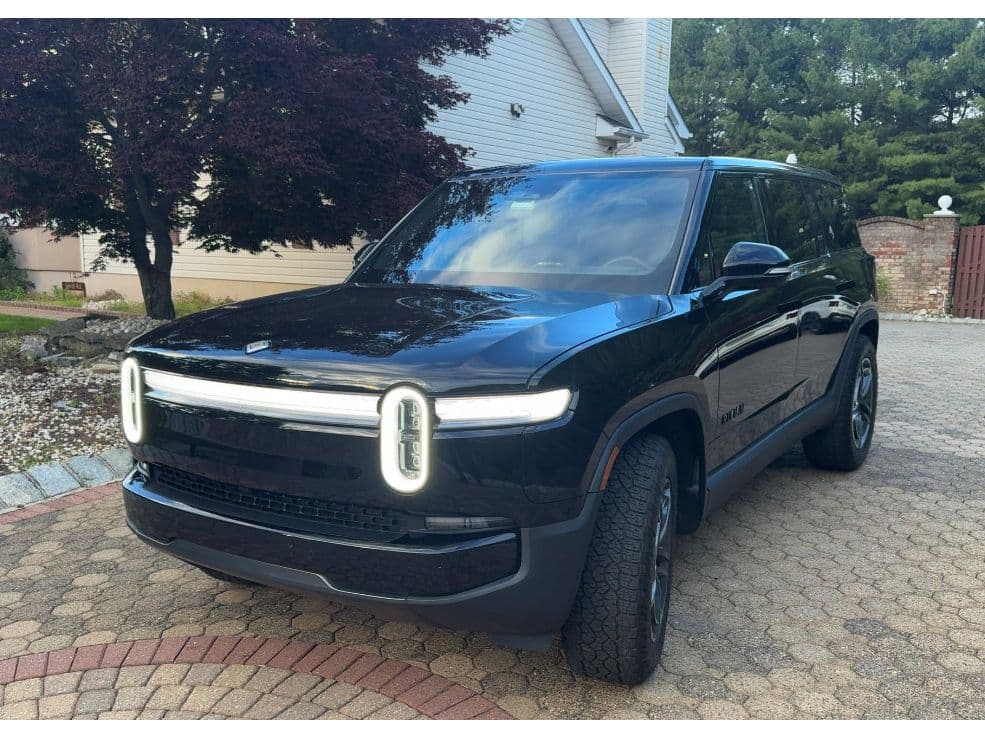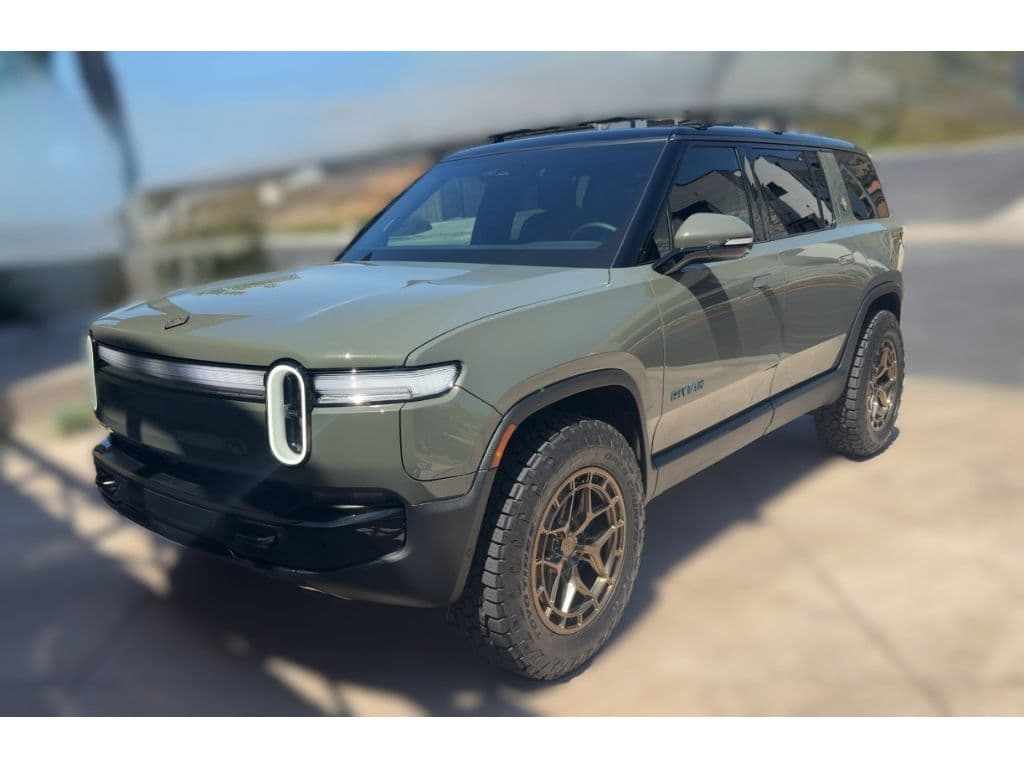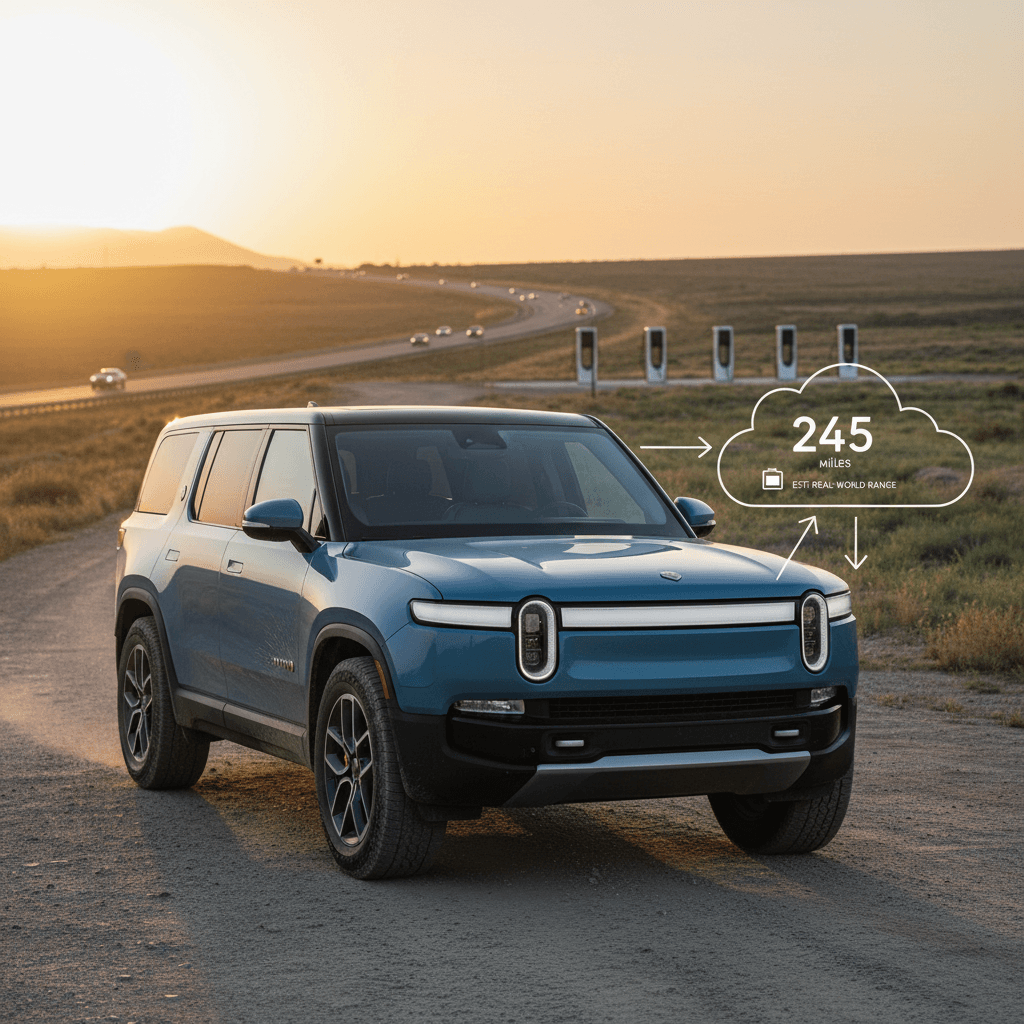
If you’re looking at a Rivian R1S in 2026, you’ve probably seen the headline EPA numbers: up to around 410 miles on paper. But what most shoppers really want to know is simple: what’s the Rivian R1S real‑world range in 2026, on actual roads, at actual highway speeds? This guide pulls together EPA data, independent tests, and owner reports so you can translate the marketing claims into day‑to‑day reality, especially if you’re considering a used R1S on Recharged.
Quick takeaway
2026 Rivian R1S range at a glance
Key 2026 Rivian R1S range numbers (EPA)
Rivian refreshed the R1S for the 2025 model year and is carrying those battery and powertrain options into 2026, with some trim and pricing tweaks. Depending on battery size, motor count, and wheels, EPA‑rated range typically falls somewhere between the high‑200‑mile and low‑400‑mile window. That puts the R1S near the top of the three‑row EV SUV class for rated range, but, as with every EV, the real story is how you drive, where you drive, and what you’re hauling.
2025–2026 Rivian R1S EPA estimates (big picture)
Approximate EPA‑rated ranges for common 2025–2026 R1S configurations. Exact ratings vary slightly by wheel/tire choice and model year paperwork, but this gives you a realistic bracket for what’s on sale in 2026.
| Configuration | Battery | Motors | Typical EPA est. range | Notes |
|---|---|---|---|---|
| Dual‑Motor Standard | Standard | Dual | ~270–290 mi | Entry battery; best for city or shorter‑range owners |
| Dual‑Motor Large | Large | Dual | ~320–345 mi | Strong all‑rounder; good for road trips with planning |
| Dual‑Motor Max | Max | Dual | ~390–410 mi | Headline number; class‑leading three‑row EPA range |
| Performance Dual‑Motor Max | Max | Perf Dual | ~370–390 mi | More power, small efficiency penalty vs standard Dual |
| Tri‑/Quad‑Motor Max | Max | 3 or 4 motors | ~350–380 mi | Highest performance; more sensitive to speed and tires |
EPA estimates are lab numbers. Expect real‑world range to run lower at 70–75 mph or in cold weather.
EPA numbers are not highway numbers
EPA vs real world: how far does an R1S really go?
Let’s start with the configuration that gets most of the attention: the Dual‑Motor R1S with the Max Pack. Its EPA rating hovers around 410 miles in ideal spec. Independent highway testing at a steady 70 mph has seen roughly 320 miles from 100% to empty on this setup, about 78–80% of the EPA figure. That’s very typical for a tall, heavy SUV driven at U.S. highway speeds.
Tri‑Motor and Quad‑Motor Max Pack R1S models generally post lower efficiency. One major publication recorded roughly 250 miles in a highway‑speed test for a Tri‑Motor Max Pack R1S, versus over 300 miles in a similar test with a Dual‑Motor Performance Max R1S on the same battery. The extra motor power is addictive, but it does cost you range when you hold higher speeds or accelerate hard.
How EPA ratings are created
The EPA doesn’t just set a car at 75 mph and let it run. It uses a mix of city and highway drive cycles at moderate average speeds (around 48 mph), gentle accelerations, and mild temperatures. Automakers can also apply adjustment factors based on internal testing.
The result: EPA numbers are excellent for comparing one EV to another, but they’re not a promise of what you’ll see on a fast highway run in February.
What we see in real use
- On warm‑weather highway trips at 70–75 mph, most R1S drivers report 70–85% of EPA.
- On mixed driving with some city streets, realistic results tighten to 80–95% of EPA.
- In winter, at high speeds, or with a roof box or trailer, real‑world range can fall to 50–70% of EPA if you don’t manage speed and preconditioning.
A good mental shortcut
How configuration changes your real‑world range
Two Rivian R1S SUVs can have very different real‑world range even if they share the same EPA rating. In 2026 you’ll find a mix of Standard, Large, and Max battery packs in the market, plus several motor counts and wheel/tire packages. Here’s how each piece moves the needle.
Range impact: battery, motors, wheels, and tires
Think of EPA as the starting line, then adjust based on how your R1S is built.
Battery size
Standard Pack R1S models are best for shorter commutes or drivers who rarely road‑trip. They can feel tight if you’re doing 200‑mile winter drives.
Large Pack is the sweet spot for many families, enough cushion for regional trips, especially with 20‑ or 21‑inch wheels.
Max Pack is for long‑distance drivers, heavy towing, or people who simply want the most buffer possible.
Motor count & power
Adding motors and power, going from Dual‑Motor to Performance Dual, Tri‑, or Quad, usually shaves range.
- Dual‑Motor: best efficiency, still very quick.
- Performance Dual: small hit for a big jump in thrust.
- Tri/Quad: noticeably more consumption at high speed.
Wheels & tires
Wheel and tire choice can easily swing real‑world range by 10–15%.
- 20–21" all‑season or mild A/T: best compromise.
- 22" wheels: more aero drag and rolling resistance, lower range.
- Aggressive off‑road tires: great off‑pavement, thirsty on the highway.
The hidden range tax: accessories
Highway, city, and mixed driving: what to expect
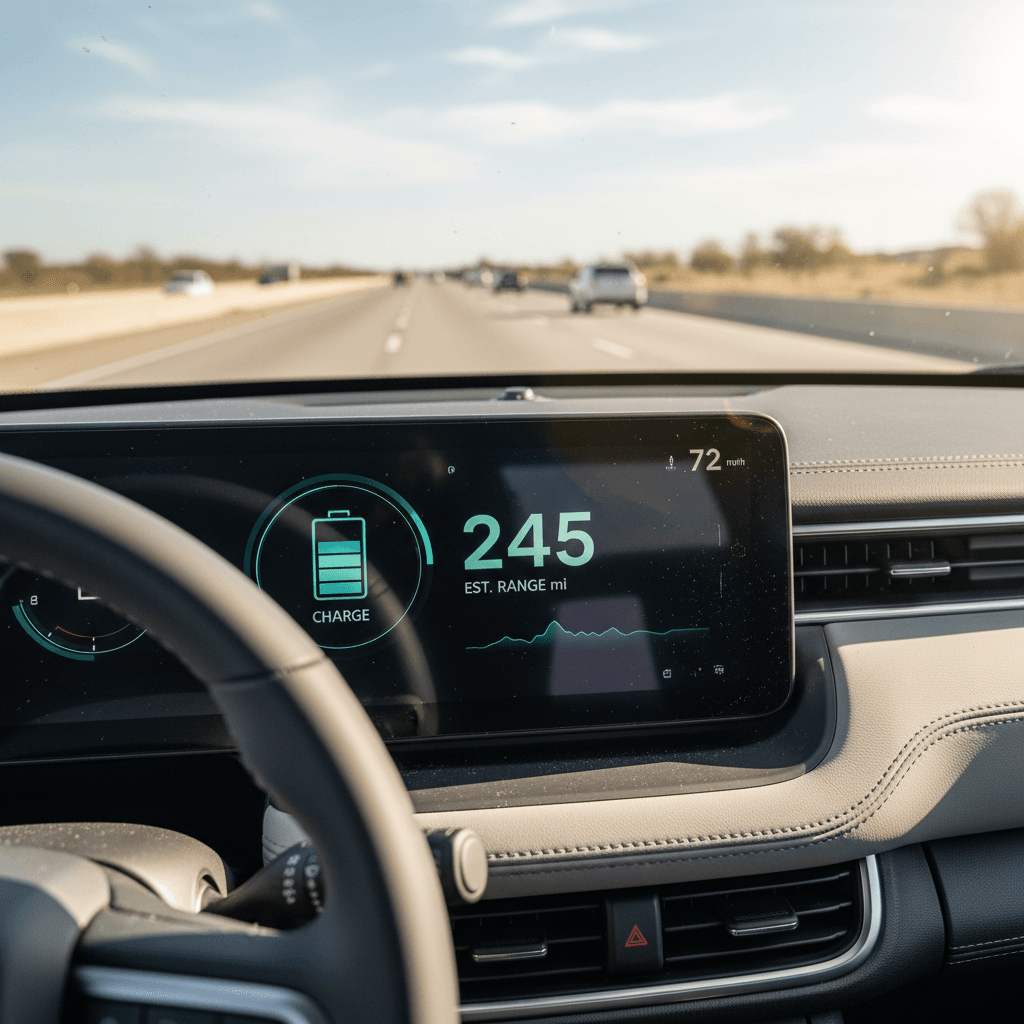
Most published tests and many owner reports focus on highway performance, because that’s where range anxiety bites hardest. But your daily reality may be much friendlier than a cross‑state blast at 78 mph with a headwind.
Real‑world range by driving scenario (Max Pack example)
Approximate real‑world ranges a 2025–2026 R1S Dual‑Motor Max Pack owner might see in different scenarios, assuming a healthy battery and moderate load.
| Scenario | Conditions | Approx. efficiency | Usable range from 100% to 10% |
|---|---|---|---|
| City‑heavy commute | Stop‑and‑go, 30–50 mph, 60–75°F | 2.5–2.8 mi/kWh | 330–360 mi |
| Mixed suburban | Blend of surface streets & 60–70 mph freeway | 2.2–2.5 mi/kWh | 295–330 mi |
| Warm‑weather highway | 70–75 mph, light wind, 60–80°F | 2.0–2.2 mi/kWh | 270–300 mi |
| Fast highway push | 75–80+ mph, or strong headwind | 1.7–2.0 mi/kWh | 230–270 mi |
These are ballpark planning numbers, not guarantees. Weather, elevation, and driving style can move them up or down.
Why city driving looks so good
Cold weather and towing: the big range killers
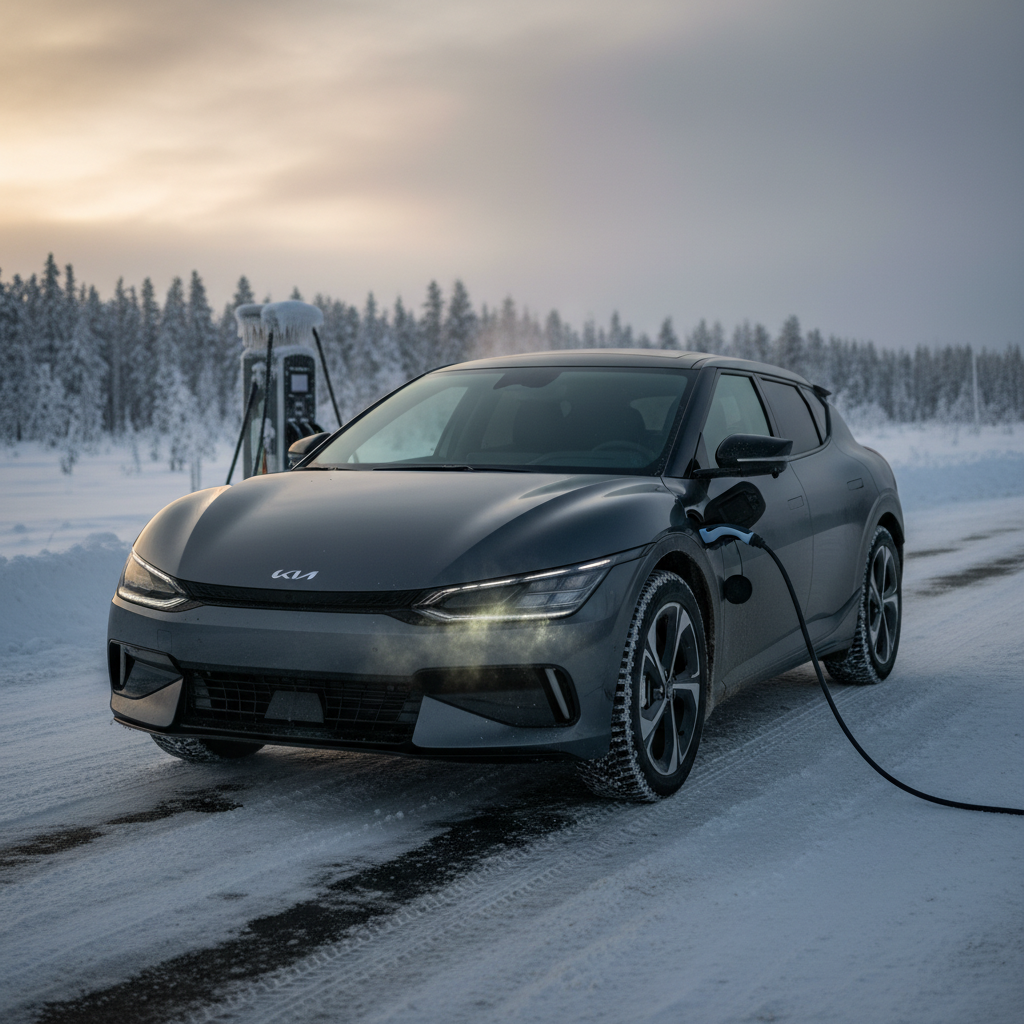
If you live where winter is real, or you plan to use your R1S for heavy towing, your experience won’t match the brochure. Cold battery chemistry, cabin heating, and the extra aerodynamic and rolling load of a trailer can all take big bites out of your available miles.
What winter and towing do to R1S range
Both are manageable if you plan for them.
Cold‑weather driving
- Below freezing, expect 20–35% less range if you do short trips without preconditioning.
- Long highway legs in the cold tend to stabilize a bit better, but still trail warm‑weather results.
- Using the steering wheel and seat heaters instead of blasting cabin heat helps noticeably.
Towing and payload
- A boxy trailer, high speed, and headwinds can cut range in half on any EV SUV.
- For moderate trailers at 60–65 mph, many R1S owners see 40–60% of normal range.
- Plan for more frequent DC fast‑charge stops and lower your speed; both make a bigger difference than you might expect.
Don’t size the battery too small if you tow
Charging speeds and trip planning in 2026
Range is only half the story on road trips; how quickly you can add that range back is just as important. The 2025–2026 R1S supports DC fast‑charging peaks in the roughly 200–220 kW window on the bigger packs. In practice, a healthy R1S can often add 90–180 miles of highway range in a 15–30 minute stop when you arrive with a low state of charge and the battery is warm.
- For fast road trips, think in terms of time spent charging, not just raw range. Two 20‑minute stops can be more relaxing than one 45‑minute stretch to 100%.
- The R1S supports the growing North American Charging Standard (NACS) ecosystem, opening up more DC fast‑charging options across the U.S. in 2026 and beyond.
- Planning apps that factor in elevation, weather, and your actual efficiency history will give you more accurate arrival‑state‑of‑charge predictions than a static EPA number.
Use your own data
Real‑world range for used R1S shoppers
By 2026, a lot of the R1S inventory you’ll see, especially on a marketplace like Recharged, will be 2022–2025 model years with a mix of Large and Max packs and varying wheel/tire choices. The good news: Rivian’s packs have generally held up well so far, and modest early‑life degradation doesn’t radically change the day‑to‑day experience.
Battery aging and range
- Most modern EVs lose a small slice of range in the first few years, then settle into a slower decline.
- A used R1S that started at 410 miles EPA might, for example, show something more like the high‑300‑mile range when new.
- In real‑world highway use, that might translate to a difference of 10–25 miles of usable buffer, which most owners never notice.
What really matters when buying used
- How the previous owner charged (frequent DC fast‑charging vs mostly home Level 2).
- Climate history, extreme heat accelerates aging if the car sat outside.
- Wheel/tire setup and any accessories that affect consumption.
- Verified battery health data, not just the original EPA sticker.
Where Recharged fits in
How Recharged evaluates R1S battery health
Range isn’t just about what the EPA once printed; it’s about the actual condition of the battery pack you’re buying. That’s why Recharged builds battery‑health data directly into each R1S listing through the Recharged Score.
Inside the Recharged Score for a Rivian R1S
What we look at before we put a used R1S on our site.
Pack health & capacity
Charging history
Usage & climate
Ready to find your next EV?
Browse VehiclesFrom screen to driveway, fully digital
Checklist: simple ways to maximize your R1S range
Everyday habits that add real miles
1. Set a realistic cruising speed
Dropping from 78 mph to 70 mph in an R1S can easily save <strong>10–15% energy</strong> on a long trip. If you’re chasing range, driving with the flow of the right lane instead of the left is the easiest win you can buy for $0.
2. Use preconditioning in hot or cold weather
Whenever possible, warm or cool the cabin while the R1S is still plugged in. Preheating the battery and cabin in winter especially helps protect range on your first leg of the day.
3. Lean on seat and wheel heaters
In cold weather, use the <strong>seat and steering wheel heaters</strong> first and keep cabin temperature a bit lower. They use less energy than trying to turn the whole cabin into a sauna via HVAC.
4. Keep your tires in check
Under‑inflated tires hurt both safety and efficiency. Check pressures monthly and after big temperature swings; Rivian’s recommended pressures are a good starting point for balancing ride and efficiency.
5. Travel light on the roof
Take off roof boxes and rack‑mounted gear when you’re not using them. They act like a parachute at highway speeds and can noticeably cut range on a tall SUV like the R1S.
6. Plan charge stops for 10–70%
On road trips, try to arrive at fast chargers around 10–20% and leave around 60–70%. The R1S charges fastest in that band, so you get more miles of range per minute at the plug.
FAQ: Rivian R1S real‑world range in 2026
Frequently asked questions about 2026 R1S range
Is the Rivian R1S range right for you?
The 2026 Rivian R1S offers some of the strongest range capability in the three‑row EV world, especially in Dual‑Motor Max Pack form, but the real story is how those miles line up with your life. If your driving is mostly local, even a Standard or Large Pack may feel abundant. If you’re stringing together fast 300‑mile days in winter with a trailer and a roof box, you’ll want every kilowatt‑hour you can get and a smart plan for DC fast‑charging along the way.
The best next step is to work backward from your longest, ugliest trip: the winter weekends, the towing days, the cross‑country drives. Once you know what those look like, it’s much easier to pick the right R1S configuration and battery size, and to decide whether a new truck or a carefully vetted used R1S on Recharged makes the most sense. With verified battery health, expert EV support, and nationwide delivery, Recharged is built to make the jump into Rivian ownership as predictable as your daily range.