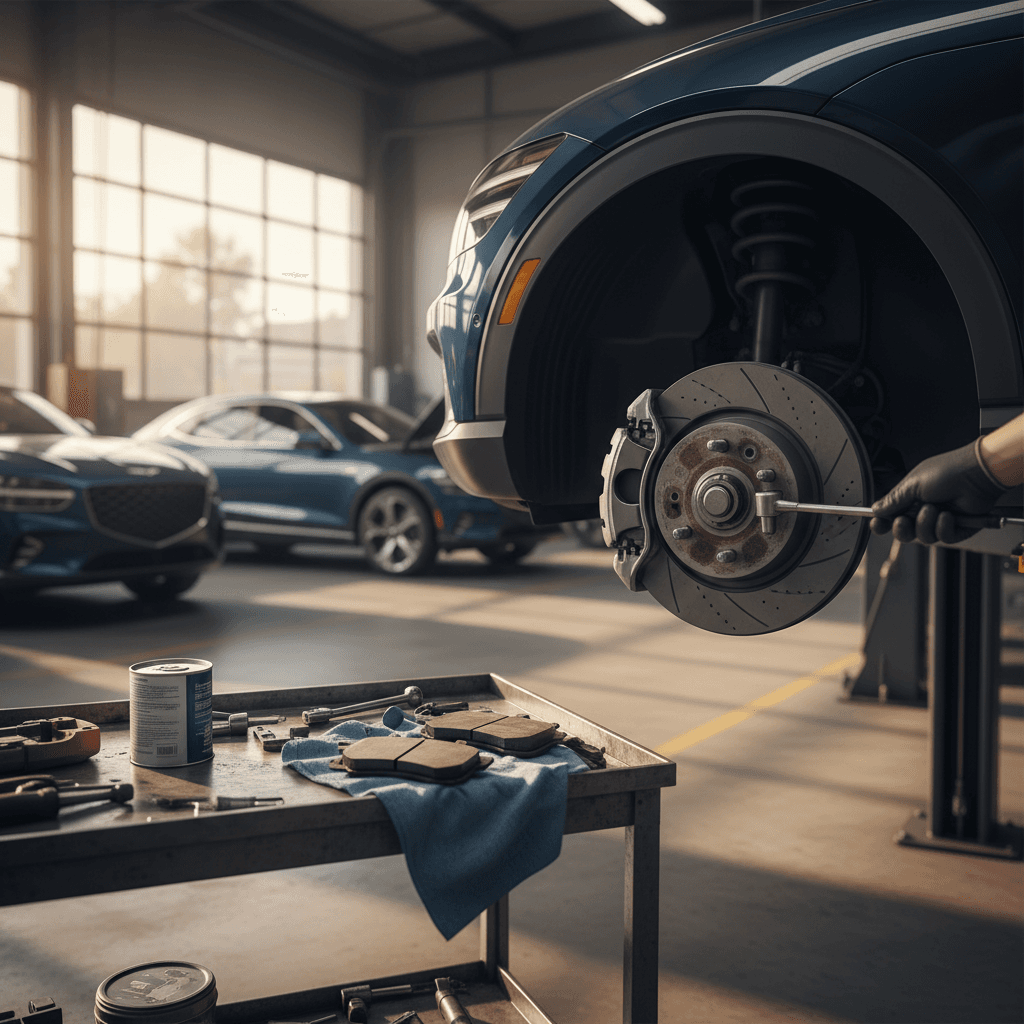
If you own a Genesis GV60, or you’re thinking about buying one used, it’s natural to wonder what Genesis GV60 brake pad replacement cost looks like. EVs are famously easy on pads thanks to regenerative braking, but when those pads finally wear out, you’re still on the hook for a real-world brake job, not a brochure promise.
Quick answer
Genesis GV60 brake pad replacement cost overview
Let’s get specific. General brake data for 2025 puts typical pad-only replacement around $150–$350 per axle for mainstream cars, with luxury models landing higher, and $300–$600 per axle when rotors are included. EVs like the GV60 usually use larger, more expensive hardware and live at the luxury end of the spectrum, so it’s no surprise that model-specific estimates are higher than economy-car averages.
What most GV60 owners can expect to pay
Model-specific data for the GV60 pegs an average brake pad replacement between the mid-$600s and high-$600s per axle, depending on model year and local labor rates. That’s a blended figure including parts and labor, about what you’d expect for a premium EV with sizable front brakes and dealer-level pricing baked in.
Pads vs. full brake job
Average Genesis GV60 brake pad replacement cost
Estimated Genesis GV60 brake pricing (per axle)
Approximate 2025 U.S. pricing for front or rear axle brake work on a Genesis GV60. Actual quotes will vary by region, parts choice, and shop.
| Service type | Where you go | What’s included | Typical 2025 cost (per axle) | Good to know |
|---|---|---|---|---|
| Brake pads only | Independent shop | Quality aftermarket pads + labor | $350–$450 | Common for front or rear if rotors are still in good shape |
| Brake pads only | Genesis dealer | OEM pads + labor | $550–$700 | Dealer labor rates and OEM parts push the price up |
| Pads + rotor resurfacing | Independent shop | Pads, hardware, rotor machining | $450–$600 | Only possible if rotors are thick enough and not heat-damaged |
| Pads + new rotors | Independent shop | Premium rotors, pads, labor | $700–$900 | Typical when rotors are warped, rusty, or near minimum thickness |
| Pads + new rotors | Genesis dealer | OEM rotors, pads, labor | $900–$1,300 | Luxury-brand pricing; get a line-item quote before you authorize |
| Brake fluid change (same visit) | Dealer or indy | Flush and refill brake fluid | $130–$220 | Genesis calls for brake fluid replacement around every 4 years or ~48,000 km / 48 months |
Use this as a sanity check when you’re comparing real-world quotes.
Front and rear pad sets on the GV60 are priced similarly, so the big cost swing comes from labor time and rotor condition, not which end of the car you’re working on. If a dealer quote looks wildly outside these ranges, ask for a written breakdown of parts, shop fees, and labor hours.
Easy way to sanity-check a quote
What drives GV60 brake pad prices up or down
6 big factors that change your brake bill
Why your neighbor’s GV60 paid less, or more, than you did.
1. Where you service it
Dealers charge luxury rates. Genesis dealers typically have higher hourly labor rates than independents, and they’ll usually insist on OEM parts.
Independent shops can save you $150–$300 per axle if they’re comfortable working on EVs.
2. Pads vs. full brake job
Replacing pads only is the cheapest way out, but it’s only safe if rotors are still thick and smooth.
If the rotors are warped, rust-pitted, or below spec, you’re now paying for pads, rotors, and more labor.
3. Your driving style
Heavy-footed city driving chews through pads faster than gentle highway miles that lean on regenerative braking.
Lots of panic stops, steep hills, and towing (rare but possible) also speed up wear.
4. Where you live
Mountainous areas and cold climates can mean more braking and more corrosion.
Road salt can rust rotors and hardware, forcing earlier rotor replacement even if your pad thickness looks fine.
5. Regenerative braking use
The GV60’s strong regen means you can coast down to a stop using the motors instead of the friction brakes when conditions allow.
Drivers who keep regen turned up usually see pads last far longer than gas-car owners.
6. Parts quality
Top-tier ceramic pads cost more up front but tend to be quieter, resist fade, and throw less dust.
Cheaper pads can save you $50–$100 now but may wear faster or squeal, which feels like a step backward on a luxury EV.
Are GV60 brakes unique?
How long Genesis GV60 brake pads really last
On a typical gas crossover, you’ll hear “every 30,000–50,000 miles” as a generic brake pad life estimate. Electric vehicles routinely blow past that because the motors do most of the slowing. The GV60 is no exception.
- Many EV drivers see 60,000–80,000 miles before their first pad replacement when they use strong regen and mostly drive highway or suburban routes.
- Urban stop‑and‑go driving, short trips, steep hills, and high speeds can pull that closer to 40,000–60,000 miles.
- On the flip side, very gentle drivers in mild climates sometimes report pads lasting well past 80,000 miles, but by then rotors may be aging out from rust more than wear.
Good news for GV60 owners
Genesis doesn’t publish a hard mileage interval for pad replacement on the GV60. Instead, the official schedule focuses on regular inspections every 12–15,000 miles or 12 months, and a brake fluid replacement around the four‑year / ~48,000 km mark. Your actual pad life will be determined more by the way and where you drive than by the calendar.
GV60 brake maintenance schedule and warning signs
Genesis GV60 brake service rhythm
How often you should be thinking about the braking system on your GV60.
| Interval | What Genesis calls for | What you should do | Why it matters |
|---|---|---|---|
| Every 12–15,000 miles / 12 months | Inspect discs, pads, lines, hoses, brake fluid level | Have a tech measure pad thickness and rotor condition at each service visit | Catches uneven wear, stuck calipers, or early rotor rust before it’s expensive |
| Every 40–48,000 miles or ~4 years | Brake fluid replacement | Do a full brake fluid flush and bleed | Moisture in old fluid can corrode components and reduce braking performance |
| 60,000+ miles | No specific pad mileage listed | Expect your first pad replacement window to open, depending on how you drive | Most GV60 owners will see pad replacement somewhere after this point |
| Any time | Brake system warning light, noises, or changes in feel | Get the car inspected immediately | Ignoring brake warnings on a 4,500‑lb EV is not a cost‑saving strategy |
Miles or months, whichever comes first.
- Grinding noises when you slow down, especially at low speeds
- High‑pitched squealing or chirping when you’re not pressing the brake pedal
- A soft or spongy brake pedal feel
- The GV60 pulling to one side under braking
- Visible pad material less than about 3 mm thick when you peek through the wheel spokes
Don’t wait on a grinding noise
Dealer vs independent shop for GV60 brakes
Genesis dealer pros and cons
- Pros: Factory training, OEM pads and rotors, access to GV60‑specific technical bulletins, and easy warranty documentation.
- Cons: Higher labor rates, more aggressive upselling, and less flexibility on parts brands. Expect to pay at the top of the ranges in this guide.
Dealers are a solid choice in the first few years, especially if the car is still under factory warranty or maintenance perks.
Independent EV‑friendly shop
- Pros: Lower hourly rates, more choice in pad and rotor brands, and often more willingness to work around your budget.
- Cons: Not every shop is comfortable with EVs. You want a shop that knows how to safely lift a GV60 and understands regen braking behavior.
Ask directly whether they’ve serviced late‑model Genesis or other high‑end EVs. If they hesitate, keep shopping.
When a dealer is worth it
Ways to save on Genesis GV60 brake pad replacement
Smart strategies to keep GV60 brake costs in check
Use strong regenerative braking
Set your GV60’s regen to a higher level and get used to easing off the accelerator early. Let the motors do the work. The less you touch the brake pedal in normal driving, the longer your pads (and rotors) will last.
Stick to annual inspections
Genesis wants those brakes inspected about every 12–15,000 miles or yearly. Taking that seriously means you’ll catch uneven wear or sticking calipers before they snowball into rotor damage and a four‑figure bill.
Compare at least two quotes
Get a quote from your Genesis dealer and from at least one independent shop that services EVs. Use this article’s ranges as a sanity check and don’t be shy about asking why one quote is higher.
Ask about pad options
Within reason, you can often choose between OEM and high‑quality aftermarket pads. A good shop can recommend a pad that balances quiet operation, dust levels, and price, without downgrading your braking performance.
Bundle brake fluid service
If you’re close to the recommended brake fluid change, ask about doing it during the brake job. You’ll pay for a little extra labor and fluid, but you’ll save the cost and hassle of a separate visit later.
Avoid unnecessary add‑ons
Some service writers love selling caliper cleaning services, brake system ‘flushes’ that go beyond what Genesis specifies, or early rotor replacement ‘just in case.’ Ask them to point to the maintenance schedule in the manual before you agree.
Watch out for scare tactics
Used Genesis GV60 buyers: brake checklist
Shopping for a used GV60? Brakes are one of the big wear items that separate a great deal from a car that’ll need a four‑figure service as soon as you get the plates. This is exactly the kind of thing Recharged bakes into our Recharged Score and battery‑health report when we list a used EV.
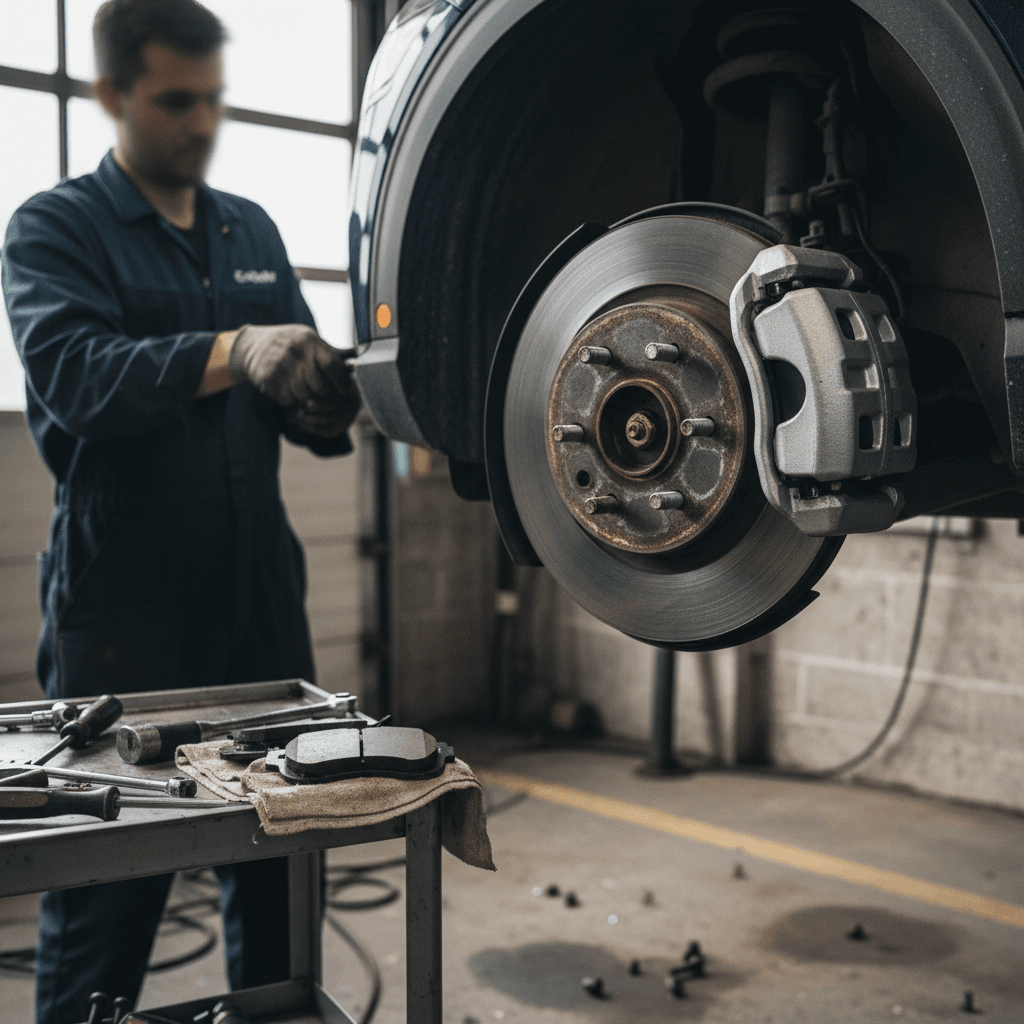
Brake checks before you buy a used GV60
Ask for recent brake service records
A bill from a Genesis dealer or reputable shop listing pad thickness, rotor condition, and any brake fluid changes is gold. No records doesn’t mean bad brakes, but you should assume an inspection is needed soon.
Have pad thickness measured
During a pre‑purchase inspection, ask the technician to write down pad thickness at each wheel. Anything under about 3 mm means you should budget for pads right away, and negotiate the price accordingly.
Inspect rotors for grooves and rust
Light surface rust from sitting is normal. Deep grooves, heavy lip edges at the rotor outer edge, or flaking rust around the vents mean you could be signing up for new rotors too.
Check for warning lights or pull
On the test drive, watch for brake warning lights and feel for the car pulling to one side under braking. Both can signal caliper or ABS issues that go beyond a basic pad swap.
Ask how the car was driven
High‑mileage highway commuters who used strong regen are easier on brakes than short‑trip city drivers. Their pads might look better than their odometer suggests.
Leverage a professional EV inspection
If you’re buying through Recharged, your GV60 comes with a <strong>Recharged Score Report</strong> that covers battery health, pricing, and key wear items like brakes. If you’re buying private‑party, it’s worth paying an EV‑savvy shop to inspect the car first.
Genesis GV60 brake pad replacement FAQ
Common questions about GV60 brake pad costs
Bottom line on GV60 brake pad costs
Think of the Genesis GV60 brake pad replacement cost as one of the few traditional maintenance expenses left on a modern EV. Yes, the numbers look higher than an economy car, but they show up less often, and you get the tradeoff of virtually no engine service in return.
If you keep up with annual inspections, use regenerative braking intelligently, and shop your quotes between a Genesis dealer and an EV‑savvy independent shop, you can keep GV60 brake work inside the normal range and avoid surprise four‑figure repairs. And if you’re shopping for a used GV60, looking closely at brake wear is one of the fastest ways to separate a gently‑driven gem from a car that’s been driving hard and stopping late.
At Recharged, every used EV we sell, including the Genesis GV60, comes with a Recharged Score Report that verifies battery health, captures wear items like brakes, and ties it all back to fair market pricing. That way, you’re not guessing what your next brake job will look like, you’re planning for it.