If you own a Rivian R1S, or you’re shopping for a used one, it’s natural to wonder what a Rivian R1S battery replacement cost in 2026 really looks like. The high‑voltage pack is the most expensive component in the vehicle, and there’s still a lot of rumor and guesswork floating around online. Let’s cut through that and talk about actual ranges, how warranty protection works, and what this means for your long‑term ownership costs.
Key takeaway up front
Overview: Rivian R1S battery replacement cost in 2026
Rivian R1S battery cost: 2026 quick facts
Because Rivian hasn’t published a simple “menu price” for a full R1S battery swap, any honest 2026 guide has to combine what we know about EV battery pricing today, Rivian’s pack sizes, and the few real‑world anecdotes from service technicians and owners. The result is a realistic range of what you’d likely face if you ever did need a pack outside of warranty, plus the very real possibility that you’ll never pay for one at all.
Don’t confuse 12V and high‑voltage batteries
Rivian R1S battery packs and why their size matters
Battery replacement cost scales with two main factors: battery capacity (kWh) and pack design. The R1S is a large, three‑row luxury SUV, and its pack is correspondingly big. Early R1S models used a roughly 135 kWh “Large” pack, and later years added smaller Standard and Standard+ options plus a larger Max pack. That puts the R1S comfortably in the same category as electric pickups when it comes to battery size, and cost.
- Standard / Standard+ packs: roughly similar in capacity to many midsize EV SUVs, but with Rivian’s off‑road and performance demands.
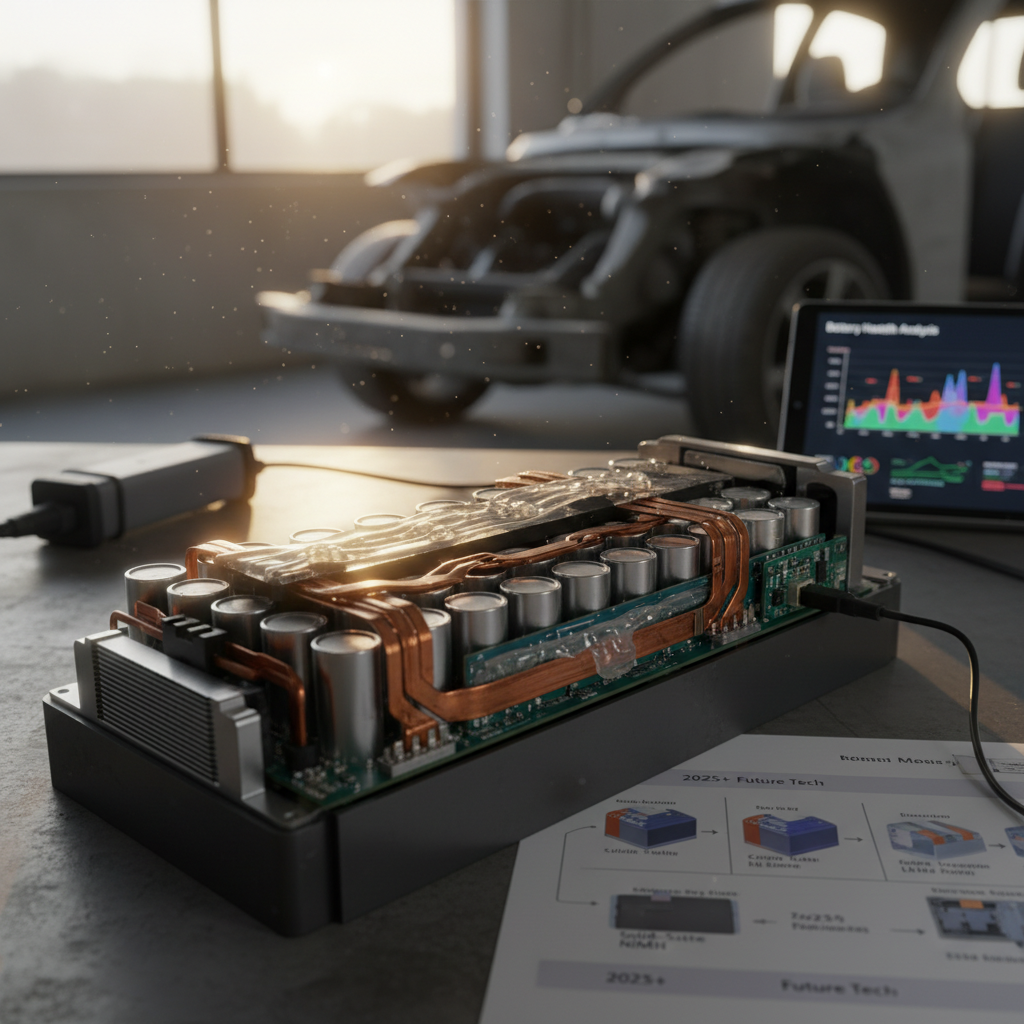
- Large packs: around 135 kWh, using thousands of 2170 lithium‑ion cells organized in multiple modules.
- Max packs: even larger capacity, designed for maximum range and towing, meaning even more material cost.
Those capacities matter because modern EV pack pricing is still largely calculated on a $/kWh basis. While cell prices have fallen over the last decade, a large pack like the R1S uses enough material and complex thermal management that it will never be a cheap wear item like tires or brakes.
How much does a Rivian R1S battery replacement cost in 2026?
Let’s address the question directly: What would you actually pay for a Rivian R1S battery replacement in 2026 if you were out of warranty?
Estimated Rivian R1S battery replacement cost in 2026 (out of warranty)
These are realistic, order‑of‑magnitude estimates based on current EV battery pricing, Rivian‑sized pack costs, and early real‑world quotes, NOT official Rivian menu prices.
| Scenario | What’s Included | Estimated Cost Range | Notes |
|---|---|---|---|
| Module‑level repair | One or a few battery modules plus labor | $4,000–$10,000 | Used when only part of the pack is faulty; preserves the rest of the pack. |
| Standard/Standard+ pack swap | Complete pack assembly plus labor | $15,000–$22,000 | Smaller‑capacity packs; closer to other midsize EV SUV replacements. |
| Large pack swap | Complete ~135 kWh pack plus labor | $18,000–$26,000 | Most common early R1S configuration; large material cost. |
| Max pack swap | Complete high‑capacity pack plus labor | $20,000–$30,000+ | Largest and most expensive option; still rare in the field. |
| Refurbished/remanufactured pack (future‑looking) | Factory‑remanufactured pack plus labor | Potentially 10–25% less than new | Viability depends on Rivian and third‑party remanufacturing ecosystem. |
All figures assume replacement at a Rivian service facility or certified partner in the United States, parts plus labor.
Where do these numbers come from?
No two repair orders are identical. A pack replaced for a one‑off defect on a low‑mileage R1S might involve warranty assistance or goodwill even after the main warranty window, while collision or flood damage is more likely to be billed at full price, often through insurance.
Insurance may be your real payer
Warranty coverage: When a Rivian R1S battery is free vs. out of pocket
For most Rivian R1S owners in 2026, the more important question than raw replacement cost is: Will I actually have to pay it? Rivian’s battery warranty is one of the strongest in the industry, and because the first R1S deliveries only reached customers in volume in 2022–2023, almost all examples on the road are still deep inside their coverage window.
- High‑voltage battery and electric drivetrain: typically covered for 8 years or 175,000 miles (whichever comes first) on R1S models.
- Coverage generally applies to defects and excessive capacity loss below Rivian’s stated threshold, not normal gradual degradation.
- Anything caused by abuse, improper modifications, collision, or flood damage is typically excluded and pushed to insurance or the owner.
Real‑world implication for 2026
Where things get more nuanced is capacity loss. Like any EV, an R1S will slowly lose range over time. All modern batteries degrade; the key is whether the pack falls below Rivian’s guaranteed capacity threshold within the warranty period. That’s where detailed battery health diagnostics like the Recharged Score become valuable when you’re shopping used.
Signs your R1S battery might need attention (not necessarily replacement)
A failing high‑voltage pack is rare, but there are plenty of reasons an R1S owner might suspect a battery issue long before an actual replacement is on the table. Understanding these helps you separate normal EV behavior from true problems.
Common signs to watch for
Noticeable, sudden range loss
Seeing 5–10% gradual range fade over years is normal. A sharp drop in estimated range over a few weeks, especially without weather or driving‑pattern changes, deserves a service conversation.
Frequent high‑voltage faults or warnings
Repeated “reduced power” or high‑voltage system warnings, especially if they appear at high state of charge, can indicate issues in modules, cooling, or pack sensors.
Charging that slows dramatically
If DC fast‑charging speeds drop far below your typical curve under similar conditions, it may point to cell imbalance, thermal management issues, or software limits to protect a weak module.
Unusual noises or smells during charging
Clicks from contactors are normal; burning, chemical, or persistent hot‑plastic smells are not. Stop charging and call Rivian if you suspect anything unsafe.
Car sitting for long periods at 0% or 100%
Letting the R1S sit fully empty or pegged at 100% for weeks is hard on battery health. This doesn’t mean immediate failure, but it can shorten pack life over the long term.
Use data, not just gut feel
Battery replacement vs. fixing or selling the R1S
Let’s say you’re one of the unlucky few facing a serious pack issue out of warranty. At that point, you’re not just deciding whether to replace a battery, you’re deciding whether to keep the vehicle at all. The math looks different depending on how you use the R1S and what the rest of the SUV is worth.
When a replacement can make sense
- Low‑mileage, high‑spec R1S that’s otherwise in excellent shape, with a clean history.
- You plan to keep the vehicle for 5–8 more years and can amortize the pack cost over a long period.
- You receive a goodwill discount, refurbished pack pricing, or a favorable insurance settlement.
When selling or totaling is smarter
- The R1S has high mileage and other expensive issues (suspension, cosmetic, or accident history).
- The repair quote exceeds a large fraction of the vehicle’s market value.
- An insurance claim pushes the vehicle into total‑loss territory, and you’d rather move into a newer EV.
Think like an appraiser
Real-world cost context: How R1S compares to other EVs
Rivian isn’t unique in having an expensive pack; it’s a function of physics and materials. A 3‑row SUV or pickup simply needs more energy storage than a compact hatchback. That said, it’s useful to benchmark the R1S against other segments to understand whether it’s unusually risky.
Approximate EV battery replacement costs by vehicle segment
High‑level, parts‑plus‑labor estimates commonly cited in 2024–2025 for out‑of‑warranty pack replacements.
| Segment & examples | Typical pack size (kWh) | Approx. replacement cost | How Rivian R1S compares |
|---|---|---|---|
| Compact EVs (e.g., Nissan Leaf, Chevy Bolt) | 40–65 | $8,000–$15,000 | Smaller, simpler packs, less material but often older tech. |
| Midsize EV SUVs (e.g., Hyundai Ioniq 5, VW ID.4) | 60–82 | $8,000–$18,000 | Closer to Rivian’s smaller Standard/Standard+ packs. |
| Large EV SUVs & pickups (e.g., Ford Lightning, Rivian R1T/R1S) | 98–149+ | $15,000–$30,000 | R1S sits squarely in this bracket; not an outlier for its class. |
| Commercial EV vans (e.g., Rivian EDV, Ford E‑Transit) | 75–135 | $14,000–$19,000+ | Similar pack sizes, but often with fleet‑oriented support options. |
Numbers represent typical ranges, not formal quotes. Individual cases may be higher or lower.
In other words, the R1S doesn’t carry a hidden, class‑leading pack penalty. If you want the capability, off‑road chops, three rows, huge torque, you’re signing up for battery economics similar to any other large electric SUV or truck.
How battery health affects used R1S values
Whether you ever replace a pack or not, the perceived cost of battery replacement already influences what your R1S is worth on the used market. Buyers are asking: “How much life is left in this pack, and how much warranty do I have?” That’s exactly where transparent battery reporting becomes a competitive advantage.
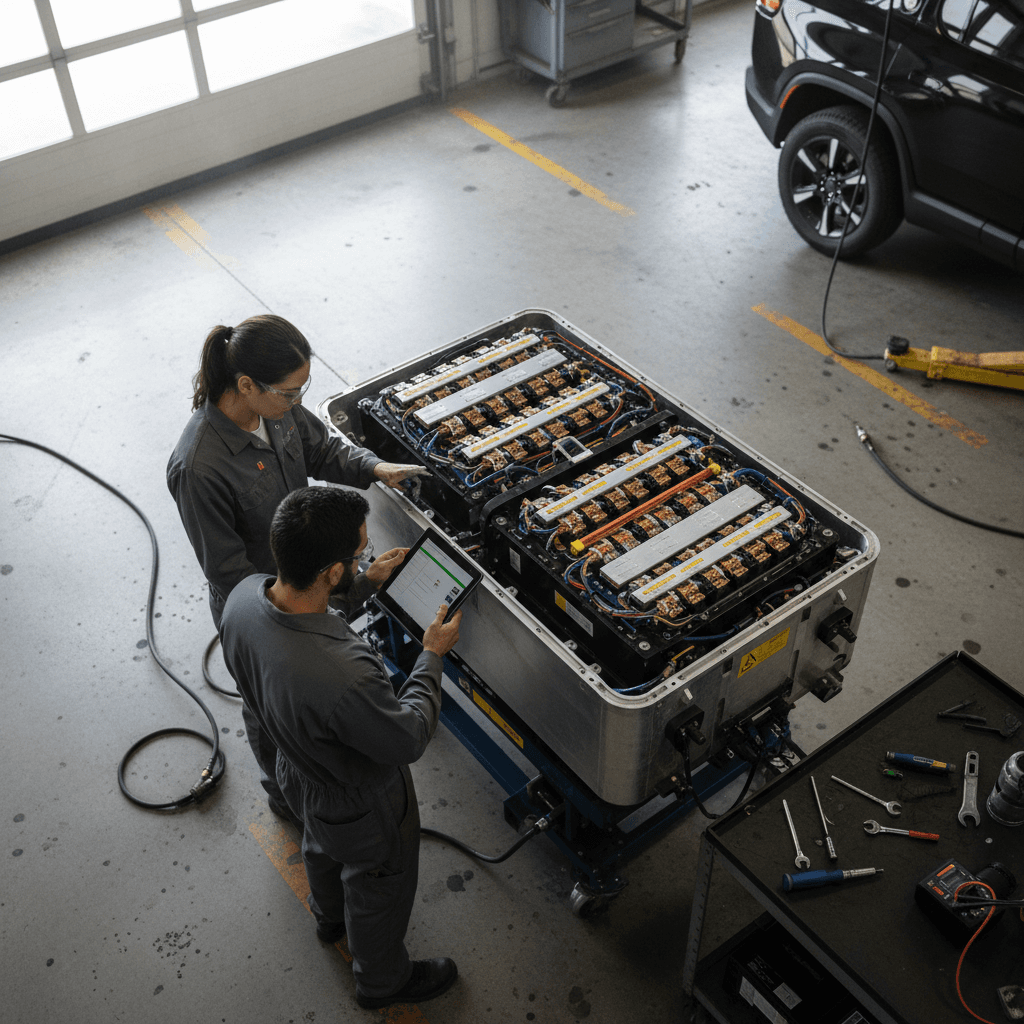
Why battery transparency matters for R1S buyers and sellers
The pack is the heart of the vehicle, and the biggest line item if something goes wrong.
Accurate pricing
Risk reduction
Better financing options
Where Recharged fits in
Ready to find your next EV?
Browse VehiclesWays to avoid or delay Rivian R1S battery replacement
You can’t cheat chemistry, but you can absolutely stretch the useful life of your R1S pack and reduce the odds that you’ll ever need a replacement while you own the vehicle. Most of these habits cost nothing; they just require a little planning and awareness.
Practical habits to extend R1S battery life
Keep daily charging in the middle of the pack
For everyday driving, aim to live between about 20% and 80% state of charge. Save 100% charges for road trips where you’ll depart soon after reaching full.
Avoid letting the R1S sit at 0% or 100%
If you arrive home nearly empty, plug in soon. If you reach 100% the night before a trip, time the charge so it finishes close to departure, rather than sitting full for many hours.
Moderate DC fast‑charging when you can
The R1S is built for fast‑charging, but constant high‑power sessions at high state of charge and in hot weather can accelerate wear. On road trips, try to charge from low state of charge up to ~70–80%, then hit the road again.
Protect the battery from extreme heat
When possible, park in the shade or a garage on very hot days. The R1S manages pack temperature, but starting cooler reduces how hard the thermal system has to work.
Stay current on software updates
Rivian frequently refines charging behavior, thermal management, and range prediction via over‑the‑air updates. Keeping software current ensures the battery is managed with the latest logic.
Address warning lights promptly
If you see repeated high‑voltage or charging warnings, don’t ignore them. Early intervention can sometimes prevent a small issue from turning into a large one.
Buying used? Ask for a real battery report
FAQ: Rivian R1S battery replacement cost in 2026
Frequently asked questions about R1S battery costs
Bottom line: Should battery costs scare you away from an R1S?
Sticker shock is natural when you first hear that a Rivian R1S battery pack could cost well into five figures to replace. But context matters. Almost every R1S on the road in 2026 is still under Rivian’s generous 8‑year/175,000‑mile battery warranty, and genuine pack failures remain rare. For most owners, the battery will be a managed asset, not an emergency expense, something you monitor over time rather than an immediate time bomb.
If you’re shopping used, the smartest move is to focus on battery transparency and remaining warranty, not worst‑case replacement quotes. A vehicle with a clean history, healthy diagnostics, and years of coverage left can deliver plenty of value even if pack prices stay where they are. And if you’d rather not navigate that alone, Recharged pairs every used EV, including the R1S, with a Recharged Score battery health report, fair‑market pricing, and EV‑savvy guidance on financing, trade‑ins, and nationwide delivery.
In short, a potential $18,000–$25,000 battery replacement someday shouldn’t automatically steer you away from an R1S. Instead, let it nudge you toward good charging habits, smart warranty choices, and data‑driven shopping. Do that, and you can enjoy the Rivian experience today without losing sleep over tomorrow’s pack prices.