If you’re wrestling with the pros and cons of electric cars, you’re not alone. EVs are grabbing headlines, incentives keep changing, and friends probably have strong opinions on both sides. This guide walks through the real advantages and drawbacks of electric vehicles in 2025 so you can decide whether an EV, new or used, fits your budget, driving habits, and charging options.
EV adoption is growing, but still a minority
Why electric cars are on everyone’s radar
Electric vehicles by the numbers
The trend line is clear: more models, improving charging networks, and competitive pricing mean EVs are moving from niche to mainstream. At the same time, interest has cooled slightly as mainstream shoppers bump into practical concerns, charging access, winter range, and resale values. Understanding both sides of the ledger is the best way to avoid buyer’s remorse.
Quick look: main pros and cons of electric cars
Key pros of electric cars
- Much lower fueling cost per mile when you can charge at home.
- Instant torque and smooth performance, EVs feel quick, even in commuter trims.
- Less routine maintenance (no oil changes, fewer moving parts).
- Quiet, refined driving experience, especially in city traffic.
- Zero tailpipe emissions and strong climate benefits over the vehicle’s lifetime.
- Access to tax credits and state/local incentives on many models.
Key cons of electric cars
- Higher upfront prices, even when discounts and incentives help.
- Charging access can be inconvenient without a driveway or reliable home parking.
- Public fast charging can be more expensive and sometimes unreliable.
- Cold weather and highway driving reduce real‑world range.
- Model and incentive uncertainty as policies and pricing change.
- Early EVs and some current models can have steep depreciation, complicating resale.
How to read this guide
The big pros of electric cars
1. Fuel savings and stable ‘fuel’ prices
For many owners, the most tangible upside of an EV is at the plug. Home electricity is usually much cheaper and more predictable than gasoline. A typical U.S. driver traveling around 12,000 miles per year can often cut their energy cost per mile by 50% or more when charging primarily at home, depending on local electricity and gas prices.
- Home Level 2 charging (240V) often works out to the equivalent of paying roughly $1–$1.50 per gallon of gas in many areas.
- Public DC fast charging is more expensive, sometimes similar to gas on a cost‑per‑mile basis, but you’ll likely use it only a fraction of the time if you can charge at home or work.
- Time‑of‑use rates and overnight pricing can make EV “fuel” even cheaper if your utility offers them.
Used EV angle
2. Lower maintenance and fewer surprises
Electric drivetrains are mechanically simple compared with internal‑combustion engines. There’s no oil to change, no exhaust system, no spark plugs, and far fewer moving parts under the hood. Over several years of ownership, that usually translates into lower routine maintenance costs and fewer big repair gambles like timing belts or transmission failures.
- No oil changes or transmission fluid services.
- Brake wear is reduced thanks to regenerative braking.
- Fewer items under the hood to leak, overheat, or wear out.
- Tires and cabin air filters are still consumables, budget for those as you would on a gas car.
3. Driving experience: quiet, quick and smooth
EVs deliver torque instantly, so even modestly powered models feel punchy around town. The absence of engine vibration and gear shifts makes highway cruising calmer. If you enjoy a quiet cabin, one‑pedal driving, and responsive acceleration for merging or passing, the EV driving experience is a major pro.
4. Environmental benefits over the long run
Building an EV battery is energy‑intensive, so there’s a higher “upfront” carbon cost than building a comparable gas car. But once you start driving, the emissions math shifts quickly. Analyses of real‑world data suggest that an EV typically reaches a lifetime emissions break‑even point versus a comparable gas car after roughly one to two years of average driving, then keeps getting cleaner as you rack up miles, especially in regions with cleaner electric grids.
Used EVs and sustainability
The real-world cons of electric cars
1. Charging access: biggest swing factor
For homeowners with a driveway or garage, EV ownership is usually straightforward: install a Level 2 charger or use a 240V outlet and you effectively have a fuel station at home. For renters, street‑parkers, and condo dwellers without assigned parking, charging is often the single biggest drawback of going electric.
Common charging pain points
Which of these applies to you?
No dedicated parking
Sparse public chargers
Time cost
Condo and HOA hurdles
2. Range, weather and road‑trip realities
Official range ratings assume mixed driving in mild weather. In the real world, cold temperatures, high speeds, heavy loads, and hills all eat into range. In winter, many drivers see 20–40% less range on highway trips. That’s manageable for daily commuting but can turn a 300‑mile road trip into two or three charging stops instead of one.
- Short daily commute or school runs? Range is rarely a problem.
- Frequent 300+ mile trips, especially in cold climates? You’ll need to plan stops carefully and choose a model with robust fast‑charging speeds.
- If you regularly tow or haul, expect additional range loss and confirm the model’s rated towing capability.
3. Upfront price and financing
Sticker prices for EVs have fallen from their early peaks, and some mainstream models now undercut comparable gas vehicles after incentives. Still, many EVs remain priced above similar gasoline models, especially crossovers and trucks. Higher MSRPs can push monthly payments up, even if running costs are lower.
Leaning on incentives and financing
4. Charging network reliability and pricing
Fast‑charging networks are improving, but reliability is still inconsistent by region and provider. It’s not uncommon to arrive at a station and find one or more stalls out of service, blocked, or delivering slower‑than‑advertised speeds. Pricing is also less transparent than gas: some chargers bill by the kWh, others by time, often with session fees or idle fees layered on.
Plan for redundancy on road trips
5. Policy swings and resale uncertainty
Tax credits, state mandates, trade policies, and automaker strategies have all been moving targets over the last few years. That volatility influences both new EV pricing and used‑EV resale values. Some models have seen sharp price cuts that are great for new buyers but painful for recent owners. If you plan to sell in three to five years, factor potential value swings into your decision.
Cost comparison: EV vs gas car
Typical cost differences: electric vs gas (ownership view)
High‑level cost comparison for a mainstream compact SUV over five years. Actual numbers will vary by model, state, incentives, and how much you fast‑charge.
| Category | Typical EV Pattern | Typical Gas Car Pattern | What It Means |
|---|---|---|---|
| Purchase price | Higher MSRP, sometimes offset by tax credits and discounts | Lower MSRP, fewer incentives | EV may cost more day one unless incentives and dealer discounts are strong. |
| Fuel/energy | Lower cost per mile if mostly home‑charging | Higher and more volatile fuel prices | Over 5 years, EV drivers often save thousands on energy. |
| Maintenance | Fewer routine services, less drivetrain wear | Regular oil changes, more moving parts | EV ownership tends to mean fewer shop visits and surprise repairs. |
| Depreciation | Can be steeper for certain models; stabilizing as market matures | More predictable in popular segments | Used values depend heavily on demand, incentives and brand reputation. |
| Incentives | Federal, state and utility incentives can be substantial | Occasional incentives, usually much smaller | Stacking incentives can flip the total‑cost equation in favor of an EV. |
| Insurance | Sometimes slightly higher, depending on repair costs and driver profile | Sometimes lower, depending on model | Quotes vary widely, always compare model‑by‑model. |
EVs can cost more up front but often win on fueling and maintenance over time.
Think in monthly cash flow, not just sticker price
Battery life, depreciation and used EVs
How long do EV batteries really last?
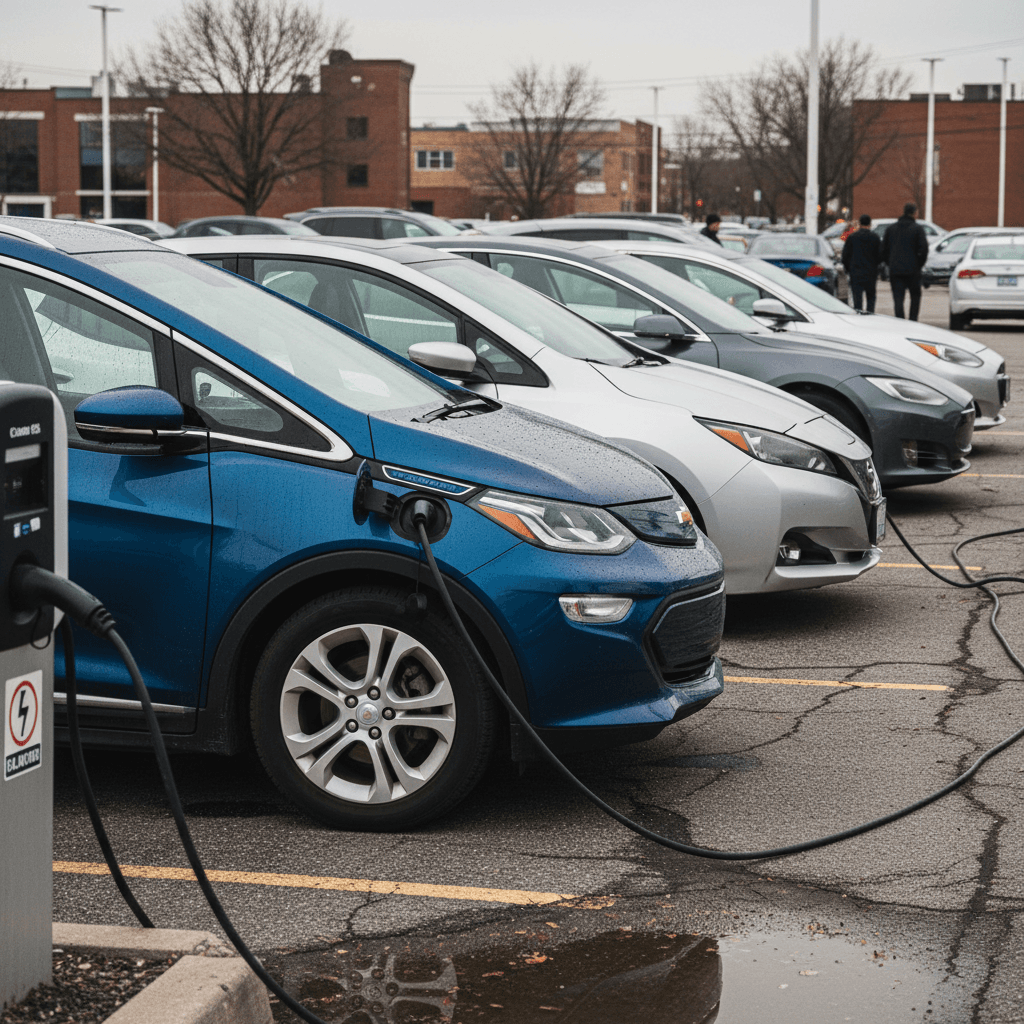
Early EVs created a perception that batteries fade quickly. Newer data paints a different picture. Large‑sample studies of thousands of EVs show average battery degradation around 1.5–2% per year, and real‑world tests of high‑mileage cars often find more than 85–90% of original capacity remaining after 100,000 miles or more. Most manufacturers back this up with 8‑ to 10‑year battery warranties, typically to 70% capacity.
Practical takeaway
Why depreciation has been choppy, and what’s improving
Used EV prices have moved more dramatically than many gas models. Several forces are at work: rapidly changing incentives, new model introductions, price cuts on new EVs, and shifting consumer sentiment. That’s pushed values down for some older or short‑range models, while newer, longer‑range EVs with strong fast‑charging performance are holding value better.
Pros and cons of buying a used EV
How the trade‑offs look in today’s market
Pros of used EVs
- Lower purchase price after initial depreciation hit.
- Same core benefits as new EVs (quiet, quick, low fueling cost).
- Many still within original battery warranty period.
- Lower environmental impact than building a new vehicle.
Cons of used EVs
- Shorter real‑world range on earlier models.
- Uncertainty about how the previous owner charged and stored the car.
- Faster tech turnover, infotainment and charging speeds improve quickly.
- Values influenced by changing incentives and new‑EV pricing.
How Recharged reduces the guesswork
Ready to find your next EV?
Browse VehiclesWho electric cars are good, and bad, for
Best and worst‑fit scenarios for EVs
Match the pros and cons to your lifestyle
Great fit
- Homeowner with driveway or garage.
- Daily driving under 80–120 miles.
- Two‑car household where one car handles long trips.
- Stable electricity rates and access to overnight charging.
Depends
- Apartment/condo with some charging but limited spaces.
- Frequent regional trips where fast chargers are available but sparse.
- Drivers who can be flexible with travel timing and stops.
Poor fit (for now)
- No access to home or workplace charging and few public options.
- Regular long‑distance driving in areas with weak charging networks.
- Heavy towing or commercial‑duty use beyond current EV capabilities.
How to decide if an EV fits your life
5‑step checklist for weighing EV pros and cons
1. Map your real driving patterns
Look at your last few months of driving: average daily miles, longest regular trips, and how often you exceed 150–200 miles in a day. Many drivers overestimate how much range they truly need.
2. Audit your charging options
Be brutally honest about where you’ll charge. Do you have a garage or driveway? Can you install a 240V outlet? Is there reliable charging at work or nearby? This is the make‑or‑break factor for most shoppers.
3. Compare total monthly cost
Instead of focusing on sticker price alone, estimate your monthly payment, insurance, electricity, and maintenance compared with your current or alternative gas car. Tools on sites like Recharged can help you model this for used EVs.
4. Decide how you’ll handle road trips
If you take several long trips a year, test‑drive the route in a planner app and see how many stops and how much extra time it adds. Some households keep one gas or hybrid vehicle specifically for long‑distance use.
5. Choose new vs. used intentionally
New EVs offer the latest range and tech, plus full warranties. Used EVs offer lower upfront cost and can be better values if a trusted battery health report, such as the Recharged Score, backs them up.
FAQ: Pros and cons of electric cars
Frequently asked questions about EV pros and cons
Bottom line: should you go electric?
When you stack up the pros and cons of electric cars, a pattern emerges. If you have consistent access to home or workplace charging, do most of your driving within 80–150 miles a day, and plan to keep the vehicle for several years, an EV can deliver lower running costs, a better driving experience, and real climate benefits. If you lack reliable charging, live in a charging desert, or depend on spontaneous long‑distance drives, today’s EV landscape may feel more limiting than liberating.
The smartest move is to match the technology to your lifestyle and budget, not to the headlines. For some drivers that means waiting a bit longer or choosing a hybrid. For others, it means taking advantage of today’s incentives and soft used‑EV prices. If you’re curious about where you stand, browse used EVs with verified battery health and transparent pricing on Recharged, or explore more of our guides on charging, incentives, and buying a used electric car before you make your next move.