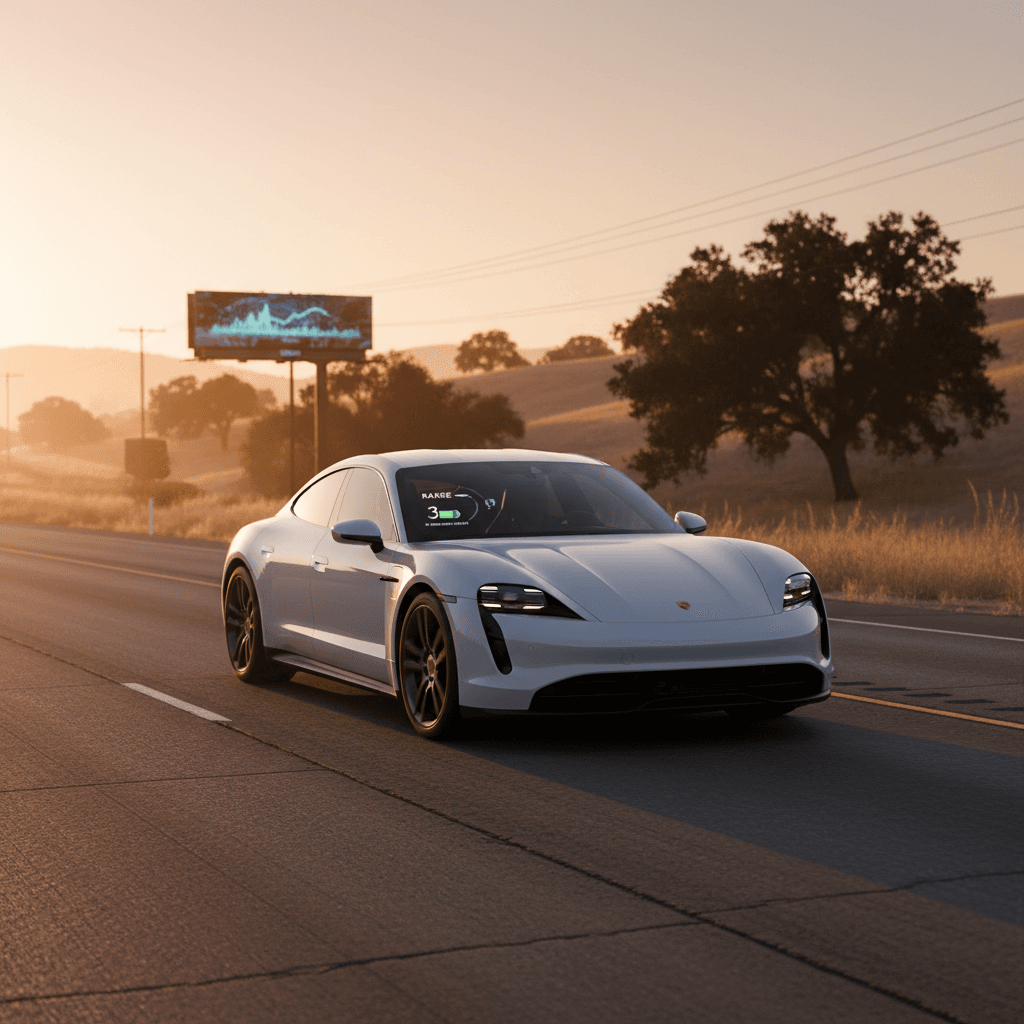
If you’re shopping a Porsche Taycan or already own one, you’ve probably noticed a disconnect between the EPA window sticker and what you see on long highway drives. The good news is that Porsche Taycan real‑world range on the highway is often better aligned with its estimates than many early reviews suggested, especially after the 2025 refresh. The key is understanding which trim you’re looking at, how fast you drive, and how you plan your charging stops.
Why focus on highway range?
Why the Taycan’s highway range feels “different”
The Taycan has always been a bit of an outlier: early models posted modest EPA range estimates, yet independent highway tests routinely showed it going farther than those labels suggested. Porsche has historically taken a conservative approach to range certification, prioritizing repeatability and battery longevity over chase‑the‑headline numbers. That’s very on‑brand for a German performance company, but it confused U.S. shoppers used to comparing EVs by EPA miles alone.
Where the Taycan shines
- Stable efficiency at 70–75 mph when you aren’t constantly flooring it.
- Excellent fast‑charging, among the quickest EVs you can buy.
- Thermal management that keeps range predictable, even when you drive hard.
Where it falls short
- Lower rated range than Tesla Model S or Lucid Air.
- Smallish rear seat and cargo for a long‑distance family road‑trip car.
- Wide spread between trims, Turbo GT highway range is a different world from a base RWD car.
Quick answers: Taycan real‑world highway range
Real‑world highway range snapshots*
*All figures above come from third‑party 70–75 mph tests of mostly new cars. Real‑world range in your Taycan will vary with temperature, wheels and tires, elevation, and how hard you drive.
Rule of thumb
How the 2025 Taycan changed the range story
For 2025, Porsche gave the Taycan its first major technical refresh, and range was a core focus. The big news is that the Performance Battery and Performance Battery Plus grew to about 89 kWh and 105 kWh gross, with usable capacities around 82 and 97 kWh. Porsche also tweaked aerodynamics, motor efficiency, and thermal management, which helped across every trim.
- EPA ratings for 2025 Taycans now peak around 318 miles on the Performance Battery Plus.
- Standard‑battery cars land roughly in the 252–274 mile EPA window depending on trim and wheels.
- Many independent highway tests are showing real‑world range equal to or above those EPA numbers when you drive sensibly at 70–75 mph.
Porsche’s own 75‑mph test
Real‑world highway range by Taycan trim
To make sense of Porsche Taycan real‑world range on the highway, you have to separate older cars from 2025+ models, and rear‑drive efficiency specials from the heavy‑hitting Turbo trims. Below, “real‑world highway” refers to independent testing around 70–75 mph in mild conditions.
Typical real‑world highway range by Taycan version
Approximate expectations for a healthy battery at 70–75 mph in mild weather, on efficient wheels and tires.
| Model / era | Battery | EPA rating (max) | Likely 70–75 mph highway range |
|---|---|---|---|
| 2020–2024 base Taycan RWD | Performance Battery Plus (~84 kWh usable) | Up to ~225 mi | ~250–285 mi if driven gently; ~230–250 mi at a steady 75 mph. |
| 2020–2024 Taycan 4S / 4 Cross Turismo | Performance Battery Plus | Up to mid‑200s | ~230–260 mi at 70–75 mph depending on wheels and temperature. |
| 2025+ Taycan RWD | Performance Battery Plus (~97 kWh usable) | Up to ~318 mi | ~320–360 mi at 70–75 mph in ideal conditions; high‑200s to low‑300s in cold or bad weather. |
| 2025+ Taycan 4S sedan | Performance Battery Plus | Up to ~315 mi (19") | Independent testing has seen ~330 mi at highway speeds on efficient wheels. |
| 2025+ Taycan 4 / 4 Cross Turismo | Performance Battery Plus | Low‑ to mid‑300s (WLTP/EPA) | Porsche’s own 75‑mph loop showed ~317 mi for a 4 Cross Turismo; expect ~290–320 mi day‑to‑day. |
| 2025+ Taycan Turbo / Turbo S | Performance Battery Plus | High‑200s to low‑300s | Expect roughly ~260–300 mi at 70–75 mph when you’re not exploiting full power. |
| 2025+ Taycan Turbo GT | Performance Battery Plus | ~270 mi EPA (approx) | Highway testing has shown ~270 mi at 75 mph, strong for a 1,000+ hp EV. |
These are not official ratings, but aggregated test results and reasonable estimates to help you plan road trips or evaluate a used Taycan.
Wheel size matters more than you think
5 factors that shrink or boost your Taycan’s highway range
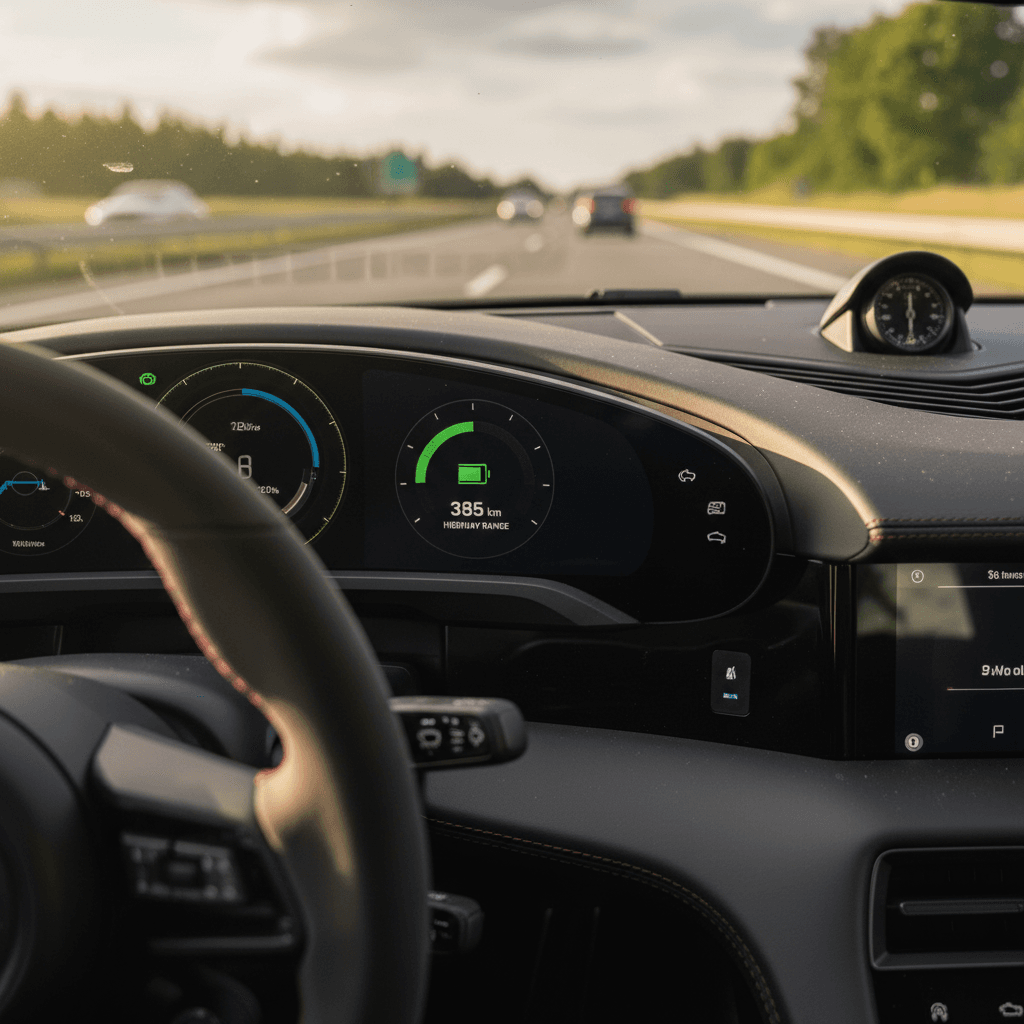
Key variables that change Taycan highway range
Two owners of the same Taycan can see wildly different results.
Speed
Temperature
Body style
Drive mode & stance
Wheels & tires
Driving style
Quick ways to stretch your Taycan’s highway range
1. Set a realistic cruise speed
If your schedule allows, cruising at 68–70 mph instead of 78–80 mph can easily add 30–40 miles of usable range per charge.
2. Use Range mode when it matters
On long, boring highway stretches, Range mode’s lower ride height and softer HVAC settings can save a few percent without killing comfort.
3. Precondition before you leave
Use grid power at home to warm or cool the pack before you hit the highway. That preserves both range and charging performance on your first DC stop.
4. Mind your wheels and tires
If you’re speccing a new Taycan or shopping used, prefer 19‑inch wheels with touring‑oriented tires if long‑distance efficiency is a priority.
5. Avoid repeated full‑throttle blasts
The Taycan will happily deliver back‑to‑back launches, but sustained high‑power driving on the highway will drag your effective range down in a hurry.
Highway range vs. EPA rating: What should you trust?
The EPA combined number on the window sticker blends city and highway driving, then layers in a correction factor. That’s useful for comparing EVs in a lab sense, but it doesn’t always predict what happens at a steady 70–75 mph. The Taycan is a perfect example: historically it has over‑delivered on highway range relative to its conservative EPA label, while some competitors with flashy numbers fade more quickly in the real world.
When to lean on EPA numbers
- Comparing EVs broadly across brands.
- Estimating mixed city/highway commuting range.
- Understanding the best‑case envelope of a new Taycan trim.
When real‑world tests matter more
- Planning regular long‑distance highway trips.
- Choosing between Taycan trims with similar EPA ratings.
- Shopping a used Taycan and wanting to see how it behaves at 70–75 mph today.
Smart way to sanity‑check a used Taycan
Used Taycan buyers: battery health & degradation
Two of the top questions we hear about used Taycans are: “How much range has it lost?” and “Will the battery still be healthy at 60,000+ miles?” So far, Taycan packs have generally held up well, with modest degradation for most daily‑driven cars. But how the car was charged and driven matters more than the odometer alone.
What really affects used Taycan range
Odometer is just one piece of the puzzle.
Charging habits
Age & climate
Use profile
Software & updates
How Recharged helps de‑risk used Taycan range
Ready to find your next EV?
Browse VehiclesHow to plan road trips around real‑world Taycan range
The Taycan’s secret weapon isn’t just how far it goes; it’s how quickly it comes back. Especially on 2025+ cars, the combination of ~300‑plus miles of realistic highway range and 10–80% fast‑charges in the 18–20 minute window changes how you think about road trips. You don’t need to run the pack to 0% or charge to 100%, you just ripple between efficient waypoints.
Highway strategies for different Taycan owners
Efficiency‑minded driver (base or 4S, 19" wheels)
Plan legs of 180–220 miles between high‑power chargers for a big buffer.
Cruise at 68–72 mph; use Range mode in featureless stretches.
Arrive at chargers around 10–20% state of charge to maximize speed.
Charge back to 65–80% and get back on the road, don’t wait for the last slow 20%.
Performance enthusiast (Turbo / Turbo GT)
Accept that you’re trading some range for immense power, plan 150–190 mile legs.
Enjoy the acceleration in short bursts, then settle into a steady 70–75 mph cruise.
Favor 270–320 kW stations that can take advantage of the Taycan’s peak charge rate.
In cold weather, use navigation to a charger so the car preconditions the battery on the way.
Pre‑trip checklist for a smooth Taycan highway run
Confirm charging network coverage
Use apps like PlugShare, Chargeway, or the built‑in nav to confirm there are multiple fast‑charging options roughly every 150–200 miles along your route.
Verify payment and apps
Make sure your charging‑network accounts are set up and tested. Nothing eats into highway range like idling at a charger that won’t activate.
Set realistic charging targets
On most legs, aim to arrive at 10–25% and depart around 70–80%. That keeps charging speeds high and your average speed over ground competitive with a gas car.
Pack a plan B
Have a backup station identified for each stop, especially in rural areas. A short detour is far better than arriving at a broken‑down charger with 3% left.
Run a shakedown trip
Before a big road trip, do a 150–200 mile highway loop close to home to get a personal baseline for your Taycan’s consumption and charging curve.
FAQ: Porsche Taycan real‑world range on the highway
Frequently asked questions
Bottom line: Should range stop you from buying a Taycan?
If you judge the Porsche Taycan purely by its early EPA numbers, it looks outgunned by long‑range rivals. But once you dig into real‑world highway range and charging performance, a different picture emerges. The 2025+ Taycan in particular is a genuine 300‑plus‑mile highway EV in the right configuration, with some of the fastest and most repeatable DC fast‑charging on the market. Earlier cars still make compelling used buys if you understand their realistic 230–270 mile highway envelope.
If you’re cross‑shopping a Taycan today, new or used, treat range as one input, not a deal‑breaker. Think about how far you truly drive between stops, what speeds you’re comfortable with, and how much you value Porsche’s driving dynamics and charging curve. And if you’d like hard data instead of guesswork, consider finding your Taycan through Recharged, where every car comes with a battery‑health‑backed Recharged Score and EV‑specialist support from first question to final delivery.