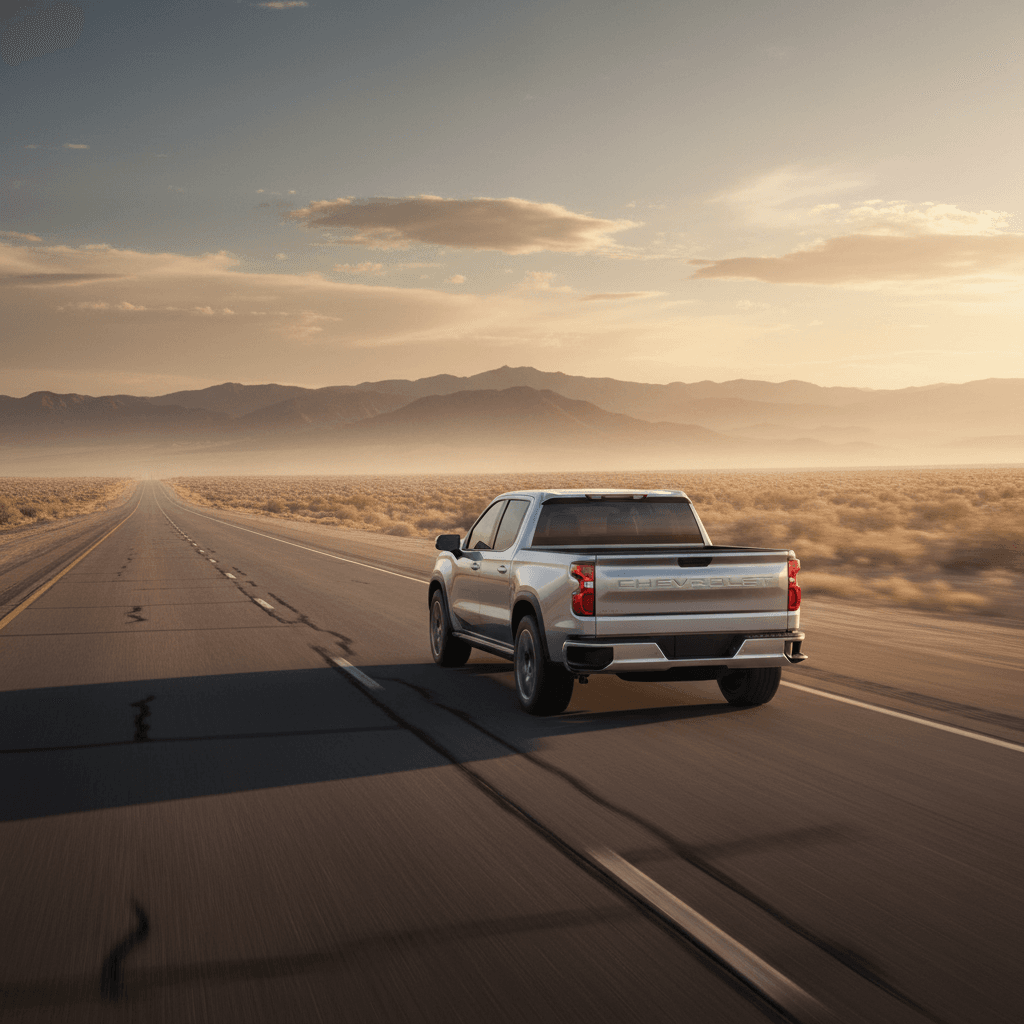
You don’t buy a Chevy Silverado EV because you want a dainty little commuter. You buy it because you want an electric truck that can pound out highway miles, tow, and still have enough battery left to get you home. The question everyone ends up asking is the same: what’s the Chevy Silverado EV real-world range on the highway, not in some EPA lab but at 70–75 mph with traffic, weather, and maybe a trailer in the mirror?
The short version
Silverado EV range by the numbers
Before we talk highway reality, it helps to frame the official numbers. Chevy keeps revising the lineup, but as of the 2024–2025 trucks, you’ll see a spread of EPA and GM‑estimated ranges on the window sticker:
Chevy Silverado EV official range estimates (2024–2025)
EPA or GM‑estimated range on a full charge. Real‑world highway range will be lower, especially when towing or driving fast.
| Model / Battery | Model Years | Official Range | Notes |
|---|---|---|---|
| WT Standard Range | 2025 | 282 mi (EPA est.) | Smaller pack, lowest price |
| WT Extended Range | 2024–2025 | 422–450 mi (EPA) | Work Truck, 18" wheels, aero‑friendlier |
| WT Max Range | 2025 | 492 mi (EPA) | Fleet‑only long‑range spec |
| LT Extended Range | 2025 | 408 mi (EPA) | Retail, 12,500‑lb tow rating |
| LT Premium / RST Extended | 2024–2025 | 390–400+ mi (EPA/GM est.) | Big wheels, more weight and toys |
| RST Max Range | 2025+ | 460 mi (GM est.) | Performance‑oriented, top battery |
Always treat these numbers as best‑case in mixed driving, not guaranteed highway range.
Sticker range is not highway range
Highway vs EPA: why the numbers don’t match
Owners get angry at the wrong villain. The EPA test cycle isn’t a scam; it’s just not your life. The official rating blends city and highway driving at modest speeds, with gentle acceleration and ideal temperatures. A big, 8,800‑pound electric truck like the Silverado EV is exquisitely sensitive to the things highway driving exaggerates:
- Speed: Aerodynamic drag rises with the square of speed. The jump from 65 to 75 mph is brutal on range.
- Temperature: Cold batteries are lazy batteries. Below about 40°F, you can lose a frightening chunk of range, and cabin heat is a huge energy draw.
- Elevation and wind: Climbing long grades or pushing into a headwind at 75 mph is like towing an invisible trailer.
- Tires and wheels: The Silverado EV RST’s 24‑inch wheels look fantastic and absolutely do not help you go farther.
- Payload and towing: Every pound you ask the truck to move shows up in the consumption readout. A boxy RV trailer is range napalm.
Think in efficiency, not just miles
Real-world highway tests: what reviewers are seeing
The best window into Chevy Silverado EV real‑world range on the highway comes from independent instrumented tests that run at a fixed 70–75 mph until the truck gives up. Two big data points stand out:
Key independent highway range and charging results
Read those numbers with nuance. Car & Driver’s 75‑mph test is deliberately punishing, closer to the reality of bombing across three states in a day. Edmunds’ procedure blends conditions and speeds more representative of an average owner with some restraint. Taken together, they reveal the Silverado EV’s core competence: this truck has staggering battery capacity and unusually efficient highway manners for something shaped like a brick with a bed.
What this means at 70–75 mph
- If your truck is rated ~390–450 miles, a careful driver at 70–75 mph can reasonably see 340–400 miles in mild temperatures with no trailer.
- Push faster, load up the bed, or drive into a winter headwind and you’ll eat into that quickly.
Where the extra range comes from
- A massive ~200‑kWh battery pack gives the Silverado EV a built‑in buffer that most EVs don’t enjoy.
- GM’s Ultium platform supports very high DC fast‑charge rates, which matters as much as raw range on real road trips.
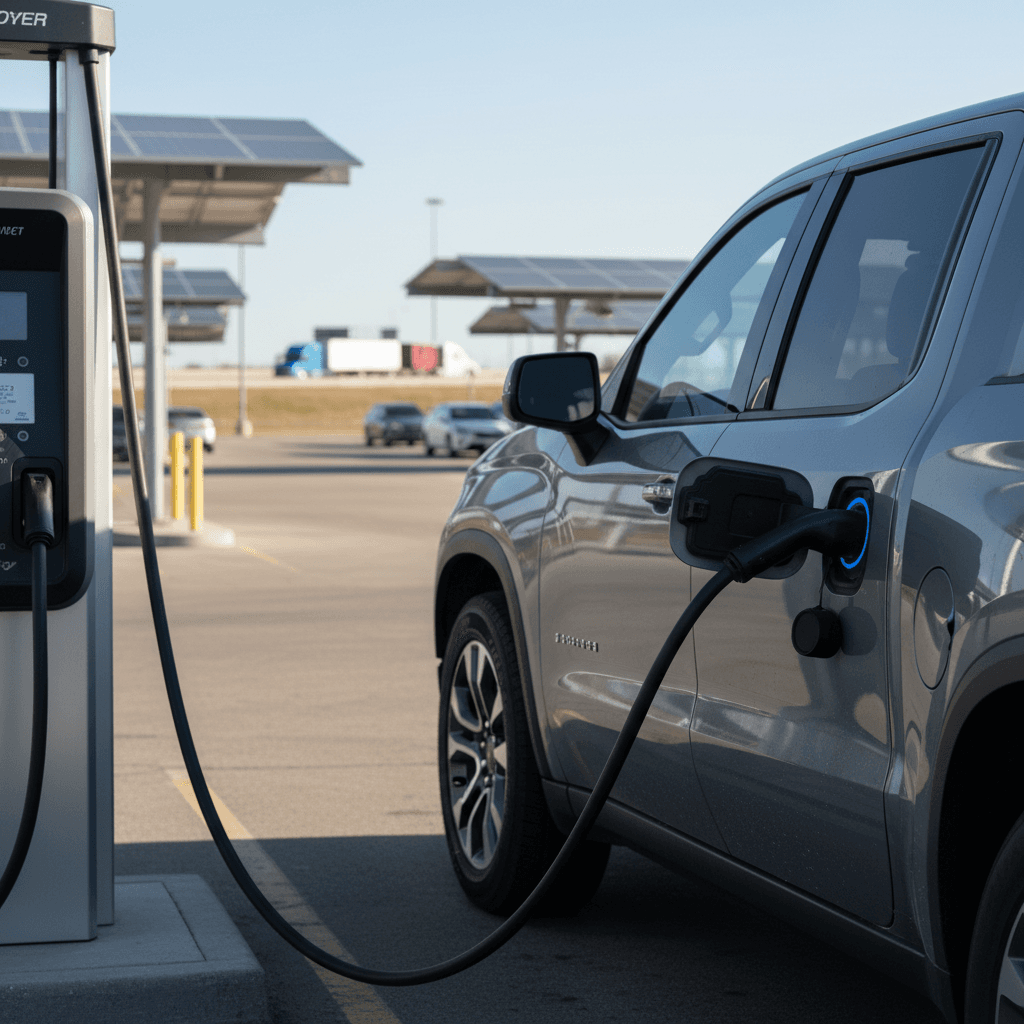
How towing kills (or doesn’t kill) your range
Every EV truck has the same towing dirty secret: drag is destiny. A low, enclosed utility trailer is one thing. A tall, square‑nose camper is another. Early drive events and first tests with the Silverado EV suggest the hit is big but manageable if you plan for it.
A real towing datapoint
- At 70–75 mph with a big camper, it’s entirely normal for range to drop 40–50% compared with solo highway driving.
- The Silverado EV’s huge pack softens the blow: losing 40% off 400 miles still leaves you with 240 miles of towing range, enough to skip some chargers.
- Hills, headwinds, and cold weather can stack on top of towing, so you don’t want to budget the last 10% of your pack.
Do not plan to the last mile when towing
What to expect on a 75‑mph road trip
Imagine you’re running I‑40 or I‑80, cruise set around 75 mph, cab full of people, bed full of stuff, no trailer. In a real Silverado EV, this is roughly what you can expect from a full charge if you’re not driving like a YouTube stuntman:
Silverado EV highway range scenarios
Approximate, assuming a large‑battery WT/LT/RST in good health
Mild weather, solo
65–75°F, light winds
- 70–75 mph cruise
- Realistic range: ~340–400 miles
- Arrive at charger with 10–15% remaining for comfort.
Cold weather, solo
Below ~35°F
- Cabin heat + cold pack
- Realistic range: ~260–320 miles
- Preconditioning and seat heaters help a lot.
Towing at speed
70 mph with sizable trailer
- Realistic range: ~180–260 miles depending on trailer shape/weight.
- Plan for frequent DC fast‑charge stops.
On a long‑distance day, what matters almost as much as total range is how quickly you can leave the charger. Here, the Silverado EV is a monster. That ~198‑kW average from 10–90% state of charge means you can add hundreds of miles of range in the time it takes to stretch, use the restroom, and argue over snacks.
Why the Silverado EV road-trips better than you’d think
How the Silverado EV compares to other electric trucks
Context is everything. On paper and in real‑world highway testing, the Silverado EV plays in the top tier of long‑range EVs, not just among trucks.
Highway-capable EV trucks: big-picture comparison
Simplified look at long‑range versions. Real‑world highway range will sit below these numbers but follows the same hierarchy.
| Model | Max Official Range | Notable Highway Test Result | High‑Level Takeaway |
|---|---|---|---|
| Chevy Silverado EV (RST / WT long‑range) | Up to ~492 mi | 400+ mi in 75‑mph test; ~484 mi in mixed range test | Class‑leading range and charging; heavy but shockingly capable. |
| Ford F‑150 Lightning (extended‑range) | Around mid‑200s–300s mi | Struggles to crack 300 mi in tough highway testing | Great as a suburban truck, challenged as a long‑haul tow rig. |
| Rivian R1T (max pack) | High‑300s to low‑400s mi | Can approach 350–400 mi at highway speeds when driven gently | Adventure‑focused; excellent efficiency for its size, but smaller pack. |
| GMC Hummer EV | Low‑300s mi | High consumption, range suffers at speed | Incredible toy, not a range champ. |
Numbers are approximate and focus on long‑range trims as of 2024–2025.
Don’t compare base to max packs
Buying a used Silverado EV: what range shoppers should look for
If you’re considering a used Silverado EV, the spec sheet matters even more than it does on a gas truck. One VIN might be a modest‑range Work Truck that lives for local jobs; another might be a max‑range RST built to inhale states. You need to know which is which before you start daydreaming about towing an Airstream to Utah in one shot.
Used Silverado EV highway-range checklist
1. Confirm battery and trim
Is it WT, LT, RST, and which battery (Standard, Extended, Max Range)? This sets your ceiling for highway range before you even start the truck.
2. Look at wheel and tire setup
Big 24‑inch wheels look sharp but tend to hurt efficiency. LT/WT models on smaller wheels are the road‑trip sleepers.
3. Review charging history
Frequent DC fast charging is normal for a work truck, but tools like a <strong>Recharged Score</strong> battery report can tell you whether that usage has actually impacted battery health.
4. Ask about towing use
Lots of heavy towing at high speeds isn’t a battery death sentence, but it does age components faster. Check for recent service, brakes, and cooling system work.
5. Check real-world consumption
On a test drive, reset the trip meter and do 15–20 minutes at highway speeds. Note mi/kWh; it’s a better indicator than guessing from the gauge alone.
How Recharged can help
Tips to maximize real-world highway range
You can’t change physics, but you can work with it. If your goal is to stretch the Chevy Silverado EV’s real-world highway range, especially on a long day or with a trailer, these habits pay off more than you’d think.
Six habits that buy you real miles
Especially helpful for towing or winter drives
Set a sane cruise speed
Dropping from 78 mph to 70 mph doesn’t feel heroic, but it can claw back tens of miles of range, particularly with a trailer.
Use cabin features smartly
In cold weather, rely more on heated seats and wheel instead of blasting the cabin heat. Precondition the truck while plugged in.
Plan chargers around 10–70%
The Silverado EV charges fastest in the mid‑range. On road trips, it’s often quicker to stop more frequently but charge in that sweet spot.
Respect wind and elevation
Strong headwinds and long grades will hammer your efficiency. Give yourself extra margin when crossing passes or driving into a storm front.
Pack and tow thoughtfully
Streamline your load where you can. A low, tapered trailer will always beat a tall, blunt one. Close the midgate and tailgate at speed.
Watch live efficiency
Use the truck’s energy screens to monitor mi/kWh in real time. Small tweaks in speed and following distance can add up over hours.
Frequently asked questions: Chevy Silverado EV highway range
Common questions about Silverado EV real-world range
Bottom line: how far will a Silverado EV really go?
Strip away the marketing and the Silverado EV is, at heart, a giant rolling battery with good manners at speed. On a normal day, in a long‑range truck, you can treat 340–400 miles of real‑world highway range as a believable planning number without a trailer, and half to two‑thirds of that when towing something big. That’s not science fiction, that’s what independent tests and early owners are living with.
If you’re trying to choose between trims or looking at a used Silverado EV, start with three questions: how big is the battery, how big are the wheels, and how far do I truly need to go between charges? Get those answers right and this truck becomes an honest, capable long‑haul partner rather than a range‑anxiety experiment. And if you’d like expert help reading battery reports and comparing highway range across used trucks, Recharged was built exactly for that, so your next road trip is limited by your playlist, not your state of charge.