If you’re eyeing a Porsche Taycan, you’ve probably noticed something striking: used prices are often far below original MSRP. The Porsche Taycan depreciation rate has been steep by traditional Porsche standards, and that can feel scary if you’re buying new, but it can be a huge opportunity if you’re shopping used.
Key takeaway
Porsche Taycan depreciation at a glance
Typical Porsche Taycan depreciation snapshots
Those aren’t official Porsche numbers, they’re a reflection of real‑world asking prices and transaction patterns across the used market. Exact depreciation will depend on year, trim, miles, options, and battery health, but the broad trend is clear: Taycan values drop quickly early on, then stabilize.
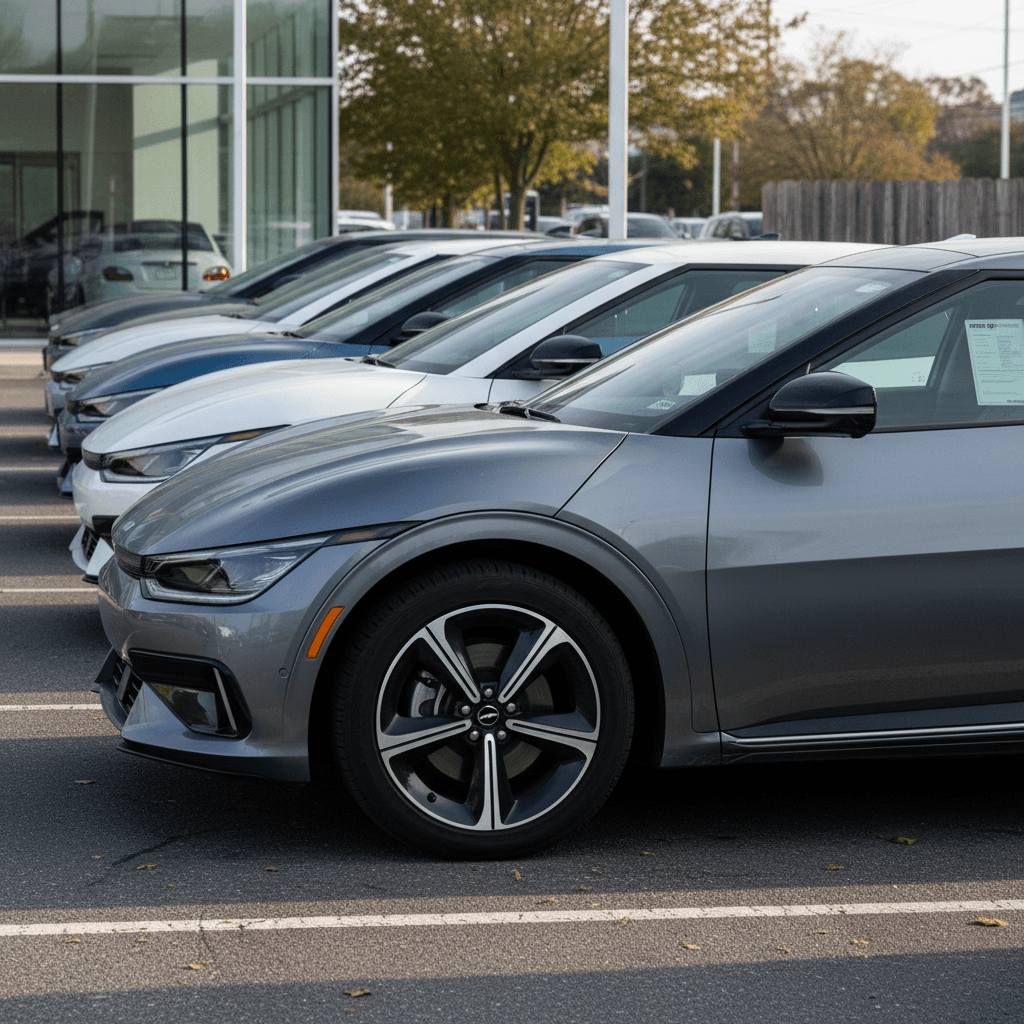
How fast does a Porsche Taycan depreciate?
Because the Taycan launched for the 2020 model year, we now have several model years of resale history. While every car is different, you can think of Porsche Taycan depreciation in three rough phases:
- Year 0–1: Heavy initial hit. Like most luxury cars, Taycans shed much of their "brand‑new" premium in the first 12–18 months. A typical 1‑year‑old car can be down roughly 20–25% from MSRP, sometimes more if it was heavily optioned.
- Years 2–3: Continued but slower decline. As more supply enters the used market and new EV incentives shift demand, Taycans often end up 40–50% below sticker by Year 3.
- Years 4–6: Depreciation flattens. Well‑kept, well‑optioned cars with healthy batteries start to behave more like used 911s and Panameras, still depreciating, but at a much slower annual rate.
Depreciation isn’t perfectly linear
Real-world Porsche Taycan price examples
To make the Porsche Taycan depreciation rate more concrete, here are simplified examples using realistic pricing ranges. These are illustrative, not offers from Recharged or any single dealer.
Illustrative Taycan depreciation paths
Approximate price evolution for common Taycan configurations in the U.S. market.
| Scenario | Original MSRP* | Age & Miles | Typical Used Asking Range | Approx. Depreciation |
|---|---|---|---|---|
| 2021 Taycan 4S, moderately optioned | $115,000 | 3 years / ~30,000 miles | $60,000–$70,000 | ~39–48% vs MSRP |
| 2020 Taycan Turbo, heavily optioned | $165,000 | 4 years / ~40,000 miles | $75,000–$90,000 | ~45–55% vs MSRP |
| 2022 Taycan RWD, lightly optioned | $90,000 | 2 years / ~20,000 miles | $60,000–$68,000 | ~24–33% vs MSRP |
| 2023 Taycan Cross Turismo 4S | $130,000 | 1 year / ~10,000 miles | $95,000–$110,000 | ~15–27% vs MSRP |
Actual pricing will vary by region, options, mileage, battery health and market conditions.
Why high MSRPs fall harder in dollars
Taycan depreciation vs other Porsche models
Compared with a 911
The 911 has historically been a depreciation outlier. Desirable trims often lose relatively little value and can even appreciate in special cases. Against that backdrop, Taycans depreciate faster:
- Early 911s may sit ~25–35% below sticker by Year 5.
- Similar‑age Taycans are commonly ~45–60% below sticker.
For brand loyalists, that spread is meaningful, but for shoppers entering the brand used, it’s a value play.
Compared with Panamera & Macan
Versus gas Porsche sedans and SUVs, Taycans aren’t quite as extreme:
- Panamera and Macan models still depreciate heavily in the first 3–5 years.
- Taycan tends to sit on the steeper side of that curve today, but not in a completely different universe.
The big difference: Taycan resale is far more sensitive to range, charging speed and incentives than its ICE siblings.
What this means if you’re buying used
Taycan depreciation vs other luxury EVs
How Taycan stacks up against other premium EVs
Broad patterns in the luxury EV used market
Tesla Model S
Model S values have also dropped quickly, driven by frequent price cuts on new Teslas, tech updates and intense competition. In many years, a Taycan and Model S of similar age show comparable % depreciation, though exact numbers vary by trim and software features.
Mercedes EQS & Audi e-tron GT
These German peers share many dynamics with Taycan: high MSRPs, rapid early depreciation, then a flattening curve. Range, DC fast‑charge performance and interior tech all influence how hard each car falls.
High-end SUVs (iX, Model X, etc.)
Luxury EV SUVs often show similar or slightly steeper dollar depreciation than Taycan because many were ordered with six‑figure stickers and heavy options. As a segment, premium EVs have simply depreciated faster than mass‑market EVs and many comparable gas vehicles.
The key point: the Porsche Taycan isn’t uniquely "bad" in depreciation among luxury EVs. It’s part of a broader pattern where early‑generation, high‑MSRP electric flagships were priced aggressively at launch, then re‑priced by the used market once incentives, competition and technology evolved.
Seven factors that drive Taycan resale value
While macro EV trends matter, the Porsche Taycan depreciation rate for any individual car depends on details. Here are the levers that move prices the most:
Key Taycan depreciation drivers
1. Battery health and usable range
For EVs, <strong>usable range</strong> is the new odometer. A Taycan whose battery retains strong capacity and can still comfortably cover highway commutes will command a premium over similar‑mileage cars with noticeable degradation.
2. DC fast-charging performance
Buyers care about how quickly the Taycan can charge on road trips. Cars that maintain high peak charging power at modern high‑speed chargers (and show healthy charging curves) are easier to sell and lose value more slowly.
3. Trim and performance level
Base RWD cars and 4S models have broad appeal and somewhat more approachable running costs. Turbos and Turbo S cars were often heavily optioned and can take a larger dollar hit, though they also attract enthusiasts who understand what they’re buying.
4. Options and interior spec
Porsche options add up quickly but don’t always return dollar‑for‑dollar in resale. Desirable packages (Performance Battery Plus, adaptive air suspension, premium audio, ventilated seats) help, but very niche or cosmetic options rarely hold full value.
5. Mileage and use profile
High mileage still matters, but buyers often tolerate more miles on an EV with documented battery health than on a similar‑priced gas car. Cars used mostly for highway commuting with regular maintenance typically fare better than short‑trip, fast‑charged‑only examples.
6. Warranty status and CPO history
Taycans under factory battery and powertrain warranties, or previously sold as Certified Pre‑Owned, usually have narrower depreciation bands. Out‑of‑warranty cars can be incredible deals, but they’re also where buyers demand more of a discount to cover risk.
7. Market timing & incentives
Changes in federal and state EV incentives, interest rates and gas prices all wash through used values. A favorable policy or a spike in gas prices can temporarily narrow depreciation; higher rates can push prices down as monthly payments climb.
Don’t ignore software and feature changes
Battery health, range and the Recharged Score
Because EV value is so tightly tied to the battery, it’s risky to rely on mileage and a quick test drive alone. Two Taycans with the same odometer reading can have very different remaining range and fast‑charging behavior, and that translates directly into resale value.
How Recharged helps you evaluate Taycan depreciation risk
Every vehicle on Recharged includes a battery‑focused Recharged Score Report
Verified battery health & range
Recharged uses deep diagnostics to estimate remaining battery capacity and real‑world range, not just what the dash says. That helps you understand whether a given Taycan is likely to keep holding value, or if future range‑related discounts are already baked into the price.
Transparent pricing vs market
Each Taycan on Recharged comes with a fair‑market pricing analysis that accounts for age, trim, mileage and battery health. Instead of guessing whether depreciation has gone too far (or not far enough), you see how that specific car compares across the wider market.
Ready to find your next EV?
Browse VehiclesWhy this matters for you
Which Taycan models hold value best?
It’s early to declare long‑term winners, but a few patterns are emerging in Porsche Taycan depreciation by trim and body style.
- Rear‑wheel‑drive Taycan (base): Often the entry point on price, especially as used inventory builds. Depreciation in percentage terms can be similar to higher trims, but lower MSRPs mean smaller dollar swings.
- Taycan 4S: A sweet spot for many buyers. Strong performance, all‑wheel drive and reasonable running costs make 4S models a favorite in the used market, supporting comparatively better resale within the Taycan family.
- Taycan Turbo / Turbo S: These cars suffer the largest dollar depreciation because they started from lofty MSRPs, but they also attract enthusiasts who specifically want maximum performance. Clean, well‑specced examples can see their curves flatten after the initial fall.
- Cross Turismo / Sport Turismo: Wagons and lifted variants appeal to a narrower but very passionate audience. In some regions they may depreciate slightly more at first; in others, their rarity can help long‑term values. Local demand matters a lot here.
Depreciation is regional
How to use depreciation to your advantage
The Porsche Taycan depreciation rate can be a feature, not a bug, if you approach the used market strategically. Here’s how to stack the odds in your favor.
Smart shopping checklist for a used Taycan
1. Target the right age window
For value, many shoppers focus on cars around <strong>3–5 years old</strong>. At that point, much of the early depreciation has already happened, but the car is still modern in range, charging and tech.
2. Prioritize battery reports over paint options
A gorgeous color and expensive leather are nice, but they don’t preserve value like a <strong>healthy pack and strong charging profile</strong>. Always insist on objective battery health data, Recharged includes it by default in the Recharged Score.
3. Compare trims on total cost, not just price
A cheaper base Taycan might need tires, brakes or software work soon; a slightly pricier 4S or Turbo with strong records and fresh consumables can be the better long‑term play. Look at taxes, insurance and financing too.
4. Check charging history and usage pattern
Frequent DC fast‑charging at high states of charge can stress any EV battery over time. Ask about the car’s charging routine, and favor examples that mostly lived on <strong>AC Level 2 home charging</strong> with occasional fast‑charge trips.
5. Lean on specialist inspections
A Porsche‑trained EV technician or a retailer like Recharged that specializes in electric vehicles is more likely to spot early signs of pack trouble, cooling issues or software quirks that could impact value later.
6. Consider your exit plan
Think about how long you plan to keep the car. If you’ll own it 5–7 years, today’s steep early‑life depreciation matters less than the price you pay now and the condition you maintain. If you’ll swap in 2–3 years, buy where the curve has already flattened.
Buying a Taycan through Recharged
If you’re considering a used Taycan, Recharged is built specifically for used EV buyers:
- Every vehicle includes a Recharged Score Report with verified battery diagnostics and fair‑market pricing.
- You can get financing, trade‑in offers, and even consign your current car, all in a fully digital process.
- Nationwide delivery and an EV‑specialist team help you shop confidently from wherever you are.
What this means for depreciation risk
Because the heavy lifting on battery health, pricing, and history is done for you, you’re less likely to overpay for a Taycan whose depreciation still has a long way to fall, and more likely to find one where the biggest drop is already behind it.
Porsche Taycan depreciation: FAQs
Frequently asked questions about Taycan depreciation
Bottom line: Is a used Taycan a smart buy?
The Porsche Taycan depreciation rate has been steeper than many traditional Porsches and similar to other six‑figure luxury EVs. For original owners, that can sting. For savvy used‑car shoppers, though, it’s an opportunity: you can access Porsche‑level performance, design and build quality for a fraction of the price that first buyers paid.
If you focus on 3–5‑year‑old cars, insist on clear battery‑health data, and compare prices against the broader market, you can dramatically reduce your depreciation risk. Platforms like Recharged are built to make that process simpler, pairing verified battery diagnostics with fair‑market pricing and EV‑specialist guidance so you can enjoy Taycan thrills without losing sleep over resale.