If you’re considering a Nissan Leaf, especially a used one, you’re probably trying to pin down the real Nissan Leaf annual service cost. EVs promise lower maintenance than gas cars, but “lower” can still mean a wide range depending on how and where you drive. Let’s break down what Leaf owners typically spend each year, which services you actually need, and how to budget for the long haul.
Quick answer
Why Nissan Leaf service costs are lower than gas cars
Compared with a similar compact gas hatchback, the Leaf has far fewer moving parts and no traditional engine maintenance. That’s the core reason annual Nissan Leaf service costs tend to stay modest.
Key reasons Leaf maintenance is cheaper
Fewer fluids, fewer moving parts, and gentle brakes add up over time.
No engine or transmission
Minimal fluid changes
Regenerative braking
Good news for used buyers
Average Nissan Leaf annual service cost
Your exact costs will depend on mileage, local labor rates, and how aggressive you are about preventative maintenance. But you can build a realistic budget using typical owner experiences and dealer menu-pricing as a guide.
Typical Nissan Leaf yearly cost range
Sample annual Nissan Leaf service budget
A simple planning tool based on typical U.S. shop rates and parts prices.
| Item | Typical Frequency | Est. Cost Each | Annualized Cost |
|---|---|---|---|
| Tire rotation | Every 6–8k miles | $30–$60 | $60–$120 |
| Wheel alignment check | Every 1–2 years | $100–$160 | $50–$80 |
| Cabin air filter | Every 1–2 years | $40–$80 | $20–$40 |
| Brake inspection | Yearly | Often included | $0–$30 |
| Brake fluid change | Every 2–3 years | $120–$180 | $40–$90 |
| Coolant service* | Every ~10 years | $250–$400 | $25–$40 |
| Misc. checks & software | Yearly | Included with inspection | $0–$30 |
Actual costs vary by region and mileage, but this table gives you a realistic starting point for budgeting.
Dealer vs. independent shop pricing
Nissan Leaf service items by mileage and age
Unlike gas cars, there isn’t a long list of “must-do” services every 15,000 miles on a Leaf. Still, certain checks and replacements will keep your EV safe and predictable as the years add up.
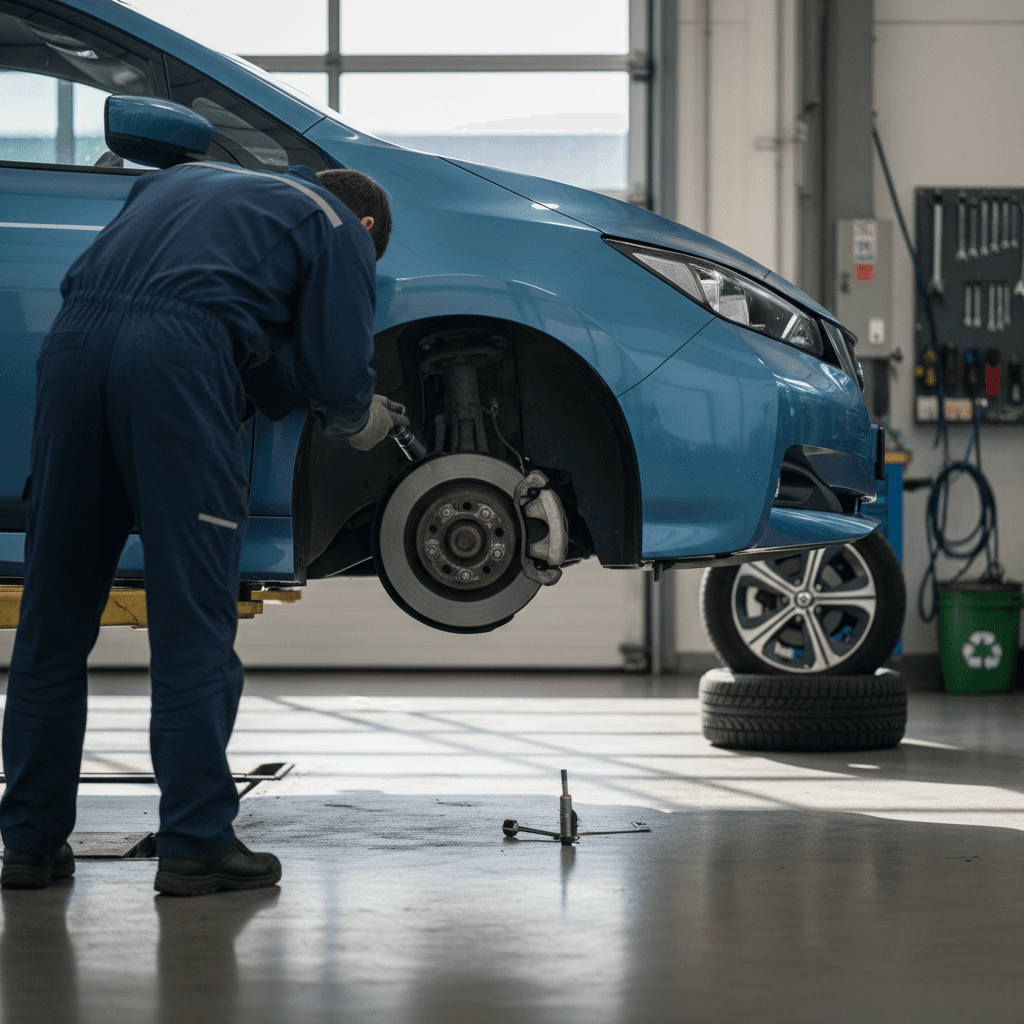
- Every 6,000–8,000 miles: Tire rotation and pressure check, quick brake and suspension look-over.
- Every 12 months: General inspection, software updates if available, cabin air filter check or replacement.
- Every 24–36 months: Brake fluid change; more often if you live in a humid or coastal area.
- Around 60,000–90,000 miles: More detailed suspension and steering inspection; first serious look at pad and rotor wear.
- Around 8–10 years: High‑voltage coolant service (for battery/inverter where applicable), 12‑volt accessory battery replacement if not done earlier.
Follow the owner’s manual, not just the service advisor
Common wear items and what they cost
Most of what you’ll pay to maintain a Leaf looks familiar: tires, alignment, and the occasional brake or suspension repair. The difference is how slowly some of those items wear on an EV with strong regenerative braking.
Typical Nissan Leaf wear-item costs
Budget for these over a 3–5 year ownership window.
Tires and alignment
- Tires: $600–$900 for a quality set installed.
- Alignment: $100–$160 when needed (after potholes or uneven wear).
Brakes and suspension
- Brake pads + rotors (axle): $300–$600 depending on shop.
- Suspension components: $300–$800 if struts, control arms, or bushings wear out at higher mileage.
Cabin and HVAC items
- Cabin air filter: $40–$80 installed, or less if you DIY.
- HVAC service: $150–$300 if A/C performance drops and needs a recharge or diagnosis.
12‑volt battery
- Replacement: $150–$300 installed, usually every 4–7 years.
DIY vs. shop work
Battery health and long‑term ownership costs
For most Leaf owners, the traction battery isn’t a yearly expense, but it’s the single biggest variable in long‑term cost. The Leaf’s early air‑cooled packs are more sensitive to heat and fast‑charging than the liquid‑cooled systems you see on many newer EVs. That’s why battery health matters even more if you’re shopping used.
What good battery health means
A healthy Leaf battery retains most of its capacity, which keeps range, performance, and resale value strong. On the dash, this shows up as more capacity bars and a realistic range estimate after a full charge.
- More usable miles per charge means fewer charging stops and less inconvenience.
- Better resale value if you decide to sell or trade later.
- Less risk of needing a major battery repair during your ownership window.
When battery issues hit your wallet
If a battery has degraded significantly, your costs show up indirectly:
- You may need to charge more often, especially in winter or on highways.
- Trip planning gets tighter, which can affect how, and how much, you use the car.
- Out‑of‑warranty battery replacement can run into the thousands of dollars, so it’s usually only justified on newer, higher‑value cars.
That’s why understanding battery health up front is critical for used‑Leaf shoppers.
How Recharged helps on battery health
Ready to find your next EV?
Browse VehiclesHow a used Nissan Leaf changes the cost picture
The Leaf has been on sale in the U.S. since 2011, which means there’s a deep used market with wide price and mileage spreads. The upside: you can buy into EV ownership with a relatively small payment and still keep annual service costs low, if you pick the right car.
Where used Leafs save you money
- Lower depreciation hit: The original owner already absorbed the biggest value drop.
- Mature service history: Many common issues are known and straightforward to fix.
- Cheaper insurance and registration: Often lower than new EVs with higher MSRPs.
Combine that with minimal yearly maintenance and you can get very low total cost of ownership.
Risks to watch on older Leafs
- Battery degradation: More years and miles usually mean some capacity loss.
- Out‑of‑warranty repairs: HVAC or onboard charger issues, while not common, are pricier out of pocket.
- Neglected maintenance: Skipped brake‑fluid or coolant services can show up as corrosion or premature component wear.
Service records and a trusted inspection go a long way toward filtering out problem cars.
Used Leaf shopping shortcut
7 ways to keep your Leaf’s annual service costs low
Practical steps to control yearly maintenance spend
1. Rotate tires on schedule
Uneven tire wear is one of the fastest ways to waste money on any car, EV or not. Stick to 6,000–8,000‑mile rotations and have the shop watch for alignment issues early.
2. Use eco or normal drive modes
Aggressive launches add stress to tires and, over the very long term, driveline components. Driving in Eco or Normal more often helps your tires and energy use.
3. Take advantage of regen
Coast and use regenerative braking instead of riding the pedal hard. You’ll extend brake life and reduce the chance of needing pad and rotor work during your ownership.
4. Price shop service work
There’s nothing wrong with using a Nissan dealer, but call at least one independent EV‑experienced shop for quotes. Labor rates and menu pricing can differ dramatically.
5. DIY the simple items
Cabin filters and 12‑volt batteries are approachable DIY jobs for many owners. If you’re comfortable with basic tools, online tutorials can walk you through safely.
6. Watch tire pressures monthly
Running under‑inflated tires increases wear and energy use. A cheap tire gauge and a five‑minute check each month can easily pay for themselves.
7. Address small noises early
Clicks, clunks, or vibration at low speeds can signal minor suspension or brake issues. Catching them sooner usually results in lower repair bills and better safety.
When to budget for bigger Leaf repairs
No car is maintenance‑free, and the Leaf is no exception. While many years will go by with nothing more than inspections and tire work, certain milestones are worth budgeting for so you’re not surprised.
Long‑term Leaf repair planning
Approximate timing and cost bands for less‑frequent but higher‑impact items.
| Item | When It May Show Up | Est. Cost Range | Planning Tip |
|---|---|---|---|
| 12‑volt battery | 4–7 years old | $150–$300 | If you’re buying used, ask when it was last replaced. |
| Suspension work | 80k+ miles, rough roads | $300–$800 | Listen for clunks or looseness over bumps; inspect yearly. |
| Brake pads/rotors | 60k+ miles, depending on driving | $300–$600 per axle | City driving with heavy regen can stretch pad life significantly. |
| HVAC or heat pump repair | High mileage or harsh climate use | $400–$1,200+ | If heating or A/C feel weak, have it checked before peak season. |
| High‑voltage battery repair/replace | More likely on older, high‑mileage cars | Several thousand dollars | Often not economic on very old Leafs; battery health is key when buying. |
These aren’t guaranteed repairs, but reasonable scenarios to consider if you plan to keep a Leaf past 8–10 years.
Don’t ignore safety‑related issues
FAQ: Nissan Leaf annual service cost and maintenance
Frequently asked questions about Leaf service costs
Bottom line: is a Nissan Leaf cheap to maintain?
If you’re looking for an EV with predictable, relatively low yearly expenses, the Nissan Leaf is hard to beat. There’s no engine to service, brake wear is slow thanks to regeneration, and most of your annual spend goes to familiar items like tires, alignments, and simple inspections. The real swing factor is battery health, especially on older, higher‑mileage cars, which is why choosing the right Leaf matters more than chasing the absolute lowest price.
Go in with realistic expectations, a budget of a few hundred dollars a year for routine service, plus a cushion for the occasional bigger item, and you’ll have a clear picture of what Leaf ownership looks like. And if you’re shopping used, working with an EV‑focused retailer like Recharged can give you verified battery diagnostics, transparent pricing, and expert guidance from first click to delivery, so your maintenance budget is based on facts, not guesswork.