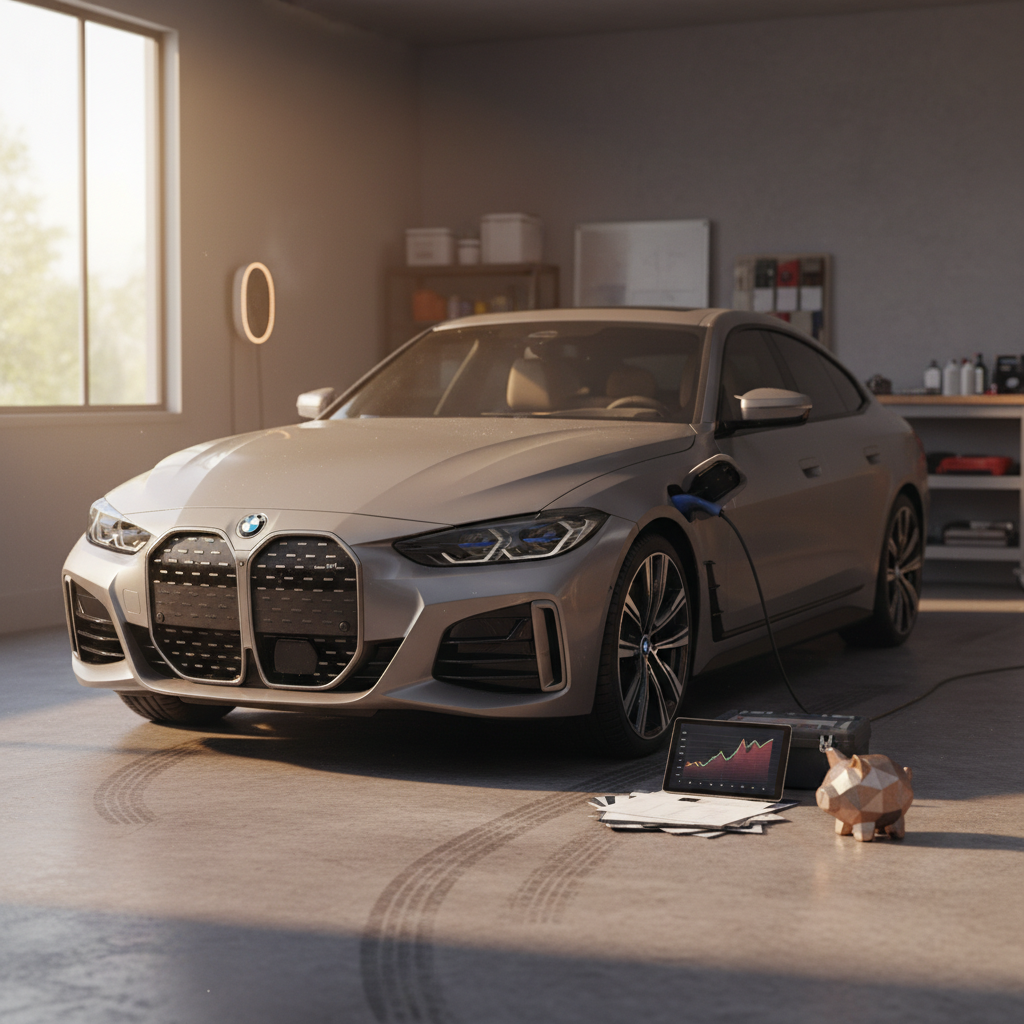
If you’re eyeing a used 2022 BMW i4, you’re probably asking the same question as every smart EV shopper: **how does the 2022 BMW i4 reliability rating really stack up**, especially as BMW’s first mass-market electric Gran Coupe ages into the used market? The good news: data from owner surveys and independent testers points to a car that’s better than average for its model year, *but* with a few important recalls and quirks you need to understand before you buy.
Short answer
2022 BMW i4 reliability rating: quick overview
2022 BMW i4 reliability at a glance
Put simply, the *headline* 2022 BMW i4 reliability rating is reassuring: formal testing organizations describe it as **more reliable than peers from the same model year**, and owner reviews largely back that up. Where you need to pay attention is **recall completion, software currency, and evidence of gentle fast-charging habits**, all of which have a bigger impact on your long-term experience than a raw score on a chart.
How reliable is the 2022 BMW i4 overall?
When the 2022 BMW i4 launched, it carried all the risk of a **first-generation electric drivetrain** in a brand known more for sport sedans than battery packs. Yet three-plus years on, a clear pattern has emerged: the i4 is **not a problem child**. Compared with other early EVs, it’s shaping up as one of the more dependable options, provided drivers keep up with software updates and recall work.
Reliability strengths
- Powertrain durability: Very few confirmed failures of the electric motor or gearbox.
- Solid build quality: Owners praise cabin materials, structural tightness, and low squeaks/rattles.
- Battery longevity (so far): Only modest real‑world range loss reported in typical mileage.
- BMW dealer network: Recalls and software campaigns are generally handled quickly and at no cost.
Known weak spots
- Software gremlins: Infotainment freezes, CarPlay glitches, and camera view quirks reported by some owners.
- High-voltage recalls: Early battery and drive‑motor software recalls require verification on any used car.
- Electronics sensitivity: Warning lights for drivetrain or HV system that turn out to be sensor or software related.
- Dependent on updates: Skipped or delayed software updates can leave known bugs unfixed.
First-year EV reality check
2022 BMW i4 reliability scores & owner ratings
If you’re hunting specifically for a **2022 BMW i4 reliability rating**, you’ll quickly notice that not every publication slaps a simple number or letter grade on the car. Some outlets still list early i4 years as “N/A” because sample sizes are small. Others now have enough data to offer a verdict, but keep the details behind paywalls.
How major sources rate 2022 BMW i4 reliability
Different organizations slice the data differently, but the story is consistent.
Independent testing
Owner review platforms
EV-specific studies
How to interpret mixed data
Most common 2022 BMW i4 problems
So what actually goes wrong on a 2022 i4? Looking across owner reports, forums, and early service data, a handful of **repeat themes** emerge. The good news is that most are **annoyances rather than catastrophic failures**, but they still matter when you’re choosing between two used cars on a lot.
Typical 2022 BMW i4 issues reported by owners
Frequency is based on patterns in owner discussions and service reports, not exact failure rates.
| Issue | How it shows up | Typical severity | What usually fixes it |
|---|---|---|---|
| Infotainment lag or freezes | Screen locks up, CarPlay drops, reverse camera view slow to return | Annoying but rarely dangerous | Software update or system reset |
| Random warning lights | “Drivetrain” or HV system warnings, car still drives normally | Mild to moderate stress | Dealer diagnostic; often sensor or software related |
| Charging-communication quirks | Public DC fast charger handshake failures or slower‑than‑expected speed | Inconvenient on road trips | Try different station; ECU or software updates if persistent |
| Wind noise / small rattles | Whistles near mirrors, creaks in cold weather | Minor | Door/trim adjustment under warranty |
| Tire and wheel wear | Heavy EV curb weight is tough on performance tires | Moderate running cost | Higher‑durability tire choice and regular rotations |
Most commonly reported 2022 BMW i4 problems skew toward electronics and software, not hardware breakdowns.
The silver lining
2022 BMW i4 recalls you should know about
A key piece of the 2022 BMW i4 reliability story is its **recall history**. Like many early EVs, the i4 has had multiple NHTSA recalls, particularly around its high‑voltage battery modules and electric drive‑motor software. On paper, that sounds scary. In practice, BMW has developed clear fixes, and many cars have already been updated.
- High-voltage battery module recall: Certain 2022–2023 i4s were recalled because battery cell modules may have been assembled in a way that could stress the module frame and, very rarely, lead to module failure or fire risk. The remedy is replacing specific modules identified by production records, free of charge.
- Drive-motor software recall: Another campaign covers electric drive‑motor software that can cause the high‑voltage system to shut down, resulting in sudden loss of drive power. BMW is fixing this through over‑the‑air (OTA) updates or dealer visits.
- Early “park outside” guidance: Early in the i4’s life, BMW and NHTSA urged some affected owners to park outside until battery-related recalls were addressed. That guidance is tied to specific VIN ranges and is no longer a day‑to‑day issue if the recall work has been completed.
- Assorted small recalls: There have also been smaller i4 campaigns (for things like labeling, safety systems, or control units) that are minor but still worth verifying.
Non‑negotiable step for used buyers
Battery life, degradation & high-voltage concerns
For most EV shoppers, long‑term **battery health** matters more than any single reliability score. The 2022 i4 uses BMW’s latest-generation lithium-ion pack, and so far, it’s behaving well in the real world. Three to four years in, there are **very few credible reports of extreme degradation** on normally driven cars. Typical owners report range that’s close to new, especially if they mostly AC charge at home and avoid living on DC fast chargers.
What we’re seeing from 2022 i4 battery performance
Early data and owner anecdotes paint an encouraging picture.
Degradation so far
Charging behavior
Warranty backup
How Recharged checks battery health
2022 BMW i4 reliability vs other luxury EVs
Reliability only means something in context. Compared to other luxury EVs launched around 2021–2023, the 2022 BMW i4 is aging **better than you might expect** from a first‑year electric BMW, and better than some headline‑grabbing rivals.
How the 2022 BMW i4 stacks up against rival EVs
High-level comparison of early reliability patterns across popular luxury EVs from the same era.
| Model & year | Overall reliability feel | Most common complaints | Biggest worry for used buyers |
|---|---|---|---|
| 2022 BMW i4 | Better than average for a first‑gen EV | Software glitches, warning lights, a handful of battery/drive software recalls | Verifying recall completion and update history |
| 2022 Tesla Model 3/Y | Mixed, highly dependent on build batch | Panel gaps, interior squeaks, 12V and trim issues, connectivity bugs | Build-quality variation and out‑of‑warranty repairs |
| 2022 Polestar 2 | Below average in some surveys | Infotainment issues, electrical faults, occasional driveline concerns | Dealer coverage and parts availability in some regions |
| 2022 Mercedes EQE/EQC (where sold) | Average to below average | Electronics issues, charging quirks, some early pack/software concerns | Out-of-warranty repair costs and complex electronics |
The i4 is not perfect, but it tends to suffer fewer high‑profile failures than some competitors launched around the same time.
Big picture
What to check before buying a used 2022 BMW i4
A strong reliability rating doesn’t mean every individual car is a winner. The i4 you actually buy will live or die on **how it was driven, charged, and serviced**. Here’s a focused checklist to separate the keepers from the headaches.
Used 2022 BMW i4 reliability checklist
1. Run a full recall check by VIN
Use the BMW or NHTSA recall tool to confirm every recall related to high‑voltage batteries, drive‑motor software, and safety systems is marked as completed, or get written confirmation from the seller that an appointment is booked.
2. Confirm software is up to date
Ask which software version the car is currently on and when it was last updated. An i4 that’s missed years of updates is more likely to have lingering bugs than one regularly brought in or updated over the air.
3. Get objective battery health data
Don’t rely on a vague “range seems fine.” Request a **battery state‑of‑health report**. At Recharged, this is built into the Recharged Score, so you see how much usable capacity and estimated real‑world range you’re actually buying.
4. Inspect charging behavior
Test both AC Level 2 and, if possible, DC fast charging. Look for error messages, handshake failures, or unexpectedly low charging speeds that might hint at damaged connectors or control modules.
5. Listen and look during a test drive
On your drive, pay attention to **wind noise, rattles, and squeaks**, especially over rough pavement. They’re not deal‑breakers on their own, but persistent noises can signal prior collision repairs or hard use.
6. Review tires, brakes, and suspension
EVs are heavy. Uneven tire wear, tired bushings, or noisy suspension components tell you this i4 has lived a hard life. Factor that into price, or walk away if the seller won’t address obvious wear items.
7. Check charging history, if available
Some service records or connected‑car logs can hint at how often the car was DC fast‑charged and regularly charged to 100%. Heavy, hot‑weather DC use with constant 100% charges is tougher on any pack, BMW included.
How Recharged simplifies this homework
Is the 2022 BMW i4 a good used buy?
Why the 2022 i4 is worth a serious look
- Better-than-average reliability rating for its model year, especially strong among early luxury EVs.
- Mature BMW chassis and interior wrapped around the new electric hardware, less of a science experiment than some rivals.
- Strong battery performance to date with limited evidence of severe early degradation.
- Comprehensive recalls and software fixes available at no cost, as long as you verify completion.
When you might want to think twice
- If you’re extremely risk‑averse about any recall history, a later model year with fewer campaigns on its record may let you sleep better.
- If the specific car you’re considering shows spotty service history, missed updates, or heavy DC fast‑charge use, you’re inheriting somebody else’s experiment.
- Out-of-warranty BMW electronics repairs can be expensive; a **strong CPO or extended warranty** can be worth the premium for peace of mind.
Put it all together and the **2022 BMW i4 reliability rating lands in a very comfortable place** for most shoppers: not flawless, but clearly better than average for its model year and for a first-generation EV. If you choose a car with clean history, completed recalls, up‑to‑date software, and documented battery health, you’re likely to enjoy years of quick, quiet, low‑drama driving. And if you’d rather have a team do that vetting for you, shopping a 2022 i4 through Recharged gives you transparent diagnostics and EV‑savvy guidance from the first click to delivery.