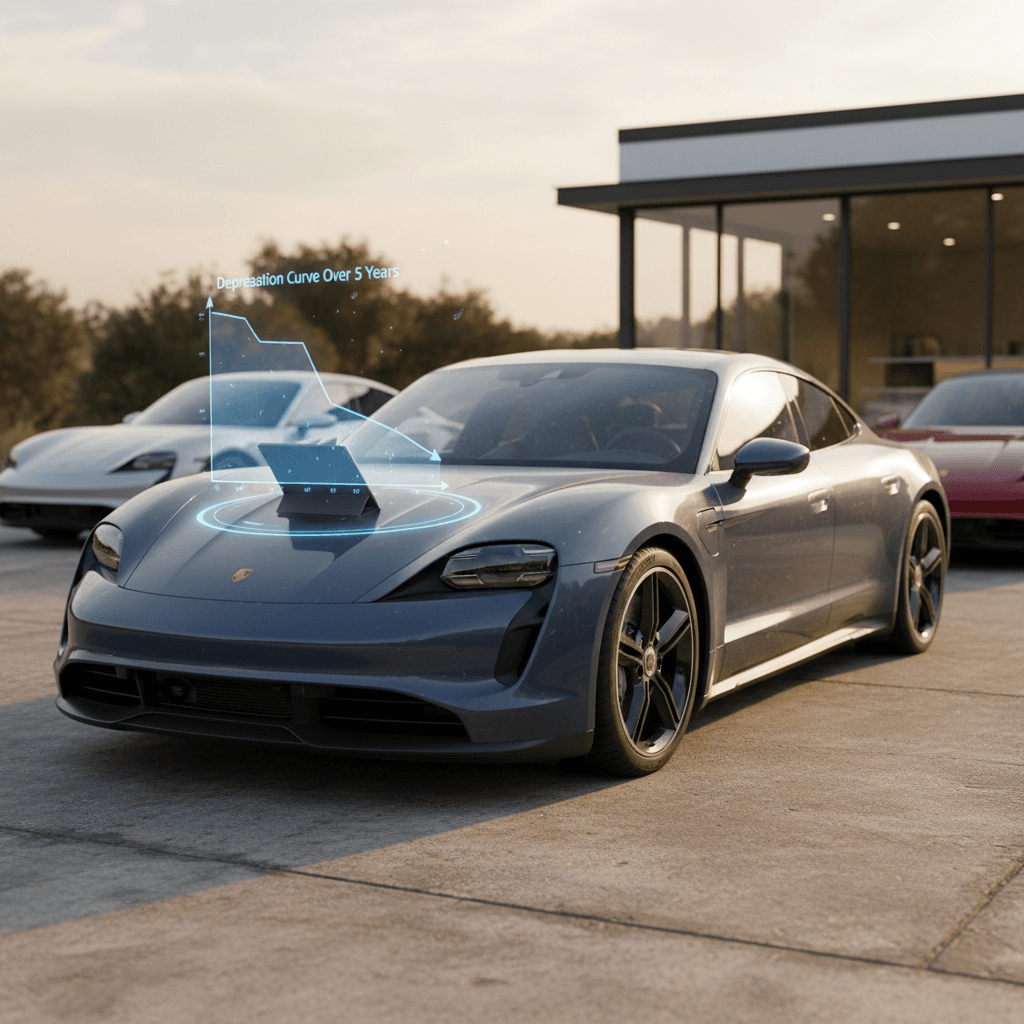
If you’ve looked at used listings, you already know the Porsche Taycan depreciation curve over 5 years is steeper than most people expected. That can be painful if you bought new, but it’s a huge opportunity if you’re shopping used today. In this guide, we’ll walk through real‑world Taycan depreciation patterns, what’s driving them, and how to buy or sell at the smartest point on the curve.
In one sentence
Why the Porsche Taycan depreciation curve matters
Depreciation is the single biggest cost of owning a luxury EV like the Taycan. Insurance, electricity, and maintenance matter, but the quiet budget‑killer is how fast the car loses value in the first half‑decade. Understanding the Taycan’s curve helps you decide whether to buy new or used, how long to keep the car, and when to sell or trade it.
- If you’re buying new, you want to know how much value you’ll burn in the first 3–5 years.
- If you’re buying used, you want to target the point where someone else already ate the ugly part of the curve.
- If you already own a Taycan, you want to time your exit before the next big dip, like a major update or facelift.
Luxury EVs behave differently
Headline numbers: how much does a Taycan lose in 5 years?
Typical 5‑year Porsche Taycan depreciation (U.S. market, 2026)
Different data sources peg the Taycan’s 5‑year depreciation anywhere from the mid‑50% range to over 70%, depending on trim, options, and how you define “normal” mileage. The most realistic picture for a U.S. buyer in 2026 is this: expect a well‑kept Taycan to lose a bit under 60% of its original MSRP over five years, with performance trims and heavily optioned cars often falling a little harder.
Good news for used buyers
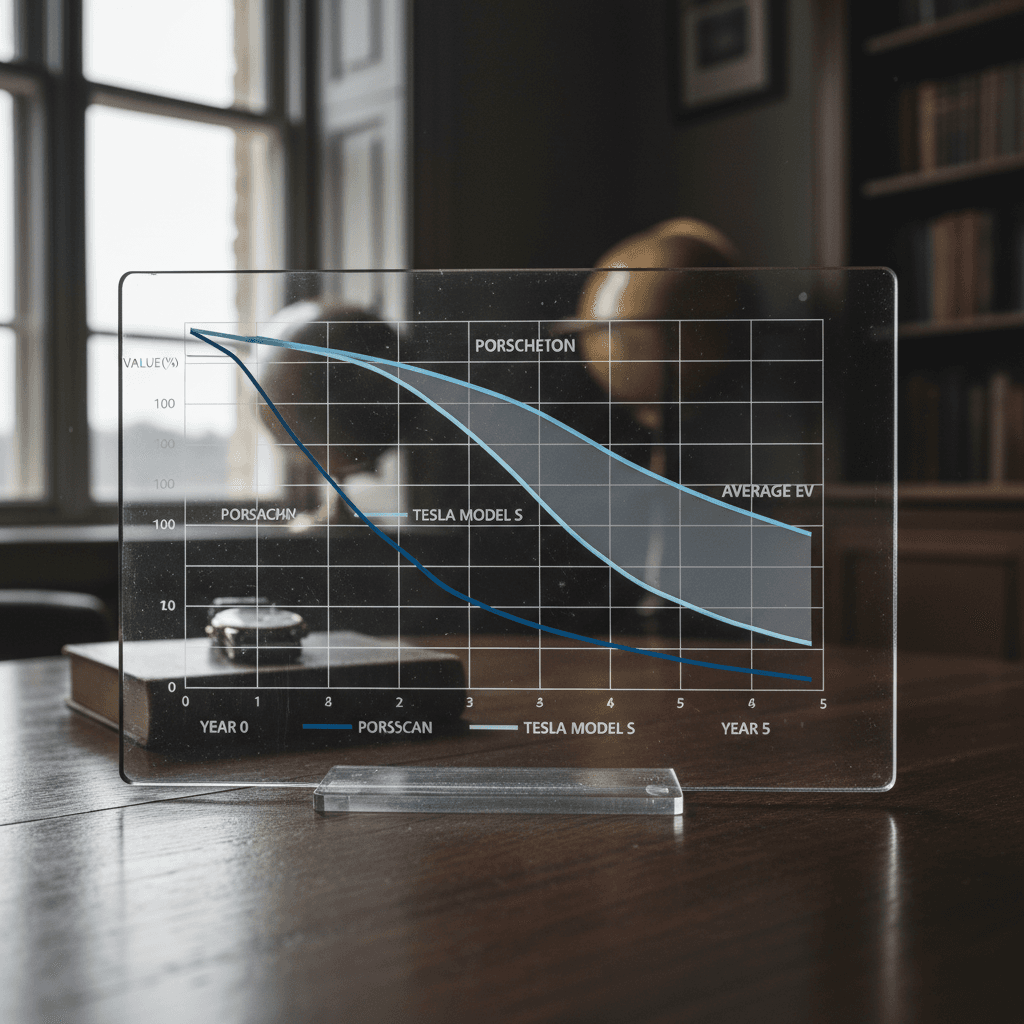
Year-by-year Porsche Taycan depreciation curve (0–5 years)
No two Taycans follow the exact same path, options, mileage, and market timing all matter. But if you plot hundreds of transactions, the 5‑year curve tends to look like this for a new Taycan purchased around $100,000–$120,000 and driven 10,000–12,000 miles per year:
Illustrative Porsche Taycan 5‑year depreciation curve
Approximate retained value for a typical Taycan in the U.S. market with average mileage and condition. Numbers are rounded to keep the big picture clear, not to predict an individual car.
| Age | Approx. value vs. original MSRP | Typical price on an original $110k car | What’s happening |
|---|---|---|---|
| Brand new (MSRP) | 100% | $110,000 | You’re paying full sticker (or close) for the very latest car. |
| Year 1 | ~80–85% | $88,000–$94,000 | Initial hit once the car is titled; demo/CPO cars often live here. |
| Year 2 | ~65–70% | $72,000–$77,000 | Used‑EV softness and tech updates start to bite; big bargains emerge. |
| Year 3 | ~50–60% | $55,000–$66,000 | The steepest part of the curve is mostly behind you as a buyer. |
| Year 4 | ~45–55% | $50,000–$60,000 | Values stabilize; condition and battery health matter more than age. |
| Year 5 | ~40–45% | $44,000–$50,000 | Most of the ‘luxury new‑car penalty’ is gone; remaining drops are slower. |
These figures are directional examples based on observed market behavior, not guaranteed resale values.
Why ranges, not single numbers?
What drives the Taycan’s steep early depreciation?
Four big forces behind Taycan depreciation
Most of the 5‑year story comes down to these themes.
1. Luxury car math, Porsche edition
High‑end cars almost always depreciate faster in absolute dollars, because there are fewer buyers for expensive used vehicles. A well‑optioned Taycan can sticker far north of $130,000. When that car loses 55–60% of its value in five years, you’re talking about $70,000+ in depreciation, even if the percentage isn’t wildly different from other luxury sedans.
2. Rapid EV tech improvements
Range bumps, charging‑speed improvements, and software updates arrived quickly after the Taycan launched. That makes early cars feel ‘older’ faster than a comparable gas‑powered Porsche. When a mid‑cycle refresh adds meaningful range and performance, it tends to pull values down on earlier years.
3. A whipsaw used‑EV market
From 2021–2024, the EV market went from shortages and markups to oversupply and softening demand. Rising interest rates didn’t help. That cocktail pushed resale values down broadly for used EVs, and a pricey electric Porsche takes the brunt of that swing.
4. Fear (and misunderstanding) of batteries
Many shoppers still worry that a 5‑year‑old EV is a ticking time bomb, even though battery warranties and real‑world data suggest otherwise. That perceived risk shows up directly in resale values, and it’s why verified battery‑health data on a used Taycan can be such a value‑add.
The options trap
How battery health impacts Taycan value
The good news: Taycan batteries have generally held up better than the depreciation headlines might make you think. The less‑good news: the market doesn’t always distinguish between a car with a strong pack and one that’s been fast‑charged hard and driven year‑round in harsh climates.
What buyers worry about
- Range loss: Will a 4‑ or 5‑year‑old Taycan still deliver practical real‑world range?
- Replacement cost: The fear of a five‑figure battery bill down the line.
- Fast‑charging fatigue: Concern that frequent DC fast charging has hurt long‑term health.
- Warranty timing: How close the car is to the end of the 8‑year / 100,000‑mile battery warranty.
What the market actually rewards
- Verified battery health: Documented state‑of‑health numbers and charging history.
- Service records: Regular dealer or specialist maintenance, software updates, and recalls.
- Mileage moderation: A 5‑year‑old Taycan with <50,000 miles is easier to sell and finance.
- Third‑party validation: Independent inspections or battery‑health reports from EV‑focused retailers like Recharged.
How Recharged helps de‑risk a used Taycan
Ready to find your next EV?
Browse VehiclesTaycan vs Tesla Model S and other luxury EVs
Viewed in isolation, a 55–60% value drop in five years sounds brutal. Put the Taycan next to other six‑figure EVs, though, and the picture gets more nuanced. Many luxury EVs have taken bigger percentage hits than mainstream EVs, simply because the starting price is so high.
Illustrative 5‑year depreciation comparison: Taycan vs rivals
Approximate 5‑year depreciation behavior for popular luxury EVs, using typical trims and MSRPs. These are directional, not precise forecasts.
| Model | Typical new MSRP | Approx. 5‑yr value loss | Approx. 5‑yr resale value | Notes |
|---|---|---|---|---|
| Porsche Taycan | $95k–$130k | +55–60% | ~40–45% of MSRP | Steep early losses; stabilizes after year 3. |
| Tesla Model S | $80k–$110k | +60–65% | ~35–40% of MSRP | Heavy cuts from new‑car price reductions plus used‑EV softness. |
| Mercedes‑Benz EQS | $105k–$130k | +60–70% | ~30–40% of MSRP | Luxury sedan with deep incentives when new; used prices under pressure. |
| Lucid Air | $80k–$140k | +60–70% | ~30–40% of MSRP | Smaller used‑car audience and young brand increase volatility. |
The Taycan’s 5‑year percentage drop is in the same ballpark as, or sometimes slightly better than, other high‑end EVs, even if the raw dollar losses are eye‑watering.
How the Taycan stacks up
Smart buying strategies: where to sit on the curve
The right point on the 5‑year curve depends on whether you prioritize the latest tech, total cost of ownership, or long‑term peace of mind. Here’s how I’d think about it if I were in your shoes.
Which Taycan window fits you best?
1. New or nearly new (0–18 months old)
You’ll pay the highest price and take the steep first‑year hit, but you get the freshest software, options, and the full warranty. This only pencils out if the emotional value of being the first owner justifies what is, frankly, the worst part of the curve.
2. Lightly used sweet spot (2–3 years old)
Here’s where the curve has already bent downward. By year 2 or 3, a Taycan is often <strong>20–35% cheaper than new</strong>, yet still feels current, has lots of warranty left, and benefits from early service campaigns and updates.
3. Value play (4–5 years old)
At this point, the car has typically lost around half or a bit more of its MSRP. You’re buying at or near the ‘shoulder’ of the curve where each additional year costs you less in dollars of depreciation, especially if you plan to keep the car another 4–5 years.
4. Long‑term keeper (5+ years, bought used)
If you’re comfortable owning the car into its 8‑ to 10‑year mark and beyond, a 5‑year‑old Taycan can be a bargain. Focus hard on <strong>battery health, maintenance history, and charging habits</strong>. Saving money up front only matters if the car remains dependable.
Practical rule of thumb
Selling or trading your Taycan: timing the market
If you already own a Taycan, your goal is the mirror image of the smart‑buyer strategy: you want to exit before another big downward step. That’s often tied less to the odometer and more to what’s happening in the wider EV market.
Key timing signals for Taycan owners
Watch these markers when planning a sale or trade‑in.
Upcoming model refresh
If Porsche announces a significant facelift or range boost, especially for the trim you own, used values for prior years can soften as buyers hold out for the update or as new‑car incentives rise.
Interest‑rate shifts
Higher borrowing costs hit expensive used cars hardest. If rates are falling, you may see stronger trade‑in offers as more buyers can comfortably finance a high‑line used Taycan.
Charging & tax policy
Changes in federal or state incentives, or in access to fast‑charging networks, can expand or shrink the pool of shoppers. Keep an eye on EV credits and infrastructure news in your state.
How Recharged can help you sell smarter
If you plan to replace the Taycan with another EV
- Shop both trade‑in and instant‑offer channels; the best number may not come from a Porsche store.
- Consider timing your sale in late spring or early fall when used‑EV demand is often stronger.
- Compare your offers to what similar Taycans actually sell for on EV‑focused platforms, not just listing prices.
If you’re exiting EVs entirely (for now)
- Factor in your total cost of ownership, including saved fuel and maintenance, before you beat yourself up over depreciation.
- Ask for offers from buyers who understand EVs; they’re more likely to value software updates, charger bundles, and battery‑health proof.
- Use a Taycan‑specific trade‑in guide to sanity‑check any offer you receive.
Porsche Taycan 5‑year depreciation FAQ
Frequently asked questions about Taycan depreciation
Bottom line: how to use the curve to your advantage
The 5‑year Porsche Taycan depreciation curve is undeniably steep, but that doesn’t make the car a bad buy. It means you have to be smart about where you step onto, and off of, that curve. Let someone else absorb the first few years of drop whenever you can, treat battery health as seriously as you’d treat an engine on a gas car, and be realistic about how long you’ll keep the vehicle.
If you’re shopping, focus on 2‑ to 5‑year‑old examples with clean histories, documented service, and verified battery‑health reports. If you’re selling, watch the market for major tech updates, policy changes, and rate moves that can swing used‑EV demand, and get offers from EV‑savvy buyers, not just generic wholesale channels.
Recharged was built around exactly these pain points. With Recharged Score battery diagnostics, fair‑market pricing tools, trade‑in and consignment options, financing, and nationwide delivery, you can let the Taycan’s steep depreciation work for you instead of against you, whether you’re moving into your first electric Porsche or moving on from the one in your garage.