The Porsche Taycan proved that an electric sedan can feel like a real Porsche, but by 2026 it also has a clear pattern of **common problems**, from high-voltage battery recalls to 12‑volt failures and finicky charging behavior. If you’re eyeing a new or used Taycan, understanding these issues up front is the difference between getting a great enthusiast EV and inheriting someone else’s science project.
What this 2026 guide covers
Overview: Porsche Taycan Problems in 2026
Compared with early Tesla products, the **Taycan’s hardware is generally robust**. Most of the pain points owners report fall into four buckets: battery and charging faults, 12‑volt battery failures, software and infotainment bugs, and a handful of significant recalls (including a high‑voltage battery fire risk and a backup‑camera compliance fix). None of this makes the Taycan a “bad” car, but it does mean you can’t treat it like an overbuilt 911 that you just buy and forget.
Porsche Taycan reliability landscape in 2026
Quick reliability snapshot by model year
Porsche Taycan reliability by model year (through 2025)
High-level view of how common problems and recalls stack up by Taycan model year as you shop in 2026.
| Model year | Overall reliability impression | Problem hot spots | Shopping notes for 2026 buyers |
|---|---|---|---|
| 2020 | Highest reported issues | High‑voltage battery recall exposure, early software bugs, 12‑volt failures, charging errors | Shop only with full recall history, strong warranty, and clean charging/battery service records. |
| 2021 | Still glitchy but better | Similar to 2020 plus early on‑board charger and charging‑port issues | Value can be compelling, but only if serviced at a Porsche dealer and software is current. |
| 2022 | Middle-of-the-road | Ongoing software and infotainment quirks, some 12‑volt and charging complaints | More mature than 2020–2021; prioritize cars with documented software updates and clean battery diagnostics. |
| 2023 | Trending better | Fewer early-build defects; still some charging and 12‑volt stories | Sweet spot for many used shoppers, just verify recall completion and DC fast‑charge behavior. |
| 2024 | Pre-refresh | Strong performance and range; issues mostly software and charging-network related | Great if you want near‑new tech at a discount. Make sure all battery and camera recalls are done. |
| 2025 | Major refresh | New battery pack, more range, updated software and UI | Lower known defect rate so far, but watch for first‑year refresh gremlins and ensure factory bulletins are applied. |
Use this as a starting point; always check the specific vehicle’s recall and service history.
How Recharged vets Taycans
High-voltage battery failures, recalls, and degradation
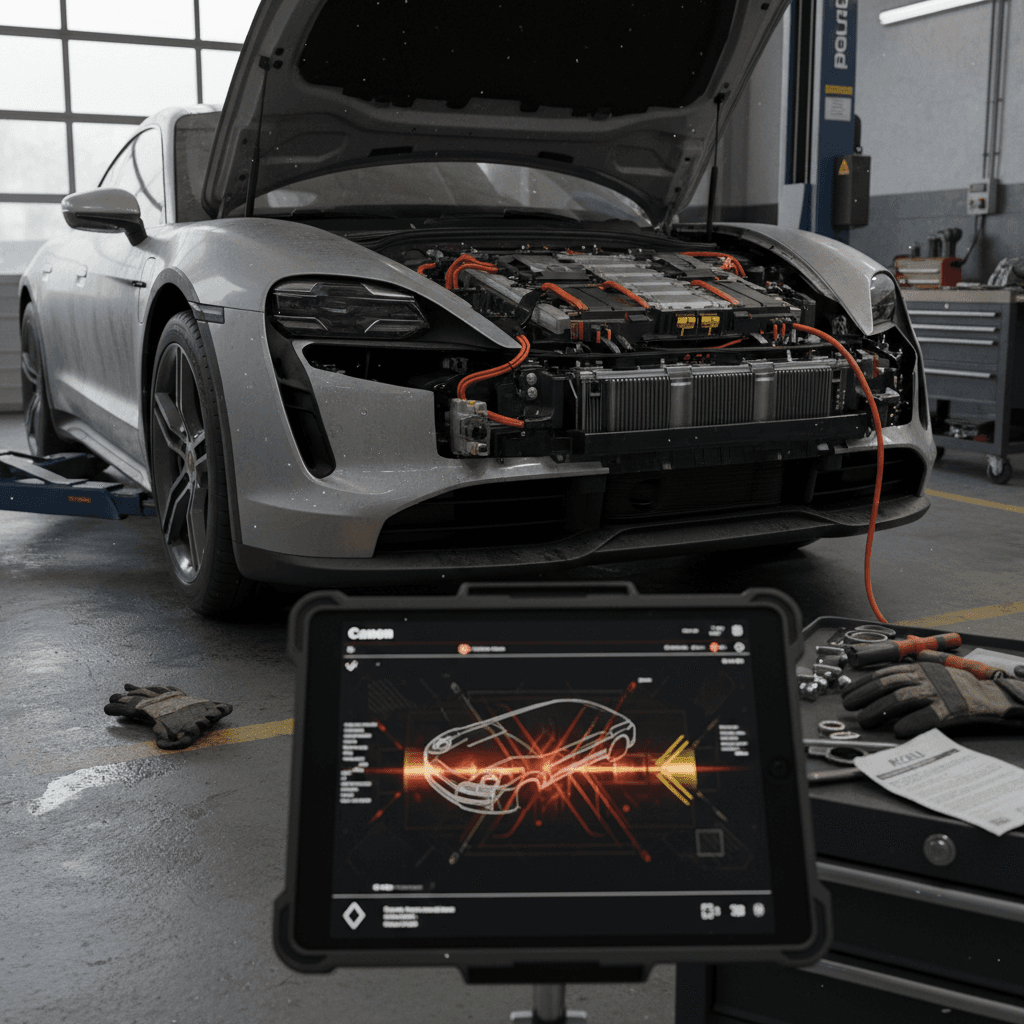
The Taycan’s 800‑volt architecture is a real engineering flex, but it also means its **high‑voltage (HV) battery pack is the heart of both performance and risk**. By 2026, the story looks like this: catastrophic failures and fire‑risk recalls are uncommon but serious, while modest degradation and range loss are normal and manageable if you understand what you’re buying.
- High‑voltage battery recall on 2020–2024 cars for potential internal short circuits that can increase fire risk and trigger “electrical system error” warnings.
- Isolated cases of HV battery module failures leading to complete no‑start conditions or extended time in the shop for module replacement.
- Normal but real range loss on early high‑mileage cars, especially those fast‑charged hard on road‑trip duty.
- 2025‑onward refresh introduces updated battery hardware and control software aimed at improving efficiency and durability.
Don’t ignore red battery warnings
1. Catastrophic HV battery faults
These are the dramatic cases: warning lights, the car dropping into limp mode, or refusing to start at all. They’re sometimes linked to the recall for potential internal short circuits in 2020–2024 packs, or to individual module failures.
- Usually handled under warranty or recall.
- Repairs can involve module replacement or, rarely, an entire pack.
- Car may be down for weeks while parts ship and Porsche approves repairs.
2. Everyday battery degradation
Every EV loses some range with time and mileage. Most Taycan owners are seeing modest, gradual loss, not catastrophic fade, especially if they mainly AC charge at home and avoid 0–100% swings.
- Check real‑world range at 100% charge against EPA ratings and recent road‑test data.
- Ask for a battery report or health scan where possible.
- Heavy DC fast‑charging and high‑speed road‑trips accelerate wear.
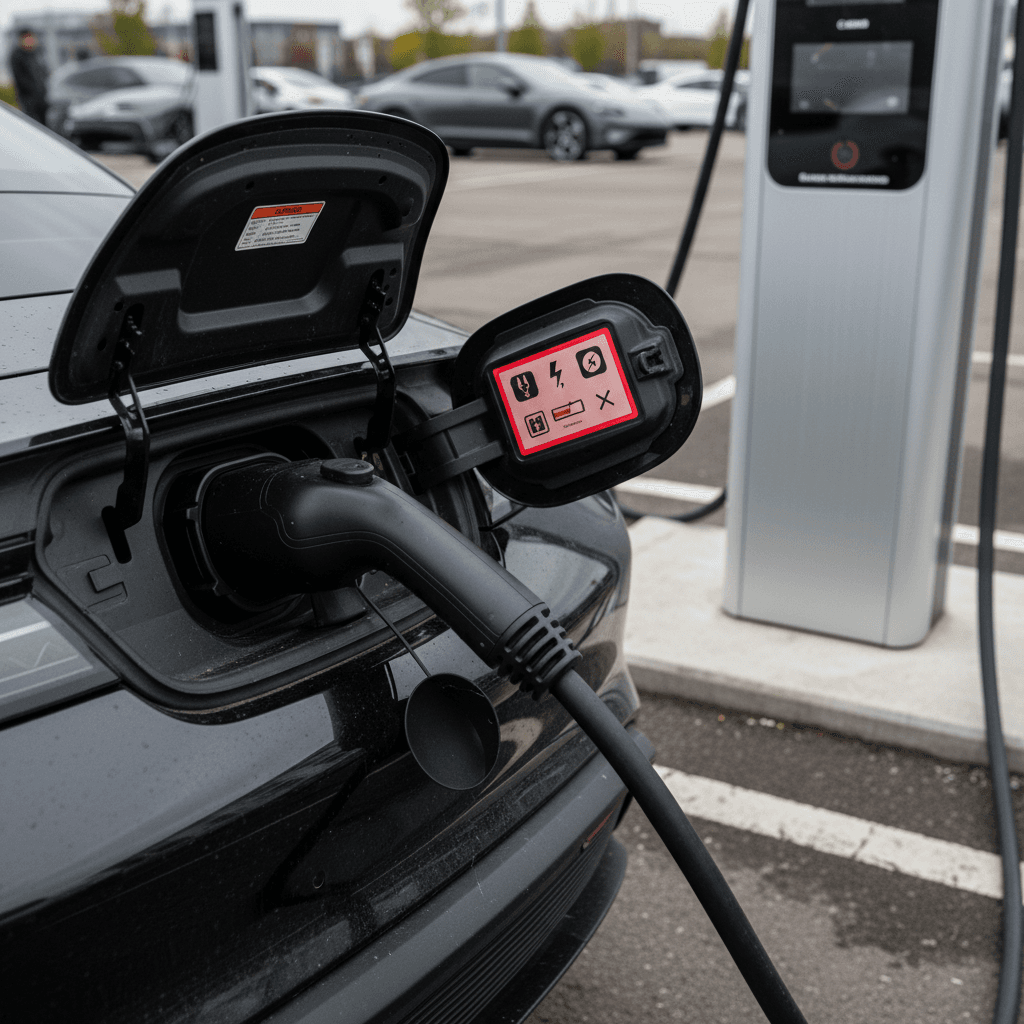
HV battery due diligence when buying a Taycan
1. Confirm all battery recalls are completed
Run the VIN through NHTSA’s site or a Porsche dealer and ensure every open high‑voltage battery campaign is closed. Avoid cars with outstanding HV battery recalls unless the seller will complete them before delivery.
2. Ask about HV battery repairs
Any history of pack replacement, module repair, or repeated electrical system errors deserves extra scrutiny. A one‑time module replacement under warranty isn’t a deal‑breaker; multiple visits for the same issue might be.
3. Check real-world range
On a full charge, compare the displayed range to what similar Taycans achieve in independent highway tests and owner reports. Big gaps can signal either heavy past use or battery health concerns.
4. Review fast-charging behavior
During a DC fast‑charge, the Taycan should ramp up quickly and hold a strong rate before tapering. Chronic throttling or sudden session drops across different stations can indicate car‑side issues.
Charging problems: DC fast charging and home charging quirks
Charging is where the Taycan’s sophistication occasionally becomes a liability. Owners report more issues with **charging reliability and error messages** than with motors, brakes, or the suspension. The catch: many of these problems live at the intersection of picky Porsche hardware and inconsistent public infrastructure.
Most common Taycan charging complaints
What owners are actually running into on the road
DC fast-charging session failures
Some Taycans, especially early cars, are fussy with certain DC fast‑charging networks. Symptoms include:
- Session starts then stops with an error.
- Car refuses to initiate a charge until you unplug, lock, and walk away for a few minutes.
- Reduced peak charging power versus spec.
AC home charging issues
Most Taycans live on AC charging, and a few owners report:
- “Charging error” messages with certain wallboxes.
- On‑board AC charger failures, sometimes downgraded from 22 kW to 11 kW replacements.
- Sensitivity to marginal wiring or shared circuits.
Network vs. vehicle blame game
Because many Taycan issues only show up on particular networks or locations, owners often get bounced between the station operator and the dealer. That makes good documentation, and tests at multiple sites, critical when diagnosing a problematic car.
Don’t test charging on just one station
Charging tests to perform before you buy
1. AC home-style charging test
If possible, plug the Taycan into a Level 2 wallbox similar to what you’ll use at home. Watch for error messages, unexpected charge stops, or noisy cooling fans indicating stress on the system.
2. DC fast-charge from ~10–20%
Take the car to a reputable DC fast charger, start around 10–20% state of charge, and film the session. You’re looking for a quick ramp to a healthy kW figure and a stable charge with no error messages.
3. Compare session data
If the seller or dealer can share past charging logs, look for repeated failures or abnormally low peak speeds. Those patterns matter more than one perfect demo on sale day.
12-volt battery and “dead Taycan” complaints
Like many modern EVs, the Taycan uses a **12‑volt battery to run its control electronics and safety systems**. When that battery goes bad or is stressed by parasitic loads, the whole car can appear dead, even if the big high‑voltage pack is full. By 2026, 12‑volt problems are one of the most common threads on owner forums.
- Taycan left parked for several days returns with a dead 12‑volt system and needs a tow.
- 12‑volt battery replacements that are costly due to coding and packaging complexity.
- Cars that have dash cams, always‑on telematics polling, or keys stored too close to the vehicle seeing accelerated 12‑volt wear.
- Some owners reporting 12‑volt battery and DC‑DC converter replacements on 2022–2024 cars.
How to keep the Taycan’s 12-volt healthy
What a failing 12-volt looks like
- Car won’t unlock or “wake up.”
- Random warning lights or fault messages that clear after a jump.
- Vehicle going completely dead after sitting a few days.
On a test drive, ask directly whether the 12‑volt battery has ever been replaced and if so, at what mileage.
Why 12-volt issues matter to your wallet
On the Taycan, 12‑volt battery replacement isn’t a simple big‑box‑store job. Parts and labor can run into the four‑figure range once you add coding and dealer time.
Buying a car that has already had its 12‑volt battery replaced once, within warranty and by a Porsche dealer, is often a plus, not a minus, as long as the root cause (like parasitic drains) has been addressed.
Software, infotainment, and driver-assistance glitches
Mechanically, the Taycan is very Porsche. Digitally, it’s more like a premium smartphone that happens to weigh 5,000 pounds. Across 2020–2025 cars, **software and infotainment bugs** are the single most common annoyance owners talk about, especially on early builds that haven’t had regular updates.
Typical Taycan software and electronics issues
Annoying more often than dangerous
Infotainment & connectivity
- Center screen freezing or rebooting mid‑drive.
- Slow startup when you first get in.
- Bluetooth drops and Apple CarPlay/Android Auto glitches.
- Quirks with the Porsche Connect app not waking or updating the car reliably.
Driver-assistance and cluster bugs
- Random driver‑assist warnings without clear cause.
- Adaptive cruise or lane‑keep temporarily unavailable.
- Range estimator that suddenly swings up or down after software updates.
- False or overly sensitive parking sensor alerts.
The upside: software is fixable
Key Taycan safety recalls through 2025
By early 2026, Taycan owners in the US have seen several high‑profile recalls. None of them make the car inherently unsafe once fixed, but they do mean you should be meticulous about recall completion when you’re evaluating a car, especially a discounted early build.
Major Porsche Taycan recalls relevant in 2026
This is not an exhaustive recall list; it highlights the campaigns most shoppers ask about. Always run the exact VIN on NHTSA or with a Porsche dealer.
| Recall focus | Model years affected | Typical symptoms or risks | What the fix involves |
|---|---|---|---|
| High-voltage battery internal short-circuit risk | 2020–2024 | Electrical system error warnings, potential increased fire risk even when parked | Dealer inspection and, if needed, HV battery module or pack repair/replacement plus software updates. |
| Backup camera image loss (compliance issue) | 2020–2025 | Rear camera image may flicker, freeze, or fail to display in Reverse, violating FMVSS rules | Dealer software update to the infotainment/camera system. |
| Assorted software/PCM campaigns | 2020–2024 (ongoing on later years) | Random warning lights, range‑estimate oddities, charging behavior bugs | Multiple software updates and control‑unit reprogramming campaigns applied at the dealer. |
Treat recall completion as a hard requirement, not a nice‑to‑have, when buying any Taycan.
Always verify recall status by VIN
How these problems affect ownership costs and depreciation
Taycan owners aren’t just fighting gremlins for fun; issues and recalls have real **economic consequences**. The model’s sharp depreciation, especially on early years, is a direct product of EV market shifts, aggressive lease deals, and shoppers internalizing the risk of expensive electrical repairs.
- Early Taycans (2020–2021) can sell at a steep discount versus original MSRP because buyers price in potential battery and electrical work.
- Out-of-warranty repairs on the HV battery, 12‑volt system, or on‑board charger can quickly erase the savings of buying cheaply if you choose the wrong car.
- On the flip side, depreciation makes a well‑vetted used Taycan an unusually compelling performance EV value in 2026.
Where you’ll likely spend more than a gas Porsche
- Electrical diagnostics and control‑unit work.
- 12‑volt battery and DC‑DC converter replacement.
- Complex HV battery or charging‑system repairs if they fall outside warranty.
Where you’ll likely spend less
- No oil changes, spark plugs, or exhaust repairs.
- Brake wear is low thanks to strong regen, especially on city‑driven cars.
- Fewer moving parts in the drivetrain versus a twin‑turbo V6 or V8.
For the right owner, those savings can offset some of the EV‑specific risk, if you buy the right example.
A used Taycan is risky or brilliant, your prep decides which
Shopping a used Taycan in 2026: what to check
If you approach the Taycan like any other luxury used car, you’re missing the point. It’s an 800‑volt, software‑defined performance EV, and your inspection needs to reflect that. Here’s how to separate solid cars from science experiments when you shop in 2026.
Essential checks for a used Porsche Taycan
1. Start with the battery health
Ask for a recent battery health report or diagnostics. On Recharged, this is built into the <strong>Recharged Score</strong>; elsewhere, you may need a Porsche dealer to pull a report. Avoid cars with unexplained, large capacity loss or repeated battery fault codes.
2. Verify recall and software campaign completion
Print a recall report using the VIN, then match it against service records. Look for multiple software campaign entries, this usually means the car has been kept current, not that it’s a lemon.
3. Review charging history and behavior
During your test, perform both AC and DC charging checks. Ask sellers how the car was usually charged (home Level 2 vs. constant DC fast charging) and at what state of charge they typically plugged in. Highway‑fast‑charged, high‑mileage ex‑fleet cars are higher risk.
4. Ask pointed questions about 12-volt failures
Has the car ever been completely dead? How many times has the 12‑volt been replaced, and under what circumstances? A single warranty replacement is fine; a pattern of dead‑car events is a warning sign.
5. Drive it like you’ll own it
On your test drive, treat the car like an owner: use navigation, CarPlay, adaptive cruise, and the full HVAC. You’re looking for freezes, faults, or features that mysteriously don’t work after 20–30 minutes.
Why buying through an EV-focused retailer helps
When a Taycan’s problems are a deal-breaker
Every used EV requires some tolerance for complexity, but there are times when a Taycan’s history should push you to walk away and keep shopping. In 2026, the market has enough supply that you don’t need to talk yourself into a bad example.
- Repeated high-voltage battery or charging system repairs with no clear resolution.
- Open safety or battery recalls the seller refuses to complete before sale.
- A history of the car going completely dead (12‑volt) multiple times without clear cause documented and fixed.
- Missing service records on a heavily discounted early‑build 2020–2021 Taycan.
- Dealers or sellers who are vague or defensive about software update history, battery reports, or prior buyback/lemon claims.
If it feels like a project, assume it is
FAQ: Porsche Taycan common problems in 2026
Frequently asked questions about Porsche Taycan problems
The Porsche Taycan is one of the most compelling performance EVs on sale in 2026, but only if you buy it with your eyes open. High‑voltage battery recalls, picky charging behavior, 12‑volt failures, and software quirks are all part of the reality of owning an early, complex electric Porsche. The good news is that these issues are now well‑mapped. If you insist on complete recall history, current software, documented battery health, and clean charging behavior, or lean on a curated marketplace like Recharged to do that work, you can enjoy the Taycan’s instant torque and Porsche dynamics while keeping the headaches to a minimum.