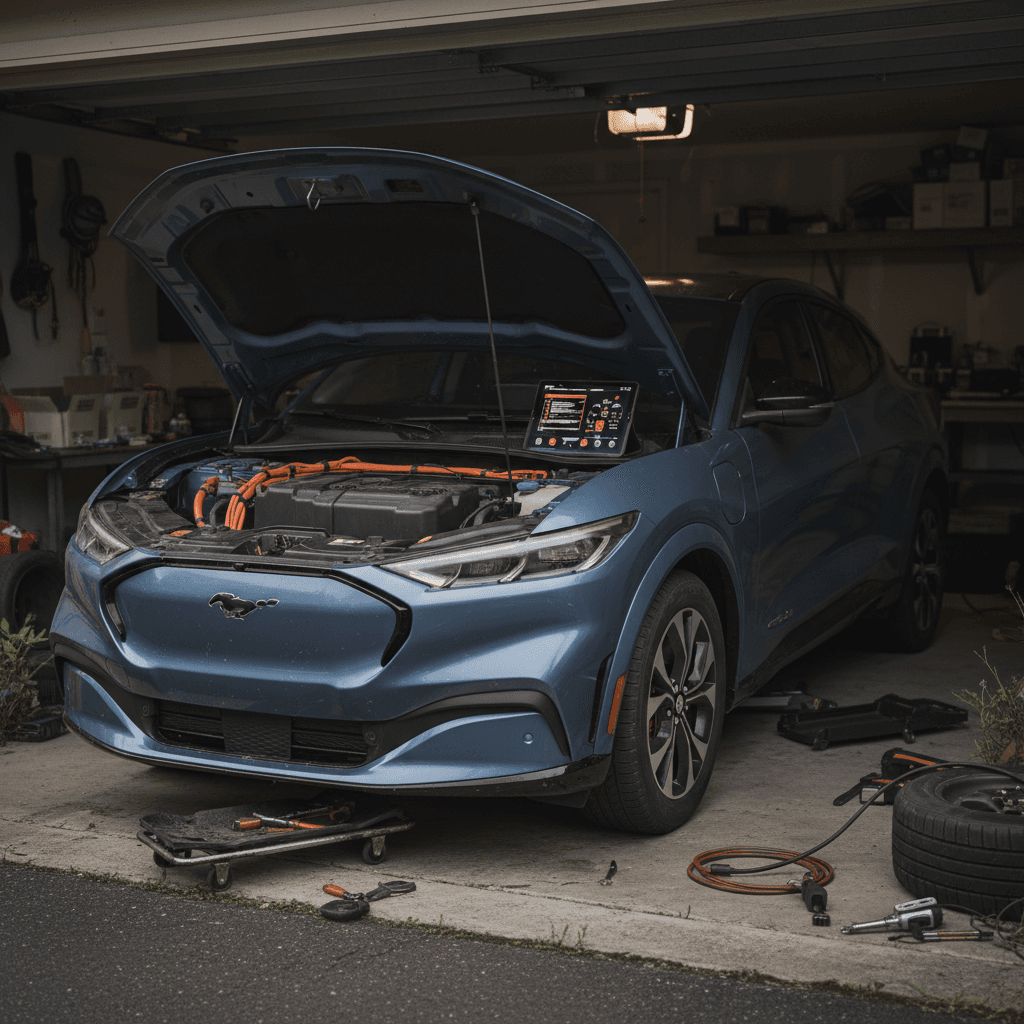
Search traffic around 2024 Ford Mustang Mach-E problems has climbed as more of these electric SUVs hit American roads, and the used market. If you’re considering one, you’re probably asking two questions: how reliable is it really, and which issues are worth worrying about versus internet noise.
Quick take
Overview: How reliable is the 2024 Mustang Mach-E?
By its fourth model year, the Mustang Mach-E is no longer a brand‑new experiment. Ford has addressed some early teething issues, especially around the high‑voltage battery contactor, and tightened up assembly. At the same time, newer software‑heavy features like BlueCruise and SYNC 4 continue to generate owner complaints when updates misfire or sensors misbehave.
2021–2025 Mustang Mach-E trouble spots at a glance
New vs. used risk profile
Major recalls impacting the 2024 Mustang Mach-E
Recalls don’t automatically mean a car is unreliable, but they do point to design or software weaknesses you should understand. Several high‑profile Ford campaigns touch 2024 Mustang Mach-E models or the broader Mach‑E lineup.
Key Mach-E recalls relevant to 2024 owners
These are the headline safety campaigns Mach-E shoppers should know about. Exact applicability depends on build date and configuration; always run the VIN on Ford’s recall checker before you buy.
| Issue | Model years impacted | What happens | Risk level | Fix type |
|---|---|---|---|---|
| Electronic rear door latches may not unlock at low battery state of charge | 2021–2025 | Rear doors can remain locked after the driver exits, potentially trapping rear passengers until power recovers or the fault clears. | High (safety / entrapment) | Software update to body control modules; usually via dealer, sometimes OTA. |
| Rearview camera image can freeze, lag or fail to display when reversing | 2021–2025 (SYNC 4 vehicles) | Camera view may not appear or may be delayed on the central screen when you shift into Reverse. | Medium (backing visibility) | SYNC 4 software update, frequently delivered as an OTA campaign. |
| High‑voltage battery junction box / contactor overheating under DC fast‑charge and hard acceleration | Primarily 2021–2022; some later builds inspected | Overheating internal contactors can deform or weld, causing sudden loss of drive power or preventing the vehicle from starting. | High (loss of motive power) | Software calibration plus, in some cases, physical HVBJB replacement at a dealer. 2024s are built with the revised hardware. |
| Various earlier campaigns (windshield bonding, suspension bolts, etc.) | Mostly 2021–2022 | Quality issues from first‑year production that can show up on early build used vehicles. | Low–Medium | Mostly one‑time dealer repairs. Important history if you’re considering a used low‑miles early‑build car. |
Not every 2024 Mach-E is affected by every recall, check by VIN, not model year alone.
How to see if a 2024 Mach-E has open recalls
Battery and charging problems
For most shoppers, the question behind "2024 Ford Mustang Mach-E problems" is, "Will the battery and charging system hold up?" The good news: genuine high‑voltage pack failures on 2024s are rare. The not‑so‑good news is that owners still report charging‑related headaches that can be confusing if you’re new to EVs.
- Legacy contactor concerns: Early‑build 2021–2022 Mach‑Es saw high‑profile recalls for overheated battery contactors during repeated DC fast charging and hard launches. 2024 models use revised hardware and calibrations, so this is more of a historical footnote unless you’re buying an older used car.
- DC fast‑charging inconsistency: Some owners report charge sessions that stop early, ramp down aggressively after 60–70% state of charge, or fail to start until they restart the car and charger. Many of these cases trace to network-side faults, but outdated vehicle software can also play a role.
- Onboard charger / AC charging quirks: Home Level 2 charging is generally reliable, but occasional complaints involve the car refusing to start a charge after a power blip, or reporting "charging fault" with certain third‑party wall boxes until firmware is updated on both sides.
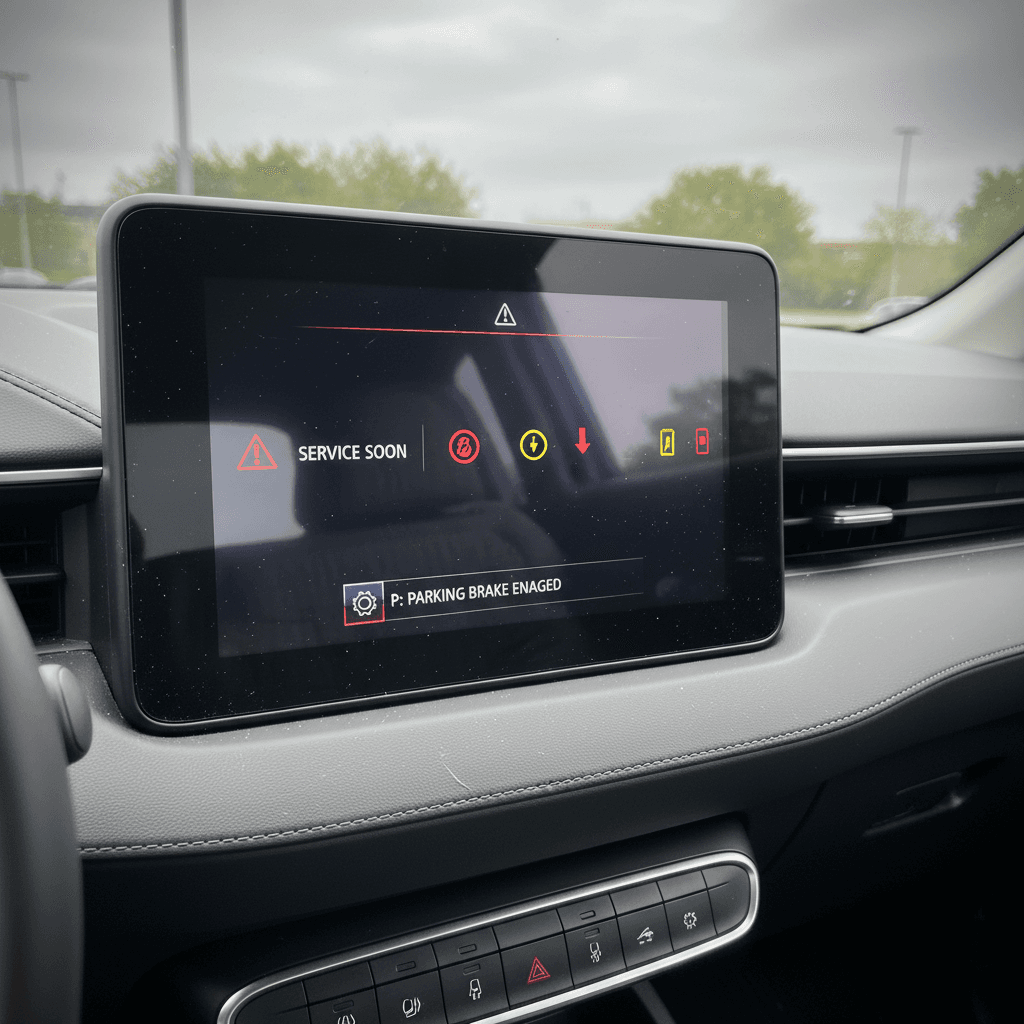
- 12‑volt battery sensitivity: As with many EVs, a weak 12‑volt battery can cause a cascade of strange warnings, everything from "Service Vehicle Soon" to disabled driver‑assist, even though the high‑voltage pack is fine. This sometimes surfaces on cars that sit for long periods on the lot.
What a serious battery problem usually looks like
What 2024 owners typically report
- Stable real‑world range close to the EPA numbers when driven moderately.
- Normal, gradual cold‑weather range loss that improves as temperatures warm up.
- Occasional charge‑rate throttling after back‑to‑back DC fast‑charge sessions, which is expected thermal protection, not a defect.
What to check on a used Mach-E
- Session history on public chargers, if the previous owner can share it, heavy DC fast‑charging on road‑trips is fine, but constant 100% fast charges can age the pack faster.
- Any history of HVBJB / contactor replacement on earlier years in the service records.
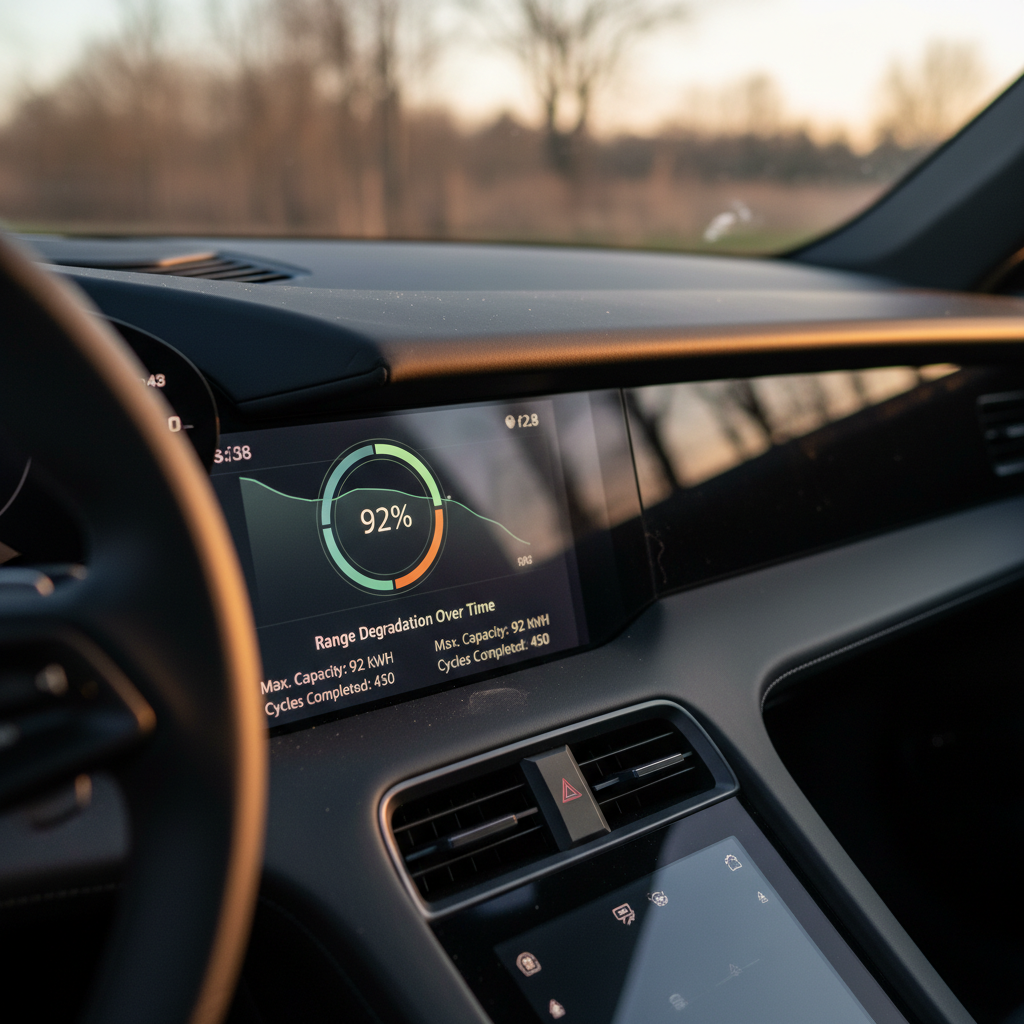
- A current battery health report. Every Recharged vehicle gets a Recharged Score with pack diagnostics, so you can see degradation trends instead of guessing.
Software, SYNC 4 and screen glitches
Like most modern EVs, the Mach-E is a rolling computer. The 15.5‑inch center screen and SYNC 4 software tie into everything from climate control to cameras and navigation. When they behave, the experience is solid. When they don’t, it can feel like the entire vehicle is acting up.
Common 2024 Mach-E software complaints
Most are annoying more than dangerous, but they matter for daily usability.
Center screen freezes or reboots
Some drivers report the SYNC 4 screen becoming unresponsive or rebooting mid‑drive, which can temporarily kill audio, nav and climate controls.
Often fixed by a later OTA update or a hard reset, but chronic cases may need dealer module reprogramming.
Rear camera lag or black screen
A major recall targets a bug where the rear camera view may freeze, lag or fail to appear when you shift into Reverse.
Ford’s remedy is a software update, sometimes OTA, sometimes performed at a dealership.
Update failures
Owners occasionally see updates that fail to install, leaving features like BlueCruise or charging logic in a half‑updated state.
In the worst cases, the car may be undriveable until a dealer completes the update with a direct connection.
Best practices for OTA updates
BlueCruise and driver-assist issues
Ford’s hands‑free highway system, BlueCruise, is a key selling point on upper‑trim 2024 Mach‑Es. It also shows up frequently in owner complaints when it doesn’t work as advertised. The pattern across forums and service bulletins is consistent: the hardware is usually fine, but software and sensor visibility can get in the way.
- Hands‑free won’t engage: The most common complaint is that BlueCruise falls back to regular adaptive cruise or lane‑keep only, even on mapped highways where it previously worked. Causes range from lane‑keep being turned off in settings to a glitchy software build that needs a dealer flash or OTA fix.
- "Driver facing camera fault" messages: Some owners see warnings that the driver‑monitoring camera can’t see their face, especially after certain software versions. Glare on the sensor, aftermarket tint, or a dirty interior windshield around the camera housing can also trigger faults.
- Windshield and sensor issues: Replaced windshields that aren’t properly calibrated, or contamination between the glass and camera unit from the factory, can cause lane‑centering and BlueCruise dropouts in bright sun or rain.
- Subscription provisioning problems: In a few cases, BlueCruise shows as active in the Ford account but won’t work in the car until a dealer or Ford support resets the subscription status in the backend systems.
Remember: BlueCruise is Level 2
Build quality, noise and HVAC complaints
By 2024, Ford’s Cuautitlán Assembly Plant had several years of Mach‑E production behind it, and big early QA missteps (like poorly bonded windshields) became less common. That said, owners still report day‑to‑day annoyances that come with many mass‑market EVs.
Everyday 2024 Mach-E issues owners mention
Not deal‑breakers for most shoppers, but worth a test drive with your ears open.
Wind noise & squeaks
Highway wind noise around the A‑pillars and mirrors is a recurring theme, especially on performance trims with wider tires. Occasional creaks from the panoramic roof area or liftgate also show up in owner reports.
Some of this is inherent to the shape and tires, but poorly aligned weather‑stripping or trim can make it worse.
HVAC behavior
A subset of owners complain about slow cabin warm‑up in very cold weather, or the system blowing noticeably cooler air at highway speeds than at a stop.
Software updates have tweaked HVAC logic several times. If your test‑drive car feels off, compare it with another Mach‑E on the lot.
What test drives can reveal quickly
Which 2024 Mach-E trims are most affected?
Within the 2024 lineup, Select, Premium, California Route 1 (where offered), and GT Performance, the core drivetrain is shared, but options change your exposure to certain problems.
Select
- Fewer gadgets = fewer software surfaces for bugs.
- Still subject to door‑latch and rear‑camera software recalls.
- Base audio and simpler spec can mean fewer squeaks and rattles over time.
Premium / California Route 1
- Most likely to have BlueCruise and more complex driver‑assist suites, so more owner reports when those systems misbehave.
- Panoramic glass roof and bigger wheels add potential for wind and road noise complaints.
GT & GT Performance
- Dual‑motor performance plus sticky tires mean more stress on suspension components and higher noise levels.
- Owners are more likely to use DC fast charging and hard acceleration, which historically aggravated earlier‑year contactor issues.
Performance trims are not "fragile", just driven harder
Should 2024 Mach-E problems scare you away?
If you focus only on forum posts, you’d think every Mach‑E is constantly throwing error messages. The reality from service data and large‑scale owner surveys is more balanced: the 2024 Mustang Mach‑E isn’t the most bulletproof EV on the market, but it also isn’t a disaster. Its biggest trouble spots are fixable software bugs and driver‑assist quirks, not widespread pack failures or unrepairable structural defects.
- If you want absolute minimal hassle and never plan to use BlueCruise, you may be happier in a simpler EV with fewer connected features.
- If you like the way the Mach‑E drives and you’re comfortable installing occasional over‑the‑air updates, most issues can be managed under warranty.
- If you’re buying used, a thorough inspection and battery health report matter far more than the model year badge on the tailgate.
Buying a used 2024 Mustang Mach-E: what to check
Because 2024 models are already trickling into the secondary market, especially from leases, it’s worth approaching them like any high‑tech used EV: focused, but not paranoid. Here’s how to stack the odds in your favor.
Used 2024 Mustang Mach-E inspection checklist
1. Run a VIN recall and campaign check
Confirm all safety recalls and service campaigns (door latches, rear camera, battery junction box if applicable) are completed. Ask the seller for documentation, not just verbal assurances.
2. Review software update history
In the car’s settings, check the software version and update log. Long gaps without updates, or repeated failed installs, can explain current bugs and hint at future headaches.
3. Test BlueCruise and basic driver-assist
On a divided highway, confirm adaptive cruise, lane‑centering and hands‑free (if equipped and subscribed) all function consistently. Watch for unexplained dropouts or "driver camera" faults.
4. Inspect screens and cameras
Shift into Reverse multiple times and verify the rearview camera image appears quickly and clearly. Use the central screen heavily during the test drive to check for lag, freezes or reboots.
5. Get a battery health report, not just range guesses
Dashboard range estimates change with driving style and weather. A proper battery diagnostic, like the Recharged Score report we run on every EV, shows usable capacity and pack health over time.
6. Listen and feel on the highway
At 65–70 mph, note wind noise around the mirrors and roof, and check for vibrations through the steering wheel. Try rough pavement to expose any rattles from the hatch, seats or glass roof.
7. Verify charging behavior on Level 2
If possible, plug into a Level 2 charger and confirm the car starts charging reliably, without repeating "charging fault" messages or dropped sessions.
How Recharged de-risks used Mach-Es
Ready to find your next EV?
Browse VehiclesFAQ: 2024 Ford Mustang Mach-E problems
Common questions about 2024 Mach-E reliability
The bottom line on 2024 Ford Mustang Mach-E problems is that most of what you’ll read online comes down to software, not structural flaws. If you’re comfortable with occasional updates and you buy a car that’s been properly inspected, with documented recall work and a clear battery health report, the Mach‑E still delivers one of the more engaging drives in the compact EV SUV segment. Take the time to vet the individual vehicle, and you can enjoy the upside without inheriting someone else’s headaches.