If you’re considering a Polestar 3, you’re probably asking a very specific question: how fast does it actually charge when you pull into a DC fast charger on a road trip? Manufacturer specs talk about **10–80% in around 30 minutes**, and newer models add an 800V system promising as little as 22 minutes. This Polestar 3 charging speed test guide breaks those claims down into practical, real-world expectations so you know what to plan for.
Key takeaway up front
Why Polestar 3 charging speed matters
With a battery north of 100 kWh, the Polestar 3 is built for long legs between stops, but that only pays off if **fast-charging stops are short and predictable**. How quickly you can go from 10% back to 60–80% state of charge (SoC) determines whether road trips feel like an EV showcase or a patience test.
- Polestar 3’s large battery means each stop can add a lot of miles, if the charger and car can sustain high power.
- Real charging times are shaped by battery temperature, starting SoC, charger quality, and whether you’re in a 400V or 800V Polestar 3.
- Understanding the charging curve lets you plan efficient 10–60% or 10–80% hops instead of wasting time waiting for the last few slow percent.
Quick rule of thumb
Polestar 3 charging specs at a glance
Polestar 3 core charging numbers
Polestar’s own data for the 400V Polestar 3 indicates about **30 minutes to charge from 10–80% on a 250 kW DC fast charger**, and about **11 hours from 0–100% on an 11 kW AC charger**. Those figures assume a warm battery, a powerful charger, and ideal conditions. Real-world testing tends to land close, but rarely better.
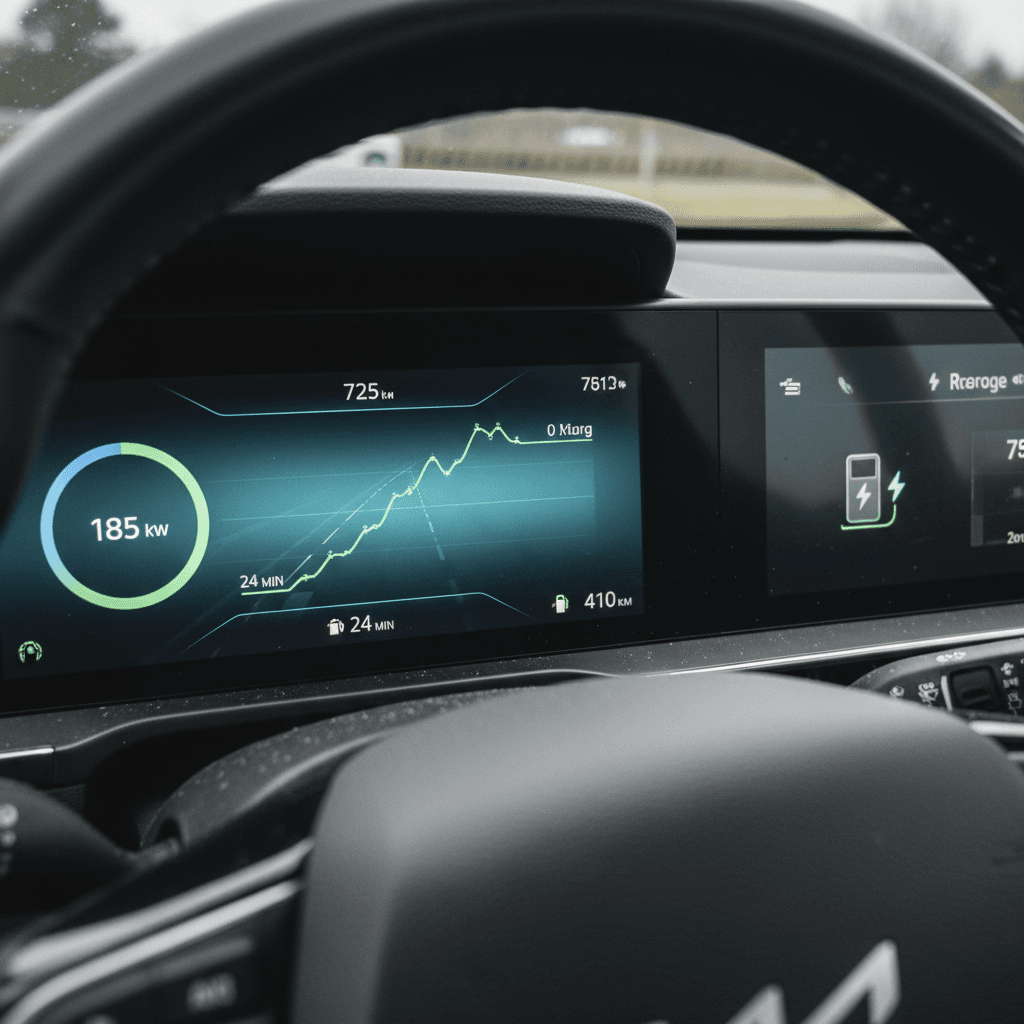
DC fast charging speed test: 10–80% in the real world
To make sense of the Polestar 3 charging speed test claims, it helps to translate the official numbers into what you’d actually experience on a modern highway fast-charging corridor in the U.S.
Polestar 3 DC fast charging scenarios
How different chargers and architectures change your stop time
400V car on 50 kW DC
Scenario: Early Polestar 3 on a legacy 50 kW DC charger.
- 10–80%: roughly 90–100 minutes
- Best suited for: rural areas, backup charging
- Feels more like a long meal than a quick pit stop.
400V car on 200–250 kW DC
Scenario: Early Polestar 3 on a strong highway charger.
- 10–80%: about 30 minutes in ideal conditions
- Average power: ~130–170 kW over the session
- Typical real-world stop: 25–35 minutes including plug-in and bathroom break.
800V car on 350 kW DC
Scenario: 2026+ 800V Polestar 3 on a 350 kW unit.
- 10–80% target: ~22 minutes
- Average power: roughly 190–220 kW
- Realistic stop: 20–25 minutes if you arrive warm and low on charge.
In independent testing of 400V Polestar 3 models, a **10–80% fast charge typically lands in the low-30-minute range** on a healthy 200–250 kW charger, assuming the battery is preconditioned and you arrive around 10–20% SoC. The upcoming 800V versions are engineered to trim that stop by several minutes by both raising peak power and flattening the charging curve.
Charger speed is not everything
Understanding the Polestar 3 charging curve
The spec sheet talks about peak power, 250 kW for early cars, up to 350 kW for the 800V variants, but what matters during a charging speed test is the **shape of the charging curve**: how long it can hold those high power levels before ramping down.
400V Polestar 3 charging behavior
- Below ~30% SoC: The car can ramp close to its 200–250 kW peak, especially if the battery is warm.
- 30–60% SoC: Power begins to taper, but you’ll still see well over 150 kW for a good chunk of this window.
- 60–80% SoC: Taper becomes more pronounced; power can fall into the 80–120 kW band.
- 80–100% SoC: Charging slows dramatically; you’re typically under 60 kW and often far lower near 100%.
800V Polestar 3 charging behavior
- Below ~40% SoC: Able to reach up to 350 kW on compatible hardware, with more time spent above 200 kW.
- 40–70% SoC: Higher plateau, holding strong power deeper into the pack than the 400V car.
- 70–80% SoC: Still a taper, but from a higher baseline; this is where 10–80% in ~22 minutes becomes feasible.
- Above 80% SoC: Same story as any big-pack EV, power falls off, and you’re usually better off unplugging.
Optimize your fast-charge window
400V vs 800V: Polestar 3 charging updates by model year
Polestar did something unusual: it launched the Polestar 3 with a capable 400V architecture, then announced a rapid upgrade to **800V hardware for the 2026 model year**, complete with faster charging and new battery packs. That matters if you’re shopping new or used, or trying to interpret charging speed tests that might be talking about two different cars with the same badge.
Polestar 3 charging hardware: early vs updated
How the original 400V Polestar 3 compares to the 800V update from a charging perspective.
| Version | Architecture | Battery packs | DC peak power | Claimed 10–80% time | Who it suits best |
|---|---|---|---|---|---|
| Early Polestar 3 (2025) | 400V | ~111 kWh pack (≈107 kWh usable) | Up to 250 kW | About 30 minutes | Drivers prioritizing range and refinement, not chasing the absolute quickest charging. |
| Updated Polestar 3 (2026+) | 800V | 92 kWh (Rear motor), 106 kWh (Dual & Performance) | Up to 350 kW (Dual/Perf) | About 22 minutes | Frequent road-trippers and tech-focused buyers who value shorter stops and future-proof hardware. |
Exact specs can vary by market and trim, but this gives a useful rule-of-thumb comparison for charging performance.
About retrofits
AC home charging: how long does it take?
Fast-charging speed tests get all the attention, but **most of your charging time with a Polestar 3 will be at home or work**. Here, the onboard 11 kW AC charger is the limiting factor, not the pack architecture.
AC charging scenarios for Polestar 3
1. Standard 120V outlet (U.S.)
Roughly 1–1.5 kW of power. Expect well over 40–50 hours for 0–100%. This is emergency-only or low-mileage backup charging.
2. 240V Level 2 at 7.2 kW
Common 32A home wallbox setup. A full 0–100% charge will take on the order of 15–17 hours, so think in terms of overnight top-ups (30–60%) rather than empty-to-full.
3. 240V Level 2 at 11 kW
Maxing out the Polestar 3’s onboard charger, you’re looking at roughly 9–11 hours for a full charge. For most owners, plugging in each evening keeps you near 60–90% daily with no drama.
4. Workplace or public AC posts
If your workplace offers 7–11 kW AC, the Polestar 3 can reliably add 20–35 miles of range per hour, perfect for commuters who rarely need DC fast charging.
Home charging sweet spot
Road-trip strategy for Polestar 3 owners
Once you understand the Polestar 3’s charging curve, you can turn a raw charging speed test into a practical **road-trip playbook**. The goal is simple: minimize total travel time, not just charging time on a single stop.
Building a smart Polestar 3 charging plan
Works for both 400V and 800V versions, with slightly different timing
Aim for low arrival SoC
Plan stops so you arrive between 5–20% SoC. That’s where the car will pull hardest from the charger and where each minute adds the most miles.
Cap your charge target
On 400V cars, unplug around 60–75% unless you have a long gap ahead. On 800V cars, stretching to 80% is less painful but still subject to taper.
Use navigation for preconditioning
Set the fast charger as your destination in the built-in navigation or Google Maps so the car can precondition the battery on the way, improving both initial power and total session time.
Think in coffee stops, not empty-to-full
How Polestar 3 compares to rivals on charging
Polestar 3 sits in a crowded field of big, premium electric SUVs. Charging speed is one of the core differentiators, especially if you road-trip across big states or between cities regularly.
Polestar 3 vs key premium SUV rivals (charging)
Approximate DC fast charging performance for comparable luxury EV SUVs.
| Model | Architecture | DC peak power | Claimed 10–80% time | Notes |
|---|---|---|---|---|
| Polestar 3 (400V) | 400V | Up to ~250 kW | ~30 min | Competitive with most 400V rivals, especially given pack size. |
| Polestar 3 (800V) | 800V | Up to ~350 kW | ~22 min | Joins the top tier of ultra-fast-charging SUVs. |
| Kia EV9 | 800V | Up to 350 kW | ~24 min | Among the quickest large SUVs at the plug. |
| BMW iX | 400V | Up to 195 kW | ~31 min | Strong but not class-leading for DC charging. |
| Volvo EX90 | 400V | Around 200–250 kW | ~30 min | Closely related platform to early Polestar 3 with similar behavior. |
Figures are representative and rounded; always check the latest official specs for exact numbers.
Where Polestar 3 stands
Charging speed and battery health
Whenever you talk about a charging speed test, the next question is always: what does this do to the battery in the long run? Polestar, like most modern EV brands, calibrates its packs to handle frequent DC fast charging, but the details still matter.
- Polestar 3’s large pack spreads the load: even at 250–350 kW, individual cells aren’t as stressed as they would be in a much smaller battery at the same power level.
- Frequent 10–80% fast charges are generally less stressful than repeatedly hammering the pack from very low to 100%.
- Regular **home or workplace Level 2 charging** remains the gentlest option for the battery, and is usually cheaper.
Habits that can hurt long-term health
What to look for on a used Polestar 3
If you’re eyeing a used Polestar 3, charging performance is one of the most important ownership variables to understand up front. A car that once aced a charging speed test might behave differently after years of use, harsh climates, or aggressive fast-charging habits.
Used Polestar 3 charging checklist
Confirm 400V vs 800V hardware
Ask the seller or dealer to confirm the model year and electrical architecture. The 800V update changes both peak power and charging curve behavior, and thus your road-trip experience.
Review DC fast-charging history
In ideal cases, you can see how often the vehicle used DC fast charging. A mix of Level 2 and occasional DC is healthiest; 100% fast-charged road-trip cars aren’t automatically bad, but deserve closer inspection.
Test a fast charge yourself
If possible, take the car to a nearby 150–250 kW station and observe peak power and how quickly it tapers. It doesn’t have to match the brochure, but it shouldn’t be wildly below peers at a similar SoC and temperature.
Ask about software and campaign updates
Polestar pushes updates that can tweak charging behavior and thermal management. Make sure the car is **fully up to date**; it can noticeably affect charging consistency.
Check for clear charging documentation
Look for manuals, charging cables, and any home-charger paperwork. These aren’t just nice-to-haves, they tell you how the previous owner actually charged day-to-day.
How Recharged can help
Ready to find your next EV?
Browse VehiclesFAQ: Polestar 3 charging speed
Common questions about Polestar 3 charging speed
Bottom line: is the Polestar 3 a fast charger?
The short answer is yes. Even in its original 400V form, the Polestar 3 is a genuinely quick charger for such a large, luxurious SUV, routinely turning **10–80% in about half an hour** on a good DC fast charger. The 800V update brings it into the top tier of EVs for charging performance, trimming that window closer to 20 minutes and holding higher power deeper into the battery.
If you’re comparing Polestar 3 charging speed tests to rivals, focus less on the peak kW number and more on how the car behaves between **10–70% SoC**, how dense fast-charging infrastructure is on your routes, and what your daily charging setup looks like. And if you’re exploring a used Polestar 3, consider shopping through a platform like Recharged, where every vehicle includes verified battery health, transparent pricing, and expert EV support from the first question to the final delivery.