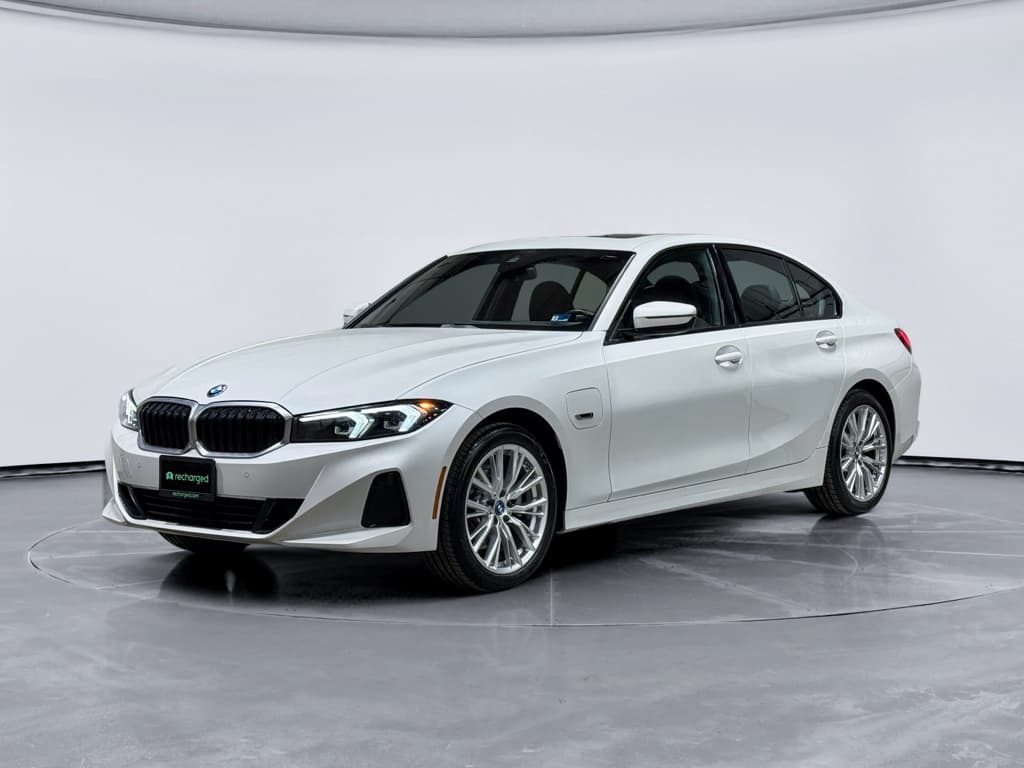
The 2025 BMW i4 sits at a crossroads: it’s both a familiar BMW 4 Series Gran Coupé and a fully electric fastback. If you’re eyeing one, especially on the used market, you’re probably wondering whether the 2025 BMW i4’s reliability matches its price tag. The short version: the i4 has **better-than-average reliability for a German luxury EV**, but it’s not totally drama‑free, especially around software, charging hardware, and a handful of recalls that touch 2022–2025 cars.
Big picture on 2025 i4 reliability
2025 BMW i4 reliability overview
By 2025, the BMW i4 is no longer a first‑year experiment. It launched for 2022, so the platform now has several years of real‑world miles behind it. Independent testers rate late‑run i4s, from 2024 onward, as **better than average for overall reliability**, and early owner feedback on the 2025 model year is strongly positive on day‑to‑day dependability, with caveats around recalls and charging quirks that you’ll want to understand before buying.
BMW i4 reliability snapshot (through early 2026)
So, is the 2025 BMW i4 a safe reliability bet? If you keep up with software updates and recall work, the car itself isn’t a ticking time bomb. The bigger wild card is the **public fast‑charging ecosystem**, which can make any CCS‑equipped EV feel unreliable when the real culprit is the charger, not the car.
How reliable is the BMW i4 so far?
To understand 2025 BMW i4 reliability, you have to separate three layers: the **underlying platform**, the **high‑voltage hardware** (battery, motor, cooling), and the **software/charging experience**.
Three layers of BMW i4 reliability
Mechanical, electric, and digital all play a role
1. Chassis & hardware
The i4 rides on BMW’s CLAR architecture, shared with gasoline 4 Series models. Suspension, body structure, and most interior hardware are mature, high‑volume components with **few systemic failures** reported.
2. Battery & drive system
The high‑voltage pack and motors have been largely robust. Issues so far tend to be **software‑triggered shutdowns** or isolated cooling component failures, not widespread pack replacements.
3. Software & charging
This is where most owner gripes live: intermittent charging errors with certain DC fast‑chargers, sensor glitches, or iDrive quirks. Annoying? Sometimes. Catastrophic? Rarely.
Survey‑based reliability scores for recent i4s show **stronger performance than many rival European EVs**, with trouble spots clustering in charging hardware (charge port door, occasional failure to initiate charging) and in‑car electronics rather than in the core electric drivetrain.
How to judge a 2025 i4’s reliability in 30 seconds
Recalls that affect 2022–2025 BMW i4 models
Every modern EV has recall baggage, and the i4 is no exception. For 2024 and into 2025, several campaigns touch **2022–2025 BMW i4s**, including some 2025‑build cars. None of these, on their own, make the car a pariah, but you absolutely want proof they’ve been addressed.
Major recent BMW i4 recalls relevant to 2025 buyers
Always run the VIN on the NHTSA site or BMW’s recall lookup before you buy.
| Issue | Model years affected | Risk | Typical fix |
|---|---|---|---|
| High-voltage drive software may shut down system | 2022–2025 i4 (various trims) | Sudden loss of drive power | Over‑the‑air or dealer software update to drive motor control |
| Front left longitudinal beam may crack | 2024 i4 eDrive40/xDrive40/M50 (small batch) | Reduced crash protection, possible battery damage in a severe impact | Dealer inspection and, if needed, replacement of the beam |
| Battery module weld defect (very small batch) | 2024 i4 xDrive40 & M50 (handful of cars) | Local overheating, potential fire risk if left unaddressed | Replace affected high‑voltage battery modules |
| Improperly assembled battery modules (small US recall) | Select 2022–2023 i4 | Possible module failure and loss of power, rare thermal event risk | Replace affected modules in recall population |
Recall descriptions are simplified; check official recall documents for full details.
Don’t skip the VIN check
Common BMW i4 issues and quirks
Zoom in from the headline recalls and you’ll find a handful of **recurring complaints** that pop up in owner surveys, forums, and long‑term tests. Most are fixable annoyances rather than fatal flaws, but they’re worth knowing about.
- Charge port door or latch sticking, especially in cold or wet climates; many owners report a one‑time replacement of the latch mechanism early in ownership.
- Intermittent charging failures at specific DC fast‑charging networks (especially high‑profile Electrify America incidents), sometimes blamed on the station, sometimes on the car’s onboard protections.
- Occasional sensor or warning‑light glitches, parking sensors, driver‑assist alerts, or phantom messages that disappear after a restart or software update.
- iDrive infotainment freezes or lag, usually resolved by software updates or a hard reboot.
- Tire and wheel wear: performance‑oriented M50/M60 trims can chew through tires quickly, and bent wheels aren’t unheard of on rough roads.
Annoyances you can live with
- Single, fixed issue that was repaired and hasn’t returned (e.g., one‑time charge flap replacement).
- Infotainment quirks that improved after a software update.
- Charging issues clearly tied to one unreliable public network.
- Normal EV wear items like tires and wiper blades.
Potential red flags
- Repeated high‑voltage or charging errors across multiple chargers.
- Any history of battery coolant leaks or high‑voltage component replacement without clear documentation.
- Open recalls, especially battery‑ or crash‑structure‑related.
- Unexplained sudden loss of power that wasn’t covered by a campaign.
Take high-voltage warnings seriously
Battery health, range and charging reliability
For EV shoppers, battery degradation is the ghost story around the campfire. The good news for the i4 is that, three to four model years in, there’s no sign of widespread pack failure or catastrophic range loss. Instead, you see the usual EV story: **modest, gradual degradation** and most owner complaints centered on fast‑charging speed or station reliability rather than the pack itself.
BMW i4 battery & charging reliability: what we’re seeing
Early‑generation data, but mostly encouraging
Degradation so far
Owner reports on early‑build 2022–2023 cars suggest **roughly single‑digit percentage losses** in usable range over tens of thousands of miles, broadly in line with other modern EVs.
Home vs public charging
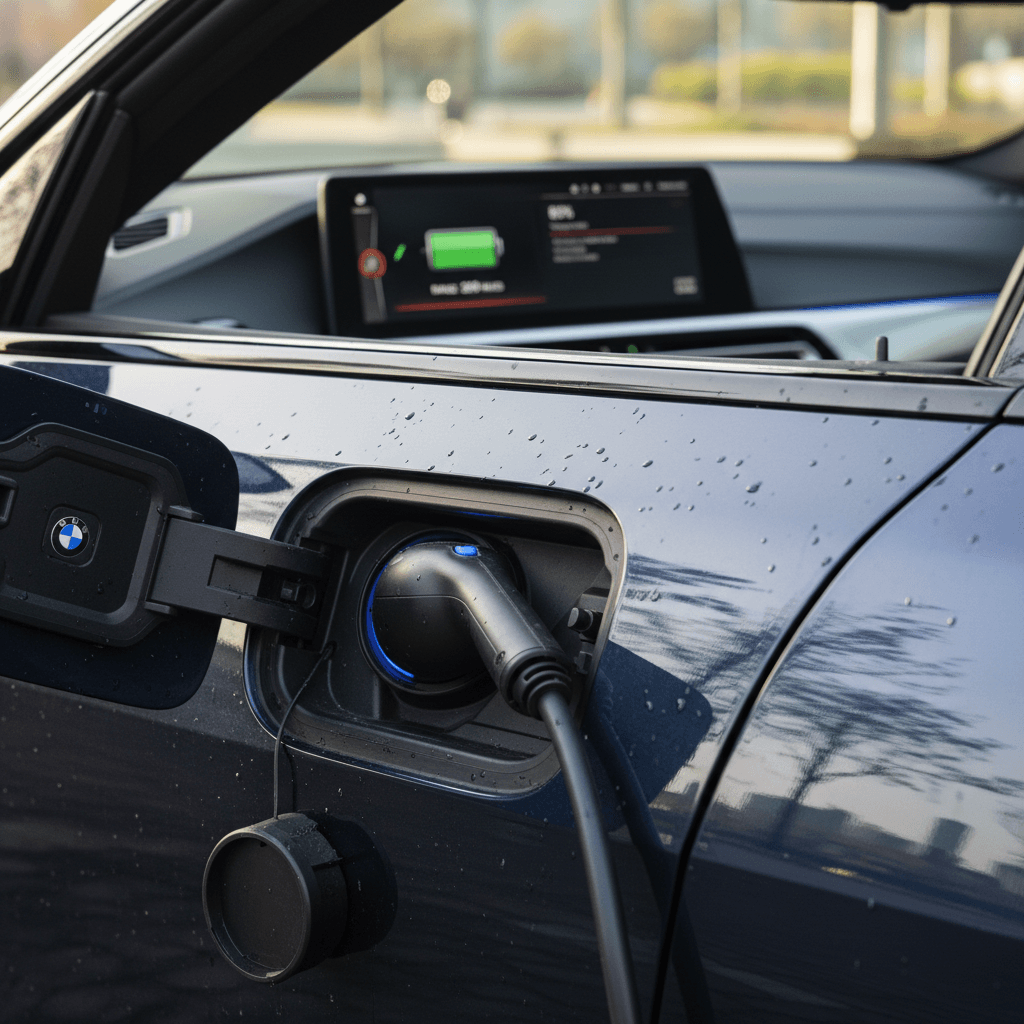
Home Level 2 charging is generally rock‑solid. The bulk of “my i4 won’t charge” stories trace back to **specific high‑power DC stations**, not the onboard charger failing outright.
Fast-charging behavior
Independent testing of the i4’s 80+ kWh pack shows DC fast‑charging from 10–90% in well under an hour, with peak rates just above 200 kW in ideal conditions, respectable, if not class‑leading.
How to baby your i4’s battery
BMW backs the i4’s high‑voltage battery with a typical **8‑year/100,000‑mile warranty** (check your specific car for details). For used‑car shoppers, that means a 2025 i4 will still have a healthy chunk of battery coverage left well into the 2030s, which materially lowers your risk on a higher‑mileage example.
Owner reviews and long-term test results
Online owner reviews of the 2025 BMW i4 skew glowing. On major automotive sites, the 2025 i4 earns **near‑perfect scores for reliability, performance, and comfort**, with the majority of owners saying they would buy one again. Real‑world forum chatter paints a similar picture: most daily‑driven i4s simply get on with the job.
“Zero issues with our M50, 2 years 24,000 miles. Budget for more tyres.”
Where owners do voice frustration, it’s often about the **ecosystem around the car**: the scattered reliability of CCS fast‑charging networks, or the sense that a $60,000+ BMW shouldn’t occasionally throw mysterious warnings after an iffy DC session. That’s less an i4 problem than a sign of the times: we’re still building the public‑charging future while already commuting in it.
The bottom line from owners
How the 2025 i4 stacks up against rival EVs
You’re probably not just cross‑shopping the BMW i4; you’re also glancing at Tesla’s Model 3 / Model 3 Long Range, the Polestar 2, maybe a Mercedes‑Benz EQE sedan or Audi Q4 e‑tron Sportback. On reliability, the i4 lands in an interesting middle ground: **less glitchy than some German rivals, more solidly built than most Teslas, but not quite as simple‑to‑own as the very best Japanese and Korean EVs**.
2025 compact luxury EV reliability comparison (high level)
A simplified look at perceived reliability across popular rivals. Actual ownership experience will vary by individual car.
| Model | Type | Perceived reliability | Typical pain points |
|---|---|---|---|
| BMW i4 (2022–2025) | Compact luxury fastback | Above average for segment | Charging hardware quirks, software glitches, small‑batch recalls |
| Tesla Model 3 / Model 3 LR | Compact sedan | Mixed | Build quality inconsistency, rattles, occasional electronic gremlins |
| Polestar 2 | Compact fastback | Average | Infotainment bugs, early brake and suspension issues in some cars |
| Mercedes EQE sedan | Midsize sedan | Below average | Complex electronics, early‑run battery‑related recalls on other EQ models |
| Hyundai Ioniq 6 | Streamlined sedan | Above average | Relatively minor infotainment and trim complaints |
“Perceived reliability” reflects a blend of survey data, recall history, and owner reports as of early 2026.
Why German luxury EVs lag on reliability stats
Buying a used BMW i4? Reliability checklist
If you’re shopping a **used BMW i4, especially a 2022–2025 car, reliability isn’t a roll of the dice, but you do need to be methodical. Here’s a practical checklist to separate the good cars from the problem children.
BMW i4 reliability checklist for used buyers
1. Run a full recall and campaign check
Use the VIN on the official recall lookup to confirm all campaigns, especially drive‑motor software and any battery or crash‑structure work, are marked completed. Ask for printed service records from a BMW dealer.
2. Confirm software and iDrive updates
From the iDrive menu, check that the car is on a recent software release. A car that hasn’t seen an update in years suggests ownership neglect and may be more prone to bugs.
3. Inspect charging hardware carefully
Open and close the charge port door multiple times. Plug into a Level 2 charger and confirm it starts charging promptly and stays stable. Listen for any abnormal clicks or relay noises near the front left fender.
4. Test DC fast-charging if you can
If possible, take the car to a reputable DC fast‑charger, pre‑condition the battery, and observe behavior. You’re looking for clean handshake, stable power delivery, and no high‑voltage or drivetrain warnings.
5. Scan for warning lights and stored faults
On a test drive, pay attention to instrument‑cluster messages. If you can, have a BMW‑savvy shop scan the car for stored high‑voltage, charging, or thermal‑management fault codes before you commit.
6. Evaluate tire, wheel and brake wear
Uneven tire wear or bent wheels can hint at pothole abuse or alignment issues. On M50/M60 trims, expect faster tire wear; factor that into your budget rather than treating it as a defect.
7. Understand remaining warranty coverage
Confirm in writing when the basic and high‑voltage battery warranties expire. A 2025 i4 with several years of factory coverage left is a very different risk profile than an early‑build 2022 that’s about to age out.
How Recharged can help with a used i4
When the 2025 i4 is a good bet, and when to walk
When a 2025 BMW i4 is a smart buy
- The car has **complete BMW service records** and documentation of all recall work.
- You can verify **clean, consistent charging behavior** at home and at least one DC fast‑charger.
- There’s **no history of high‑voltage component replacement** beyond routine software fixes.
- Remaining factory battery warranty gives you a buffer for the first years of ownership.
In this scenario, the 2025 i4 offers a compelling mix of refinement, performance, and real‑world efficiency with a reliability profile that’s solid for the segment.
When to walk away politely
- Repeated high‑voltage or charging errors across multiple chargers, even after “fixes.”
- Missing recall paperwork on campaigns that clearly apply to that VIN.
- A salvage or accident history near the battery tunnel or front structure, with vague repair documentation.
- Obvious owner neglect: badly worn tires, overdue maintenance, and a long list of unresolved warnings in the instrument cluster.
With high‑energy battery packs and complex electronics, “mystery problems” can be ruinously expensive. There are enough clean i4s in the market that you don’t need to gamble.
Viewed in the harsh light of reliability, the 2025 BMW i4 holds up better than its stereotype as a complicated German EV might suggest. The platform has matured, the big defects have been targeted with recalls, and the battery itself appears robust so far. If you insist on clean history, stay current on software, and buy from a seller who can actually answer your questions, the 2025 i4 is less a reliability horror story and more a well‑engineered, occasionally fussy companion, with the added benefit that, on the right back road, it still drives like a BMW.