If you just bought, or are thinking about buying, an electric vehicle in Pennsylvania, it’s natural to wonder about Pennsylvania EV HOV lane rules. In some states, EVs can use carpool lanes solo. In Pennsylvania, the story is different, and if you commute around Pittsburgh on I‑279, those differences really matter.
Quick answer
Overview: Do EVs Get Special HOV Access in Pennsylvania?
Many drivers hear about California-style perks and assume every state lets solo EVs zip down the HOV lane. Pennsylvania does not offer that benefit today. The Commonwealth has focused more on rebates, road user charges, and corridor charging investments than on lane access as an incentive. That means that, practically speaking, you should plan to follow the same HOV rules in your EV that you would in a gasoline car.
Pennsylvania EV & HOV Policy Snapshot (2025–2026)
Don’t assume EV perks cross state lines
Where Are HOV Lanes in Pennsylvania?
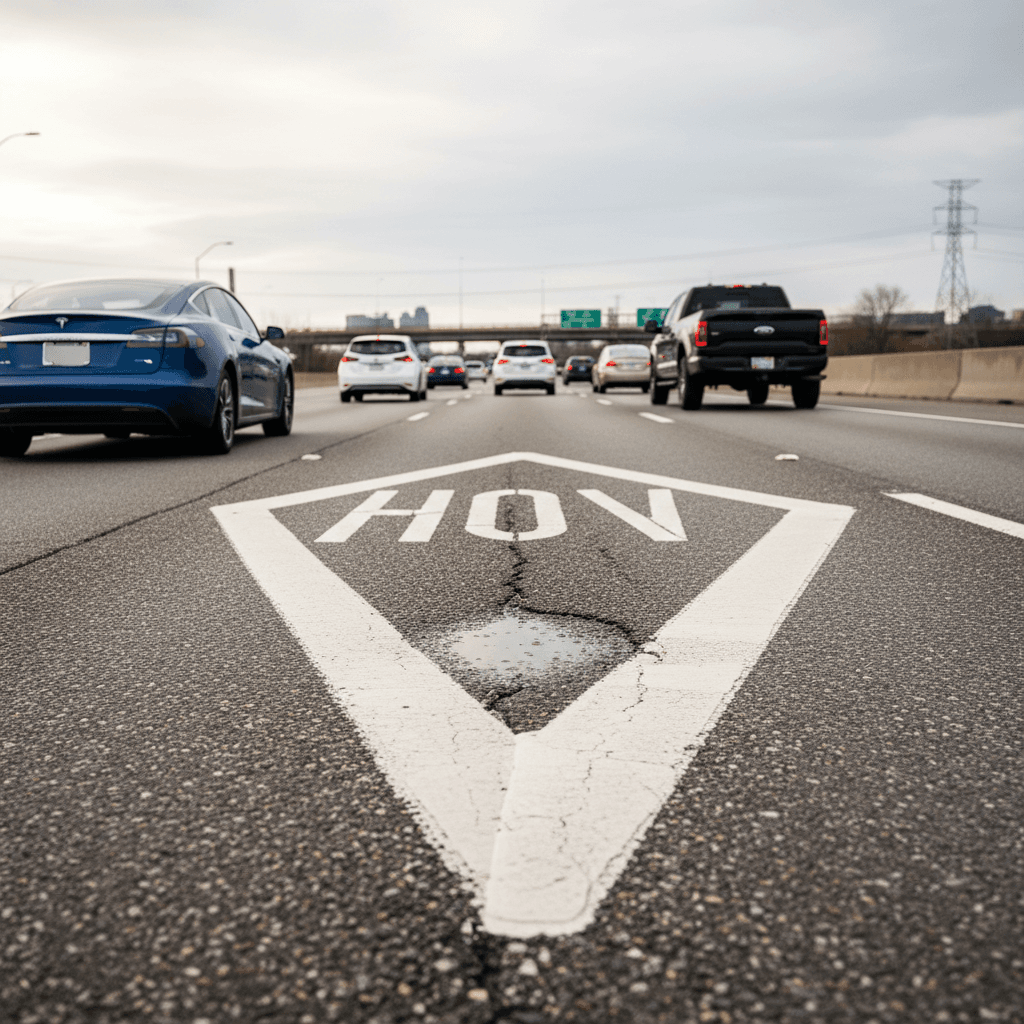
Unlike some large metro regions with multiple HOV corridors, Pennsylvania has one primary HOV facility, located in Pittsburgh:
- I‑279 (Parkway North) reversible HOV lanes: Run in the median between near-downtown Pittsburgh and the Perrysville Avenue area, serving commuters from the North Hills into downtown and back.
- A short HOV segment associated with the Wabash Tunnel can also function as a managed lane for carpools and transit, but most day-to-day HOV discussion in Pennsylvania is about the I‑279 reversible lanes.
Where these rules matter
Current HOV Rules: Hours and Occupancy Requirements
PennDOT’s HOV rules are designed to move more people, not just more vehicles. That’s why the focus is on the number of occupants rather than what powers your car. Here’s how the I‑279 HOV facility typically operates:
Typical I‑279 HOV Lane Hours and Rules*
These are the standard operating patterns PennDOT has used for the reversible HOV lanes on I‑279/Parkway North when not affected by special closures or construction.
| Direction / Time | Status | Who Can Use It |
|---|---|---|
| Weekday inbound (AM) | HOV 2+ only, usually ~6:00–10:00 a.m. | Cars, SUVs, vans, and light trucks with at least 2 occupants; all motorcycles. |
| Weekday outbound (PM) | HOV 2+ only in PM peak; often unrestricted later evening | Same 2+ occupant rule during peak; outside peak, lanes may open to all vehicles. |
| Midday weekday | Typically closed | HOV lanes are often closed to allow for reversal and maintenance. |
| Overnight & weekends | Often unrestricted or closed depending on schedule | When open as general-purpose, any legal vehicle may use them, EV or not. |
*Always check PennDOT’s latest advisories or 511PA before you rely on these schedules. Construction projects can change hours or close the lanes entirely.
These hours are not guaranteed
Are EVs Eligible for Single-Occupant HOV Use?
What many drivers expect
In several states, EVs or plug-in hybrids can legally use HOV lanes with just the driver behind the wheel, usually if they display a special decal or license plate. Those policies were created to nudge early adopters into electric vehicles.
What Pennsylvania actually does
Pennsylvania currently does not grant solo HOV access based on driving an EV. There’s no EV HOV sticker program, no special EV license plate that changes your status, and no carve-out for plug-in hybrids.
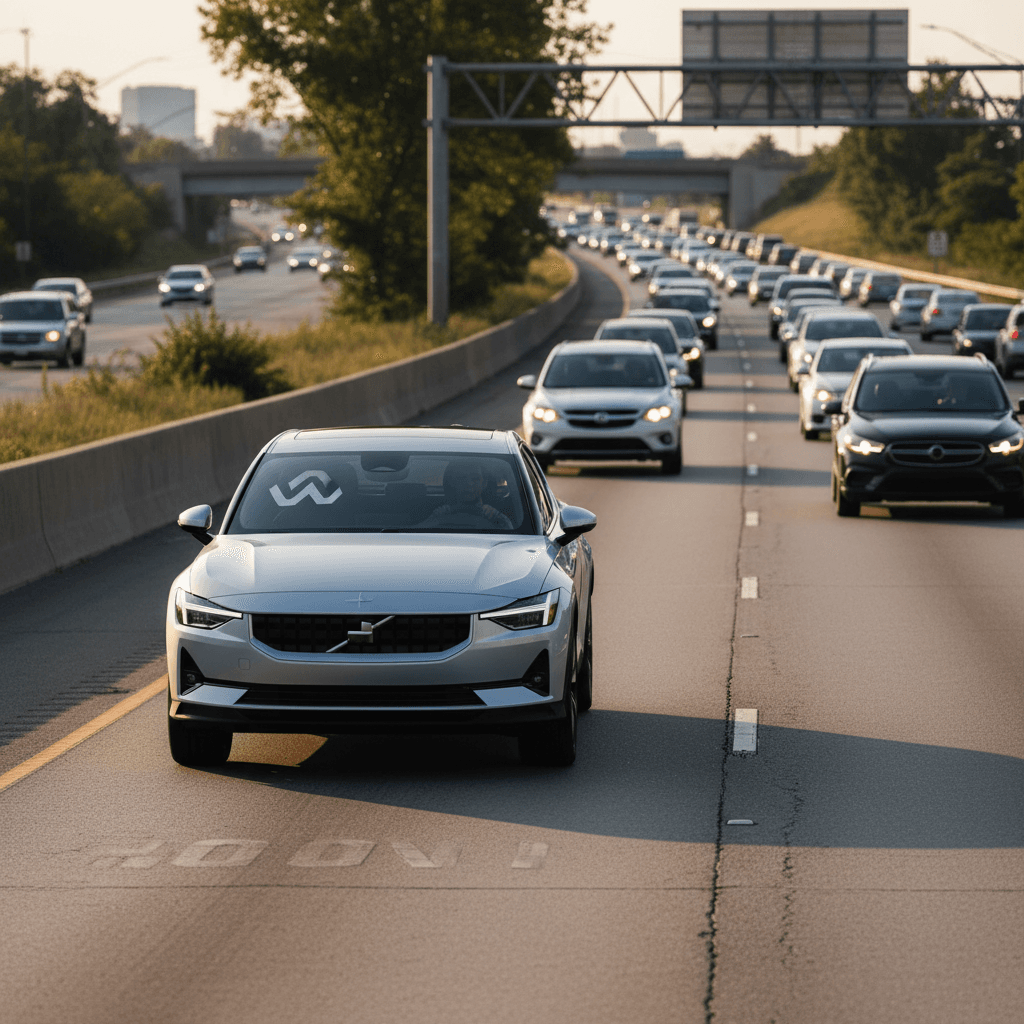
Functionally, that means your Tesla Model 3, Chevy Bolt, Hyundai IONIQ 5, or used Nissan LEAF is treated exactly like a gasoline car when it comes to HOV rules. To legally use the I‑279 HOV lanes during restricted hours, you must either:
- Have at least two people in the vehicle (you plus one passenger), or
- Ride a motorcycle, which is exempt from the minimum occupancy requirement.
Enforcement still applies to EVs
HOV Closures and Construction on I-279
If you commute in or around Pittsburgh, you’ve probably noticed that the Parkway North HOV lanes have not always been available in recent years. PennDOT has been working through structural repairs on bridge piers and related infrastructure, which has led to extended closures and shifting traffic patterns.
Why this matters to EV drivers
When the lanes are open and operating normally again, expect the same familiar pattern: reversible operation, weekday peak HOV‑2+ restrictions, and no special solo access for EVs. Think of HOV as a carpool reward, not an EV reward.
How Pennsylvania Compensates EV Drivers Instead of HOV Privileges
If Pennsylvania doesn’t lean on HOV perks to drive EV adoption, what does it do? The Commonwealth has been reshaping its policy mix around rebates and a simplified way to pay for road use instead.
Key Pennsylvania EV Policies (Beyond HOV)
What you actually get as an EV owner in 2025–2026
Alternative Fuel Vehicle Rebates
The state’s Alternative Fuel Vehicle Rebate program periodically offers rebates to Pennsylvania residents who buy or lease qualifying new or used EVs and plug‑in hybrids. For the July 1, 2025–June 30, 2026 period, funding is available for approximately 500 rebates, targeted toward lower and moderate-income households.
You apply after purchase, and the amount depends on income and vehicle type. Always check the current program year details before you buy.
Road User Charge (RUC) for EVs
Starting April 1, 2025, Pennsylvania began phasing in a flat annual Road User Charge on EVs, replacing the cumbersome Alternative Fuels Tax reporting many owners ignored or never knew about.
The law set a multi‑year schedule: $200 in 2025, $250 in 2026, and then indexing future years to inflation via the Consumer Price Index.
Charging Infrastructure Investments
Pennsylvania is tapping federal NEVI funds and state programs to expand DC fast charging and Level 2 stations along major corridors and within metro areas. For many commuters, reliable public charging is more valuable than an HOV sticker they’d rarely use.
This matters if you live in a rowhouse, apartment, or older home where installing a fast home charger is tricky.
EV economics still stack up
Planning Your Pennsylvania Commute as an EV Driver
If you’re commuting in or near Pittsburgh today, your best strategy is to treat the HOV lane as an occasional bonus for carpools, not the cornerstone of your EV purchase decision. Here’s a practical way to approach it.
Practical Checklist: Making the Most of Your EV Commute in Pennsylvania
1. Confirm current I‑279 HOV status
Before you bet your arrival time on the Parkway North HOV, check PennDOT’s 511PA tools or local traffic reports. Long‑running repair work and reversible operations means schedules can change.
2. Build a real carpool, don’t just depend on your EV
Because Pennsylvania doesn’t give EVs solo HOV access, the only reliable way to use the HOV lanes at peak is to <strong>organize a consistent carpool or vanpool</strong> with co‑workers or neighbors.
3. Optimize charging for your schedule
Use home Level 2 charging or workplace charging (if available) so you can <strong>avoid mid‑commute fast‑charging stops</strong>. That’s more important to your door‑to‑door time than any hypothetical HOV perk.
4. Know your alternative routes
Keep at least one alternate route in mind for days when HOV is closed or backed up. Traffic dynamics can change quickly when PennDOT shifts lane configurations for maintenance.
5. Use EV‑friendly navigation tools
Apps from automakers and third parties can <strong>layer live traffic, construction, and charging stops</strong> into one view. That’s especially useful if you’re driving a used EV with a shorter range window.
6. Factor policy into where you live and work
If you’re choosing between job sites or neighborhoods, look at <strong>door‑to‑door commute time including traffic and charging</strong>, not just distance. In many parts of Pennsylvania, a slightly longer distance with less congestion beats betting everything on a single HOV corridor.
Buying a Used EV in Pennsylvania? Policy Tips to Keep in Mind
If you’re shopping for a used EV, especially through a digital retailer like Recharged, you don’t need to obsess over HOV stickers the way buyers do in California or Virginia. Pennsylvania’s rules are simpler, but you should still factor state policy into your purchase decision.
1. Focus on battery health over HOV perks
Because there’s no solo EV HOV access, the big question isn’t "will this get me into a special lane?" but "will this pack still deliver the range I need every day?"
Every vehicle sold through Recharged includes a Recharged Score Report with verified battery health, so you can see how much real‑world commuting range you’re buying, critical if you rely on I‑279 or other congested corridors.
2. Run the total-cost-of-ownership math
Combine state rebates (if you qualify), the annual Road User Charge, and your likely electricity costs. A used EV with a healthy battery can still beat a similar gas car on monthly cost even without HOV lane time savings.
Recharged’s fair‑market pricing and EV‑specialist support can help you sanity‑check whether a particular car makes sense for your commute and budget.
How Recharged can help Pennsylvania shoppers
FAQ: Pennsylvania EV HOV Lane Rules
Common Questions About Pennsylvania EV HOV Rules
Bottom Line for EV Owners in Pennsylvania
In Pennsylvania, HOV lanes reward carpooling, not powertrains. Whether you’re in a gas sedan or a used Tesla, solo drivers don’t get special access to the I‑279 HOV lanes, and long‑running construction has made those lanes an intermittent benefit even for carpools.
If you’re considering an EV for your Pittsburgh‑area commute, or anywhere else in the Commonwealth, make the decision based on real-world range, charging access, and total ownership cost, not dreams of flying down an empty HOV lane alone. That’s where a transparent marketplace like Recharged can help: every used EV comes with a Recharged Score battery health report, fair‑market pricing, financing and trade‑in options, and expert EV guidance tailored to how and where you actually drive.
Plan your commute around the rules as they are today, keep an eye on PennDOT updates for I‑279, and treat any future HOV perks as a nice bonus rather than the whole justification for going electric. The real payoff for Pennsylvania EV drivers is in the quiet, low‑cost miles you rack up every day, HOV lane or not.