If you live in or drive through Pennsylvania, the strength of the Pennsylvania electric car charging network can make or break whether an EV feels practical. The state has moved from “catching up” to quietly becoming one of the more capable EV travel corridors in the Northeast, but coverage is still uneven, and the details matter when you’re buying a used EV or planning a trip.
Why this matters if you’re shopping used
How strong is Pennsylvania’s electric car charging network in 2026?
Pennsylvania’s public EV charging network at a glance (2026)
On paper, Pennsylvania’s numbers look respectable: just over 2,100 public charging locations and more than 6,000 ports statewide, with roughly a third of them DC fast. In practice, those chargers are clustered along interstate corridors and around metro areas like Pittsburgh and Philadelphia, while rural regions still rely on a patchwork of Level 2 stations.
The real story in 2025–2026 is how quickly fast charging has improved. Federal NEVI funding, new sites on the Pennsylvania Turnpike, and private networks like Electrify America, EVgo, Tesla, and GM/EVgo/Pilot are filling in the gaps that used to make a cross‑state trip in a Chevy Bolt or Nissan LEAF feel like an experiment.
Statewide charger numbers, and where they actually are
Where Pennsylvania’s public chargers are concentrated
These city stats show why your EV experience depends heavily on where you live or travel.
| City / Area | Approx. stations | DC fast ports (approx.) | What it means for drivers |
|---|---|---|---|
| Pittsburgh metro | 320+ | ~100 | Dense mix of Level 2 and fast charging; good for apartment dwellers and road‑trippers. |
| Philadelphia metro | 170+ | ~120 | Growing DC fast options but still feels tight for curb‑parked residents. |
| Allentown / Lehigh Valley | 50+ | ~50 | Surprisingly strong DC fast coverage along I‑78 and surrounding suburbs. |
| Harrisburg area | 30+ | ~40 | State‑capital corridor benefits from Turnpike and NEVI attention. |
| Smaller cities & towns | 10–25 each | Often under 20 | Usable with planning; Level 2 tends to dominate away from interstates. |
Station counts are approximate and based on U.S. Department of Energy data updated in early 2026.
Map density hides reality on the ground
NEVI corridors: the highway backbone of Pennsylvania EV charging
Pennsylvania is leaning hard on the federal National Electric Vehicle Infrastructure (NEVI) program to build out a spine of fast chargers along its major interstates. The state has a multiyear plan and has already secured well over $70 million of its roughly $170+ million NEVI allocation, with dozens of sites under contract or open along designated Alternative Fuel Corridors like I‑76, I‑80, I‑79, I‑81, and I‑376.
- NEVI sites must be placed no more than about 50 miles apart along approved corridors.
- Stations must sit within roughly 1 mile of the highway exit.
- Each site has multiple DC fast chargers, often 150 kW or higher, with both CCS and increasingly NACS connectors.
- Pricing is set by the site operator but must meet uptime and accessibility requirements tied to federal funding.
Pennsylvania is an early NEVI leader
For you as a driver, that means trips like Philadelphia to Pittsburgh, New York to Ohio via I‑80, or Maryland to upstate PA are dramatically easier than they were just a few years ago. Where non‑Tesla drivers once had to rely almost entirely on Electrify America, there’s now a competitive mix of NEVI-backed sites run by ChargePoint, EVgo, Tesla (with Magic Dock or NACS), and regional players.
Pennsylvania Turnpike: fast charging on the main artery
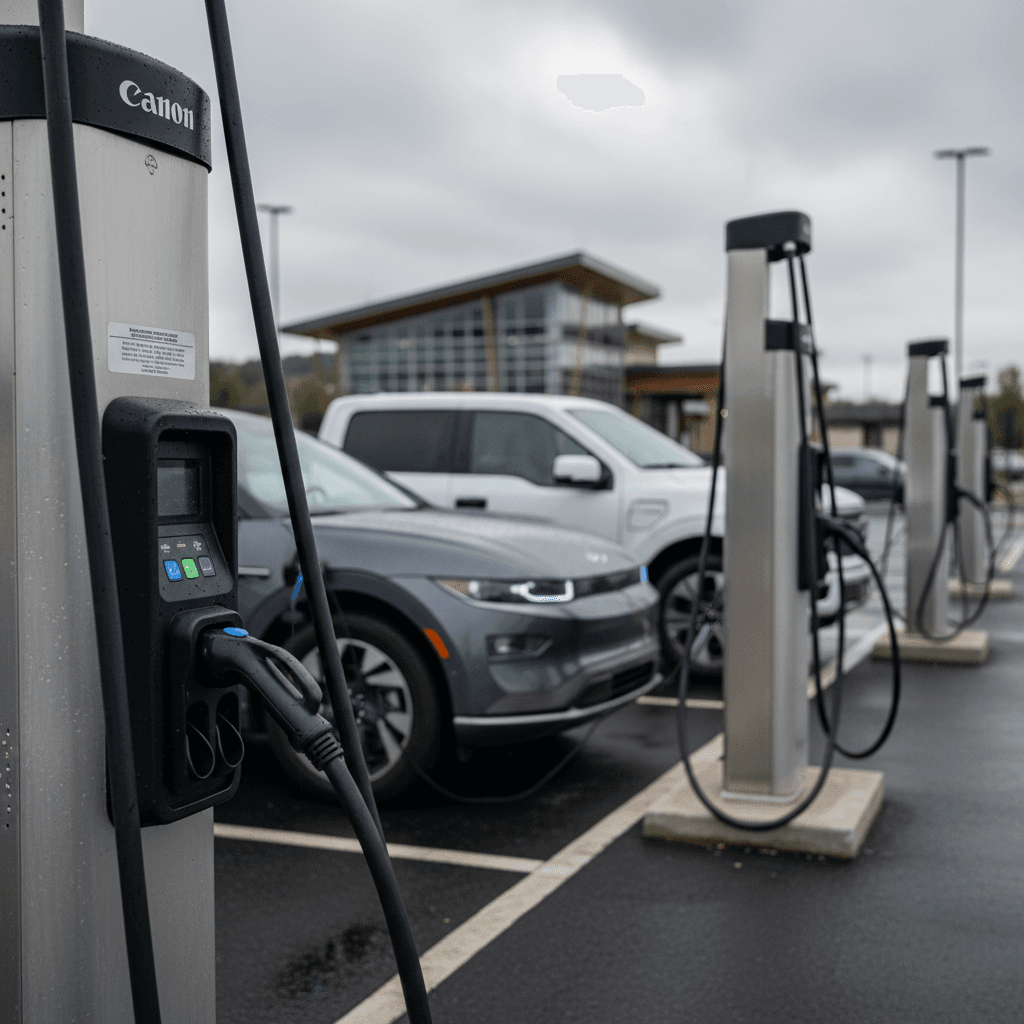
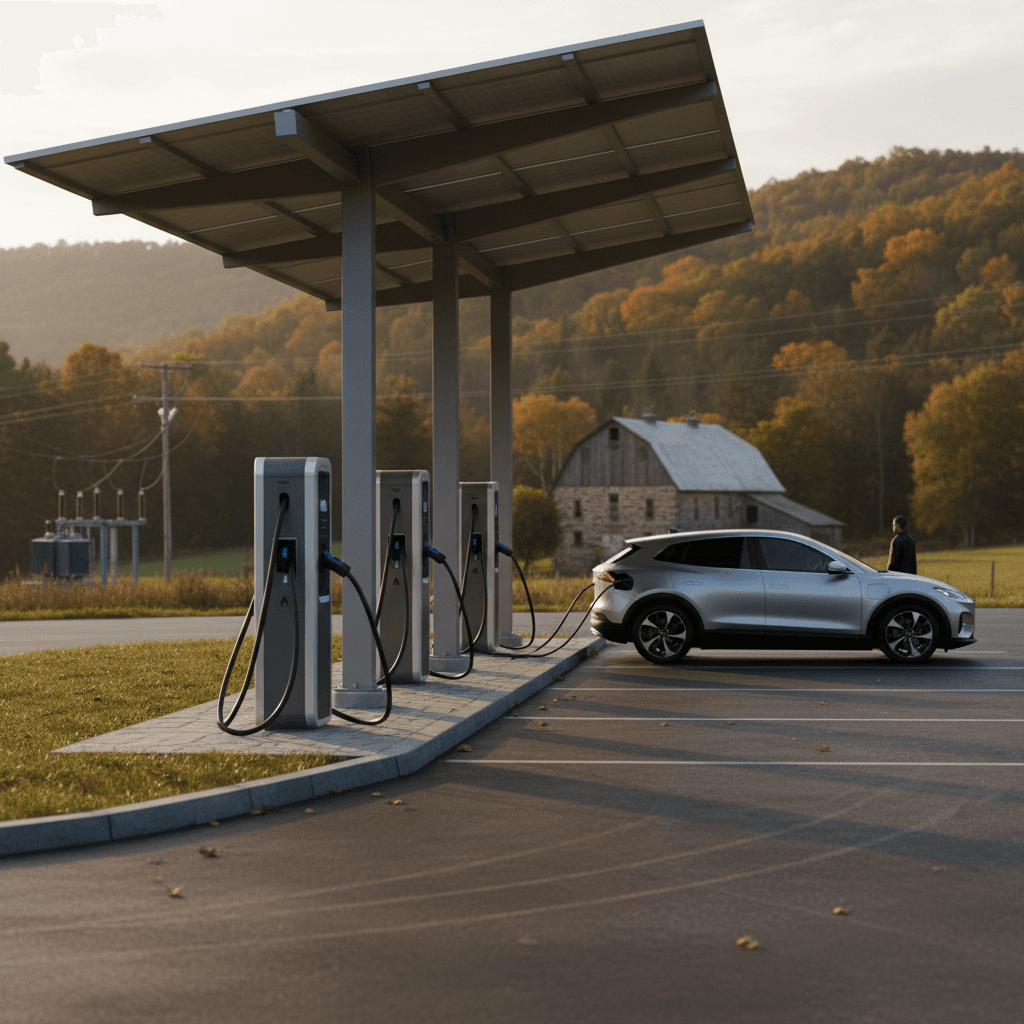
The Pennsylvania Turnpike is the state’s economic and travel backbone, and it’s finally starting to behave that way for EVs. The Turnpike Commission began experimenting with EV charging back in 2014; as of 2025 it reported more than 60 chargers at eight service plazas and is now in the middle of a major upgrade cycle.
What to expect from Turnpike EV charging by 2027
A partnership with Applegreen Electric is reshaping the corridor.
400 kW fast chargers
New plazas like North and South Somerset feature up to 400 kW DC fast chargers, letting many modern EVs add hundreds of miles in 20–30 minutes.
NACS + CCS support
Turnpike sites are being built with both NACS and CCS connectors, which is critical as Ford, GM, Hyundai and others move to NACS.
All plazas by 2027
The goal is to have EV charging at all 17 Turnpike service plazas by 2027, ending the old patchwork of just a few locations.
How to use Turnpike chargers effectively
City spotlight: Philadelphia vs. Pittsburgh and beyond
Philadelphia: lots of EVs, not enough plugs
Philadelphia’s EV adoption has outpaced its charging build‑out. Public data from 2024 showed roughly 140–180 public charging locations and under 400 ports in the city, with only a small fraction of those being DC fast. That’s improving, NEVI sites and private networks are adding fast chargers along I‑95 and key commercial corridors, but curbside and neighborhood coverage still lag demand.
If you street‑park in Philly, you should assume public charging will be a mix of weekly DC fast sessions plus slower overnight sessions at workplace or garage chargers when you can get them.
Pittsburgh & regional hubs: steadier build‑out
Pittsburgh has emerged as one of Pennsylvania’s most charger‑dense metros, with 300+ public charging locations and roughly 100 DC fast ports across the region. Between highway sites on I‑79 and I‑376, urban hubs, and suburban shopping centers, it’s relatively straightforward to live with an EV, even in an apartment, if you’re willing to plan.
Smaller metros like Allentown–Bethlehem–Easton, Lancaster, Erie, and State College punch above their weight thanks to Alternative Fuel Corridor coverage and strong utility or municipal engagement.
Apartment and rowhouse reality check
Who actually runs Pennsylvania’s EV charging network?
Unlike a unified “grid,” Pennsylvania’s electric car charging network is a mosaic of public and private efforts. When you zoom in on the map, you’ll see a familiar mix of logos:
- Tesla Supercharger sites, some with Magic Dock or dual NACS/CCS hardware, increasingly open to non‑Tesla EVs.
- Electrify America locations at Walmart, Sheetz, and other retail partners, especially along I‑76, I‑80, and I‑81.
- EVgo and ChargePoint stations in urban cores, parking garages, universities, and grocery chains.
- Utility‑backed or municipal networks at workplaces, park‑and‑ride lots, and public facilities.
- NEVI‑funded hubs operated by those same private networks under state contracts.
For you, operator diversity is a mixed blessing. Competition improves coverage and pricing over time, but it also means you’ll want accounts with at least two or three major networks, plus a credit card fallback, to avoid getting stranded by a single broken charger or app outage.
Connector standards in PA: NACS, CCS and your used EV
Pennsylvania sites are being upgraded right as the U.S. moves from a CCS‑centric world to the North American Charging Standard (NACS) popularized by Tesla. For a few years, you’ll be living in a mixed ecosystem:
What Pennsylvania drivers should know about connectors
CCS still dominates non‑Tesla fast charging
Most public DC fast chargers in Pennsylvania still use CCS plugs, and nearly every non‑Tesla EV sold before 2025 expects CCS.
NACS is arriving fast at new sites
Many new NEVI and Turnpike installations already include NACS cables alongside CCS, anticipating Ford, GM, Hyundai and others switching over in 2025–2027.
Adapters bridge the transition
If you buy a used CCS car, a future NACS–CCS adapter may expand your options. If you buy a used Tesla with NACS, a CCS adapter may help at legacy sites.
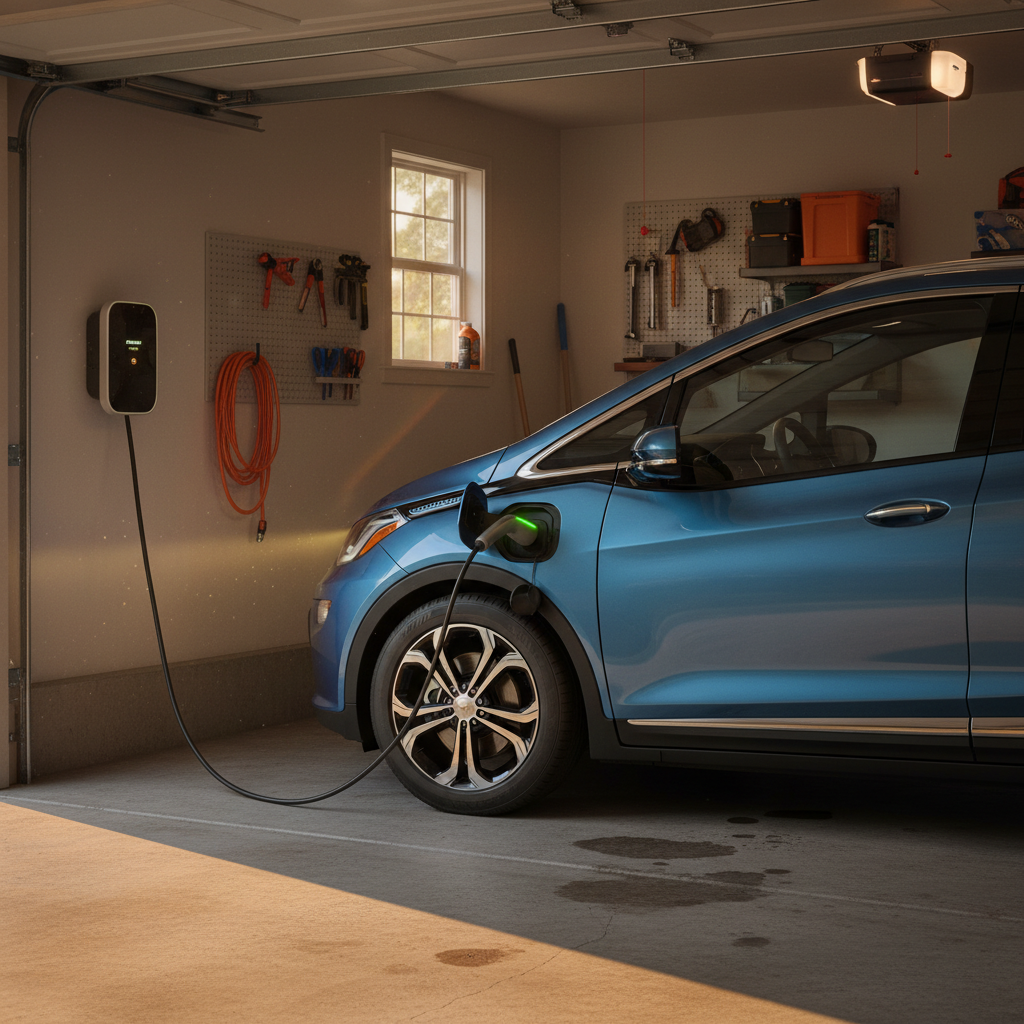
Home charging is still J1772 or NACS
Level 2 home and workplace chargers in PA are still mostly J1772 or Tesla Wall Connectors. Adapters make it straightforward to mix and match at home.
Match your used EV to your local network
Reliability and real‑world issues to expect
Coverage is only half the story. Like most states, Pennsylvania still struggles with charger reliability, especially on older, non‑NEVI sites. Drivers routinely report arriving at a “green” pin on an app only to find broken card readers, vandalized plugs, offline units, or stations blocked by gas cars.
- Older urban Level 2 stations in Philly and some smaller towns are most prone to neglect and downtime.
- Newer NEVI and Turnpike fast chargers generally have higher uptime standards and more responsive maintenance.
- High‑use sites near major cities can have queues during peak weekend travel or holidays, especially on I‑76 and around King of Prussia.
Don’t arrive with 2% in the winter
Incentives and utility programs supporting charging build‑out
Behind the scenes, Pennsylvania’s charging network is also being shaped by utility and state incentive programs. For drivers, the most relevant part is home and workplace charging support, but those same dollars also help seed public stations at apartments and commercial sites.
Examples of EV charging support in Pennsylvania
Programs change often, always confirm current details before you count on them.
Home Level 2 rebates
Rural cooperatives like Adams Electric, Central Electric, and Northwestern Rural have offered $100–$300 rebates or bill credits for home Level 2 charger installations, especially when paired with load‑management programs.
Commercial & multifamily help
Utilities such as PECO run rebate programs for commercial, workplace, and public charging, sometimes worth tens of thousands of dollars per project, to jump‑start installations at offices, garages, and fleet depots.
State grants for public fast charging
Programs like Driving PA Forward and NEVI grants have funded high‑power DC fast chargers along the Turnpike and at key interchange locations.
Why this matters for used‑EV shoppers
Planning EV road trips across Pennsylvania
Thanks to NEVI corridors and the Turnpike build‑out, cross‑state trips that once required spreadsheet‑level planning now look much closer to a normal road trip, as long as you respect the limitations of your particular EV and Pennsylvania’s terrain.
Pennsylvania EV road‑trip checklist
1. Start with a realistic range
Use your winter highway range, not the EPA sticker. In PA’s hills, a 250‑mile EPA EV can behave like a 180‑mile car on a cold day.
2. Anchor stops on NEVI and Turnpike sites
Plan your main DC fast stops at NEVI‑funded hubs and Turnpike plazas first, they tend to have better power, redundancy, and amenities.
3. Keep one backup charger in mind
On each leg, identify at least one alternate fast charger within 20–30 miles in case your primary site is busy or offline.
4. Use apps that know Pennsylvania’s quirks
Tools like <strong>A Better Routeplanner</strong>, PlugShare, and major network apps understand elevation, weather, and local station performance better than raw Google Maps does.
5. Budget extra time in winter and on I‑80
The I‑80 corridor in particular can see harsh weather and long distances between towns. Add a buffer to arrival state‑of‑charge targets in winter.
6. Combine charging with meals
Choose plazas and interchanges with food and restrooms so a 25‑minute DC session feels like a normal travel break, not a delay.
How Recharged helps Pennsylvania drivers shop smart for used EVs
If you’re evaluating a used EV in Pennsylvania, public charging is only half the equation. The other half is the health of the battery you’re relying on and whether the vehicle’s charging hardware actually fits the way you’ll use the state’s network.
Battery health and charging reality
Every vehicle on Recharged comes with a Recharged Score Report that includes verified battery health diagnostics. That matters in Pennsylvania because a degraded pack shrinks your effective highway range, and makes the gaps between chargers on I‑80 or the Turnpike feel bigger than they look on the map.
Our EV specialists can walk you through how a specific car’s DC fast‑charging curve, connector type, and thermal management will perform on your daily routes and road trips across the state.
Ownership made simpler for PA buyers
Recharged offers financing, trade‑in options, consignment, and nationwide delivery, plus a fully digital experience backed by EV experts. Whether you’re near our Experience Center in Richmond, VA or shopping from Philadelphia, Pittsburgh, or Erie, we can help you find a used EV that fits Pennsylvania’s charging landscape instead of fighting it.
If you’re unsure which model works best with the Pennsylvania electric car charging network, our team can help translate maps and data into practical recommendations.
Pennsylvania EV charging network: FAQ
Frequently asked questions about Pennsylvania’s EV charging network
The bottom line on Pennsylvania’s electric car charging network
Pennsylvania’s electric car charging network in 2026 is no longer the bottleneck it once was. With over 2,000 public stations, a rapidly expanding spine of NEVI‑funded highway chargers, and a Turnpike system marching toward universal coverage, the state now supports serious EV ownership and long‑distance travel, especially if you have access to home or workplace charging.
That doesn’t mean the work is done. Urban neighborhoods, curb‑parked residents, and rural drivers still face real gaps and reliability issues, and the shift from CCS to NACS will create some short‑term confusion. But if you pair the current Pennsylvania electric car charging network with the right used EV, and a realistic understanding of your routes and seasons, an electric car can be a practical, lower‑maintenance, and lower‑fuel‑cost daily driver across the Commonwealth.
If you’re ready to explore a used EV that fits Pennsylvania’s evolving charging map, Recharged can help you compare options, understand battery health, and line up financing and delivery without a traditional dealership hassle.