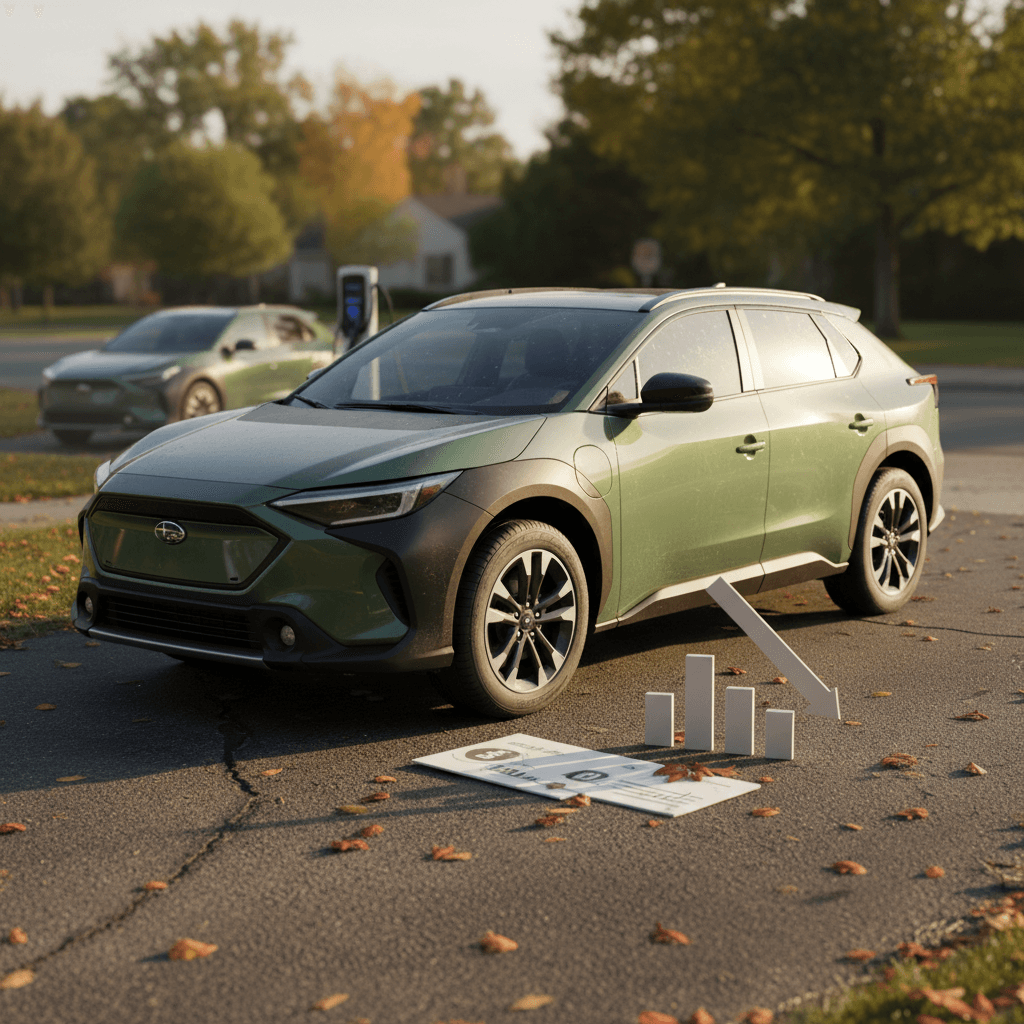
If you’re eyeing a Subaru Solterra, or already driving one, the big question is what this quirky, outdoorsy EV will be worth in five years. The Subaru Solterra’s value after 5 years is shaped by more than just odometer miles: early‑EV market jitters, aggressive lease deals, battery tech, and Subaru’s brand loyalty all tug the curve in different directions.
Quick context
Subaru Solterra 5‑Year Value at a Glance
Solterra Value Trajectory (Best‑Guess Snapshot)
Those ranges are not gospel; they’re an informed forecast based on present resale prices of 2023–2024 Solterras, observed EV depreciation, and how similar compact EV crossovers behave. The important takeaway is this: the Solterra is likely to depreciate faster than a traditional gasoline Subaru, but similarly to many first‑wave EVs.
How the Subaru Solterra Is Priced Today
To understand Subaru Solterra value after 5 years, start with where pricing stands today. New Solterras have been heavily incentivized, 0% APR financing, aggressive leases, and, in some months, sizeable discounts off MSRP. Used examples, including ex‑rental units, have already hit the mid‑$20Ks.
New vs. Used Subaru Solterra Pricing (Early Market Snapshot)
Approximate U.S. pricing based on 2023–2025 model years as of early 2026.
| Model year / condition | Typical MSRP when new | Approximate used asking price today | Notes |
|---|---|---|---|
| 2025–2026 new | $45,000–$52,000 | N/A (new inventory) | Often sold with 0% APR or steep lease support. |
| 2024 used, low miles | $45,000–$52,000 | ~$25,000–$29,000 | Many are 1–2 year‑old crossovers already discounting hard. |
| 2023 used, higher miles | $44,000–$51,000 | ~$22,000–$26,000 | Early build years plus ex‑rental fleet vehicles press prices down. |
| Projected 5‑year‑old (future) | $45,000–$52,000 original MSRP | ~$20,000–$26,000 | Where a 5‑year‑old Solterra is likely to land if trends hold. |
These ranges are directional, not offers; real prices vary by options, mileage, and region.
Why those used prices matter
Projecting Subaru Solterra Value After 5 Years
Because the Solterra launched for the 2023 model year, there is no actual 5‑year sales data yet. Instead, you look at three clues: current used prices, lease residuals, and how similar EVs have aged.
- Early used Solterras appear to be down roughly 35–45% from MSRP in just 2–3 years, depending on incentives and mileage.
- Lease programs have at times assumed mid‑to‑high‑50% residuals at 36 months, optimistic compared with what many owners and analysts expect the open market to bear.
- Compact EV crossovers from mainstream brands (Hyundai Kona Electric, Kia Niro EV, VW ID.4, Nissan Ariya) commonly land around 45–55% of original MSRP at five years, assuming normal market conditions.
Blend those signals together and a realistic working assumption is that a Subaru Solterra will be worth about 45–55% of its original MSRP after 5 years, assuming typical U.S. mileage (60,000–75,000 miles), no major accidents, and a healthy battery.
If you buy new today
Say you pay $48,000 out the door for a nicely equipped Solterra. At 5 years, a 50% retention scenario puts you around $24,000. A softer 45% market would land near $21,600.
You’ve effectively burned mid‑$20Ks of value over five years, before energy and maintenance costs.
If you buy used at 2–3 years old
Buy that same Solterra at, say, $26,000 when it’s three years old. If it’s worth $18,000–$20,000 two years later, you’ve only given up $6,000–$8,000 in depreciation for your 5‑year‑old vehicle.
This is why many EV shoppers are waiting for the big first‑owner hit, then buying on the used market.
Rule of thumb for Solterra shoppers
What Drives Subaru Solterra Depreciation?
Key Forces Pushing Solterra Values Up or Down
Some are in Subaru’s control. Some aren’t.
Range & charging performance
The Solterra’s range and DC fast‑charging speeds are competitive on paper but not class‑leading. As newer EVs hit 300+ miles of real‑world range and ultra‑fast charging, first‑wave models like the Solterra look dated sooner, which pressures resale values.
Incentives & lease deals
When manufacturers heavily subsidize new leases, 0% APR, low monthly payments, fat residuals, they effectively undercut future used pricing. That’s good news for lessees; tougher for early cash buyers hoping to protect equity.
EV market volatility
Used EV values have been whipsawed by changing incentives, dealer discounts, and high‑profile fleet sell‑offs. The Solterra has not been immune. Oversupply in one model year can pull prices for all years down.
Brand trust & safety
Subaru’s reputation for safety and all‑weather competence helps. The Solterra’s shared platform with the Toyota bZ4X and its five‑star safety pedigree make it less of an unknown quantity than some startup EVs.
Low sales volume
The Solterra is a niche player. On one hand, that means fewer used examples competing with each other. On the other, limited shopper awareness can keep demand, and therefore prices, muted.
Perceived reliability & recalls
Early wheel‑bolt and 12‑volt electrical issues made headlines. If Subaru continues to fix problems quickly and keep warranty support generous, long‑term confidence, and value, improves.
Why early recalls matter for value
Battery Health, Warranty and Long‑Term Value
For an EV, resale value rises and falls with battery health. Subaru warranties the Solterra’s traction battery for 8 years or 100,000 miles, with a guarantee that it will retain at least 70% of its original capacity over that period. For anyone selling or buying at the 5‑year mark, that’s still inside the safety net.
- A 5‑year‑old Solterra with 60–75k miles and good charging habits should still have comfortably more than 70% capacity in the real world.
- Cars that have lived on DC fast chargers and constant 100% charges may show more degradation and command lower prices.
- Battery‑related warning lights, rapid range loss, or frequent DC fast‑charging history will all spook used‑car buyers and appraisers.
Battery‑friendly habits that protect value
Because the Solterra is relatively heavy and always all‑wheel drive, buyers in snow‑belt states and mountain regions may be especially keen on a healthy‑battery, low‑mileage example, something to keep in mind if you’re planning a 5‑year exit and wondering where to sell.
Lease vs. Buy With 5‑Year Value in Mind
Subaru and its dealers have pushed the Solterra hard on leases, low or zero down, competitive monthly payments, and surprisingly high residual values at 36 months. That alone tells you something important: Subaru’s finance arm is willing to shoulder a big chunk of depreciation risk.
When leasing a Solterra makes sense
- You expect EV tech and charging networks to improve dramatically in the next 3–5 years.
- You’re worried about resale value but still want to drive a new EV with full warranty coverage.
- Your local dealer is advertising very low monthly payments relative to the MSRP.
Here, the bank takes the gamble on what the car is worth down the road. If the 5‑year value tanks, you hand back the keys and walk away.
When buying (especially used) shines
- You’re buying at a steep discount to original MSRP (for example mid‑$20Ks on a lightly used example).
- You plan to keep the vehicle 5–8 years, squeezing more life out of each dollar of depreciation.
- You care more about total cost of ownership than constantly having the newest thing.
If you buy smart on the used market, the Solterra’s 5‑year value curve looks much kinder.
Where Recharged fits in
Ready to find your next EV?
Browse Vehicles7 Ways to Protect Your Solterra’s Resale Value
Owner Habits That Keep Your 5‑Year Value Higher
1. Treat the battery kindly
Keep daily charging in the 20–80% window when possible, and reserve 100% charges and repeated fast‑charging sessions for road trips. A healthier battery translates directly into stronger offers when you sell.
2. Stay on top of software updates
Updates can improve driveability, charging behavior, and even range estimates. A Solterra with up‑to‑date software feels more modern and reassures buyers that it’s been cared for.
3. Document all maintenance
Keep tidy records for tire rotations, brake service, cabin filters, and recall work. A thick folder, or digital history, from a Subaru dealer or reputable EV shop boosts confidence and resale value.
4. Preserve the interior and cargo area
Buyers expect some wear in a five‑year‑old adventure wagon, but stains, pet damage and broken trim pieces drag prices down. Cargo liners and seat covers are cheap insurance.
5. Avoid aftermarket modifications that scare buyers
Off‑brand wheels, LED light bars wired by a buddy, or hard‑wired accessories can make used‑car buyers (and lenders) nervous. If you do modify, keep stock parts and be ready to return the car to near‑original condition before selling.
6. Mind your mileage
If you can, keep annual mileage in the 10–12k range. A 5‑year‑old Solterra with 80,000+ miles is going to sit at the lower end of our value ranges, even with a solid battery.
7. Time your sale around incentives
If Subaru or other brands are dumping new EVs with huge discounts, used values may sag. When possible, sell during calmer periods, often spring and early fall, when new‑car incentives are milder.
Is a Used Subaru Solterra a Good Value?
If you’re looking strictly at dollars and cents, the used market is where the Solterra story gets interesting. New buyers took the hard punch; used buyers get the rebound. As long as you shop carefully, a used Solterra can be an excellent value at the 5‑year mark, either as something you buy when it’s five years old, or something you buy at 2–3 years and keep to year five.
Pros and Cons of a 5‑Year‑Old (or Future 5‑Year‑Old) Solterra
What you gain and what you give up.
Where the value is strong
- Substantial discount to original MSRP, often 40–55% off.
- All‑wheel drive and Subaru ride/handling character you can’t get from some competitors.
- Remaining battery and powertrain warranty coverage if you’re buying at 3–4 years old.
- Lower running costs than a comparable gas Subaru, especially if you can charge at home.
Where you compromise
- Range and charging speeds that may look modest next to the latest EVs.
- Some uncertainty around long‑term parts availability and resale beyond year eight.
- Potential stigma from early recalls and negative online chatter about depreciation.
- Fewer third‑party accessories and less aftermarket support compared with popular gas Subarus.
This is where Recharged aims to de‑risk the equation. On our marketplace, every used EV, including the Solterra, comes with a Recharged Score battery health diagnostic, transparent pricing against current market data, and EV‑specialist guidance. You’re not guessing what 5‑year value might look like in a vacuum; you can see how that individual car stacks up right now and how it fits your budget over time.
FAQ: Subaru Solterra Value After 5 Years
Frequently Asked Questions
Bottom Line: The Solterra’s 5‑Year Ownership Picture
The Subaru Solterra is not a resale superstar in the mold of a gas Outback, and it was never going to be. It’s a first‑generation electric Subaru in a fast‑moving segment, which means aggressive early depreciation and a lot of noise in the used‑EV market. But that same volatility can work in your favor if you’re willing to buy used, shop carefully, and keep a clear eye on battery health.
If you plan to own from new through year five, budget for a significant paper loss and enjoy the quiet, all‑weather EV experience along the way. If you’d rather let someone else fund the experiment, a discounted used Solterra with a clean battery report, exactly the kind of car you’ll find on Recharged, can deliver a lot of Subaru character for surprisingly little money, even after half a decade on the road.