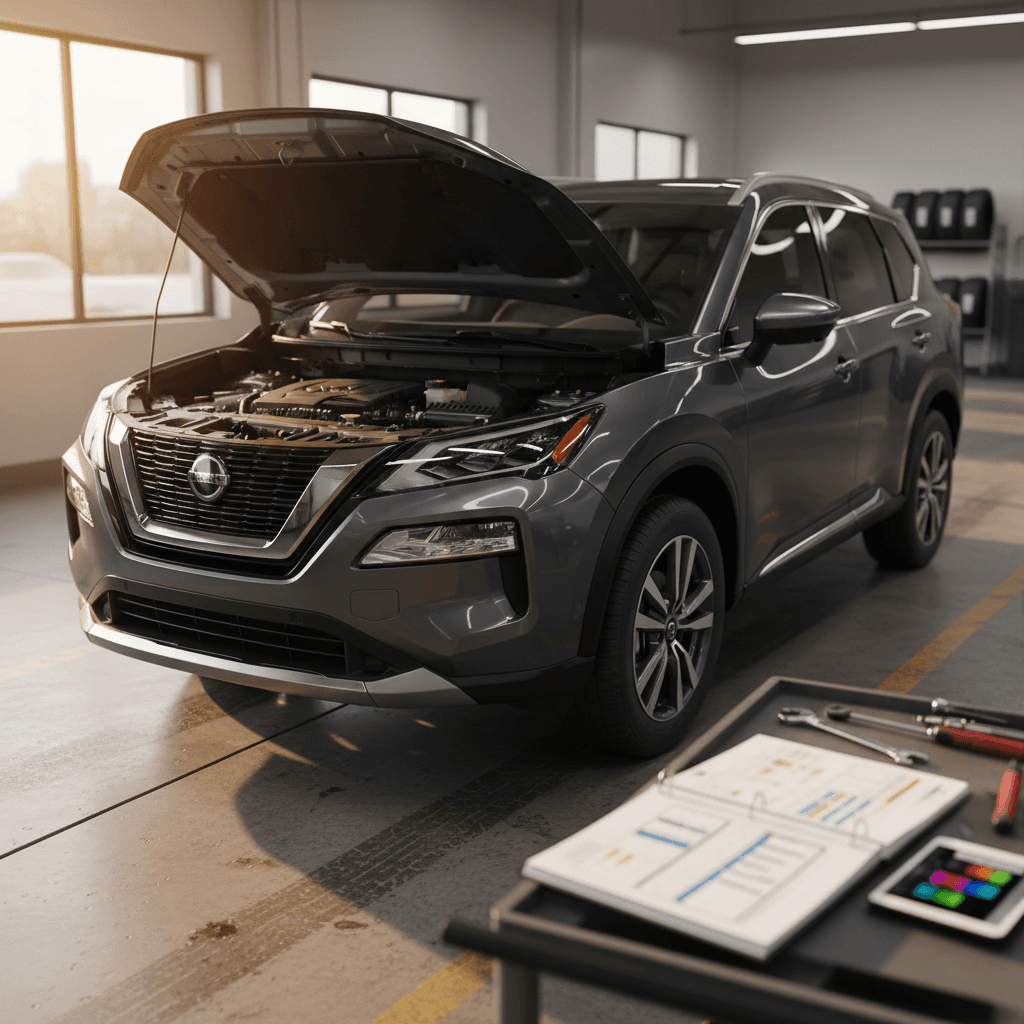
If you own a Nissan Rogue, your service routine will decide whether it feels solid at 150,000 miles or starts getting expensive much sooner. Understanding the right Nissan Rogue service schedule, and which items matter most, helps you avoid surprise repairs, keeps your crossover safe, and protects its resale or trade‑in value if you eventually move into an EV.
Big picture
Why Nissan Rogue service really matters
On paper, the Nissan Rogue is a practical, efficient compact SUV. In the real world, long‑term ownership hinges on maintenance. Its turbo engines and CVT transmission are efficient but operate under high stress. Stretching oil changes, skipping CVT fluid service, or ignoring brake and coolant flushes can turn a low‑cost commuter into a liability.
What good maintenance gets you
Three payoffs of following your Rogue’s service schedule
Reliability
Fresh fluids and filters reduce wear on engines, CVTs, brakes, and steering components, keeping failures rare instead of routine.
Safety
Routine inspections catch worn brakes, tires, and suspension parts before they turn into an unsafe emergency stop, or a failed inspection.
Resale & trade‑in value
A stamped service book or digital record can add meaningful value when you sell or trade, especially as more drivers move into EVs.
Nissan Rogue service schedule at a glance
Nissan adjusts maintenance tables by model year and engine, but most recent Rogues (including the 1.5L turbo three‑cylinder) follow similar patterns. Always confirm details in your owner’s manual, but you can think of Rogue service in these broad buckets:
Typical Nissan Rogue maintenance cadence
Always check your specific manual
Service by mileage: What to do and when
Here’s a practical, easy‑to‑remember outline that lines up with what many Nissan dealers recommend for the Rogue. If your manual is stricter, follow the manual; if it’s looser, this schedule errs slightly on the cautious side to protect long‑term reliability.
Approximate Nissan Rogue service intervals
Summarized for recent model years; always confirm with your Owner’s Manual.
| Mileage / Time | Key Services | Why it matters |
|---|---|---|
| Every 5,000–7,500 mi or 6–12 months | Engine oil & filter, tire rotation, brake inspection, fluid level check | Keeps the engine lubricated, tires wearing evenly, and brakes catching issues early. |
| 15,000–20,000 mi | Cabin air filter, engine air filter inspection/replacement, brake fluid (many dealer schedules), suspension and steering inspection | Improves cabin air, helps the engine breathe, and keeps brake feel consistent. |
| 30,000 mi | Repeat basics + CVT fluid inspection, possibly CVT fluid change under severe service, more detailed brake and fuel system inspection | Early CVT fluid service under heavy use can dramatically extend transmission life. |
| 45,000–60,000 mi | Spark plug replacement (many models), brake fluid again, drive belt inspection, CVT fluid change if not done earlier | Prevents misfires and hard starts; fresh fluids reduce heat and wear on major components. |
| 100,000–105,000 mi | Engine coolant replacement, thorough inspection of hoses, belts, suspension, and steering | Coolant loses corrosion protection over time; fresh coolant protects gaskets and prevents overheating. |
| Every visit | Multi‑point inspection, software updates, recall checks | Helps catch small issues, like seepage, worn bushings, or updated TSBs, before they become expensive. |
Key maintenance items grouped by mileage for most Nissan Rogue models.

Tie service to seasons
CVT fluid, brakes, coolant & other major services
Beyond routine oil changes, a few services have an outsized impact on how a Rogue ages: CVT fluid, brake fluid, spark plugs, and coolant. These items are where diligent owners quietly save thousands of dollars compared with those who only react when something breaks.
CVT fluid service
The Rogue’s continuously variable transmission (CVT) is efficient but intolerant of heat and dirty fluid. Many manuals in North America suggest inspections around 30,000 miles, and some dealer schedules push fluid replacement far down the road.
- Conservative approach: Drain-and-fill every 30,000–40,000 miles, especially if you drive in traffic, heat, or hills.
- Standard approach: Follow the inspection schedule, but don’t wait past ~60,000 miles for the first fluid change.
Fresh CVT fluid is cheaper than a transmission; owners who keep these intervals rarely regret it.
Brakes, coolant & spark plugs
- Brake fluid: Many Rogue service schedules call for replacement around 20,000–30,000 miles and then periodically. It absorbs moisture over time, which hurts braking performance and corrodes components.
- Spark plugs: For most modern Rogues, expect replacement around 60,000 miles, even if some tables stretch it longer. Fresh plugs protect the coil packs and keep fuel economy on target.
- Coolant: Often due around 100,000–105,000 miles on newer models. Waiting too long risks degradation of corrosion inhibitors and potential head gasket issues.
Treat these as long‑term insurance policies, not optional extras.
Be wary of "lifetime" claims
Typical Nissan Rogue service costs
Service pricing varies with region and labor rates, but you can ballpark Rogue maintenance by looking at independent data and dealer menus. For a 2024 Rogue, one major cost‑to‑own study estimates about $6,000–$7,000 in maintenance over the first five years, before unexpected repairs. That includes routine services and bigger jobs like brakes and major fluid changes.
What common Rogue services usually cost
Approximate U.S. pricing at independent shops or dealers
Oil & filter change
$70–$130 with synthetic oil, depending on shop and region.
Often includes a multi‑point inspection and fluid top‑off.
Brake job (axle)
$250–$450 per axle for pads and rotor resurfacing or replacement.
Higher if calipers or hardware are seized.
CVT fluid service
$200–$400 for a drain‑and‑fill with genuine CVT fluid.
Full exchanges or neglected transmissions can cost substantially more.
Spark plug replacement
$200–$400 depending on engine access and plug type.
Often bundled with other 60,000‑mile services.
Coolant flush
$150–$250 for a full system flush and refill.
Usually not needed until around 100,000 miles on newer Rogues.
Inspection & minor fixes
$100–$250 for miscellaneous inspections, bulbs, wipers, and small adjustments.
Useful before long trips or before selling the vehicle.
Plan ahead, not react
Common Nissan Rogue issues, and how service helps prevent them
No crossover is perfect, and the Rogue is no exception. But most of its well‑known problems are made better, or at least less catastrophic, by smart maintenance and early diagnosis.
- Excessive oil consumption (newer turbo engines): Some owners report needing top‑offs between oil changes. Checking your oil level monthly and keeping intervals reasonable helps you spot issues before they become engine damage.
- CVT wear or shudder: Historically, Nissan CVTs haven’t enjoyed a stellar reputation. Conservative fluid changes and avoiding heavy towing or abuse dramatically improve your odds of smooth, long‑term operation.
- Suspension and steering wear: Struts, control arms, and bushings can wear faster on rough roads. Regular inspections catch play or leaks before tires and alignment suffer.
- Brake noise and vibration: Letting pads go metal‑to‑metal or ignoring vibration can quickly damage rotors. Routine inspections and timely pad replacements keep costs manageable.
Well‑timed maintenance doesn’t make a flawed design perfect, but it shifts the odds in your favor. The difference between a good and a bad ownership story with the same vehicle is often just discipline on service.
Adjusting your schedule for severe driving
Official service tables usually split usage into "standard" and "severe" conditions. The catch is that many real‑world Rogue owners fall into the severe bucket without realizing it, and that should change how you think about timing your services.
Do you drive your Rogue in severe conditions?
If any of these sound like you, shorten intervals.
Common severe use cases
- Frequent short trips under 5 miles
- Stop‑and‑go urban traffic
- Regular driving in extreme heat or cold
- Dusty, unpaved roads or road salt exposure
- Heavy loads or roof boxes on long trips
How to adjust service
- Oil changes: consider 5,000 miles or less.
- CVT fluid: inspect frequently; change around 30,000 miles.
- Brake inspections: at every visit.
- Filters: check cabin and engine air filters more often.
Use your climate as a guide
How service history impacts resale or trade-in value
When you eventually move on from your Rogue, whether that’s to another gasoline SUV or your first EV, your maintenance story becomes part of the negotiation. A clean, well‑documented service history is one of the simplest ways to protect your wallet at that moment.
Why records matter
- Dealers and buyers discount uncertainty: If they don’t know whether the CVT fluid was ever changed, they assume the worst and bid accordingly.
- Proof beats promises: Invoices for brake work, coolant flushes, and spark plugs are far more convincing than "I always kept up with it" in conversation.
- Digital history travels: Many shops and dealers store history electronically, which can be pulled later to support a sale or trade.
Where Recharged fits in
If you decide your next step is an EV, a well‑maintained Rogue can be a valuable asset. At Recharged we:
- Provide fair trade‑in or consignment options when you’re ready to switch from a gas SUV to an electric vehicle.
- Rely on data‑driven pricing and condition, not just a quick glance, so your maintenance effort actually counts.
- Sell EVs with a Recharged Score battery health report, mirroring the transparency you wish you’d had when buying your gas car.
Your service discipline today makes your transition to an EV financially easier tomorrow.
Quick Nissan Rogue service checklist
Use this before every service visit
1. Note current mileage & time since last visit
Write down your odometer reading and how many months it’s been since your last oil change or major service. This helps you and the advisor prioritize the right work.
2. List any new noises or driving changes
Clunks, shudders, or changes in steering or braking feel are critical clues. Mention when they happen (cold, hot, braking, turning, highway speeds).
3. Confirm oil change interval
If a dealer sticker shows 3,000 miles but your manual says 7,500 with synthetic, ask why. You can still choose a conservative interval, but it should be a conscious choice.
4. Ask about CVT and brake fluid status
Request that the shop document when CVT fluid and brake fluid were last changed and whether they’re due based on mileage and conditions.
5. Keep all invoices and digital records
Create a folder (physical or digital) where every service invoice lives. It will matter when you sell or trade the car.
6. Plan the next visit on the spot
Before you leave, schedule your next service window. Treat it like a dentist appointment, easy to move if needed, harder to remember from scratch.
Nissan Rogue service FAQ
Frequently asked questions about Nissan Rogue service
Owning a Nissan Rogue doesn’t have to mean guessing at service intervals or waiting for dashboard lights to tell you what’s wrong. With a clear maintenance roadmap, and a realistic view of your driving conditions, you can keep your Rogue reliable, safe, and financially predictable for years. And when you’re ready to transition into an electric vehicle, that disciplined service history becomes an asset, not an afterthought, making it easier for companies like Recharged to value your trade fairly and help you step confidently into your next car.