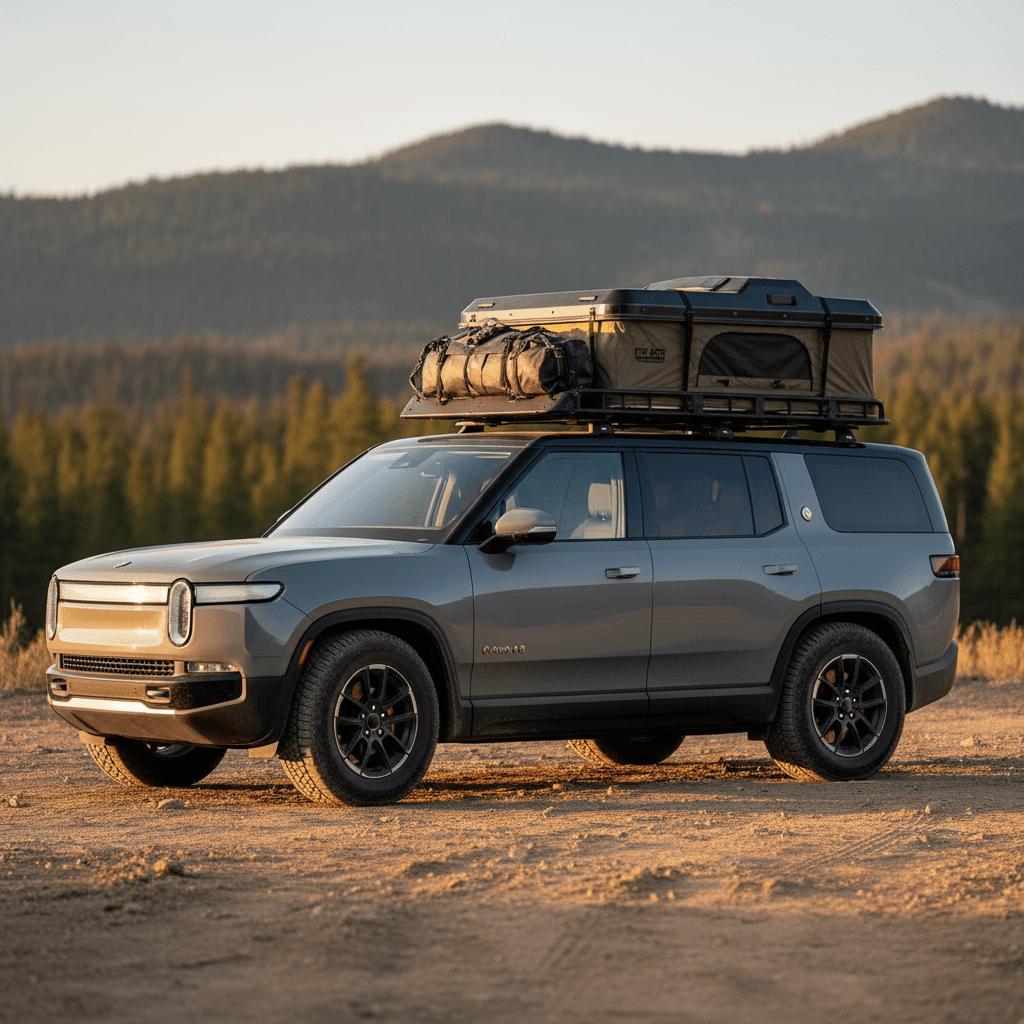
If you’re eyeing a cargo box, bikes, kayaks, or a rooftop tent for your Rivian R1S, the first question is simple: **how much weight can the R1S roof rack actually hold?** Getting this wrong isn’t just a warranty headache, it can affect handling, braking, and that big panoramic glass roof you paid for.
Short answer
Rivian R1S roof rack weight limit at a glance
Key Rivian R1S roof load numbers
Those numbers sound generous on paper. In the real world, they have to cover the weight of **everything above the glass**: the rack itself, crossbars, boxes, skis, bikes, kayaks, rooftop tent, and sometimes two or three sleeping humans. That’s why Rivian, and any rack maker worth listening to, tells you to stay inside the vehicle’s own ratings, no matter how overbuilt the rack looks.
Dynamic vs static roof load: what those numbers really mean
Dynamic load (driving)
Dynamic load is the maximum weight allowed while the vehicle is moving. That’s the number you use when you ask, “Can I drive down the highway with this box, bike rack, or rooftop tent mounted?”
- Includes rack + crossbars + accessories + cargo
- Accounts for wind, bumps, emergency maneuvers, and body roll
- Is almost always the lower of the two ratings
If your R1S crossbars are rated around 250 lbs dynamic, you treat that as your hard ceiling while driving.
Static load (parked)
Static load is the maximum weight allowed when the vehicle is stationary. Once you’re parked at camp, the structure can support far more than it can safely carry at 75 mph.
- Includes tent + people + bedding + gear
- Often 2–3x higher than dynamic ratings
- Makes rooftop tents possible without crushing the roof
For rooftop tents on an R1S, static ratings in the 600–780 lb ballpark are common, but you must confirm your exact figure in the owner’s guide for your model year.
Never mix up these ratings
Official Rivian R1S cargo crossbar weight limits
Rivian doesn’t print “roof rack weight limit” in the giant letters you might hope for, but buried in the owner’s guide and accessory docs are the numbers that matter. While exact wording can shift with model‑year updates, the pattern is consistent across R1T and R1S:
- The factory Rivian cargo crossbars for R1S are rated for roughly 250 lbs (113 kg) of dynamic load per crossbar pair.
- Static load, what the roof can support when parked, is substantially higher, commonly referenced in the 600–780 lb total range on Rivian platforms.
- You must also respect the vehicle’s overall roof cargo limit, which several spec databases peg around 113 kg (249 lbs) for R1S while driving.
Where to find your exact numbers
Remember: these limits assume the vehicle is in good condition, the crossbars are correctly installed in the factory mounting points, and everything is torqued to spec. A loose mount or improvised clamp‑on bar can dramatically change the equation.
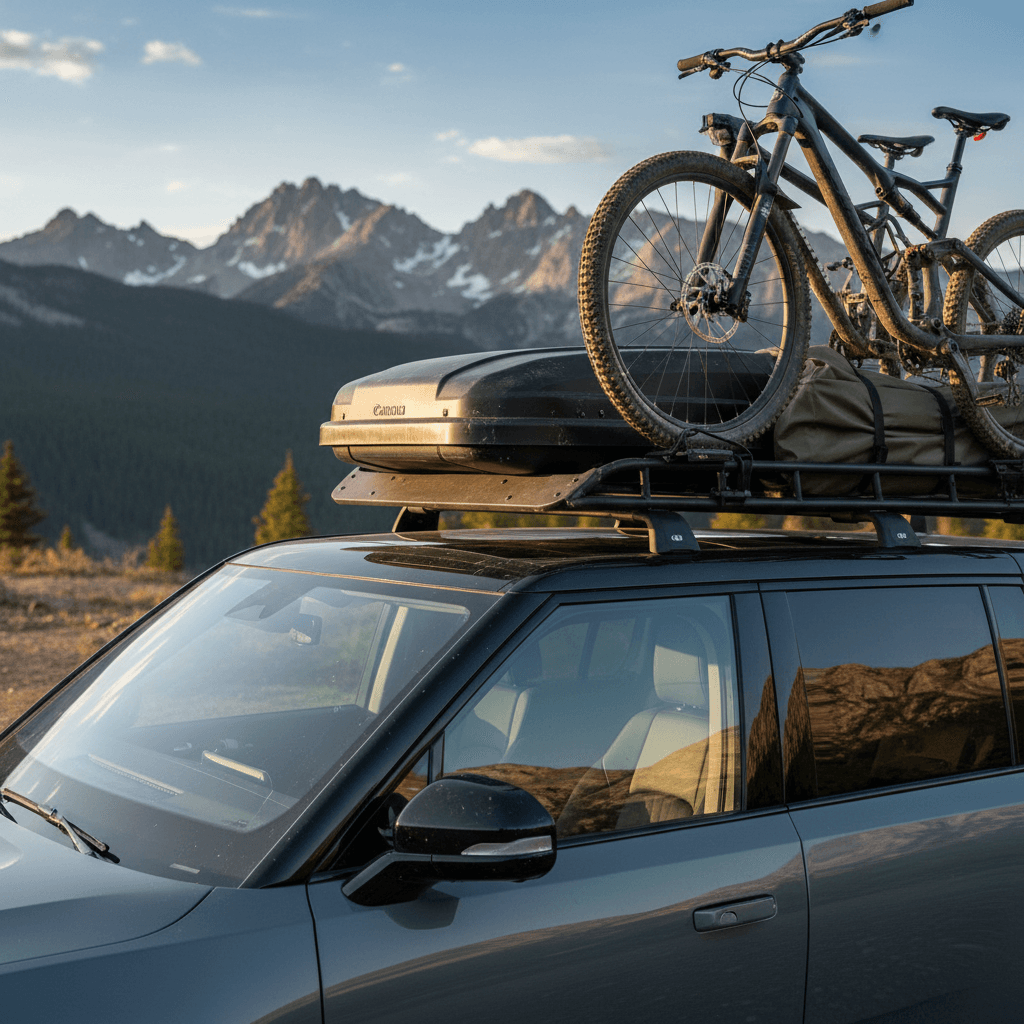
Aftermarket racks on an R1S: do higher ratings matter?
Spend five minutes shopping for Rivian R1S racks and you’ll see big numbers: 300 lbs dynamic here, 600 lbs dynamic there, and static ratings over 1000 lbs on some full‑length platforms. It’s impressive engineering, but it doesn’t magically upgrade your R1S roof.
Common R1S rack options and what their ratings mean
The strongest rack is still limited by the Rivian roof beneath it.
Full platform racks
These replace the crossbars with a full-length deck. Makers often advertise 300–600 lb dynamic and 800–1200 lb static ratings.
Use these as proof the rack itself is stout, not as permission to ignore Rivian’s published roof and crossbar limits.
Low‑profile crossbar systems
Some aftermarket crossbars bolt into the same factory mounting points but use beefier extrusion or more bars.
They can spread weight better or reduce wind noise, but your safe load is still capped by the vehicle and its attachment points.
Clamp‑on & budget bars
Universal clamp‑on bars may list a 220–300 lb capacity, yet they aren’t engineered specifically for the R1S roof shape.
On a glass‑heavy EV, that’s a red flag. When in doubt, stick to factory rails and dedicated fit kits.
Vehicle ratings always win
Can a Rivian R1S safely run a rooftop tent?
Yes, roof‑top tents and Rivian R1S SUVs go together like coffee and a cold morning at the trailhead. The key is sizing the tent and your camping payload so you never exceed the roof or rack ratings, either in motion or parked.
Typical rooftop tent weights vs R1S roof limits
Use this as a ballpark guide, always check your tent’s actual weight and your owner’s guide before you buy.
| Setup | Approx. tent weight | Rack + crossbars | Total roof load (driving) | OK for R1S? |
|---|---|---|---|---|
| Soft‑shell 2‑person RTT | 120–140 lbs | 50–70 lbs | 170–210 lbs | Generally within ~250 lb dynamic limit if you pack light up top |
| Soft‑shell 3‑person RTT | 140–170 lbs | 60–80 lbs | 200–250 lbs | Borderline, requires lightweight rack and minimal extra roof gear |
| Hard‑shell RTT | 150–200+ lbs | 60–80 lbs | 210–280+ lbs | Often exceeds practical dynamic limit on R1S |
| Tent + bikes/box | 140–170 lbs | 60–80 lbs | + bikes/box | Very easy to overload, move extra cargo inside instead |
Weights shown are examples; your specific tent, rack, and accessories will vary.
A realistic sweet spot
When you’re parked, that same R1S can safely support you, your partner, a kid or two, and normal camping gear in the tent, as long as the **combined static weight** stays under Rivian’s limit. Many families comfortably camp on R1S roofs because the weight is spread across factory mounting points and reinforced structure, not just the glass panel.
How to calculate a safe roof load for your R1S
Before you click “buy” on that shiny tent or cargo box, grab a notepad, or your phone’s calculator, and run the numbers. Here’s a simple way to keep your Rivian honest.
Step‑by‑step: sizing your R1S roof load
1. Find your official limits
Look up the <strong>maximum roof cargo</strong> and <strong>crossbar dynamic/static</strong> ratings in your R1S owner’s guide. Write them down. Your safe load is capped by the lowest number you see.
2. Add up everything above the glass
List the weight of your rack or platform, crossbars (if separate), cargo box or rooftop tent, mounting hardware, bikes, skis, and any light bars or awnings. Use manufacturer specs, not guesses.
3. Compare to the dynamic rating
Your total moving roof weight must stay under the <strong>dynamic</strong> limit, often around 250 lbs on an R1S. If your number is close to or above that, you either need a lighter setup or to move gear inside the vehicle.
4. Check static load for rooftop tents
For camping, add <strong>tent + people + bedding + bags</strong>. Compare that to the R1S static rating. Give yourself a safety margin instead of running right at the number.
5. Don’t forget GVWR and payload
Heavy roof gear plus seven passengers, plus luggage, plus a trailer can push you close to the R1S’s <strong>gross vehicle weight rating (GVWR)</strong>. If you’re loading to the max, keep an eye on overall payload, tire pressures, and suspension sag.
6. Re‑check after mods or upgrades
New wheels, added armor, or a different rack system can all change how much real-world payload you have left. Any time you make changes, repeat the math before you assume your old roof numbers still work.
Packing tips, range impact, and daily‑driver sanity
Even when you’re staying comfortably within the Rivian R1S roof rack weight limits, how and where you pack your gear can make a big difference in highway manners and range. Think of the roof as premium real estate, not general storage.
Make the most of your R1S roof without killing range
A few simple choices can keep your EV feeling like an EV, not a brick.
Prioritize aerodynamics
Big square tents and upright bikes act like parachutes. If you care about range, choose low‑profile boxes, sleeker tents, and keep tall items as far back and as low as possible.
Move dense weight inside
Put heavy, dense items, water, tools, recovery gear, on the floor inside the R1S, between the axles. Use the roof for bulky but lighter stuff like sleeping bags or camp chairs.
Adjust your pace
Roof loads magnify the effect of speed. An R1S with a box or tent will see more range loss as you climb past 70 mph. Dropping 5 mph often saves more time in charging than you lose in cruising speed.
Good news for everyday driving
Roof rack safety checklist for your next trip
Treat roof gear like you treat charging: a quick routine that keeps your EV happy and your family safer. Before every big trip, and at least once a season, run through a simple checklist.
Pre‑trip roof rack safety checks
Confirm weight math
Re‑add the weight of your rack, crossbars, tent or box, and any bikes or kayaks. Make sure your moving load still sits safely under the R1S dynamic limit and your rack’s own rating.
Inspect mounting points and hardware
Check every mount for cracks, corrosion, or pulled‑through fasteners. Verify the rack is still seated correctly in the factory R1S mounting points with no wobble or play.
Verify torque and clamp tightness
Use a torque wrench where the manufacturer specifies values. For clamp‑on systems, make sure bolts haven’t loosened after a few hundred miles of driving or an off‑road trip.
Check clearance and hatch movement
Open the rear hatch fully and turn the front wheels lock‑to‑lock. Confirm nothing contacts the glass, shark‑fin antenna, or paint, even on uneven ground.
Secure every loose end
Tie down straps, awning arms, and wiring. Anything that can flap, chafe, or bang in the wind will eventually damage paint, glass, or the rack itself.
Adjust tire pressure and drive mode
If you’re heavily loaded for a trip, set tire pressures to the loaded recommendations on your door placard and choose the R1S drive mode that best matches your conditions.
Rivian R1S roof rack weight limit FAQ
Frequently asked questions about R1S roof rack limits
How Recharged can help if you’re shopping used
If you’re dreaming of an R1S loaded with skis, bikes, or a rooftop tent, the roof rack weight limit isn’t just a number, it’s the line between confident adventure and nagging doubt. You want to know that the SUV under all that gear is structurally sound, the battery is healthy, and the previous owner didn’t spend three summers overloading cheap crossbars on that glass roof.
That’s where Recharged comes in. Every used EV we sell, including Rivian R1S models, comes with a Recharged Score Report that details battery health, fair market pricing, and key condition notes, so you’re not guessing about how the vehicle has been used. Our EV specialists can walk you through roof load limits, towing, and charging, and help you pick an R1S that fits your actual plans, whether that’s a sleek cargo box for ski weekends or a full overland setup with a rooftop tent.
You can handle the adventures. Let us handle the homework. When you’re ready, explore used Rivian listings, talk through accessories and financing, and even arrange nationwide delivery or a visit to our Richmond, VA Experience Center, without ever having to guess what your R1S roof rack can safely carry.