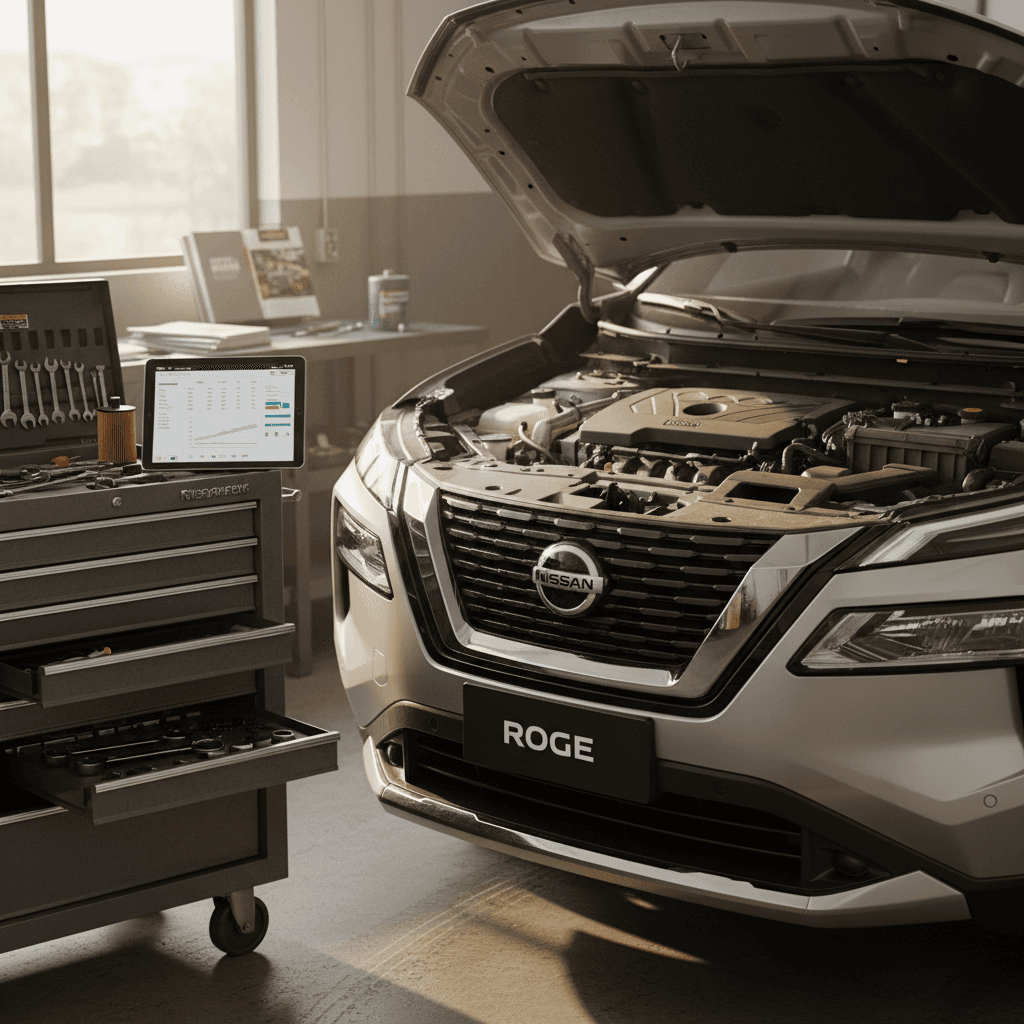
If you own or are considering a Nissan Rogue, understanding Nissan Rogue maintenance is just as important as fuel economy or features. The Rogue can be a low-drama daily driver if you stay ahead of maintenance; ignore it, and repair bills can stack up quickly, especially on newer models with turbo engines and CVTs.
Which Rogue does this apply to?
Nissan Rogue maintenance at a glance
Big-picture Nissan Rogue ownership numbers
Compared with similar compact SUVs, the Rogue’s routine maintenance costs are generally mid-pack. Oil changes and filters are inexpensive; what drives long-term cost is how well you care for the CVT transmission and, on 2021–2024 models, the 1.5L VC-Turbo engine.
Quick rule of thumb
Nissan Rogue maintenance schedule by mileage
Your owner’s manual is the final word, but most Nissan dealerships and independent shops follow a similar pattern. Here’s a simplified Nissan Rogue maintenance schedule that works as a reference for most model years:
Typical Nissan Rogue maintenance schedule
Common service intervals for many 2014–2025 Rogue models. Check your manual for exact requirements.
| Mileage / Time | Key Services | Notes |
|---|---|---|
| Every 7,500 mi / 6 months | Engine oil & filter; multi-point inspection; tire rotation; top off fluids | Some older manuals list 5,000-mile oil changes. When in doubt, more frequent is safer, especially if your driving is mostly city or short trips. |
| 15,000–20,000 mi | Cabin air filter; brake inspection; battery test | Plan on a cabin filter about every 15k and a brake inspection at least once a year. |
| 30,000 mi | Engine air filter; brake fluid inspection/replacement; alignment check | Good time to do a more thorough inspection, especially if you notice pulling or uneven tire wear. |
| 60,000 mi | Transmission fluid service (if recommended); spark plug inspection (older models); coolant check | Some CVT fluid is listed as inspection only , but many owners choose a drain-and-fill around this mileage for peace of mind. |
| 90,000–100,000 mi | Spark plugs (newer engines), coolant service, accessory belt inspection/replacement | Higher-mileage Rogues benefit from proactive replacement of wear items before long trips. |
| Every year | Brake fluid test/replacement as needed; rust / underbody inspection in snow-belt regions | In the Northeast or Midwest, salt accelerates corrosion, catching it early is far cheaper than structural repairs. |
Intervals assume normal driving; use the severe-schedule side if you tow, idle a lot, or drive in extreme heat or cold.
Severe service? Use shorter intervals
Typical Nissan Rogue maintenance costs
Actual costs will vary by region and shop, but it helps to have ballpark numbers when you’re budgeting or comparing the Rogue to other SUVs.
What common Rogue services usually cost
Independent shop pricing in many U.S. markets as of late 2025
Oil & filter change
Expect $70–$130 depending on oil type and shop.
- Dealers may be on the higher end.
- Independent shops and quick-lubes fall lower if they run specials.
Brakes & tires
Brake pads/rotors: $350–$650 per axle.
Tires: $650–$1,000 for a set of quality all-season tires mounted and balanced.
Fluids & filters
CVT fluid service: typically $250–$450.
Coolant, brake fluid, differential fluids: $150–$250 each when needed.
For a newer Nissan Rogue, most third‑party cost‑to‑own tools land in the $800–$900 per year maintenance/repair range over the first five years, assuming about 15,000 miles per year. That’s competitive with other compact crossovers, but spikes can appear in years where tires or major fluids come due.
Good news for used buyers
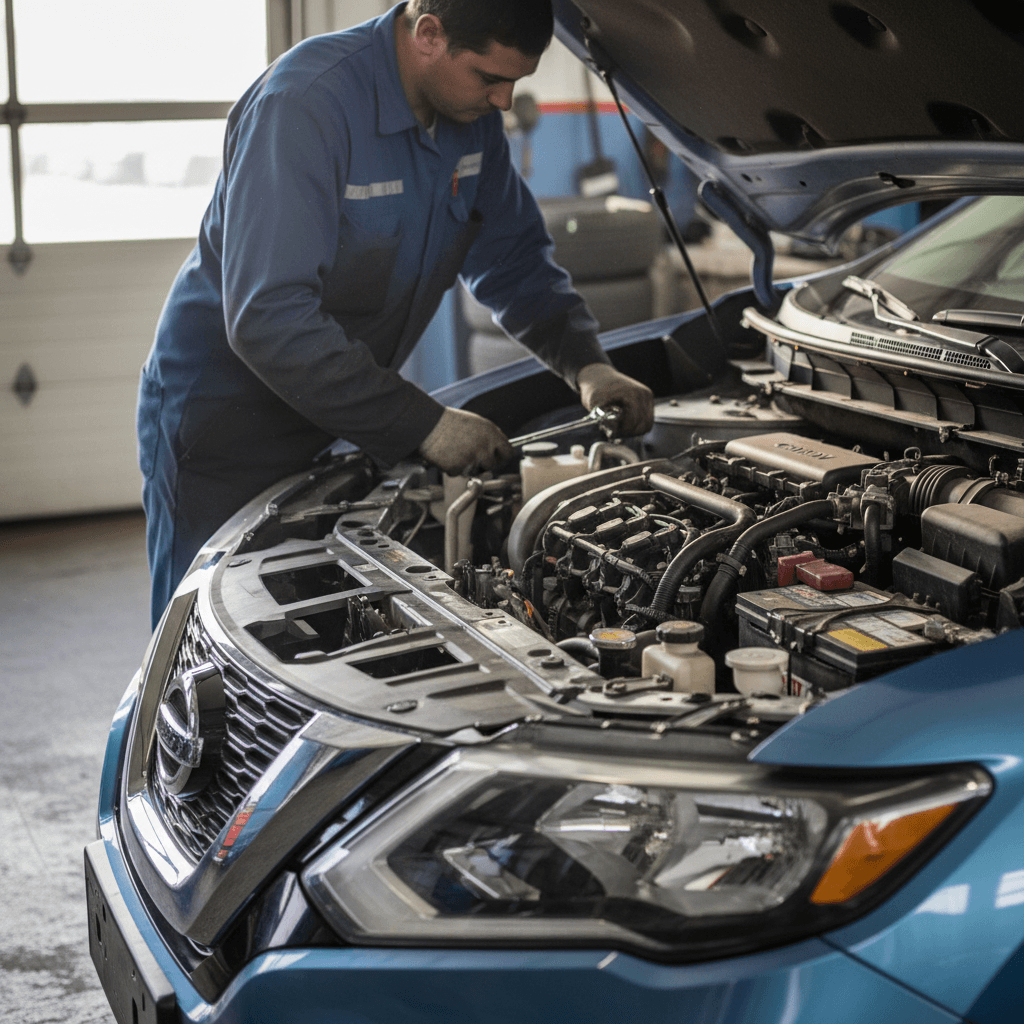
CVT and engine care on the Rogue
Most modern Rogues pair a small-displacement four‑cylinder or 1.5L VC‑Turbo three‑cylinder with a CVT (continuously variable transmission). This combo delivers good fuel economy, but it also means your maintenance discipline matters more than it would on an old‑school automatic.
CVT best practices
- Warm-up counts: Avoid hard acceleration until the drivetrain is up to temperature.
- Gentle launches: CVTs dislike repeated full‑throttle standing starts; smooth inputs extend life.
- Fluid service: Even if the manual only calls for inspection, many technicians recommend a CVT fluid drain‑and‑fill around 60,000 miles and then every 30,000–40,000 miles after, especially in hot climates.
- Listen for whine: A rising or falling whine that changes with speed, or shuddering on take‑off, can be early signs of CVT trouble.
VC‑Turbo & other engines
- Oil quality is non‑negotiable: Small turbo engines are sensitive to dirty or degraded oil. Stick to the correct grade and don’t stretch intervals.
- Warm-down after hard runs: After highway or uphill driving, give the engine a gentle minute or two before shutdown.
- Pay attention to warnings: Any check‑engine light, low‑oil warning, or new knocking noise should be investigated immediately, especially on 2021–2024 VC‑Turbo Rogues that are part of recent engine‑bearing recalls.
Never ignore low oil or new noises
Common Nissan Rogue issues to watch for
No modern crossover is perfect. The Rogue’s widespread popularity means we have a good read on patterns that shop owners and owners tend to see over time.
- CVT complaints on earlier models: Pre‑2017 Rogues in particular had more reports of CVT judder, whine, and eventual failure. Many were addressed under extended warranties, but on a used example you’ll want service records and a long test drive.
- Wheel bearings & suspension wear: Like many compact SUVs, front wheel bearings and struts can show their age around 80,000–120,000 miles, especially on rough roads.
- Electronic gremlins: Backup cameras, infotainment screens, sensors, and keyless entry systems occasionally act up. These issues are usually annoying rather than catastrophic, but diagnosis at a dealer can still be pricey.
- Rust in snow‑belt states: Not unique to Nissan, but worth noting. Check rocker panels, rear hatch bottoms, and underbody mounting points carefully if the vehicle has lived where roads are salted.
Used Rogue shopping tip
Recalls & the VC-Turbo engine: what owners should know
In 2025 Nissan announced large recalls for certain vehicles equipped with its 1.5‑liter and 2.0‑liter VC‑Turbo engines, including many 2021–2024 Nissan Rogues. The concern is premature wear on internal engine bearings that can lead to engine damage or failure over time.
- Symptoms can include abnormal engine noise (knocking, rattling), rough running, or new warning lights.
- Dealers inspect the engine oil pan for metal debris; if debris is present, the engine may be repaired or replaced under the recall.
- Nissan has outlined extended warranty coverage (up to 10 years or 120,000 miles on certain vehicles) for affected engines. Exact terms depend on your VIN and campaign details.
- Owner notification letters began going out in mid‑ to late‑2025, but you don’t have to wait, your dealer or the NHTSA recall site can check your VIN now.
How to check if your Rogue is affected
How maintenance affects Rogue resale value
With compact crossovers, the difference between a cheap Rogue and an expensive one isn’t just miles, it’s maintenance documentation. Buyers and lenders know that a turbocharged, CVT‑equipped vehicle lives or dies on how it has been serviced.
Two Rogues, very different resale stories
Same model year, similar mileage, different maintenance paths
Rogue A: fully documented
- Oil changes recorded every 5k–7.5k miles.
- CVT fluid serviced around 60k–70k miles.
- Recall work completed with invoices.
- Tires, brakes, and batteries replaced on time.
Result: Easier to finance, higher trade‑in and private‑party valuations.
Rogue B: no records
- Long gaps between services or missing history.
- No proof of CVT or coolant service.
- Open recalls showing on VIN lookup.
- Uneven tire wear, dash warning lights.
Result: Lower offers, more scrutiny from savvy buyers and lenders.
Where Recharged fits in
Ready to find your next EV?
Browse VehiclesDIY vs shop maintenance on a Rogue
If you’re reasonably handy, there’s money to be saved by doing some Nissan Rogue maintenance yourself. The trick is knowing where DIY makes sense and where modern powertrains and safety systems call for professional tools and software.
What’s realistic to DIY on a Rogue?
Oil & filter changes
Accessible from underneath with basic tools and jack stands or ramps. Always use the correct oil weight and quality specified in your manual.
Engine & cabin air filters
Both are straightforward on most Rogues and can be swapped in minutes with YouTube guidance and a screwdriver.
Wiper blades & basic bulbs
Simple, low‑risk jobs. Just be careful with headlight housings, they’re expensive to replace if cracked.
Tires, brakes & suspension
Possible for experienced DIYers but safety-critical. If you’re not fully confident, pay a shop; improper work here can be dangerous.
CVT fluid & coolant service
Modern CVTs often require specific procedures, fluid types, and temperature checks. A good independent shop or dealer is usually the smartest choice.
Advanced diagnostics & ADAS
For check‑engine lights, sensor faults, or driver-assist system issues, professional diagnostics are usually cheaper in the long run than throwing parts at the problem.
Don’t void your coverage
Maintenance checklist before buying a used Rogue
If you’re shopping the used market, especially 5‑ to 8‑year‑old Rogues, maintenance history matters more than a shiny detail job. Here’s a quick pre‑purchase checklist you can run through with any seller.
Pre‑purchase maintenance checklist for a used Rogue
1. Ask for service records first
Look for consistent oil changes, CVT fluid service, coolant changes, and completed recalls. Gaps of 30,000 miles or more are a red flag.
2. Run a VIN recall & history check
Verify that open recalls, especially those related to VC‑Turbo engines, have been addressed, and cross‑check mileage against any Carfax/Autocheck data.
3. Inspect for leaks and noises
On a test drive, check for oil spots under the car, burning smells, or new mechanical noises from the engine bay or underbody.
4. Feel for CVT shudder
From a stop, accelerate gently and then more firmly. A healthy CVT should feel smooth and consistent, without sharp surges, slipping, or buzzing.
5. Check tires, brakes, and alignment
Uneven tire wear, steering pull, or pulsation under braking often points to neglected maintenance or prior damage.
6. Consider an independent inspection
A pre‑purchase inspection from an independent shop or an EV‑savvy retailer like Recharged is cheap insurance compared with one major surprise repair.
Buying or selling a Rogue?
Nissan Rogue maintenance FAQ
Common Nissan Rogue maintenance questions
Bottom line: making a Rogue cheap to own
The Nissan Rogue’s popularity isn’t an accident; for many households it hits a sweet spot of size, efficiency, and comfort. But like any modern crossover, it rewards owners who are proactive about maintenance, especially when it comes to oil quality, CVT fluid, and staying current on recalls.
If you already own a Rogue, build a simple plan around 7,500‑mile services, a thorough check‑up every 30,000 miles, and extra attention as you approach 60,000–100,000 miles. If you’re shopping used, make maintenance history and recall status as important as price and paint color. And when you’re ready to buy, sell, or trade, using a transparent marketplace like Recharged, with data‑driven pricing, nationwide support, and detailed vehicle health reporting, can turn all that careful maintenance into real money back in your pocket.