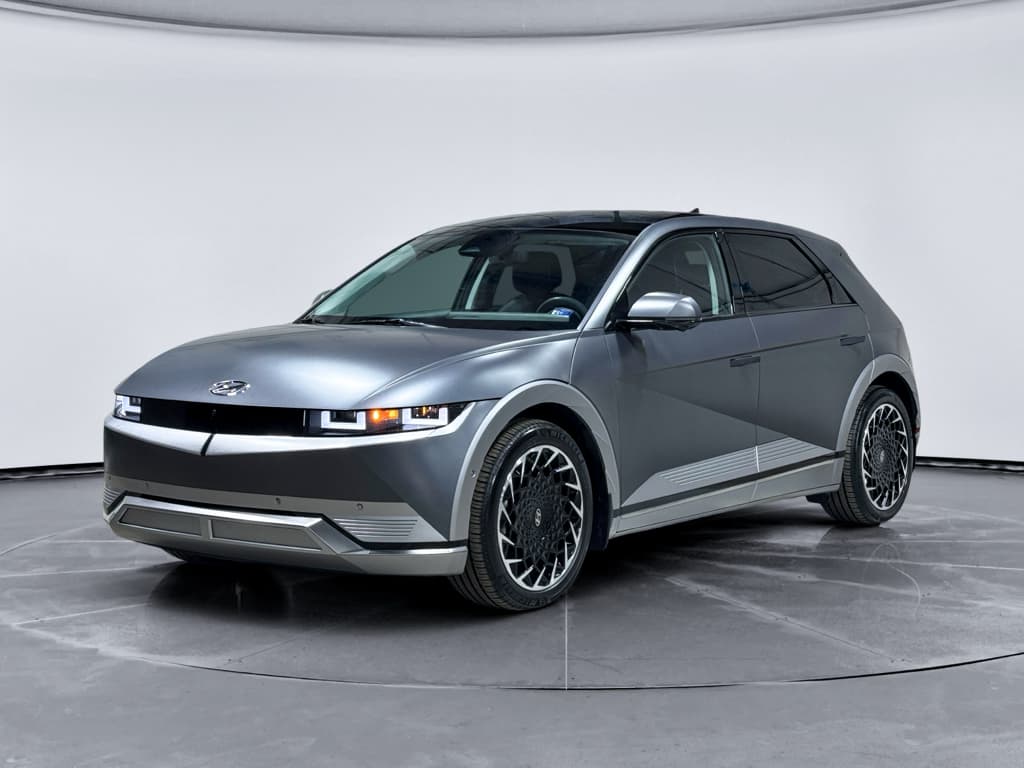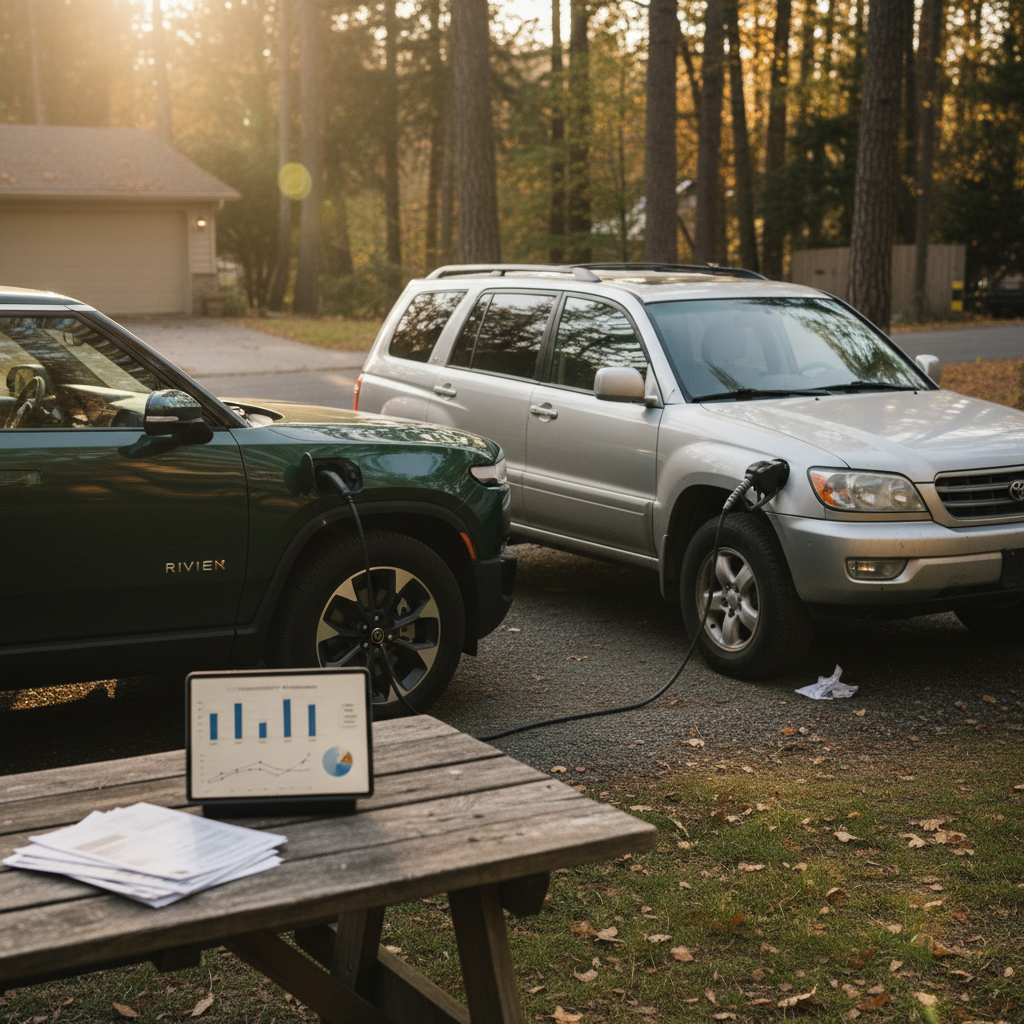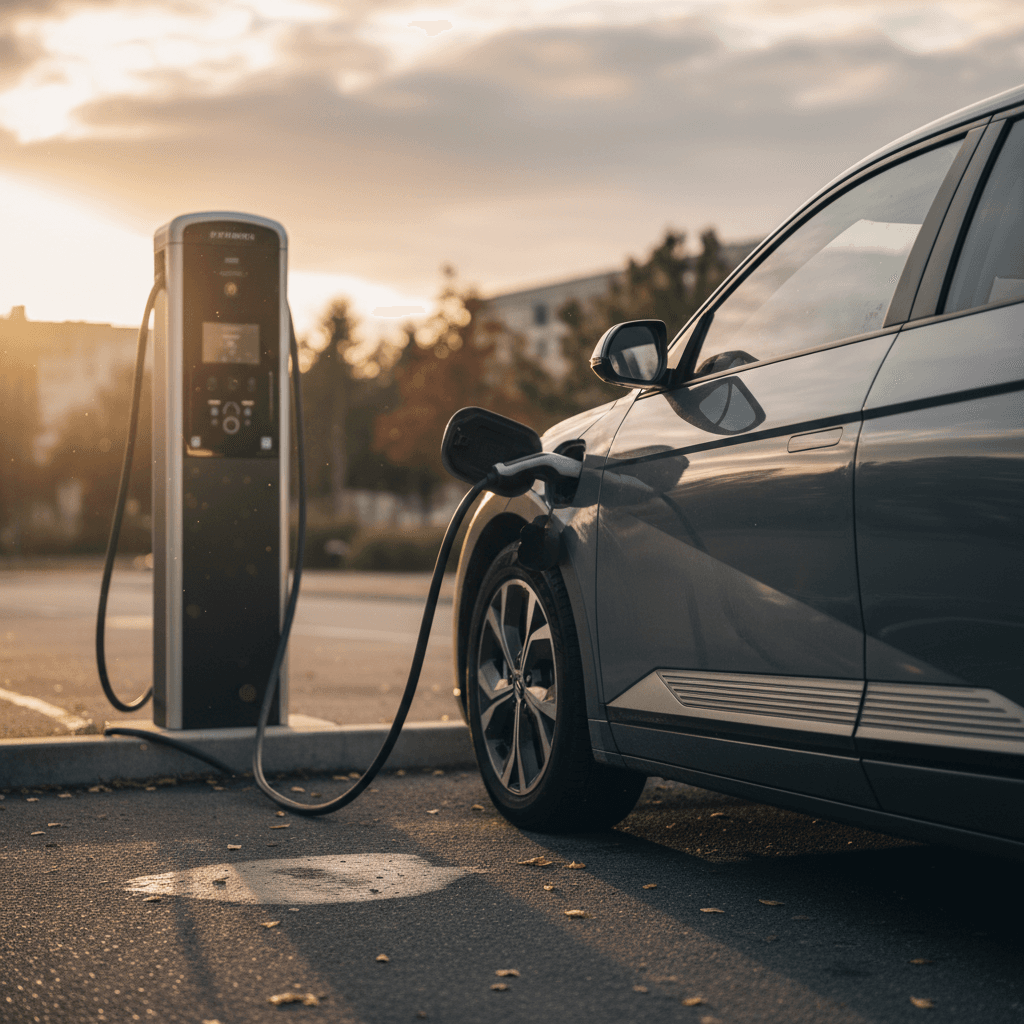
If you’re considering a Hyundai Ioniq 5, especially a used one, the question that really matters isn’t just MPGe or kWh/100 miles. It’s **how much the Hyundai Ioniq 5 costs per mile to charge** at your house and on the road. The good news: when you run the numbers with today’s U.S. electricity prices, the Ioniq 5 is usually dramatically cheaper per mile than a comparable gas SUV.
Key takeaway up front
Why Hyundai Ioniq 5 charging cost per mile matters
Automakers love to quote **EPA range** and **MPGe**, but as a shopper you care about **dollars, not acronyms**. Charging cost per mile is the cleanest way to compare a Hyundai Ioniq 5 to a gas SUV, or to another EV, because it links three things you can actually control: how efficient the car is, what you pay for electricity, and how you drive.
- Helps you compare an Ioniq 5 to your current gas vehicle on an apples‑to‑apples cost‑per‑mile basis.
- Lets apartment dwellers estimate the premium they’ll pay if they rely on public fast charging.
- Gives used‑EV shoppers a realistic view of **total cost of ownership**, not just the purchase price.
- Makes it easier to decide if upgrading your home panel or adding off‑peak EV rates is worth it.
Simple cost‑per‑mile formula
Hyundai Ioniq 5 efficiency: the numbers behind cost per mile
To estimate Hyundai Ioniq 5 charging cost per mile, we need a realistic efficiency number. Official EPA data and owner reports put most Ioniq 5 trims in the **2.8–3.5 miles per kWh** range in mixed driving, depending on battery, drivetrain, and conditions.
Typical Hyundai Ioniq 5 efficiency by trim (U.S.)
Approximate real‑world energy use figures to use when estimating cost per mile. Your exact results will vary with climate, speed, and driving style.
| Model / drivetrain | EPA efficiency (kWh/100 mi) | Approx. mi/kWh (EPA) | Real‑world mi/kWh many owners see |
|---|---|---|---|
| RWD (standard / long range) | ~28–30 | 3.3–3.6 | 3.2–3.7 |
| AWD (long range) | ~31–34 | 2.9–3.2 | 2.7–3.2 |
| Ioniq 5 N / performance‑oriented | higher | <3.0 | 2.3–2.7 (spirited driving) |
For rough cost‑per‑mile math, using 3.0–3.5 mi/kWh works well for many owners.
Don’t compare your winter commute to the EPA label
Home charging: typical Hyundai Ioniq 5 cost per mile
Most Ioniq 5 owners will do the majority of their charging at home. Recent U.S. data shows average residential electricity around **17–19¢/kWh** in 2025–2026, with wide variation by state. That’s the number you’ll plug into your cost‑per‑mile equation.
Hyundai Ioniq 5 home charging cost per mile (typical U.S. rates)
Let’s work through **two quick examples** using the same Hyundai Ioniq 5 efficiency but different home electricity rates:
- You pay **18¢/kWh** and average **3.3 mi/kWh** in your Ioniq 5. • Cost per mile = 0.18 ÷ 3.3 ≈ **5.5¢/mi**. • 1,000 miles/month ≈ **$55** in electricity.
- You pay **25¢/kWh** in a high‑cost area and average **3.0 mi/kWh**. • Cost per mile = 0.25 ÷ 3.0 ≈ **8.3¢/mi**. • 1,000 miles/month ≈ **$83** in electricity.
Use off‑peak EV rates if your utility offers them
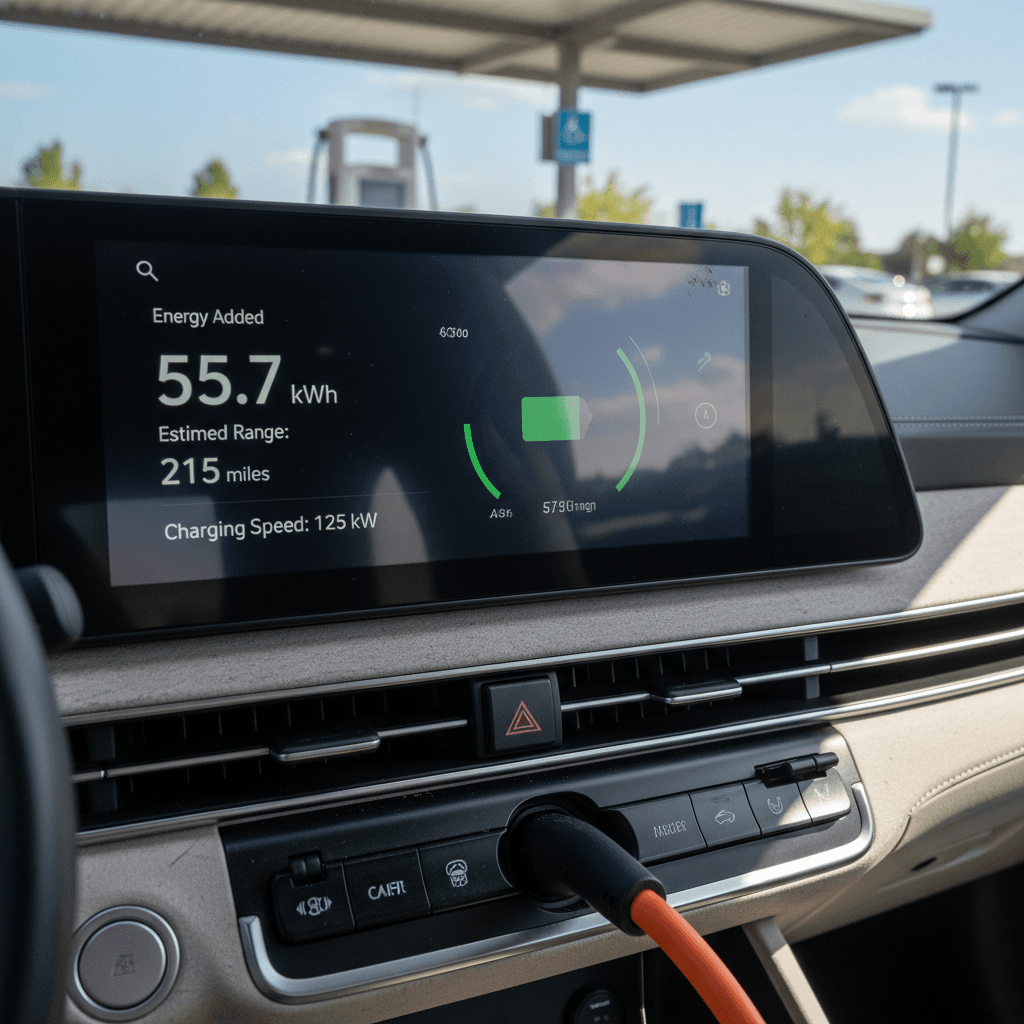
Public DC fast charging: Ioniq 5 cost per mile on the road
Where home electricity might cost you **15–25¢ per kWh**, public DC fast charging is often **40–60¢ per kWh** before any memberships. With the Ioniq 5’s strong fast‑charging speeds, you can still road‑trip comfortably, but each mile simply costs more.
Hyundai Ioniq 5 cost per mile at common DC fast‑charging prices
Approximate cost per mile for an Ioniq 5 using typical fast‑charging prices and realistic efficiency numbers.
| Price per kWh | Assumed mi/kWh (highway) | Approx. cost per mile | What it looks like in the real world |
|---|---|---|---|
| $0.35/kWh | 3.0 mi/kWh | ≈11.7¢/mi | Discounted/member rate on some networks in lower‑cost regions |
| $0.45/kWh | 2.8 mi/kWh | ≈16.1¢/mi | Common high‑speed charger rate along busy interstates |
| $0.55/kWh | 2.5 mi/kWh | ≈22.0¢/mi | Peak pricing in expensive markets or at ultra‑fast chargers |
These are ballpark figures; always check your specific network’s rates and any membership discounts.
Fast charging is like paying highway‑rest‑stop gas prices
For many owners, the reality looks like this: **80–90% of charging at home** at 5–7¢ per mile, plus **10–20% of miles** added at 14–20¢ per mile on fast‑chargers for trips. The blended result is still far below a comparable gas vehicle’s cost per mile.
How seasons, weather, and driving style change Ioniq 5 cost per mile
The Hyundai Ioniq 5 is efficient, but it’s still subject to physics. Temperature, speed, terrain, and your right foot all move the efficiency number up or down, and your charging cost per mile moves with it.
Four big factors that move your Ioniq 5 cost per mile
Same car, same battery, very different results depending on how and where you drive.
Cold weather
Very hot weather
Speed & highway driving
Driving style & load
Why EVs still win on running costs
Hyundai Ioniq 5 electricity cost per mile vs a gas SUV
Putting the Hyundai Ioniq 5 charging cost per mile in context helps. Let’s compare it to a typical compact or mid‑size gas SUV, exactly the vehicles many Ioniq 5 shoppers are coming out of.
Example: Ioniq 5 on home charging
- Average efficiency: 3.3 mi/kWh (mixed driving)
- Home electricity: $0.18/kWh
- Cost per mile: 0.18 ÷ 3.3 ≈ 5.5¢/mi
- 12,000 miles/year: about $660 in electricity
Example: Gas SUV replacement
- Real‑world economy: 26 mpg
- Gas price: $3.50/gal (conservative in many markets)
- Cost per mile: 3.50 ÷ 26 ≈ 13.5¢/mi
- 12,000 miles/year: about $1,620 in fuel
Viewed over a few years, the gap is huge
What these costs mean if you’re shopping for a used Ioniq 5
If you’re looking at a used Hyundai Ioniq 5, understanding charging cost per mile helps you judge whether a particular car, and your local energy rates, fit your budget. It’s not just about the sticker price; it’s about **what it will cost you every month to drive.**
Used Hyundai Ioniq 5: questions to ask about cost per mile
1. How much of your charging can be done at home?
If you can charge overnight at home most days, you’re likely in the **5–7¢/mile** range. If you must rely heavily on public DC fast charging, plan for much higher per‑mile costs.
2. What’s your real electricity price per kWh?
Don’t just look at the “energy” line item. Divide your total electric bill (including fees and taxes) by kWh used to get your **blended** rate. That’s what your Ioniq 5 will actually see.
3. Do local utilities offer EV or time‑of‑use rates?
An EV‑optimized plan can make a used Ioniq 5 even more compelling. Off‑peak rates often knock several cents off each kWh, shrinking cost per mile significantly.
4. What’s your typical annual mileage?
High‑mileage drivers benefit most from the Ioniq 5’s low running cost. If you drive 15,000–20,000 miles a year, the energy savings can dwarf small differences in purchase price between similar used EVs.
5. Has the battery been health‑checked?
Battery health doesn’t usually swing efficiency dramatically, but a well‑documented pack ensures you get the range you’re paying for, and helps keep your real‑world cost per mile predictable.
How Recharged helps with cost transparency
Ready to find your next EV?
Browse VehiclesStep‑by‑step: calculate your own Ioniq 5 charging cost per mile
Online calculators are nice, but your best estimate will always come from your own numbers, your utility, your driving, your Ioniq 5. Here’s a simple process you can follow in a few minutes.
DIY calculator: Hyundai Ioniq 5 charging cost per mile
1. Find your true electricity rate
Grab your last electric bill. Divide **total amount due** by **total kWh used**. If you paid $160 for 900 kWh, your true rate is about **17.8¢/kWh**.
2. Reset your Ioniq 5’s trip computer
Before a normal week of driving, reset one of the trip meters. At the end of the week, note the **average mi/kWh**. That’s your real‑world efficiency, not a lab guess.
3. Plug into the basic formula
Use: <strong>Cost per mile = (rate per kWh) ÷ (mi/kWh)</strong>. For example, 0.178 ÷ 3.2 ≈ **5.6¢/mi**.
4. Estimate your monthly and yearly “fuel” bill
Multiply cost per mile by how many miles you drive. At 5.6¢/mi and 1,000 mi/month, that’s **$56/month** or about **$672/year**.
5. Repeat the math for your old gas car
Take your old car’s mpg and local gas price, and run the same 12,000‑mile‑per‑year assumption. The gap between those two totals is your **annual savings** with the Ioniq 5.
6. Create a road‑trip fast‑charging scenario
Assume a higher kWh price (say, 45–50¢) and a lower highway efficiency (2.6–2.9 mi/kWh). Use the same formula to estimate what you’d spend on a typical 600–800‑mile trip.
Hyundai Ioniq 5 charging cost per mile: FAQs
Frequently asked questions about Ioniq 5 charging cost per mile
Bottom line: what you should budget per mile in an Ioniq 5
When you strip away the jargon and look at the real math, a Hyundai Ioniq 5 driven primarily on **home charging** in the United States is typically a **5–7¢‑per‑mile** vehicle. Mix in occasional DC fast‑charging and that might climb into the **7–10¢/mi** range on average, still far below the **12–18¢/mi** many drivers pay to feed an equivalent gas SUV.
If you’re cross‑shopping a used Hyundai Ioniq 5, that low and predictable charging cost per mile is one of its biggest strengths. Use your own electric bill and driving patterns with the simple formulas above, and you’ll know exactly what to expect before you sign anything. And if you’d like a second opinion, the EV specialists at Recharged can help you compare **cost‑per‑mile, battery health, and market pricing** across multiple used Ioniq 5s, so you end up with the right car, at the right price, with no surprises on your monthly bills.