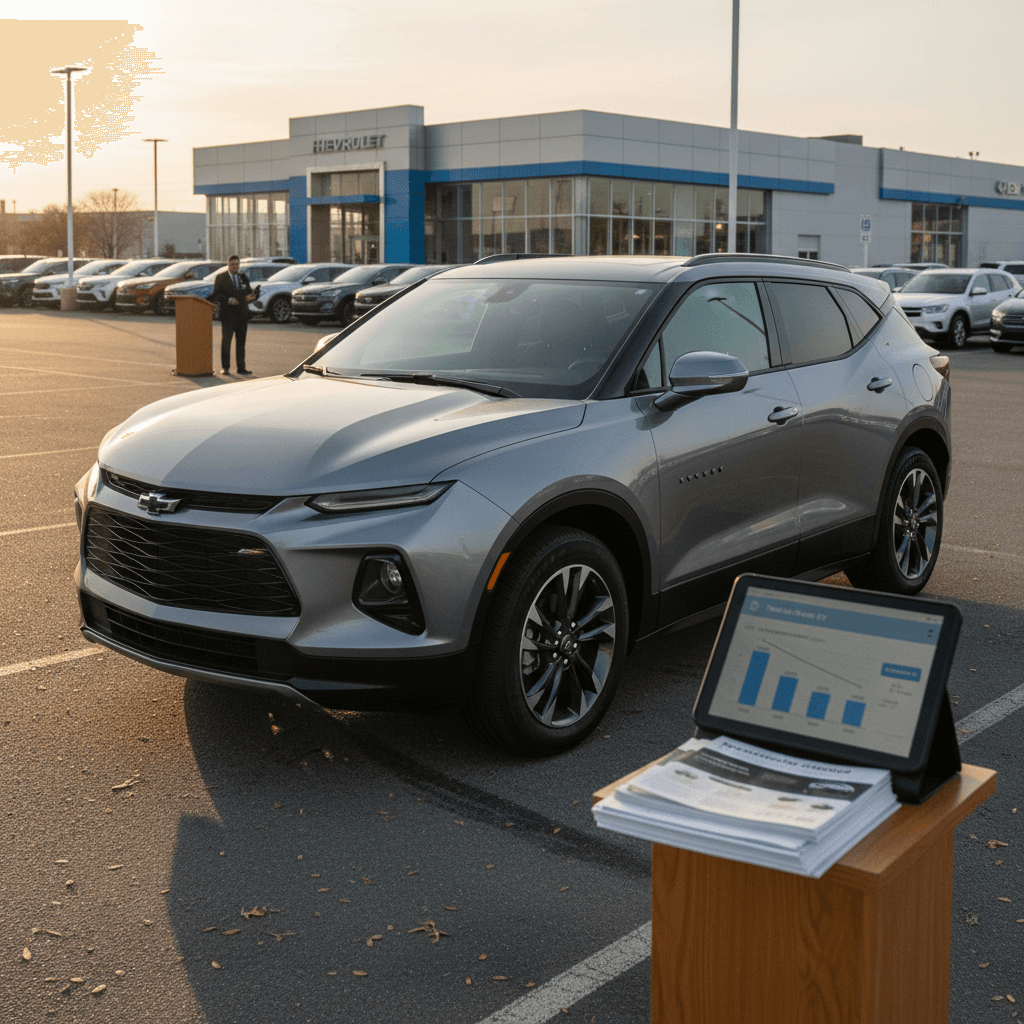
If you own a Chevrolet Blazer EV, you’ve probably noticed the headlines about fast‑moving EV prices. By 2026, trade‑in value has become a crucial question for Blazer EV drivers who are thinking about selling, leasing something new, or jumping into a different brand. This guide breaks down what your Chevrolet Blazer EV trade in value in 2026 might look like, why the numbers can feel all over the map, and how to put yourself on the right side of the deal.
Quick take
Chevrolet Blazer EV trade‑in value in 2026: overview
Blazer EV value snapshot in early 2026 (big‑picture ranges)
Those aren’t quotes; they’re realistic ballparks we see in early 2026 for Blazer EVs in average condition with typical mileage. Your actual number will depend heavily on trim, equipment, region, incentives you received when you bought, and whether you’re trading to a dealer, selling privately, or using a specialist EV marketplace like Recharged.
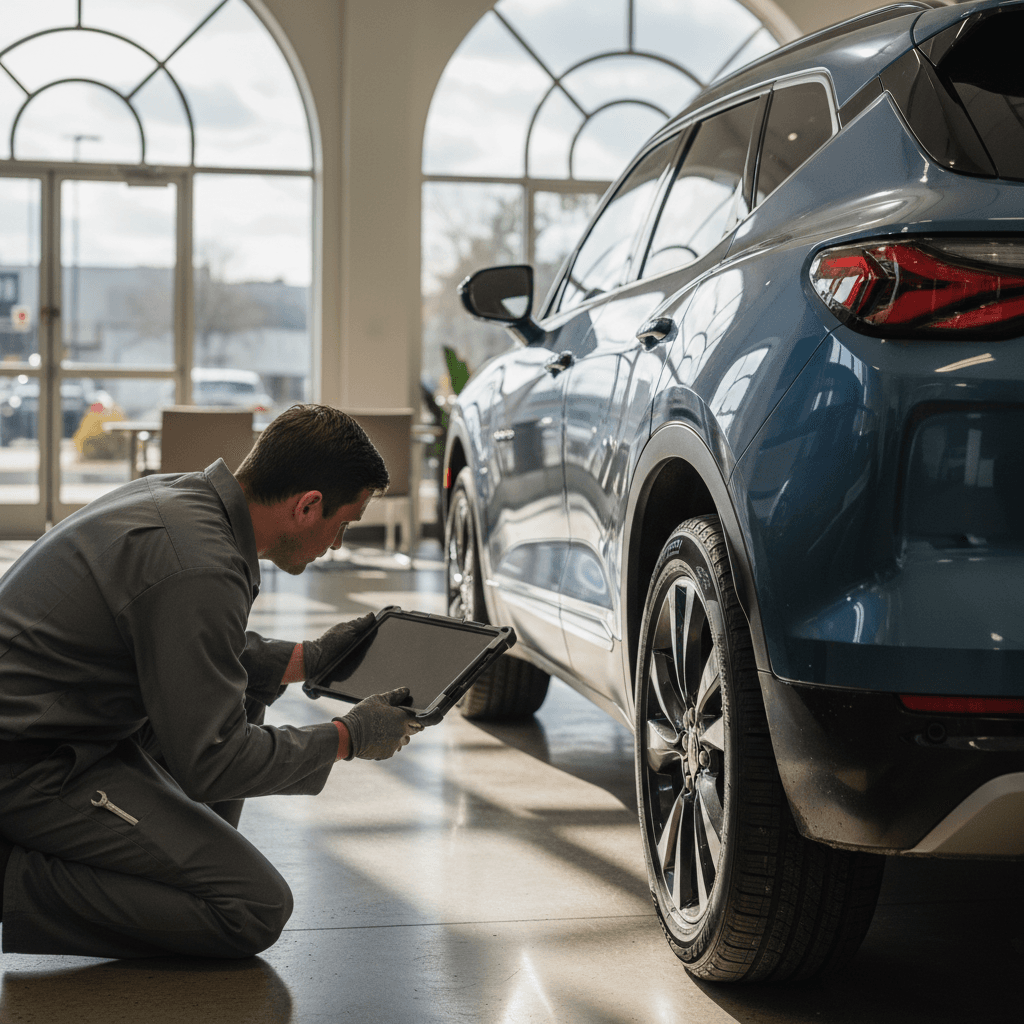
How much is my Chevrolet Blazer EV worth in 2026?
Let’s put some broad guide rails around 2026 Blazer EV trade‑in values. These examples assume clean title, no major accidents, and mileage that’s roughly typical for the model year (about 12,000–15,000 miles per year in the U.S.). Numbers reflect what many owners see as trade‑in offers, not private‑party sale prices, which can run several thousand dollars higher.
Illustrative Chevrolet Blazer EV trade‑in ranges in 2026
Approximate U.S. trade‑in ranges for common Blazer EV scenarios in early 2026. These are directional examples, not guaranteed offers.
| Scenario (early 2026) | Example vehicle | Approx. mileage | Typical trade‑in range* |
|---|---|---|---|
| 1 | 2024 Blazer EV LT AWD | 24,000–30,000 mi | High‑$20,000s to low‑$30,000s |
| 2 | 2024 Blazer EV RS RWD well‑equipped | 20,000–25,000 mi | Low‑ to mid‑$30,000s |
| 3 | 2025 Blazer EV LT FWD (newer build) | 10,000–15,000 mi | Mid‑$30,000s to low‑$40,000s |
| 4 | 2025 Blazer EV RS AWD w/3RS package | 10,000–15,000 mi | High‑$30,000s to mid‑$40,000s |
| 5 | 2025 Blazer EV SS performance trim | 8,000–12,000 mi | Low‑ to mid‑$50,000s |
| 6 | Early‑build 2024 Blazer EV with prior software history | Similar to above | Often $2,000–$5,000 under a clean comparable |
Real‑world bids vary by region, options, color, tire condition, and battery health. Use this table as a starting point, not an appraisal.
Important disclaimer on values
If you bought your Blazer EV after the late‑2024 price corrections and stacked factory incentives or tax credits, your effective cost basis may be far lower than the original window sticker. In that case, even a seemingly low trade‑in number might leave you in a surprisingly decent equity position.
7 key factors that drive Blazer EV trade‑in value
- Model year – Newer 2025 and 2026 Blazer EVs generally see stronger offers than 2024s, especially very early builds that lived through GM’s software stop‑sale period.
- Trim and powertrain – RS and SS trims, especially with all‑wheel drive and popular packages, usually price above base LT models.
- Mileage – Crossing mileage milestones (30k, 60k, 90k miles) tends to knock offers down faster than most owners expect.
- Battery health – A pack that still holds close to its original usable capacity is a major value booster on any used EV.
- Condition and tires – Curb rash, interior wear, and tired tires can trim thousands off a Blazer EV offer in seconds.
- History and accidents – Structural repairs, airbag deployments, or branded titles can push a Blazer EV into auction‑only territory.
- Market timing – Local EV incentives, gas prices, and regional appetite for EVs all move the needle month to month.
Where Recharged fits in
How trim, model year, and mileage change your offer
Chevrolet has shuffled Blazer EV trims and pricing since launch, but in 2026 you’ll mainly see LT, RS, and SS badges. Under the skin, there are front‑, rear‑, and all‑wheel‑drive versions, plus big differences in equipment like Super Cruise, premium audio, and appearance packages. All of that shows up in your appraisal, but not always in the way you’d expect.
How LT, RS, and SS trims typically appraise in 2026
Same model year, similar miles – different demand curves.
LT (value play)
The LT is the volume and fleet favorite. In 2026, LTs often show the steepest percentage depreciation, because many sold with heavy discounts and were used as demos or loaners. On the upside, their lower original prices mean you’re less likely to be deeply underwater.
RS (sweet spot
RS models add style and stronger equipment. In the used market, a clean RS with attractive wheels and colors typically brings a few thousand more than a comparable LT, especially in rear‑wheel drive or with popular tech packages.
SS (halo trim)
The SS is the performance flagship. It commands the highest dollar amounts, but early depreciation can still be harsh because initial MSRPs were lofty. Enthusiast demand and limited supply help SS values stabilize faster once the first big drop is behind them.
Older year, low miles
A 2024 Blazer EV with very low mileage can still command strong money, but early build‑quality headlines and software recalls may keep bids under a similarly equipped 2025.
If you’re in this camp, documentation matters: service records, recall completion proof, and a clean battery health report can narrow that gap.
Newer year, higher miles
A 2025 Blazer EV you’ve driven hard might appraise closer to an older low‑mile example. Crossing 30,000 or 40,000 miles often drops bids more than moving from 2025 to 2024 on paper.
If you’ve racked up miles, a strong maintenance story and fresh tires are your best tools to defend your value.
Trade‑in vs private sale vs Recharged: what nets you more?
You have at least three realistic ways to turn a Blazer EV into cash or your next vehicle in 2026. Each has different trade‑offs in terms of price, convenience, and risk.
Your main options for selling a Chevrolet Blazer EV in 2026
Price is only one piece of the puzzle.
1. Traditional dealer trade‑in
- Pros: Fast, simple, handles payoff and paperwork, good if you’re already buying another vehicle.
- Cons: Often the lowest dollar figure; some dealers still price EVs conservatively because they’re wary of depreciation and battery risk.
2. Private‑party sale
- Pros: Typically the highest sale price if you’re willing to field calls, show the car, and negotiate.
- Cons: Time‑consuming, you handle payoff logistics, scams and no‑shows are real, and many buyers are unsure how to evaluate a used EV battery.
3. Recharged marketplace or instant offer
- Pros: EV‑focused valuation, nationwide buyer reach, digital paperwork, and verified Recharged Score to showcase your Blazer EV’s battery and condition.
- Cons: You may net a bit less than a top‑dollar private sale, but often more than a quick dealer trade‑in for a mainstream SUV.
How Recharged can help
Ready to find your next EV?
Browse VehiclesHow Chevrolet Blazer EV depreciation compares to other EVs
Industry‑wide, fully electric vehicles tend to lose value faster in the first three years than comparable gas SUVs, often in the 60–75% range by year three. The Blazer EV has lived that story in real time, in part because it launched into a fierce EV price war and endured a high‑profile software stop‑sale early in its life.
Where the Blazer EV sits
- Early buyers who paid close to window sticker in 2023–early 2024 often saw steep paper losses by 2025–2026 as GM cut prices and juiced incentives on new inventory.
- Shoppers who grabbed large discounts or leased with aggressive factory support, however, are frequently ahead of the curve, their real cost of ownership looks far better than headline resale percentages.
Versus other midsize EV SUVs
- Compared with rivals like Ford Mustang Mach‑E, Hyundai Ioniq 5, and Kia EV6, the Blazer EV’s depreciation is on the heavier side so far, largely because of its rockier launch and deeper later discounts.
- That said, the Blazer EV slots into a busy, price‑sensitive segment. If GM stabilizes pricing and fixes software perceptions, values could gradually normalize relative to peers.
Why depreciation headlines don’t tell your whole story
8 steps to maximize your Blazer EV trade‑in value
Practical moves that can add real dollars to your offer
1. Pull your payoff and know your numbers
Before you ask for offers, get your exact loan or lease payoff and compare it to realistic trade‑in ranges. That tells you whether you’re in positive equity, break‑even, or negative territory, and how hard you should push on price.
2. Gather maintenance and recall records
Dealers and EV buyers pay more for well‑documented vehicles. Print or download service history, recall completion paperwork, and any warranty repairs on your Blazer EV. Showing that early software issues were handled properly builds confidence.
3. Get a battery health report
Battery condition is the heart of your Blazer EV’s value. A verified diagnostic, like the <strong>Recharged Score</strong> battery health test, can separate your SUV from high‑mile or abused examples and justify a stronger offer.
4. Fix small cosmetic issues
Touch up chips on high‑contrast paint, repair obvious curb rash on RS/SS wheels, and address fogged headlights or cracked glass. Don’t overspend, but a few hundred dollars of clean‑up work can easily add a four‑figure bump in perceived value.
5. Detail the interior and remove personal items
A spotless cabin photographs and shows better, especially in light‑colored interiors that can look tired when dirty. Take out phone mounts, stickers, and clutter so appraisers can imagine the SUV on their lot, not in your driveway.
6. Time your appraisal around tires and maintenance
Blazer EVs are heavy; worn tires spook buyers and appraisers. New or nearly new tires and up‑to‑date maintenance signal lower reconditioning costs and often support noticeably better offers.
7. Collect multiple real offers
Never rely on a single number. Get at least one local dealer appraisal, a few online instant offers, and a quote from an EV‑focused marketplace like Recharged. The spread can be several thousand dollars on the same vehicle.
8. Be flexible on how you sell
If you’re upside‑down or offers feel too low, consider consigning your Blazer EV through a specialist or selling privately. A slightly longer process may be worth it to bridge a nasty negative‑equity gap.
Timing your sale: is 2026 the right year to move on?
The best time to sell or trade a Blazer EV isn’t the same for everyone. It depends on when you bought, how you financed, and how the SUV fits your life today.
If you bought early at a high price
Owners who paid close to launch MSRPs in 2023–early 2024 often carry the heaviest paper losses. If you’re not under financial pressure and still like the SUV, holding another year or two can let the market stabilize and your loan balance catch up.
However, if you’re struggling with payments or don’t love the vehicle, it may be better to rip off the bandage now rather than carry negative equity into your next purchase.
If you scored big incentives or leased
If you jumped in after GM’s major price cuts or leased on a strong deal, 2026 can be an excellent time to act. You may find your Blazer EV’s trade‑in value covers your payoff or even leaves you with cash to roll into the next vehicle.
Before your lease ends, compare your buyout figure to real‑world values. If market value is lower, walk away. If your buyout is a bargain, you may be able to buy the SUV and resell it for a profit through a marketplace like Recharged.
Watch interest rates and EV incentives
Common Blazer EV trade‑in mistakes to avoid
- Leaning on MSRP, not your actual price paid. Depreciation calculators that start from window sticker can make you feel worse than you should if you bought with big discounts or credits.
- Letting one low offer define reality. Some dealers simply don’t want another EV on the lot. Take that number as a data point, not the final word.
- Ignoring battery health. Showing up without any proof of pack condition forces appraisers to assume the worst, and to price in that risk.
- Skipping cosmetic basics. Dirty interiors, warning lights, and neglected tires give buyers a reason to knock your Blazer EV down, even if the underlying vehicle is sound.
- Rolling negative equity blindly. If you’re upside‑down, understand exactly how much of that loss is being folded into your next loan or lease before you sign.
- Waiting until mileage or warranty cliffs. Hitting big milestones, like 36,000 or 60,000 miles, or the end of bumper‑to‑bumper coverage, can ding offers more than a few months of calendar time.
Chevrolet Blazer EV trade‑in value FAQ (2026)
Frequently asked questions about 2026 Chevrolet Blazer EV trade‑in value
The 2026 Chevrolet Blazer EV trade‑in picture is complicated: aggressive early pricing, software headlines, and a fast‑moving EV market have produced some bruising depreciation stories. Yet your experience doesn’t have to match the worst examples. If you understand how buyers value Blazer EVs, document your battery and service history, and shop your SUV to the right channels, you can come away with a number that makes sense for both your wallet and your next move. When you’re ready to see what your Blazer EV is really worth, Recharged is built to give you that clarity, with verified battery health, transparent pricing, and EV‑specialist support from first quote to final signature.