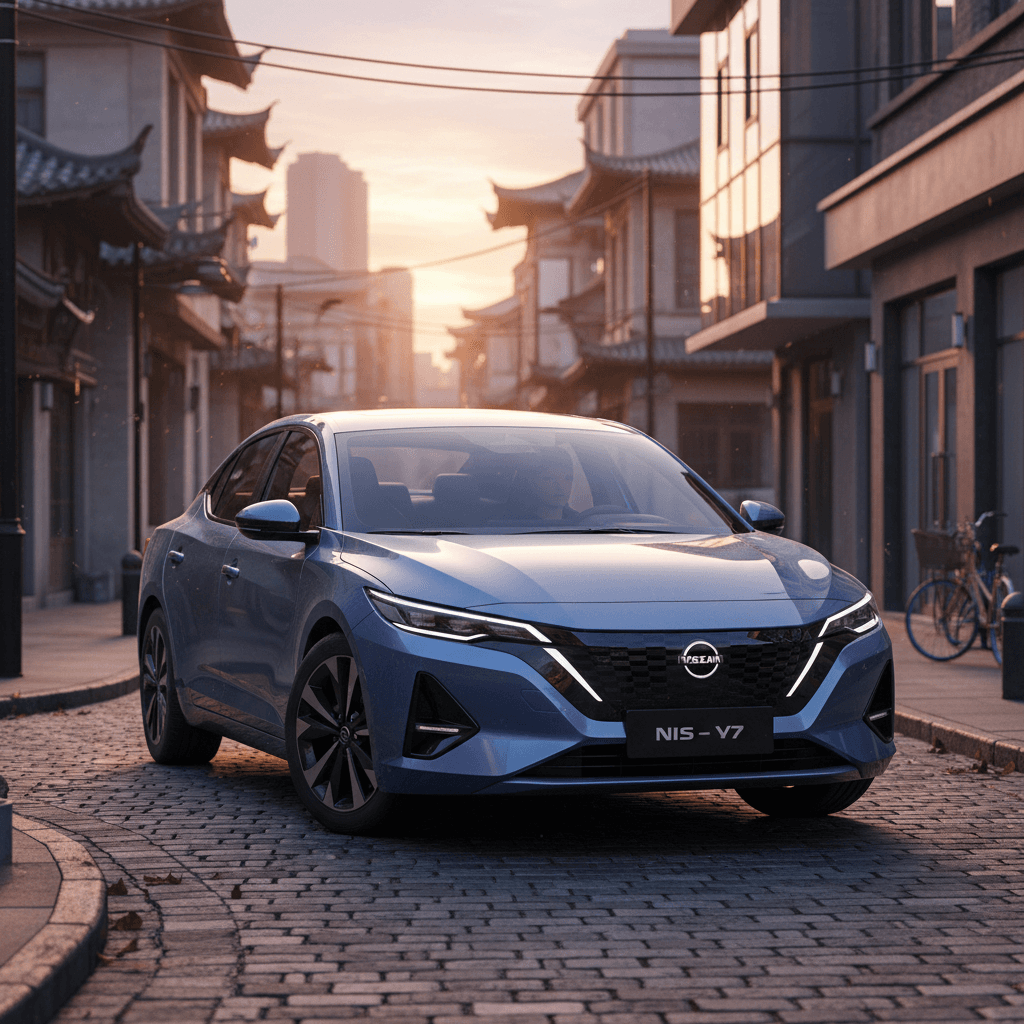
Search for “Nissan N7” today and you’ll tumble into a very 2025 story: a sleek, mid-size electric sedan built in China, priced like an economy car, loaded with big-battery range and big-screen tech. If you’re in North America, you can’t buy one (yet), but the Nissan N7 still tells you a lot about where EVs are headed and what tomorrow’s used-EV market might look like.
Quick take
What is the Nissan N7?
Nissan positions the Nissan N7 as a family-friendly, mid-size electric sedan developed with its Chinese joint-venture partner Dongfeng. It’s the first production model on Dongfeng Nissan’s new Tianyan Architecture, a flexible platform that can support battery-electric, plug-in hybrid, and range-extended EVs. The N7 was previewed by the Epoch concept and officially launched in China in late April 2025, with deliveries starting in mid‑May.
On paper, the N7 is roughly the size of a traditional Nissan Maxima: about 4,930 mm long and 1,895 mm wide, with a wheelbase just over 2,900 mm. That footprint gives it genuine mid-size presence, but Dongfeng Nissan markets it as a “most family-friendly” EV, aimed at everyday commuters and first‑time EV owners, not just tech enthusiasts.
- Mid-size, four-door electric sedan built by Dongfeng Nissan in China
- First model on the Tianyan Architecture EV platform
- Front-motor, front-wheel-drive layout with single-motor powertrains
- Launched in China in April 2025 with deliveries starting in May 2025
- Targeted at value-conscious families and first-time EV buyers
Nissan N7 key specs, platform, and performance
Nissan N7 at a glance
Under the skin, the Nissan N7 is built on the Tianyan Architecture, a modular EV toolkit shared with the Dongfeng eπ 007 sedan. The layout is straightforward: a permanent-magnet synchronous motor up front driving the front wheels, with two power levels, around 160 kW and 200 kW, paired with lithium iron phosphate (LFP) battery packs.
That power translates to roughly 215–268 horsepower, enough for confident highway merging rather than track‑day bragging rights. The focus here is efficiency and comfort, not Nürburgring lap times. With its low drag coefficient and long wheelbase, the N7 is designed to feel stable, quiet, and relaxed at speed, more electric Camry than electric GT‑R.
Tianyan Architecture
- Supports EV, PHEV, and range-extended EV layouts.
- Designed to lower cost with shared components.
- Engineered for efficient aerodynamics and cabin space.
- Forms the basis for multiple future Dongfeng Nissan models.
Driving character
- Front-wheel drive prioritizes stability in poor weather.
- Single-motor simplicity keeps weight and cost down.
- Power levels tuned for everyday commuting and family use.
- Advanced driver-assist tech aims to reduce fatigue in city traffic.
Range, battery, and charging details
The headline with the Nissan N7 is range. Depending on the trim, the N7 uses either a 58 kWh or 73 kWh LFP pack sourced through a Sunwoda joint venture. On China’s optimistic CLTC test cycle, that translates to advertised figures in the 510–635 km band (roughly 317–395 miles). Real‑world numbers will land lower, but for buyers cross‑shopping within the Chinese market, those ratings matter.
Nissan N7 battery and range overview (China CLTC)
Trim naming on the N7 roughly mirrors its claimed CLTC range figures.
| Variant | Battery (LFP) | Power | Drive | Claimed CLTC range |
|---|---|---|---|---|
| 510 models | 58 kWh | ≈160 kW | FWD | ~510–540 km |
| 625 models | 73 kWh | ≈200 kW | FWD | ~625–635 km |
Real-world U.S. EPA-style range would be lower than CLTC, but the N7 still stacks up well in its segment.
Charging hardware is tuned for daily usability rather than record-setting speeds. The N7 supports DC fast charging, with Nissan citing roughly 30% to 80% in about 14 minutes under ideal conditions on a high‑power charger. There’s also a 6.6 kW vehicle‑to‑load function, so you can power camping gear, tools, or a tailgate party directly from the car.
LFP batteries: why they matter
Inside the Nissan N7: comfort and tech
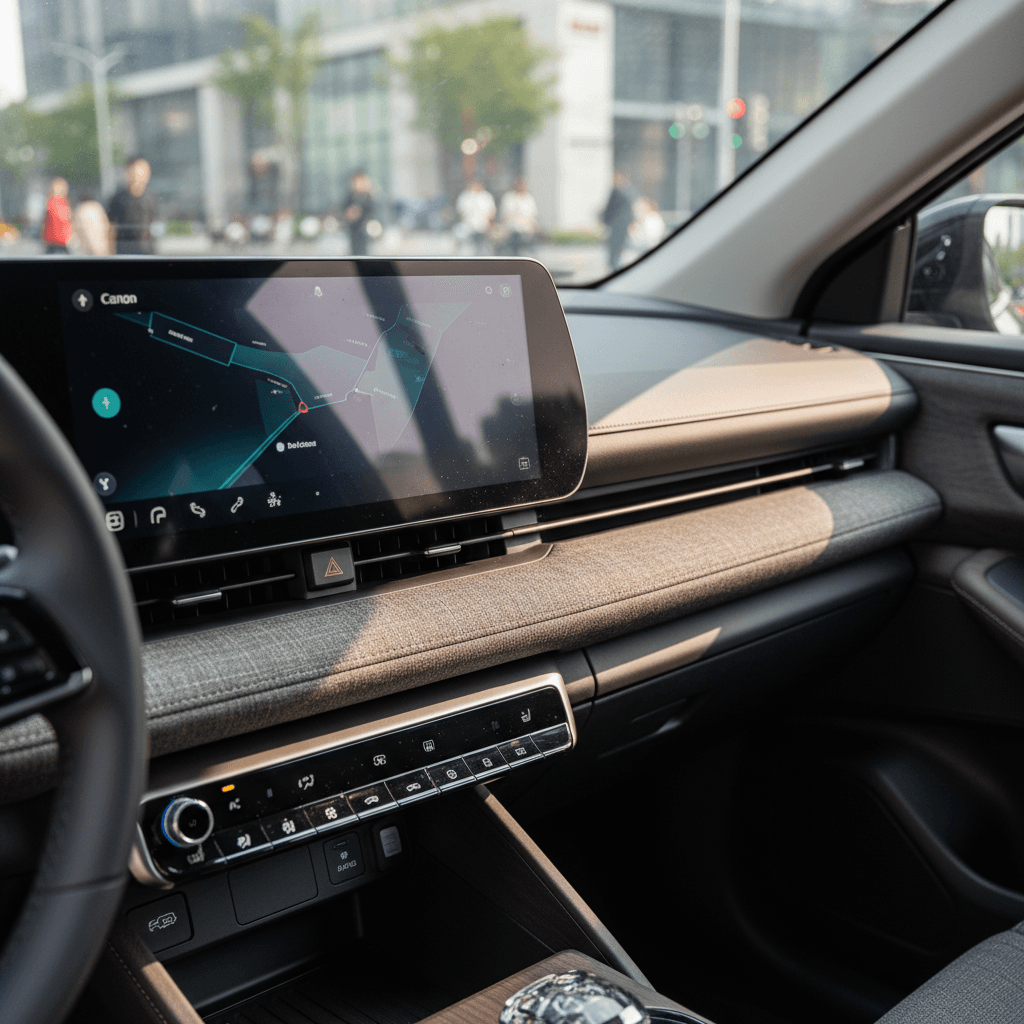
If you’ve driven a recent Nissan, the N7’s cabin will feel both familiar and oddly futuristic. There’s a large 15.6‑inch central touchscreen paired with a dedicated digital instrument cluster, plus a low-profile, two-spoke steering wheel with the gear selector tucked behind it. Materials include suede‑like microfibers, soft-touch “cloud” padding, and two-tone interior color options that lean more boutique hotel than rental counter.
Nissan N7 tech highlights
A mass‑market sedan that leans hard into software and AI.
Snapdragon-powered infotainment
The N7 runs a custom NISSAN OS infotainment stack on a Qualcomm Snapdragon 8295P chipset, with generous onboard memory and storage for apps, navigation, and media.
AI comfort features
Nissan touts an AI “zero‑pressure” seat system with dozens of sensors that adjust bolster support and posture automatically, aiming to reduce fatigue on long drives.
Advanced driver assistance
In partnership with Momenta, the N7 adds highway and city Navigate on Autopilot-style assistance, plus smart parking features designed for dense urban environments.
Light show included
Pricing and where the Nissan N7 is sold
At launch, the Nissan N7 landed in Chinese showrooms with pricing in the neighborhood of 119,900 to 149,900 yuan, roughly $16,000 to $18,000 USD at recent exchange rates. For perspective, that’s economy‑car money for something with the footprint and interior space of a traditional mid-size sedan and the range to challenge far pricier EVs.
So far, the N7 is primarily a China-market model. Nissan has signaled interest in shipping it to other regions, Japan has been mentioned as an early candidate, but no global rollout timeline has been confirmed. For North America, nothing has been announced, and the car faces additional hurdles: safety certification, charging‑standard integration, and brand‑positioning decisions in a market already crowded with crossovers.
Important for U.S. shoppers
How the Nissan N7 compares to other EV sedans
On spec sheets, the Nissan N7 looks like it’s punching above its weight. It’s roughly Model 3–sized, with range figures that can rival or beat many mainstream EV sedans, but its Chinese‑market pricing undercuts most of them dramatically. The trade‑offs are all about where and how you can buy it, and what kind of charging infrastructure it’s designed to live with.
Nissan N7 vs. familiar EV sedans (high-level comparison)
How the N7’s core idea stacks up against EV sedans many U.S. shoppers know.
| Model | Market focus | Approx. size | Max advertised range | Starting price (local) |
|---|---|---|---|---|
| Nissan N7 | China-focused | Mid-size sedan | Up to ~625–635 km CLTC | ≈$16k–$18k (China) |
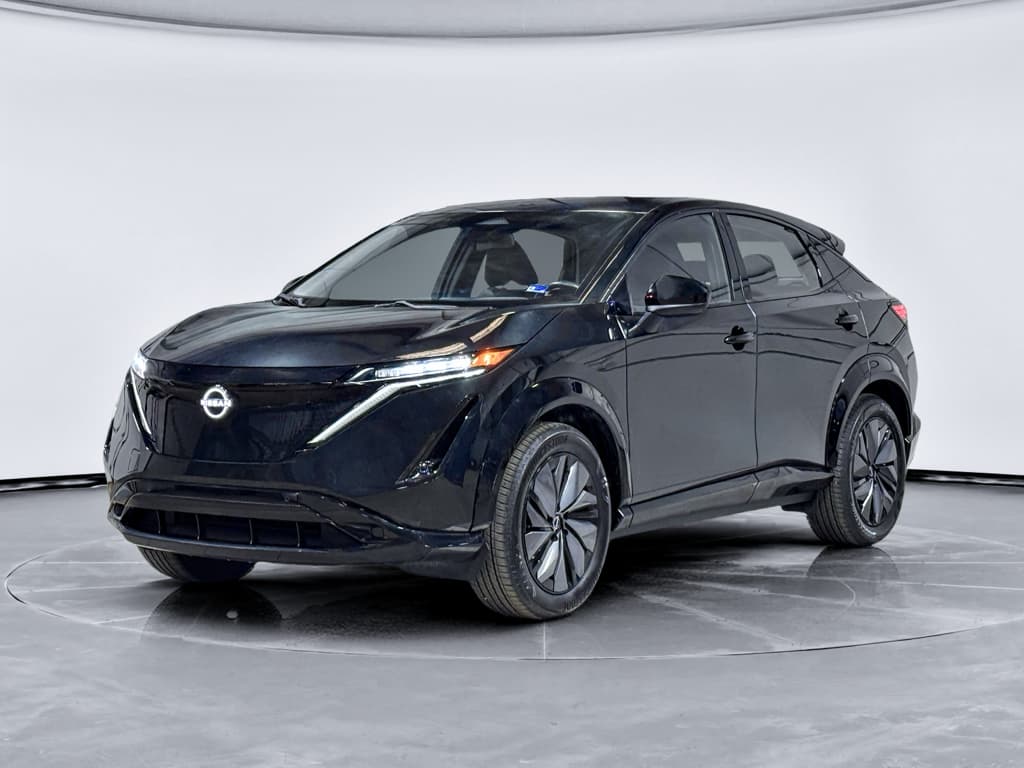
| Nissan Ariya (FWD) | Global crossover | Compact–mid SUV | ~200–300+ miles EPA | Well above $40k (U.S.) |
| Tesla Model 3 | Global sedan | Compact/mid sedan | ~270–340+ miles EPA | Upper‑$30ks and up (U.S.) |
| BYD Han EV | China + exports | Large sedan | 600+ km CLTC on some trims | Well above N7 in China |
Specs vary by trim and test cycle; this table is meant as a directional comparison, not a one‑to‑one spec sheet.
Where the N7 shines
- Value: Mid-size space and big range at sub‑$20k pricing (in its home market).
- Comfort & tech: High-end seats, animated lighting, and modern driver-assist features.
- LFP durability: Battery chemistry that’s well‑suited to urban fast‑charge habits.
- Brand familiarity: For Chinese buyers, Nissan’s joint venture still carries mainstream credibility.
Where it’s limited
- Market availability: Primarily sold in China, with only tentative plans for other regions so far.
- Single-motor only: No all‑wheel‑drive performance halo model, for now.
- Unknown resale story: As an all‑new platform, its long‑term reliability and resale values are still a question mark.
- Charging ecosystem: Optimized for Chinese infrastructure and standards, not the CCS/NACS mix you see in the U.S.
What the Nissan N7 means for U.S. EV shoppers
You may never see a Nissan N7 in your local grocery‑store parking lot, but the philosophy behind it matters globally. The N7 proves you can build a spacious, long‑range EV at an economy‑car price if you optimize for cost and scale, and if you’re willing to launch first in a hyper-competitive market like China.
For U.S. drivers, the N7 is a hint of what the next wave of budget EVs might look like. As Nissan deepens its EV partnerships and launches more models on shared platforms, you can reasonably expect future cars, sedans, crossovers, and even small MPVs, to borrow N7 ideas: lighter LFP packs, more efficient aerodynamics, and heavy use of software and AI to deliver value without expensive hardware.
Affordable EVs are no longer just about smaller batteries and pared-back equipment. Cars like the N7 show how far you can stretch tech and comfort when you design the whole package around efficiency and cost.
Why this matters for used EVs
Buying a used EV instead: practical tips
If the Nissan N7 has you wishing you could snag a roomy, efficient EV without the new-car price tag, you’re not alone. The good news: you can already capture a lot of that value by shopping smart for a used EV in the U.S. market today.
Checklist: getting N7-style value from a used EV
1. Focus on real-world range, not brochure numbers
Look for owner reports and independent tests, not just the original EPA figure. Climate, driving style, and battery age all affect how far you’ll actually go on a charge.
2. Pay attention to battery chemistry and health
Some EVs use nickel-based packs, others use LFP like the N7. Each behaves differently over time. Use a <strong>verified battery health report</strong>, such as the Recharged Score, to understand remaining capacity instead of guessing from mileage alone.
3. Check charging compatibility for your life
N7 buyers rely on China’s native infrastructure; you’ll be living with a mix of CCS, NACS, and Level 2 options. Make sure the car you’re eyeing plays nicely with home charging and road‑trip networks where you actually drive.
4. Evaluate comfort and tech with your daily routine in mind
Big screens and AI buzzwords are great, but ask: can you see the gauges clearly, is the driving position comfortable, and do driver‑assist features feel intuitive rather than intrusive?
5. Look beyond the sticker price
Insurance, tires, charging costs, and potential software subscriptions all factor into total ownership. A slightly higher purchase price for a car with a healthier battery and better efficiency can still be the smarter deal.
How Recharged can help
FAQ: Nissan N7 electric sedan
Frequently asked questions about the Nissan N7
Bottom line on the Nissan N7
The Nissan N7 isn’t just another nameplate in a crowded EV catalog. It’s a signal flare: mid‑size space, long‑range numbers, high‑end comfort tricks, and a price tag that would make most U.S. compact sedans blush, at least in its home market. For now it’s a China‑focused story, but it points toward a future where affordable, well‑equipped EVs are the rule, not the exception.
If you’re shopping in the United States today, you’ll be watching the N7 from a distance. But the ideas it embodies, efficient platforms, LFP durability, software‑heavy cabins, and honest value, are already seeping into the EVs you can test‑drive right now. Use those same priorities when you shop, especially in the used EV market, and you can get surprisingly close to the N7’s promise without waiting years for an import that may never come.