If you’re eyeing a 2024 Mercedes EQS, you’ve probably seen impressive EPA numbers, but what you really care about is how far it goes in the real world. This 2024 Mercedes EQS range test breakdown pulls together independent tests, EPA data, and owner-style driving scenarios so you know what to expect from both the sedan and SUV, whether you’re commuting, road‑tripping, or shopping the used market.
Quick takeaway
Why 2024 EQS range tests matter for shoppers
On paper, the 2024 Mercedes EQS is a range champion among luxury EVs. The rear‑drive EQS 450+ sedan carries an EPA combined range rating of **about 352 miles**, with dual‑motor 450 4Matic and 580 4Matic trims close behind at roughly **345 miles**. Those numbers put it in the same conversation as the Tesla Model S and Lucid Air when it comes to long‑distance capability.
But EPA ratings are only part of the story. Real‑world range depends on **how and where you drive**, temperature, wheel size, and even how heavy your right foot is. Because the EQS is now starting to appear in volume on the **used EV market**, understanding real‑world range and how the large battery is holding up is critical if you’re cross‑shopping a new EQS, a used example, or other large luxury EVs.
Relevance for used‑EQS buyers
2024 Mercedes EQS range specs at a glance
2024 Mercedes EQS range and efficiency snapshot
Mercedes tweaks details year to year, but the 2024 EQS sedan family still centers on a **108.4‑kWh usable battery** paired with an efficient electric drivetrain. Officially, the 2024 EQS 450+ sedan is rated at **96 MPGe combined** with electricity use of about **35 kWh per 100 miles**, which is competitive for a big, ultra‑luxury EV.
2024 Mercedes EQS EPA range ratings (sedan)
Key EPA range ratings for the 2024 EQS sedan trims most shoppers will encounter.
| Trim (2024 sedan) | Drive | EPA combined range | EPA efficiency (combined) |
|---|---|---|---|
| EQS 450+ | RWD | 352 mi | 96 MPGe (35 kWh/100 mi) |
| EQS 450 4Matic | AWD | 345 mi | similar to 450+ |
| EQS 580 4Matic | AWD | 345 mi | similar to 450+ |
| AMG EQS 4Matic+ | AWD | 305 mi | lower efficiency, more power |
EPA figures are a starting point, real‑world results often vary, as we’ll see below.
EPA range is not a guarantee
Real-world range tests: what independent numbers show
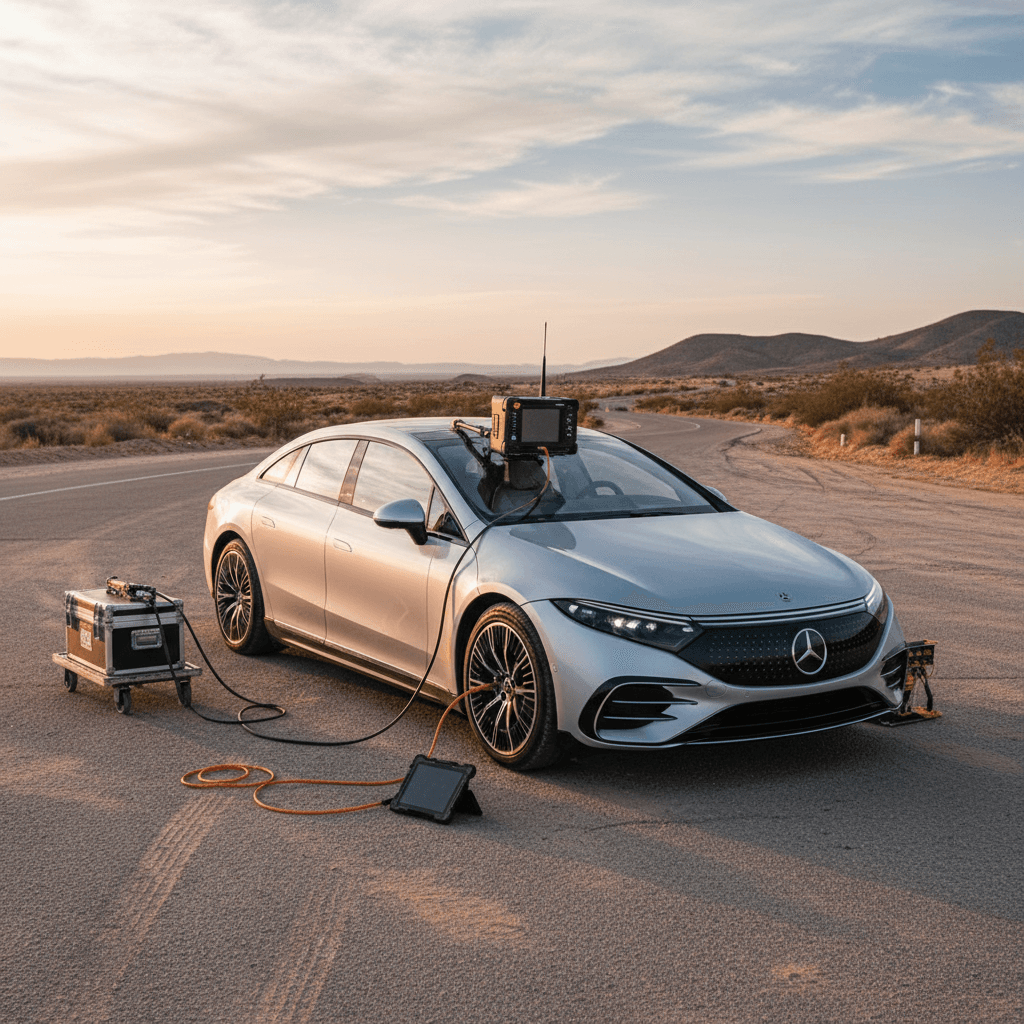
Independent outlets that run controlled range tests have consistently found that the EQS can **match or beat** its EPA numbers when driven in mixed conditions. That’s not something you can say about every luxury EV, many fall short in real‑world use.
Key 2024 EQS range test results
How the EQS performed in third‑party testing and evaluations
Mixed-driving SUV test
Edmunds ran a 2024 EQS 450+ SUV through its standardized EV Range Test and recorded about 407 miles of real‑world range, beating the SUV’s 339‑mile EPA number by roughly 20%.
That made it the longest‑range electric SUV Edmunds had tested at the time.
Highway-focused sedan tests
Other outlets have reported **350–400 miles at highway speeds** in the EQS sedan, depending on wheel size, temperature, and driving style. In many cases, test cars matched or slightly exceeded their combined EPA ratings on a controlled 70–75 mph loop.
Owner-style driving impressions
Long‑term evaluations and road tests typically describe the EQS as a car that’s **easy to keep efficient**. Gentle acceleration and use of its strong regenerative braking help real‑world consumption stay below EPA’s projected 39 kWh/100 miles in many scenarios.
The EQS is one of the rare large luxury EVs that tends to meet or beat its EPA rating in independent tests, especially in its single‑motor configurations.
Bottom line from testing
Sedan vs. SUV: how EQS body style changes range
EQS sedan: the range leader
The **EQS 450+ sedan** is the range champ of the lineup. Its sleek, low‑drag shape and single‑motor rear‑drive layout make it the most efficient version. If you want maximum miles per charge and don’t need a third row, this is the EQS to target.
- Best official range: ~352 miles.
- Most efficient in kWh/100 mi.
- Typically the longest‑range choice on the used market as well.
EQS SUV: space with surprising legs
The **EQS SUV** rides taller and offers a third row, but independent testing shows it can still deliver **well over 350 miles** in mixed driving. In Edmunds’ test, the 450+ SUV actually out‑performed its 339‑mile EPA rating by about 68 miles, landing at 407 miles.
- Officially rated slightly lower than the sedan.
- Real‑world results can be similar when driven carefully.
- More frontal area and weight mean extra sensitivity to speed and payload.
Which body style should you pick?
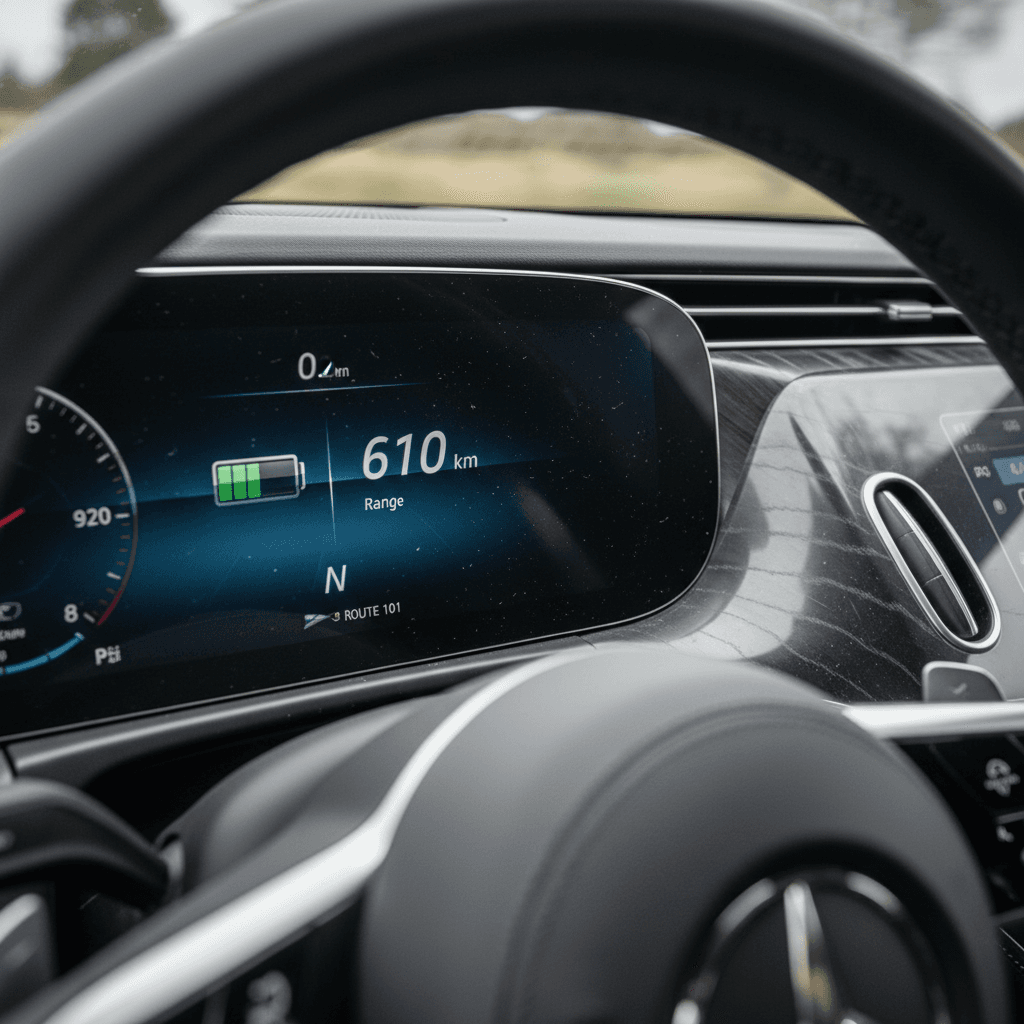
Five big factors that change your EQS range
What will really change your 2024 EQS range?
1. Highway speed
Above about **70 mph**, aerodynamic drag ramps up fast. In owner‑style testing, cruising at 75–80 mph can trim 15–20% off the EQS’s best‑case range, especially in the taller SUV.
2. Temperature and climate control
Cold weather thickens battery chemistry and increases HVAC load. Running the cabin heater and seat warmers on a freezing day can eat into range. The EQS’s efficient heat pump helps, but winter can still cut usable range 20–30% compared with mild weather.
3. Wheel and tire choice
The EQS looks great on big wheels, but those 21‑ or 22‑inch packages usually wear wider, stickier rubber with more rolling resistance. If maximum range matters, prioritize more modest wheel sizes and touring‑oriented tires.
4. Driving style and regen use
Smooth inputs, coasting when possible, and smart use of the EQS’s **adjustable regenerative braking** can visibly lower your consumption readout. Hard launches, late braking, and rapid lane‑changes push energy use toward the EPA ceiling or beyond.
5. Payload, roof boxes, and towing
Extra passengers, cargo, and accessories like roof boxes or hitch‑mounted carriers all add drag and weight. The EQS can tow modest loads, but plan a generous buffer and more frequent fast‑charge stops if you’re pulling a trailer.
Winter range reality check
Highway and road-trip performance
The EQS was engineered with long‑distance comfort in mind. Its huge battery and efficient powertrain mean that, even at 70–75 mph, you can often cover **280–320 real‑world highway miles** between fast‑charge stops in a 450+ sedan under decent conditions. The SUV’s boxier shape and extra weight narrow that window somewhat, but its real‑world results are still strong for a three‑row EV.
- At 65–70 mph in mild temperatures, many testers see consumption better than EPA, allowing you to get close to or slightly over the combined‑range number.
- At 75–80 mph, expect range to drop into the mid‑200s on the SUV and upper‑200s to low‑300s on the sedan, depending on wheels and load.
- In heavy rain, headwinds, or sub‑freezing weather, build in an extra fast‑charging stop and aim to arrive with at least 10–15% battery remaining.
Road‑trip planning tip
Charging speed, battery size, and trip planning
A big part of range confidence is understanding how quickly you can recover miles. The 2024 EQS’s roughly **108‑kWh usable battery** gives you plenty of headroom, but you also need to know what happens when you plug in on the road or at home.
How the EQS turns electrons into miles
Key charging scenarios for everyday use and road trips
Level 2 home charging
On a 240‑volt home charger, the EQS typically goes from about 10% to full in **11–13 hours**, depending on onboard‑charger configuration and circuit rating. Overnight top‑offs are realistic even with a large battery.
DC fast charging on the road
At a high‑power DC station, the EQS can accept up to **200 kW**. In good conditions, you’re usually looking at **around 30 minutes** to go from 10% to 80%, adding roughly 200+ miles of highway‑usable range.
Optimal charge window
For trip efficiency, think in terms of **10–60% or 10–70% hops**. Charging slows as you approach 100%, so it’s often faster on a long day to add smaller chunks of energy more often rather than one monster charge to full.
Don’t rely on 0%
What used EQS shoppers should look for on range
Because the EQS launched earlier in the decade, we’re now seeing more **off‑lease and early‑life used EQS sedans and SUVs** entering the market. The good news: large, liquid‑cooled packs like the EQS’s tend to degrade slowly when properly maintained. The challenge is proving that to your own satisfaction before you sign anything.
Range and battery checks for a used EQS
1. Look past the single ‘range at 100%’ estimate
Displayed range is heavily influenced by the previous owner’s recent driving style. A recent streak of aggressive highway driving can make a healthy battery look weak, and vice versa.
2. Ask for a battery health report
Ideally, you want a **scan‑based report** that shows usable capacity and cell balance, not just a salesperson’s assurance. Recharged’s **Recharged Score** includes this as part of every used EV listing.
3. Check for software updates and service history
Battery management updates can improve efficiency or charging behavior. A documented history with regular maintenance and software campaigns is a plus for long‑term range confidence.
4. Test a typical drive route
If possible, drive a loop that mirrors your real use case, commute or a common weekend highway run, and watch consumption in kWh/100 mi rather than obsessing over the percentage gauge.
5. Inspect wheels, tires, and accessories
Oversized wheels, aggressive tires, roof boxes, and heavy aftermarket add‑ons all nibble at range. Factor those into your expectations and potential replacement costs.
How Recharged helps de‑risk a used EQS
Ready to find your next EV?
Browse VehiclesHow the EQS range compares with rivals
Shoppers usually compare the EQS with other flagship luxury EVs such as the Tesla Model S, Lucid Air, BMW i7, and Porsche Taycan. On pure EPA numbers, the EQS 450+ sedan generally trails the highest‑spec Lucid Air and some Model S variants, but it often **out‑ranges or matches** rivals like the BMW i7 and Taycan while delivering a quieter, more comfort‑oriented experience.
Approximate range comparison: EQS vs key luxury EV rivals
Representative EPA combined range figures for common long‑range trims (2024 model‑year or similar). Exact numbers vary by wheel size and options.
| Model | Example long‑range trim | Approx. EPA combined range |
|---|---|---|
| Mercedes EQS sedan | EQS 450+ | ~352 mi |
| Mercedes EQS SUV | EQS 450+ SUV | ~339 mi |
| Tesla Model S | Long Range | ~375–405 mi |
| Lucid Air | Grand Touring / Pure Range | Up to ~410–516 mi (best cases) |
| BMW i7 | xDrive50 or similar | Typically 295–320 mi range band |
| Porsche Taycan | Performance Battery Plus | Often 250–300 mi range band |
EQS doesn’t always top the spec sheet, but it’s one of the most consistent large EVs in independent real‑world testing.
Spec sheet vs real‑world behavior
2024 Mercedes EQS range test: FAQ
Frequently asked questions about 2024 EQS range tests
Bottom line: how far the 2024 EQS really goes
If you strip away the marketing and focus on data, the 2024 Mercedes EQS stands out as one of the **most honest long‑range EVs** on the road. Independent tests of both sedan and SUV variants show that it often meets or exceeds its already‑strong EPA ratings, provided you respect the usual EV realities around speed, temperature, and load.
For shoppers, the practical takeaway is straightforward: a 2024 EQS 450+ sedan driven thoughtfully can deliver **300+ miles of real‑world range** without drama, and the closely related EQS SUV isn’t far behind. If you’re considering a used EQS, focus on **verified battery health and real‑world consumption**, not just the range estimate on a full charge. That’s exactly the kind of transparency Recharged is built around, pairing detailed battery diagnostics and fair pricing with specialist EV guidance so you know what your EQS will really do, day in and day out.